
Fair Skin Meaning: Pale vs Fair Skin Explained
 Reviewed by Alexandra Gilmore
Fair skin means a naturally light skin depth. Pale can describe the same natural depth, but it can also mean that someone looks lighter or less colorful than their usual baseline. Neither label reveals undertone, health, sun response, or an exact foundation shade.

Fair skin means a naturally light skin depth. Pale skin can mean the same thing in everyday conversation, but pale can also describe skin that looks lighter or less colorful than a person's usual baseline. That is the main difference: fair is normally a stable depth category, while pale may describe either natural coloring or a temporary appearance.
Neither fair nor pale reveals whether your undertone is warm, cool, neutral, or olive. The words also do not identify your color season, health, sun response, or exact foundation shade.
Fair Skin Meaning: The Quick Comparison
| Term | Usual meaning | Best use |
|---|---|---|
| Fair skin | A naturally light range of skin depth | Describing your stable complexion or narrowing a foundation range |
| Pale skin | Very light natural skin or a lighter-than-usual appearance | Use context to show whether you mean natural depth or a change from baseline |
| Light skin | A broad, relatively neutral depth label | Comparing complexion or cosmetic depth ranges |
If your complexion has always sat at the light end of a shade range, fair or light is usually the clearest label. If you are naturally very light, pale may also feel accurate. If someone says you look pale today, however, they are usually comparing your current appearance with your normal color—not assigning you a permanent skin-tone category.
Key Takeaways
Use fair for a naturally light skin-depth range and use pale carefully: it may describe a very light natural complexion or a change from your natural baseline. The words have no single universal boundary, and neither one determines undertone.
💫 Discover Your Complete Color Palette
Once you have separated skin depth from undertone, use a complete color analysis to connect that information with clothing, hair, and makeup colors.
Find My Color Palette →- Fair normally describes a stable, naturally light complexion.
- Pale can describe naturally very light skin, but it can also mean looking lighter than usual.
- Light is often the most neutral depth label in beauty and foundation ranges.
- Fair or pale skin can have a warm, cool, neutral, or olive undertone.
- Check your usual appearance in indirect daylight before relying on a photo, shade name, or one-day change.
📚 Recent Articles
Why Fair and Pale Are Not Perfect Synonyms
There is no official pale-versus-fair border that everyone follows. Everyday language, cosmetic brands, photographers, dermatology tools, and color analysts use different systems for different purposes. In normal beauty language, fair usually means a naturally light skin depth. Pale is less precise. It may be a synonym for very fair, or it may describe someone whose face has temporarily lost some of its usual color.
This makes the comparison asymmetrical. Fair is generally a category relative to other skin depths. Pale can be a category, an impression, or a change. A person can be naturally fair and look more pale than usual. Another person can describe their stable complexion as pale without suggesting any change. Context tells you which meaning is intended.
The Fitzpatrick phototype is sometimes pulled into this conversation, but it answers a different question: how skin tends to react to ultraviolet exposure. A 2024 dermatology review notes that Fitzpatrick classification has important limitations when it is treated as a direct skin-color scale. It should not be used to manufacture an official definition of pale versus fair.
What Fair Skin Usually Means
Fair skin is best understood as a depth description. It sits toward the lighter end of a complexion range before undertone is considered. In a foundation line, fair may be the first depth family, followed by light, light-medium, medium, tan, deep, and other categories. Those names are convenient, not universal measurements. One brand's fair-neutral can be close to another brand's light-neutral.
Fair also describes a natural baseline rather than one frozen color value. Your face may look slightly deeper after sun exposure, lighter in winter, pinker after exercise, or warmer under indoor bulbs. Those surface changes do not automatically place you in a different permanent category. Look at the skin you normally see along the jaw, neck, or upper chest under consistent light.
Most importantly, fair does not mean cool. Fair skin can carry peach, golden, yellow, pink, red, neutral, or olive nuances. Some of these are undertones; others are surface effects or a mix of both. If your real question is temperature, use the undertone test for fair skin rather than trying to solve it from the word fair.
What Pale Skin Usually Means
Pale has two common meanings. The first is a stable appearance: a person may simply use pale to describe a naturally very light complexion. In that context, it often overlaps with very fair, porcelain, or the lightest end of a shade range. It is descriptive language, not a statement that something is wrong.
The second meaning is relative. Someone who normally has a light, medium, or deep complexion can look pale compared with their usual appearance. In clinical terminology, NCBI MeSH defines pallor as an unnatural paleness of the skin. That definition is about a change or manifestation, not a cosmetic depth category.
Color can also disappear in a photo without changing in real life. Overexposure lifts the brightest values, cool phone processing can reduce warm surface color, and a strongly colored wall can cast light onto the face. Foundation that is too light or too opaque may produce the same washed-out impression. Before deciding that pale is your permanent skin-tone label, compare several ordinary days in neutral conditions.
This article is about descriptive language and color analysis. It is not a medical diagnosis. A sudden or persistent change from your normal appearance belongs in a health conversation, especially when it comes with symptoms or concern. An online photo, color chart, or fashion test cannot evaluate that situation.
How to Tell Which Description Fits You
You do not need a device or a single official chart. You need a consistent reference. The goal is not to prove that one adjective is objectively correct; it is to choose language that matches your normal appearance and helps with the task in front of you.
- Start with your baseline. Think about your complexion across several normal days, not after exercise, illness, strong sun, a cold walk, or heavy makeup.
- Use indirect daylight. Stand near a window without direct sun. Turn off warm ceiling bulbs and avoid a strongly colored wall that can reflect onto your face.
- Remove camera variables. Check a mirror first. If you take a photo, disable beauty filters and compare more than one image because automatic exposure and white balance can shift apparent depth.
- Compare connected areas. Look at the jaw, neck, and upper chest rather than judging only the center of the face, where redness, concealer, or skincare can change the surface color.
- Choose the term for the purpose. For a foundation menu, fair or light may be practical. For a personal description, pale may feel natural. For an unusual change, compare with your baseline instead of assigning a shade category.
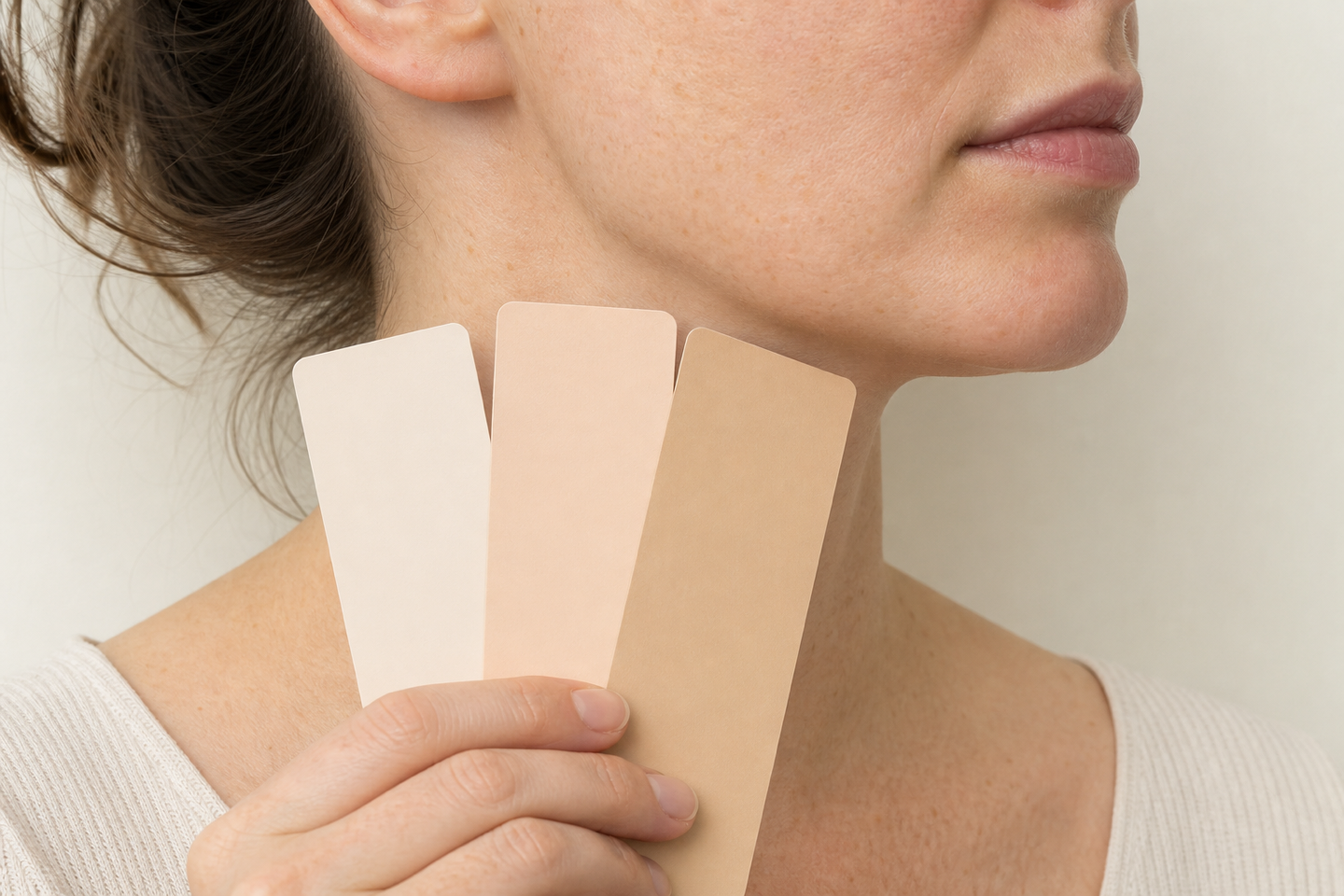
A useful result may be something like “fair depth with a neutral-warm undertone” or “very light depth with a cool-olive undertone.” That description separates two pieces of information instead of forcing one word to do everything. If you want a wider vocabulary for depth categories, use the guide to skin-tone names as a reference, not as a rigid identity test.
Fair or Pale Does Not Reveal Your Undertone
Skin depth describes how light or deep the visible complexion appears. Undertone describes the subtler color direction that influences harmony with fabrics, makeup, and metals. The two interact visually, but one does not determine the other. A light complexion can be warm, cool, neutral, or olive.
This matters because many online comparisons repeat an unreliable shortcut: fair equals warm or healthy, while pale equals cool or colorless. Real complexions do not follow that split. A naturally pale person may have a golden or peach direction. A fair person may have a cool pink or blue-red direction. Visible redness can sit over a warm undertone, and a muted olive cast can appear at very light depths.
Do not rely on one vein, one jewelry metal, or one selfie. Compare controlled fabric pairs near the face and look for repeated effects: a more even complexion, clearer eyes, less emphasis on shadows, and a natural relationship between face and fabric. The pale skin warm-versus-cool guide covers that narrower diagnosis without making depth do the work of undertone.
What the Difference Means for Foundation
Foundation shopping becomes easier when you split the label into two decisions. First choose a depth family: very fair, fair, or light. Then choose an undertone direction: cool, warm, neutral, olive, or the closest vocabulary the brand offers. The shade name alone is not enough because porcelain, ivory, alabaster, and light beige can mean different things across ranges.
| What you observe | Likely issue to test | Next comparison |
|---|---|---|
| The shade looks right in depth but turns orange or yellow | Undertone may be too warm, or the formula may oxidize | Compare the same depth in neutral or cooler options after wear time |
| The face looks pink beside the neck | Shade may be too cool or too saturated | Try a neutral or muted option at the same depth |
| The face looks flat, chalky, or disconnected | Depth may be too light or coverage too opaque | Try the next depth or a sheerer formula |
| Every fair shade looks slightly deep | The range may not extend far enough at your undertone | Compare another range instead of forcing the closest label |
Swatch two or three neighboring candidates from the jaw toward the neck, then check them in daylight after the formula has settled. The best starting point should disappear into the transition between face and neck rather than making the face uniformly lighter. The full online foundation shade process explains formula, coverage, comparison, oxidation, and return-policy checks.
What the Difference Means for Your Color Palette
Knowing that your skin is fair or pale narrows the depth conversation, but it does not produce a wardrobe palette. Two people at almost the same skin depth can need opposite color temperatures, different levels of contrast, and different intensity. One may come alive in optic white, navy, and cool rose. Another may need ivory, camel, moss, and warm coral. A third may prefer muted neutral colors because high chroma overwhelms the face.
Use three questions instead of one label:
- Do warmer or cooler versions of the same color make the complexion look more even?
- Does the face handle strong light-dark contrast, or does a gentler value range look more connected?
- Do clear saturated colors support the features, or do softer colors create better balance?
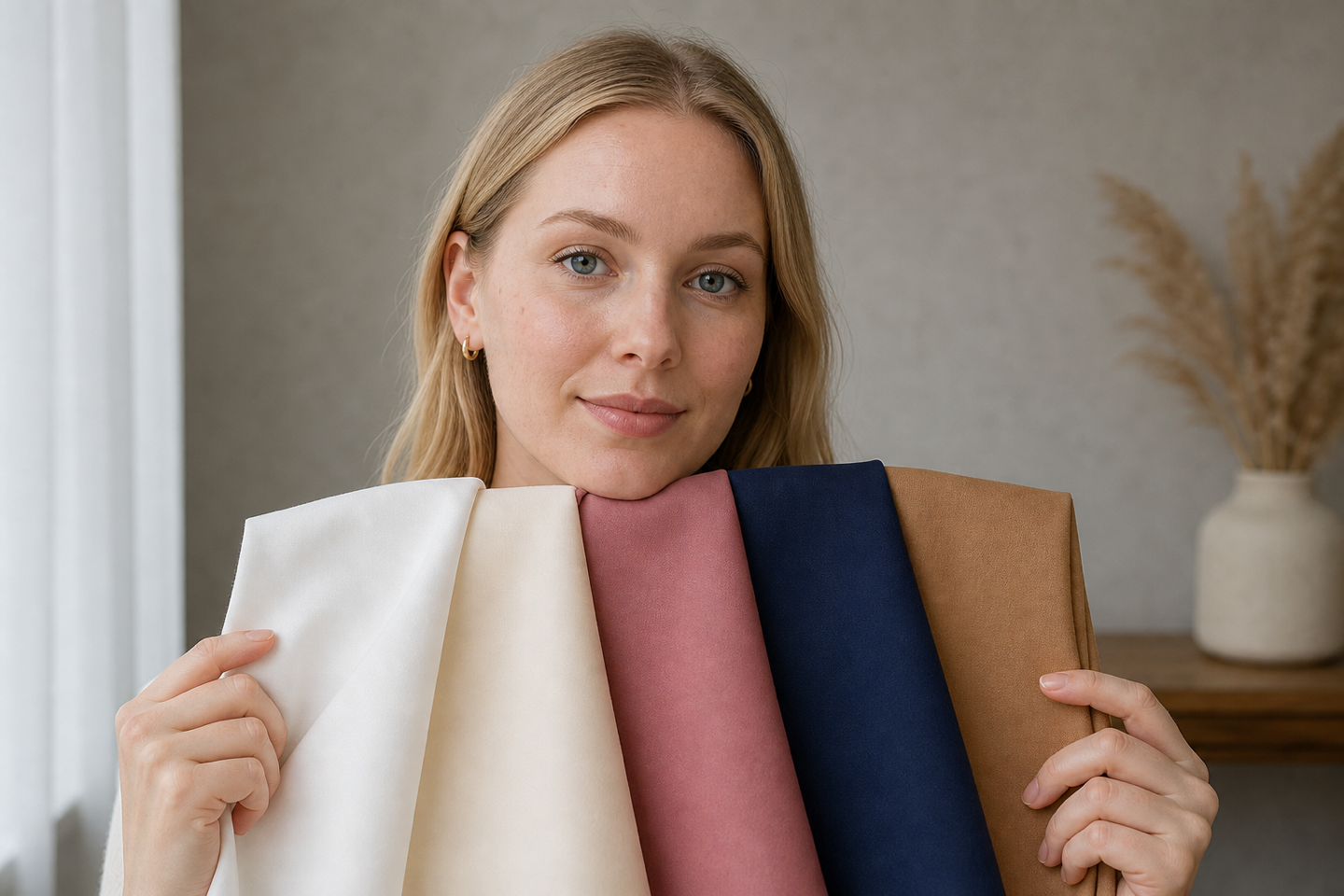
Keep each comparison controlled. Change one property at a time and observe the face rather than choosing the prettiest fabric. For a practical list of clothing options after you know your direction, continue to the complete pale-skin color guide or the more focused best colors for pale skin.
When Paleness Is a Change, Not a Skin-Tone Label
If pale describes your normal complexion, it can be a perfectly ordinary personal label. If it describes a noticeable change from your normal color, a beauty article should stop short of explaining the cause. Pallor is a clinical observation with many possible contexts, and appearance varies across skin depths and viewing conditions.
Do not use a foundation shade, phone photo, vein test, or color-analysis result to decide whether a health change matters. If unusual paleness is sudden, persistent, worrying, or accompanied by feeling unwell, seek appropriate medical advice. That boundary protects both decisions: healthcare can address a change, while color analysis can stay focused on your stable complexion and personal palette.
Researchers also continue to debate how skin color should be measured. A 2024 review of clinical skin-color assessment found important deficiencies across existing classification tools. The FDA skin-tone measurement material likewise treats classification as a measurement problem, not a handful of interchangeable adjectives. For everyday style decisions, consistent light and clear context are more useful than false precision.
People Also Ask
Is fair skin the same as pale skin?
Sometimes. Both can describe a naturally light complexion. Fair usually functions as a stable depth category, while pale can also describe looking lighter or less colorful than your usual baseline. The intended meaning depends on context.
Can fair skin have a warm undertone?
Yes. Fair describes depth and does not determine your undertone. Fair skin can be warm, cool, neutral, or olive, so compare fabrics or foundation undertones rather than assuming temperature from depth.
Is pale skin always cool-toned?
No. Naturally pale skin may have golden, peach, neutral, cool, or olive nuances. Surface redness and visible veins can also make a light complexion appear cooler than its actual color direction.
What is the difference between fair, light, and porcelain skin?
Fair and light are broad depth labels, while porcelain is usually a descriptive or brand-specific shade name near the lightest end of a range. Their order and undertone vary, so use the chart for the specific foundation or system.
Can tanning change fair skin into light or medium skin?
Sun exposure can change visible surface depth, but your natural baseline and sun response are separate questions. For foundation, match the current face-to-neck transition. For color analysis, test fabrics under consistent conditions instead of using a seasonal tan as the only clue.
Why does my skin look pale in photos?
Exposure, white balance, filters, flash, and reflected wall color can all change how much warmth and depth a camera records. Compare the photo with a mirror in indirect daylight before treating the image as accurate.
Should I choose a foundation labeled fair or light?
Use the label only to narrow the range. Compare neighboring depths at the jaw and neck, then check undertone and wear-time change. A fair shade in one brand may overlap with a light shade in another.