Pale Skin Warm vs Cool Undertone
 Reviewed by Alexandra Gilmore
A pink surface flush does not automatically make pale skin cool, because undertone remains separate from redness. Compare stable warm and cool cues in daylight, then use the result to choose clothing, lipstick, and foundation shades that even the complexion instead of exaggerating ruddiness or sallowness.

Pale pink skin is one of the most visually distinctive complexions to dress — and one of the easiest to get wrong. Reach for the wrong shade and your skin can look washed out, ruddy, or flat. Choose the right one and your complexion appears luminous, even, and effortlessly polished.
💫 Discover Your Complete Color Palette
One feature rarely explains every color that works for you. Compare your undertone, depth, clarity, and contrast as a complete palette, then use the results to test clothing, makeup, and hair colors more consistently.
Find My Color Palette →The single most important variable is not your surface tone. It's your undertone — the subtle hue sitting beneath the skin's surface that remains constant regardless of a tan, a flush, or the season. That underlying hue is what determines whether a color harmonizes with your face or competes with it, whether you're picking a blazer, a lipstick, or a foundation.
Here's the complication: pale pink skin doesn't automatically mean cool undertones. Pink surface tones can sit on top of both warm and cool bases, and confusing the two is one of the most common styling mistakes for fair complexions.
This guide cuts through that confusion. By the end, you'll know:
- How to identify whether your pale pink skin leans warm or cool
- The specific colors — for clothing, makeup, and accessories — that flatter each undertone
- Which shades to avoid so you stop second-guessing the mirror
- How a personal color analysis can take the remaining guesswork out of the equation
Whether you're building a wardrobe from scratch, refining your makeup palette, or simply tired of buying colors that looked great in the store but feel off once you're home, undertone-first dressing is the framework that makes the difference.
Why Pale Pink Skin Needs an Undertone-First Approach
Two people can stand side by side with identical levels of paleness — the same translucent, porcelain surface — and need completely opposite color palettes. One will glow in icy jewel tones; the other will look sallow in them. The difference has nothing to do with how pale they are. It comes down entirely to undertone.
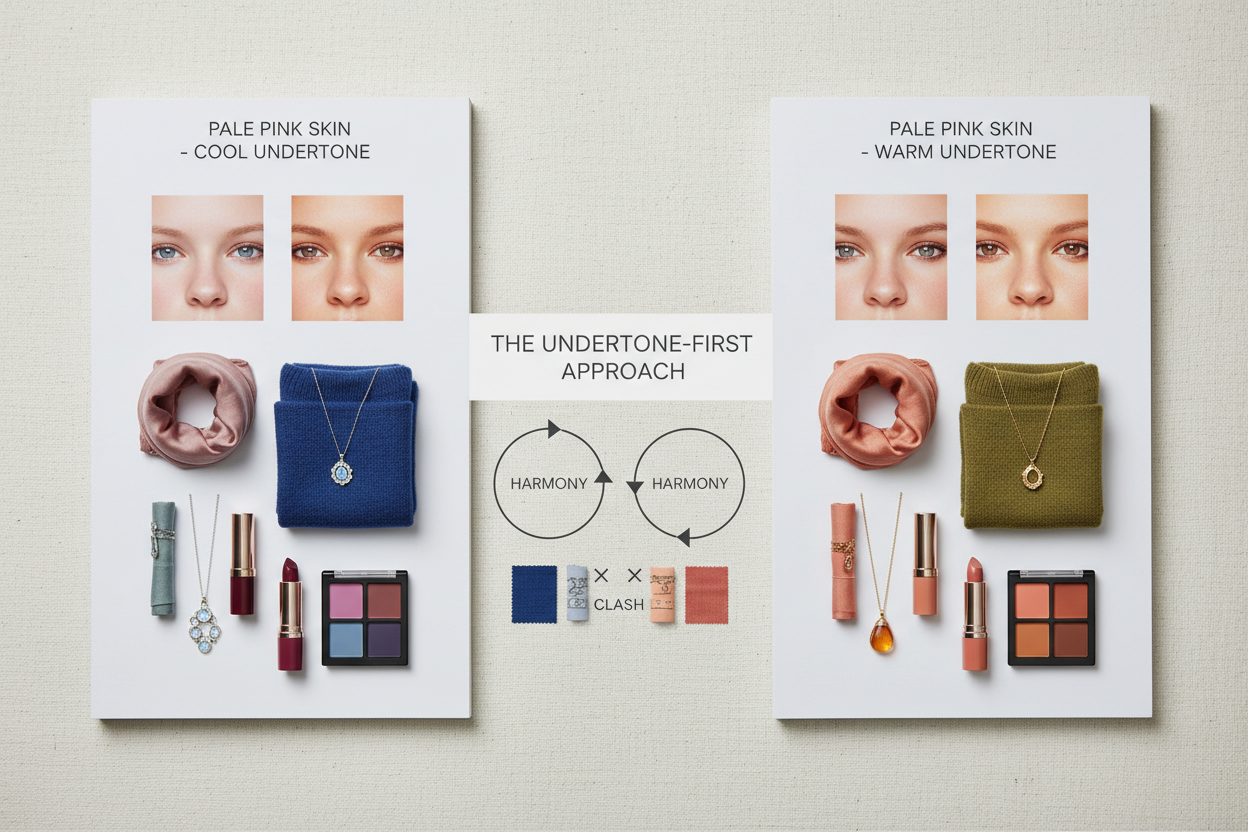
Your undertone is the subtle hue beneath the skin's surface that doesn't change with seasons, self-tanner, or a winter flush. That deeper layer is what interacts with the colors you wear. When the color harmonizes with your undertone, your complexion looks balanced and luminous. When it clashes, it amplifies redness, dullness, or uneven patches.
For pale pink skin specifically, the surface color sets a trap. That visible pink flush makes a complexion read as automatically "cool," so most people reach for cool-toned clothing and makeup by default. But the pink at the surface can sit on top of a warm base. If you dress by surface color instead of undertone, you end up spending money on shades that work against you.
The fix is simple: identify your undertone first, then build every color decision — clothing, makeup, accessories — around that one factor. Everything else follows. [Take the color analysis quiz →]
How to Tell Whether Your Pale Skin Has a Warm or Cool Undertone
Figuring out your undertone comes first, before any palette advice means anything. Three at-home tests tend to work well for pale complexions, where surface pink can muddy the signal.
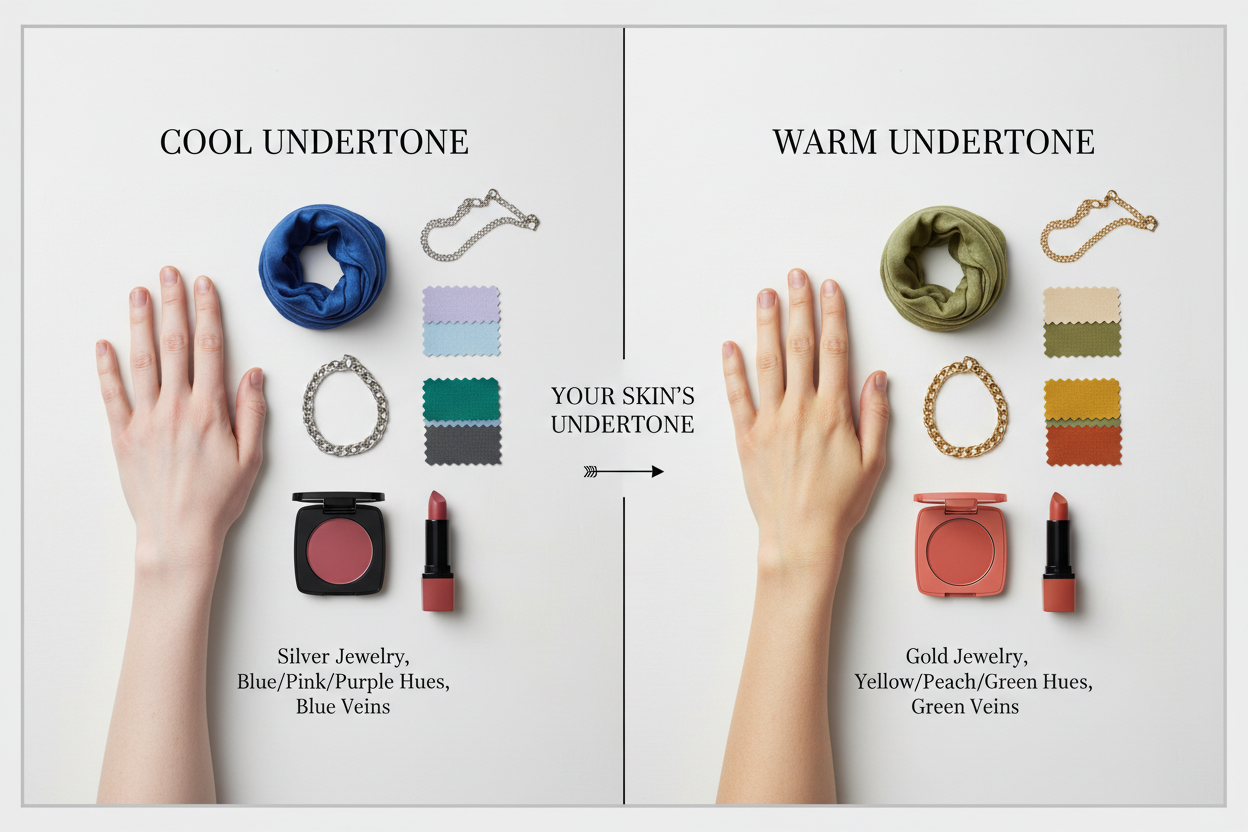
The vein test Look at the inside of your wrist in natural daylight. Blue or purple veins point to a cool undertone. Green or olive veins point to a warm one. If you can't tell whether they're blue-green, your undertone is probably neutral.
The white-vs-cream fabric test Hold a piece of bright white fabric next to your bare face, then swap it for cream or off-white. Whichever makes your skin look even and healthy is the one that matches your undertone. Pure white tends to work better for cool undertones; cream and ivory for warm. On pale pink skin the contrast between the two fabrics is pretty stark, which makes this test especially useful.
The jewelry test Hold silver and gold jewelry against your skin with no makeup on. If silver makes you look fresh and clear, you're likely cool-toned. If gold gives your skin some warmth, you're likely warm-toned. If both look fine, neutral is a reasonable conclusion.
A note on pale pink skin: the flush at the surface can make veins harder to read, especially under artificial light. Use a north-facing window or bright indirect daylight if you can. If two out of three tests agree, go with that.
Best Colors for Pale Skin with a Cool Undertone
If your undertone is cool, the colors that work best share a common thread: blue, pink, or silver bases instead of yellow or orange ones. The right shades make skin look porcelain-clear and eyes brighter. The wrong ones introduce a sallow or washed-out quality almost instantly.
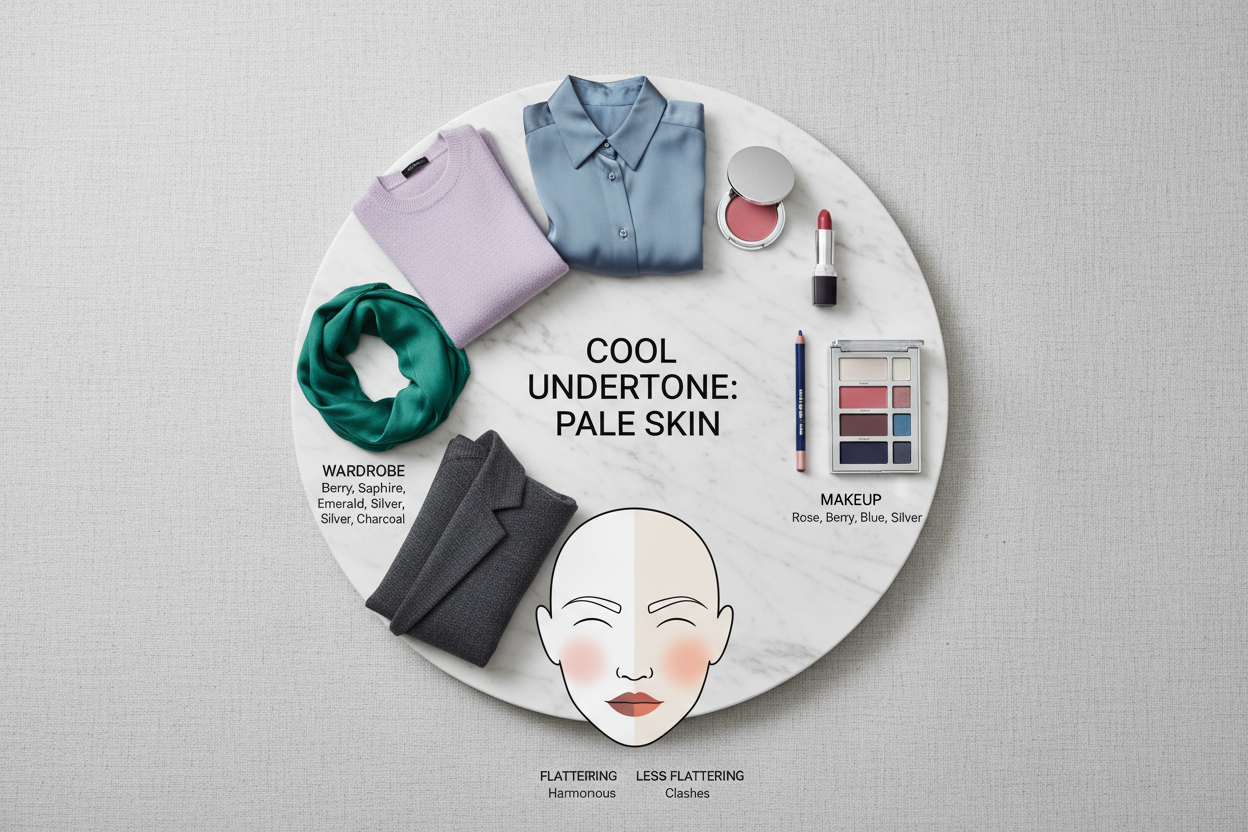
Clothing colors to reach for:
- Jewel tones — sapphire blue, emerald, amethyst, and deep ruby create rich contrast against pale skin without competing with its natural coolness
- Icy pastels — powder blue, soft lilac, mint, and blush pink work because they share the cool base of your undertone
- True white — sharp, bright white complements cool undertones and makes pale complexions look fresh rather than flat
- Blue-based neutrals — charcoal gray, cool taupe, and navy are solid wardrobe anchors that don't pull warmth from your face
- Deep jewel-based darks — midnight blue and cool-toned burgundy add depth without introducing yellow or orange
Colors to avoid with a cool undertone: Warm yellows, oranges, terracotta, camel, and earthy browns tend to clash with cool pale skin — they can make the complexion look tired or greenish rather than luminous.
Cool-Undertone Makeup Shades: Foundation, Blush, and Lip
Makeup sits closest to your face all day, so getting the shades right here makes the most immediate difference.
- Foundation: Look for formulas with a pink or neutral-pink base. Avoid anything labeled "warm," "golden," or "beige-yellow" at the lightest end of the shade range. A pink-neutral undertone prevents the ashiness that comes from purely gray-based formulas and the orange cast that comes from warm ones.
- Blush: Soft rose, cool pink, and berry-tinted blushes work well on cool pale skin — they echo a natural flush without amplifying redness. Peach or bronzy blushes introduce warmth that can make cool pale skin look ruddy.
- Lip color: Berry, mauve, soft raspberry, and blue-red lipsticks complement cool undertones directly. Rosy nudes with a pink base work for everyday wear. Warm brick reds, terracotta, and orange-based corals tend to fight the cool undertone rather than work with it.
- Eyeshadow: Silver, cool taupe, plum, and smoky gray enhance the cool dimension of the complexion and make eyes look more defined.
- Highlighter: Pearl and cool-silver highlighters sit well on cool pale skin, adding luminosity without the golden warmth that throws off the tone.
Best Colors for Pale Skin with a Warm Undertone
Warm-undertone pale skin has yellow, peach, or golden undertones beneath the surface — even when the visible flush looks pink. The colors that work best share a warm base: yellow, orange, or red-adjacent hues that echo what's already in the skin rather than fighting it.

Clothing colors to reach for:
- Peach and coral — these mid-tones bridge the warmth in the undertone and create a naturally healthy, sun-kissed look without any tan
- Golden yellow and warm amber — not always the first choice for pale skin, but colors in this family harmonize with a yellow or golden undertone and make the complexion look radiant
- Warm camel and tan — earthy neutrals with a warm base work as reliable everyday neutrals against warm pale skin
- Off-white and ivory — softer than bright white, these shades work with the warmth in the undertone rather than washing it out
- Warm terracotta and rust — deeper warm tones add contrast and depth without the coolness that clashes with a warm base
- Warm olive green — a surprisingly good choice for warm undertones, especially in muted or deeper versions
Colors to avoid with a warm undertone: Bright white, icy blue, cool lavender, and ash gray tend to wash out warm-undertone pale skin or introduce a grayish cast. These colors have cool bases that work against the warmth in the skin.
Not sure yet whether you lean warm or cool? A structured color analysis removes the guesswork entirely. [Start your color analysis →]
Warm-Undertone Makeup Shades: Foundation, Blush, and Lip
- Foundation: Look for shades described as "warm," "golden," or "peachy" in the lightest tiers. A yellow or neutral-warm base prevents the flat, ashy look that pink-based foundations can create on warm undertones. You want a shade that disappears into the skin, not one that sits on top of it.
- Blush: Peach, apricot, warm coral, and soft terracotta blushes bring warm-undertone pale skin to life. They echo the natural warmth in the complexion and create a convincing, healthy flush. Cool-pink or berry blushes can make warm pale skin look unwell.
- Lip color: Warm nude, coral, peachy pink, and warm brick red lipsticks work with the undertone's yellow-orange base. These shades look natural rather than applied. Stark blue-reds, cool mauve, and berry tones clash with warm bases and can look jarring against pale skin.
- Eyeshadow: Warm bronze, copper, champagne, and soft terracotta shades complement the golden quality of a warm undertone. Peachy nudes make a strong everyday neutral for warm pale complexions.
- Highlighter: Gold and champagne highlighters bring out the natural warmth in the complexion and create a sun-touched glow that looks entirely believable on warm pale skin.
Applying Your Palette: Clothing, Makeup, and Accessories
Knowing your palette only matters if it changes what you actually buy and wear. Here's how undertone-based color selection plays out across the places where color decisions happen.
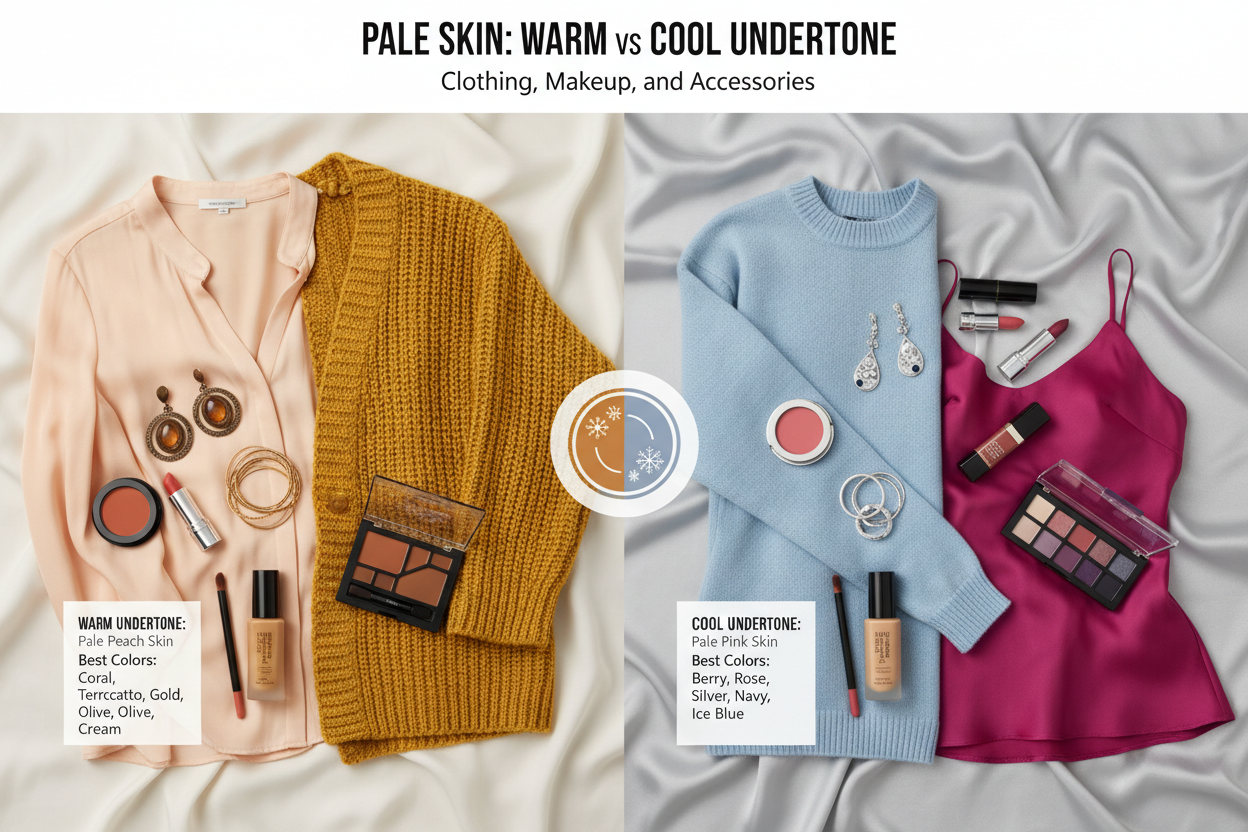
Near-face colors carry the most weight. A scarf, collar, or jacket lapel sitting close to your jaw affects how your complexion reads far more than the color of your trousers. When budget or closet space is tight, get near-face colors right first. A neutral outfit turns flattering or unflattering mostly based on what's happening at the neckline.
Full-body garments are lower stakes. A dress or coat worn away from the face can stray from your ideal palette without much consequence. This is where you have room to try trend colors that don't perfectly match your undertone.
Build a core neutral base first. For cool undertones: charcoal, cool gray, navy, and true white. For warm undertones: camel, ivory, warm tan, and off-white. These neutrals work with almost anything else in your palette and give you the most useful foundation for the least money spent.
Use makeup as your most precise tool. Unlike clothing, makeup sits directly on skin, so the interaction between shade and undertone is immediate. Getting foundation, blush, and lip color right produces faster, more visible results than any other change you can make. This is also where a lot of people have been quietly working against themselves for years without knowing it.
Accessories follow the same rules. Cool undertones suit silver-toned metals, platinum, and white gold. Warm undertones suit yellow gold, rose gold, and bronze. Applied to bags, belts, and jewelry, these choices pull the whole look together.
Colors That Work for Both Warm and Cool Pale Pink Skin
Not every color is an either/or. Several shades work on both warm and cool pale complexions, which makes them useful if you test as neutral, can't get a clear result from the at-home diagnostics, or just want options that won't backfire.
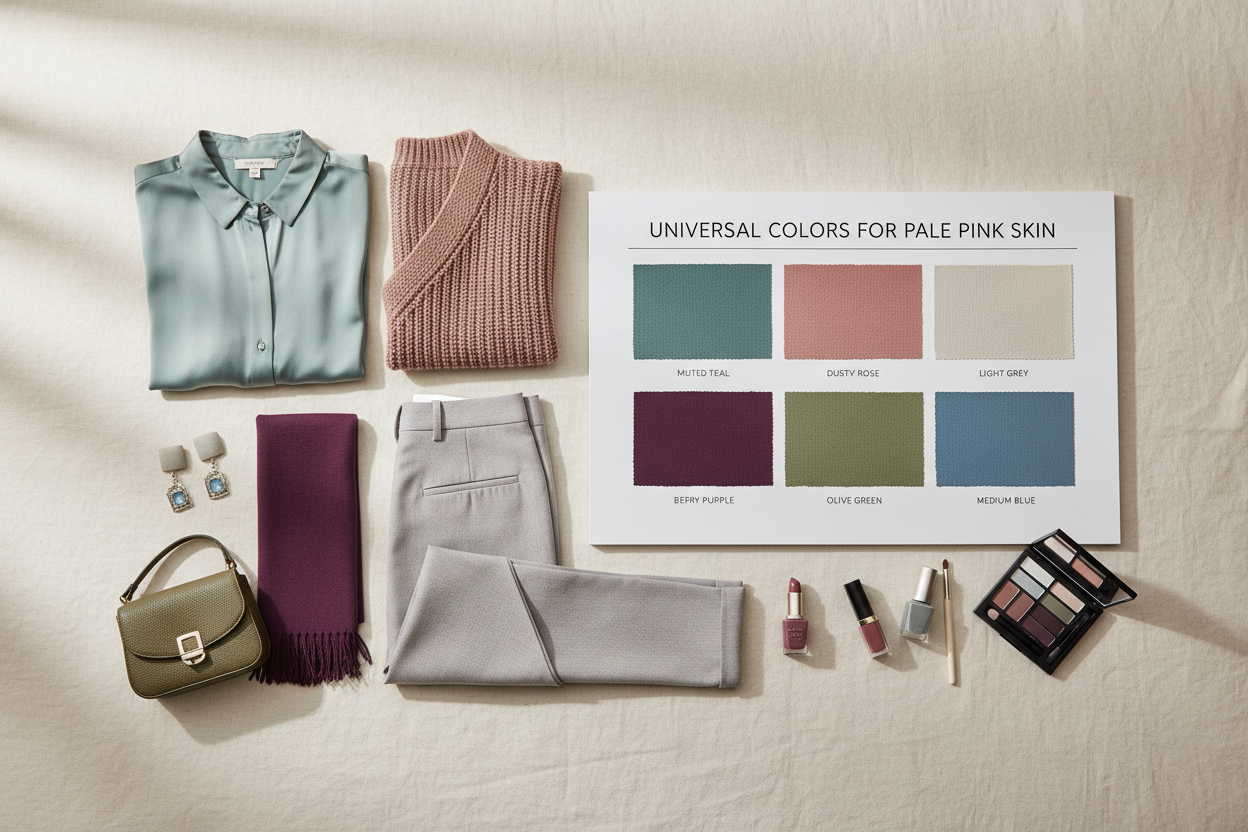
- Soft lavender — muted enough to avoid the starkness of cool purple, but without the warmth of lilac. It works with the natural pink in pale skin rather than amplifying it.
- Dusty rose — the gray tone takes the edge off its warmth, so it doesn't overwhelm cool undertones, while still carrying enough warmth for warm complexions.
- Muted teal — the blue-green split bridges both sides of the undertone spectrum. Go for deeper, less saturated versions; bright teal tends to read too stark.
- Soft navy — less intensely blue than bright navy, a soft or slightly faded navy gives pale skin some contrast without the cool sharpness that can clash with warm undertones.
- Soft medium gray — not icy (too cool) and not greige (too warm). A true mid-tone gray sits close enough to neutral that it works on most pale complexions.
These are useful fallbacks, not a replacement for figuring out your undertone. They tend to produce a pleasant result — fine for everyday wear — but not the full effect you get from a palette that actually matches your coloring.
How a Personal Color Analysis Can Confirm Your Palette
At-home tests are a reasonable starting point, but they have real limits. The vein test depends on lighting. The fabric test requires owning both options. And for pale pink skin, the visible flush can introduce enough visual noise to make self-diagnosis genuinely difficult.
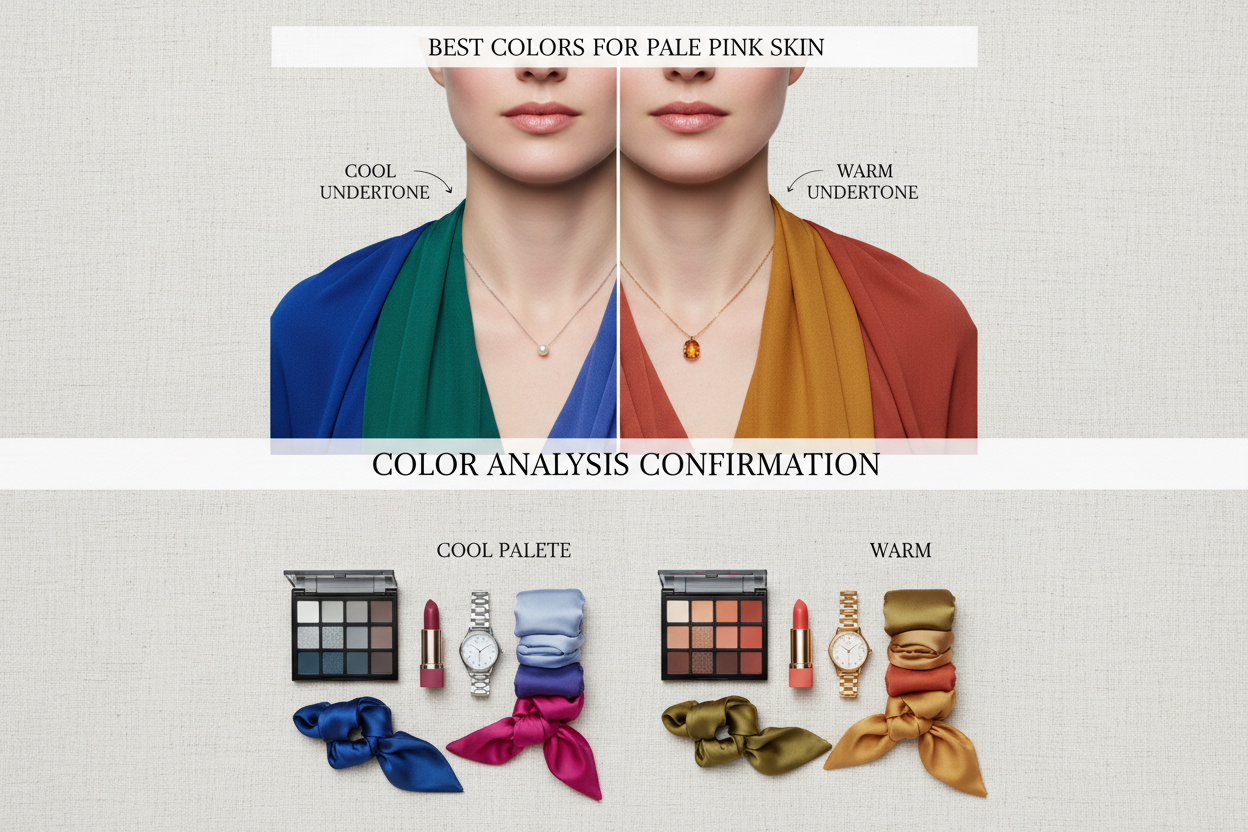
Professional color analysis — a practice that took shape in the 1980s and early 1990s as a recognized framework for personal styling — was built to resolve that ambiguity. The core idea still holds: knowing which colors work with your skin tone means every clothing and makeup purchase is more likely to actually work, and fewer things end up looking wrong once you get them home.
What's changed is access. A structured color analysis considers not just surface tone and undertone, but how your specific combination of skin, hair, and eye color interacts — because all three influence which shades within your undertone family will actually be flattering. That used to require a dedicated professional appointment. Now the same systematic approach is available through digital tools.
For pale pink skin especially, where the gap between luminous and washed out is narrow and the undertone signal tends to be subtle, a confirmed palette is genuinely useful. It removes the per-purchase hesitation, makes a wardrobe function as a coherent system rather than a pile of individual gambles, and takes most of the guesswork out of makeup selection.
People Also Ask
What colors should pale skin avoid?
Pale skin — whatever the undertone — tends to struggle with colors that offer too little contrast or pull the complexion in the wrong direction. Which shades cause problems depends on your undertone:
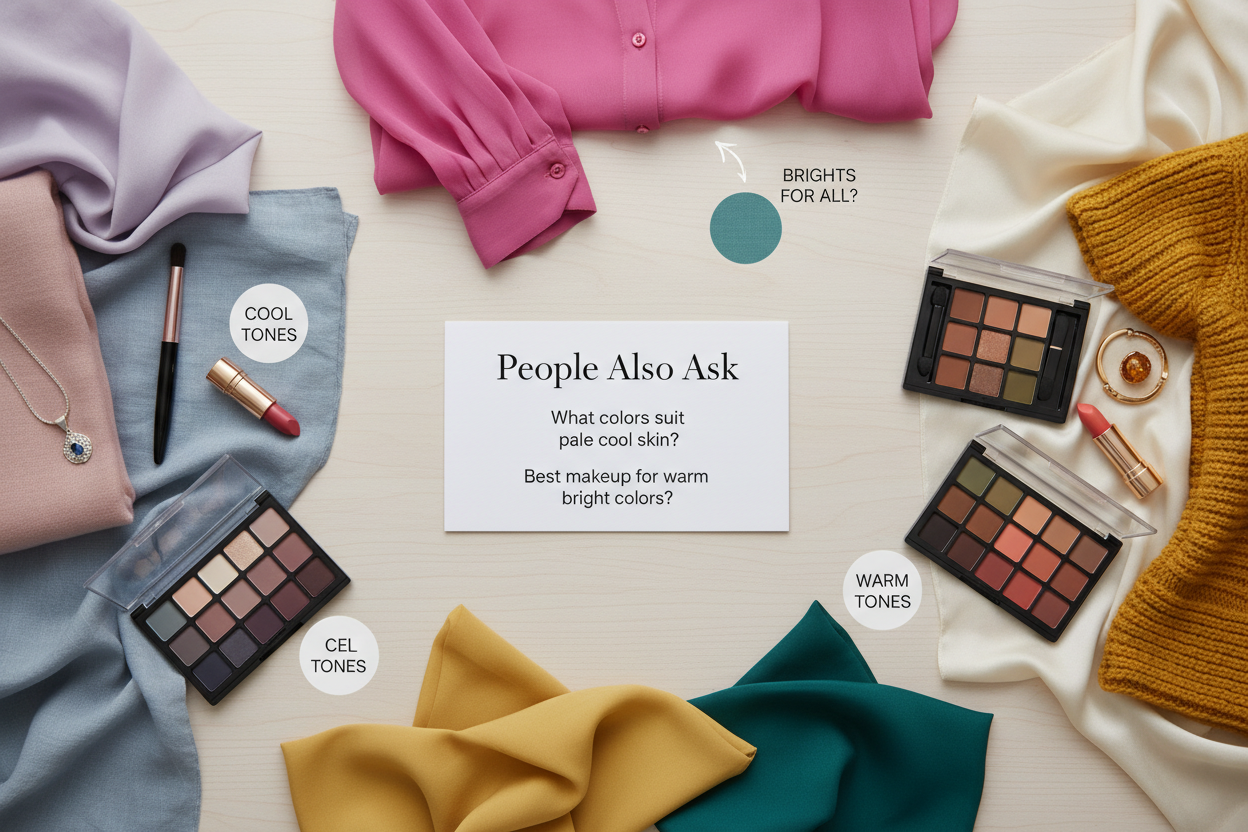
- Cool undertones: Warm yellows, oranges, terracotta, camel, and heavily golden-brown shades. They introduce warmth that fights a cool base and can make pale skin look sallow or unwell.
- Warm undertones: Stark white, icy blue, cool lavender, and ash gray. These cool-dominant colors wash out warm-undertone pale skin and tend to leave it looking flat or grayish.
A few shades cause trouble regardless of undertone: neons and highly saturated fluorescents overwhelm rather than complement a pale complexion, and heavily muted army greens tend to drain color from the face. The underlying principle is that your undertone — the subtle hue beneath your skin's surface — determines which colors work with your complexion and which create visual friction.
How do I know if my pale skin has a warm or cool undertone?
Three at-home tests work well for pale complexions:
- The vein test: Check the inside of your wrist in natural daylight. Blue or purple veins suggest a cool undertone; green or olive veins suggest a warm one.
- The white-vs-cream test: Hold bright white fabric and then cream or ivory fabric against your bare face. The one that makes your face look balanced and healthy matches your undertone — white tends to suit cool, cream tends to suit warm.
- The jewelry test: Hold silver and gold jewelry against your skin without makeup. If silver looks better, you're likely cool-toned; if gold looks better, you're likely warm.
For pale pink skin, do these tests in indirect natural light rather than artificial light. The pink flush at the surface can throw off the results under yellow indoor lighting. If two out of three tests agree, that's probably your undertone. If all three feel inconclusive, you may be neutral.
What is the difference between pale skin and fair skin undertones?
"Fair" and "pale" get used interchangeably, but they mean slightly different things. Fair refers to depth — it's a position on the skin tone spectrum, indicating low melanin. Pale describes skin that looks light, sometimes with a translucency or low color saturation to it.
Both can carry any undertone — warm, cool, or neutral. Undertone is completely independent of how light or deep a complexion is. One person with fair skin might have a distinctly warm golden undertone; another with the same depth carries a cool pink or blue undertone.
Where pale skin gets interesting is visibility. With less melanin, undertone hues — pink, peach, yellow — often show more directly at the surface. That can make identification easier, but it also creates a trap: a pink flush on the surface doesn't automatically mean a cool undertone, because that flush can sit on top of a warm base.
Does pale pink skin look better in pastels or jewel tones?
Both can work, but undertone matters more than skin depth here.
- Cool undertones tend to suit icy pastels (powder blue, soft lilac, blush pink) and deep jewel tones (sapphire, amethyst, emerald, ruby) equally well. The shared cool base in both families works with the undertone. Icy pastels read soft and harmonious; jewel tones create strong, flattering contrast.
- Warm undertones do better with warm-based pastels — soft peach, warm blush, creamy yellow — than icy ones. Jewel tones with a warm lean, like amber, warm emerald, or golden olive, also work. Cool jewel tones like icy violet or pure sapphire tend to wash out warm-undertone pale skin.
Deeply saturated jewel tones generally create more visual impact against pale skin than very light pastels, which can blend in rather than pop. Start with the right undertone family, then adjust saturation for the occasion.
What makeup colors flatter pale skin with pink undertones?
Pale skin with visible pink at the surface usually falls into cool undertone territory — the pink suggests a blue-pink base rather than yellow or peach. A few shades that tend to work:
- Foundation: Pink-neutral or neutral-cool formulas in the lightest shade ranges. Warm-yellow and golden bases often sit on top of cool pale skin rather than blending in.
- Blush: Soft rose, cool pink, and muted berry. Peach and coral can read warm against a pink-toned base, especially if applied heavily.
- Lip: Berry, mauve, soft raspberry, rosy nudes, and blue-reds. These look intentional rather than jarring.
- Eyeshadow: Cool taupe, silver, plum, and soft gray stay harmonious with the complexion without fighting it.
- Highlighter: Pearl and cool-silver formulas add luminosity without the golden warmth that would contrast with a pink base.
One caveat worth keeping in mind: surface pink doesn't automatically confirm a cool undertone. If the vein or jewelry test points warm, the suggestions above may not apply. Undertone — not surface color — should drive your shade choices.
FAQ
What is the best color to wear if you have pale pink skin?
It depends more on your undertone than on how pale you are. Once you know whether your skin runs cool or warm, the rest gets easier:
- Cool undertone: Jewel tones like sapphire, amethyst, and emerald tend to look good, as do soft icy pastels and classic navy or white. They share a cool base that sits well against your complexion.
- Warm undertone: Earthy neutrals, peach, coral, golden yellow, and cream generally work better. Stark white and icy blues can drain the warmth out of your skin, so those are worth avoiding.
When in doubt, undertone is the more reliable guide than surface color — whether you're picking clothes, accessories, or makeup.
Can pale skin have a warm undertone even if it looks pink?
Yes. Surface color and undertone are different things. A pink flush is a surface characteristic, not an undertone signal.
The vein test is the most reliable check: blue-purple veins suggest cool, green suggests warm. You can also hold white versus cream fabric against your bare face in natural daylight. If cream flatters you and white washes you out, your undertone is probably warm — regardless of any visible pink. Letting surface flush override undertone testing is one of the most common color-analysis mistakes for pale complexions.
What colors make pale skin look washed out?
It depends on your undertone:
- Cool undertone pale skin: Warm yellows, oranges, and heavy camel tones can make the complexion look sallow.
- Warm undertone pale skin: Stark icy whites, cool grays, and ash neutrals drain warmth from the face and leave it looking flat.
- Both undertones: Wearing a color too close to your skin tone makes pale skin recede. Very muted, dusty, or grayed-out shades also tend to kill natural luminosity.
The pattern holds either way: a color that fights your undertone, or offers too little contrast, risks making you look washed out instead of bright.
Is ivory or pure white better for pale skin?
It depends on undertone. Neither is universally better:
- Cool undertone: Pure white tends to work well, creating clean contrast. Ivory's yellow-adjacent warmth can clash with a cool base.
- Warm undertone: Ivory, cream, and off-white are usually more flattering. Pure white can look harsh or cold against warm-undertone pale skin.
The easiest test: hold both fabrics against your bare face in natural light, no makeup. Whichever makes your complexion look even and healthy is the right match.
How does undertone affect foundation shade selection for pale skin?
Undertone often matters more than depth when picking a foundation for pale skin. Two shades that look nearly identical in the bottle can wear completely differently depending on the undertone.
- Cool undertone: Look for foundations labeled pink-neutral, neutral-cool, or explicitly cool. Warm-yellow and golden-beige formulas tend to sit visibly on pale skin instead of blending in.
- Warm undertone: Peach, warm-neutral, and golden-beige formulas in the lightest shade ranges usually work best. Cool or pink-toned foundations can leave an ashy or grayish cast.
Pale skin has less melanin to diffuse the foundation's color, so an undertone mismatch shows up more obviously than it would on deeper complexions. Test along the jawline in natural daylight — not on your wrist, not indoors — for the most accurate read.
What hair color complements pale pink skin with a cool undertone?
Cool-undertone pale skin tends to work best with hair colors that share or enhance that coolness rather than fight it.
Ash blonde, platinum, cool light brown, and blue-black all harmonize with a cool base without introducing warmth that clashes. If you want something with more drama, cool-toned reds can be striking — true auburn or a blue-red, not copper or golden red.
The colors to be careful with are warm golden blonde, brassy brown, copper, and heavily highlighted warm-honey tones. These can conflict with a cool undertone and make the skin look a bit sallow around the face.
The same logic that applies to clothing and makeup applies here: staying within cool or neutral-cool territory tends to keep everything cohesive.
Are earth tones flattering on pale skin with a warm undertone?
Yes. Earth tones are one of the more reliably flattering color families for warm-undertone pale skin. Because they share the same warm base as the complexion, they create harmony instead of visual conflict.
Some options that tend to work well:
- Terracotta and warm rust for a grounded, earthy contrast
- Camel and warm tan as neutrals that enhance rather than wash out
- Warm olive and golden khaki for muted but flattering depth
- Peach and warm sand for a softer, tonal look
The main thing to watch out for is earth tones that lean cool rather than warm. Khakis with gray undertones, muted army greens, or cool-cast beiges tend to lose the flattering quality that makes warm earth tones work for this complexion.
Not sure whether your pale skin leans warm or cool? A personal color analysis can help — take the quiz at color-analysis.app to get started.