Gold vs Silver Jewelry Test: How to Determine Your Undertone
 Reviewed by Alexandra Gilmore
Compare matched gold and silver near your face in daylight, then judge clarity and evenness before reading the result.

The gold or silver jewelry test is a daylight comparison that helps you see whether warm, cool, or neutral-looking metals make your complexion appear clearer. Hold similarly sized yellow gold and silver pieces beside your bare face, one at a time. If gold makes the skin look even and luminous while silver adds a gray cast, a warm direction may be worth exploring. If silver looks fresh and gold seems yellow or overly flushed, explore a cool direction. If both look balanced, a neutral result is possible. The test is a styling clue, not a measurement of your skin or a rule about what you may wear.
The common silver or gold skin tone test is easy to distort: a large bright necklace will command more attention than a small matte earring. This guide keeps light, placement, scale, and finish as similar as possible, then shows how to judge your face rather than the attractiveness of the jewelry. Use the result to choose a next comparison, not to replace personal taste.
How the Metallic Undertone Test Works
Yellow gold reflects a visibly warm, yellow-toned light; silver and platinum appear much cooler and whiter. Put either close to a face and its reflected light changes the color context in which you see skin. Your skin also absorbs and scatters light. Melanin and other components influence its visible appearance, as this review of skin optics explains. The jewelry test takes advantage of that visual interaction; it does not measure melanin, keratin, or a medically defined “undertone.”
In personal color analysis, undertone is shorthand for a relatively stable warm, cool, or balanced color direction. Surface skin color may look lighter, deeper, redder, or more golden after sun exposure or under different lighting. That is why a gold vs silver test asks how each metal affects the same face under the same light. Skin depth does not predetermine the winner: warm, cool, and neutral effects occur across light, medium, and deep complexions.
Reflectance matters beyond color temperature. A high-shine silver chain throws sharp highlights; a brushed gold bangle produces a softer glow. Compare like with like before interpreting the effect as an undertone clue. The face is the strongest place to judge earrings and necklaces because the under-eye area, jawline, and cheeks are visible together. A wrist comparison can help you see the metal's color, but it rarely shows what happens to the whole face.
Step-by-Step Testing Protocol
Set aside about five minutes. You need a yellow-gold piece and a silver-colored piece of similar size and shine, a plain white or off-white shirt or cloth, a mirror, and indirect daylight. A pair of matching earrings is ideal; two chains or clean pieces of metallic fabric also work. Real precious metal is not required for the visual comparison, provided the surfaces genuinely look gold and silver. Check that neither item is tarnished.
1. Make the light and background consistent
Stand or sit facing a window during the day, away from a patch of direct sun. Turn off warm lamps and colored screen light. Put a neutral white cloth across your shoulders or behind your face so a bright top cannot tint the result. Remove strongly colored lipstick, blush, or bronzer if convenient. Do not strain to make your skin “perfect”; ordinary texture is part of the face you are styling. Keep your head, mirror, and distance from the window still for each swap.
2. Swap equal pieces near your jawline
Hold gold just below one side of your face for several seconds. Look at the cheeks, eye area, and jaw, then replace it with silver in the same place. Repeat on the other side to cancel a shadow from the window. If testing bracelets, first compare them on the same wrist, then move a chain or swatch beside the jaw to see whether the wrist result translates to facial styling. Avoid comparing a wide gold cuff with a thin silver chain.
3. Record the effect, then repeat
Write two or three observations before you decide which piece you like more: “skin looks even,” “under-eye shadow appears deeper,” or “metal dominates.” If you take photos, lock exposure and white balance if your phone allows it, and keep beauty filters off. Photos are a memory aid; inspect the mirror too, because automatic camera processing can change the contrast. Repeat the swap on another day or in another room with comparable daylight. A result that vanishes when you change position is weak evidence.
Ask a friend to change the pieces without naming them if you find yourself choosing the metal you already own. Familiarity is a real preference, but it does not answer how reflected color frames your face. When both versions seem close, try the brighter and softer finishes in each color before calling the test neutral.
How to Evaluate Your Reflection
Look for a pattern across the entire face. A harmonious metal often makes skin appear more even and the eyes and facial contours easier to see. A less harmonious comparison may emphasize grayness, a yellow cast, redness, or under-eye shadows. These are perceived styling effects, not changes to your health or skin. If neither metal produces a meaningful difference, write “unclear” rather than inventing one.
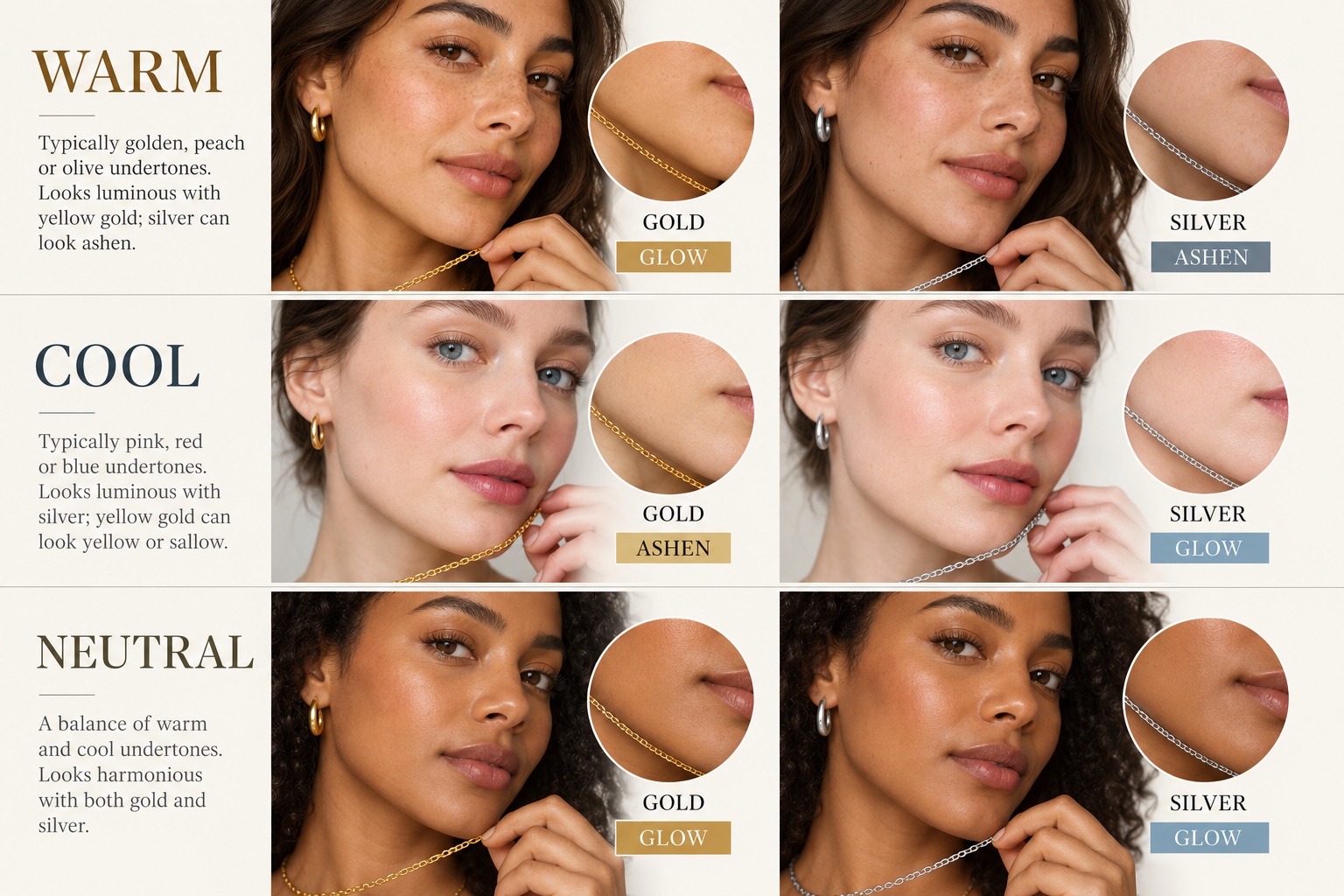
| What you see under the same daylight | Useful reading | Next check |
|---|---|---|
| Gold appears integrated; silver leaves skin looking gray or flat | A warm direction is plausible | Compare warm ivory with cool white fabric |
| Silver looks crisp; yellow gold adds yellow or flushed-looking color | A cool direction is plausible | Compare blue-red with orange-red fabric |
| Both metals keep skin clear at equal scale and finish | Neutral or balanced may fit | Try rose gold and mixed metals; compare fabrics |
| Neither result repeats, or shine dominates the face | The metal test is inconclusive | Use matte pieces and a fabric drape |
Glow, clarity, and evenness
“Glow” is useful only when you can say what changed. Does the cheek look smoother in color? Do the eyes read clearly without the metal stealing the scene? Does the jaw transition look natural against the neutral background? Observe these cues across both sides of the face. One tiny highlight from a polished chain is not enough to assign a warm or cool undertone.
Gray, yellow, and shadows
An ashen impression often means the surrounding metal looks stark relative to the complexion; an added yellow cast may mean the yellow gold is too intense. Under-eye circles can appear deeper because the metal changes local contrast. These impressions also depend on lighting, fatigue, finish, and adjacent clothing. Do not interpret them as a health finding. If you already notice persistent discoloration, the jewelry test cannot explain its cause.
For medium and deep skin, compare the effect on cheeks and eyes rather than looking only for “pink” or “yellow” in the wrist. Olive-looking skin can make both standard metals feel a little extreme; antique gold, pewter, or a softer finish may be more useful. The undertone test for dark skin and warm-versus-cool olive guide offer more targeted comparisons.
What If Both Look Great?
Yes, neutral skin can wear gold and silver, and many people with a clear warm or cool preference enjoy both too. If both matched pieces leave your face balanced in repeat trials, treat the result as flexibility. It does not prove that your skin is precisely halfway between warm and cool. The size of the jewelry, its shine, nearby clothes, hair color, and the effect you want may be carrying more weight than temperature.
Try a mixed-metal outfit rather than forcing a verdict. Pair a silver necklace with a yellow-gold ring, then reverse which color sits nearest your face. If both still look integrated, you can build a wardrobe around shared shapes or finishes instead of one prescribed metal. Light rose gold is another bridge: it can combine gentle warmth with a less saturated impression than bright yellow gold.
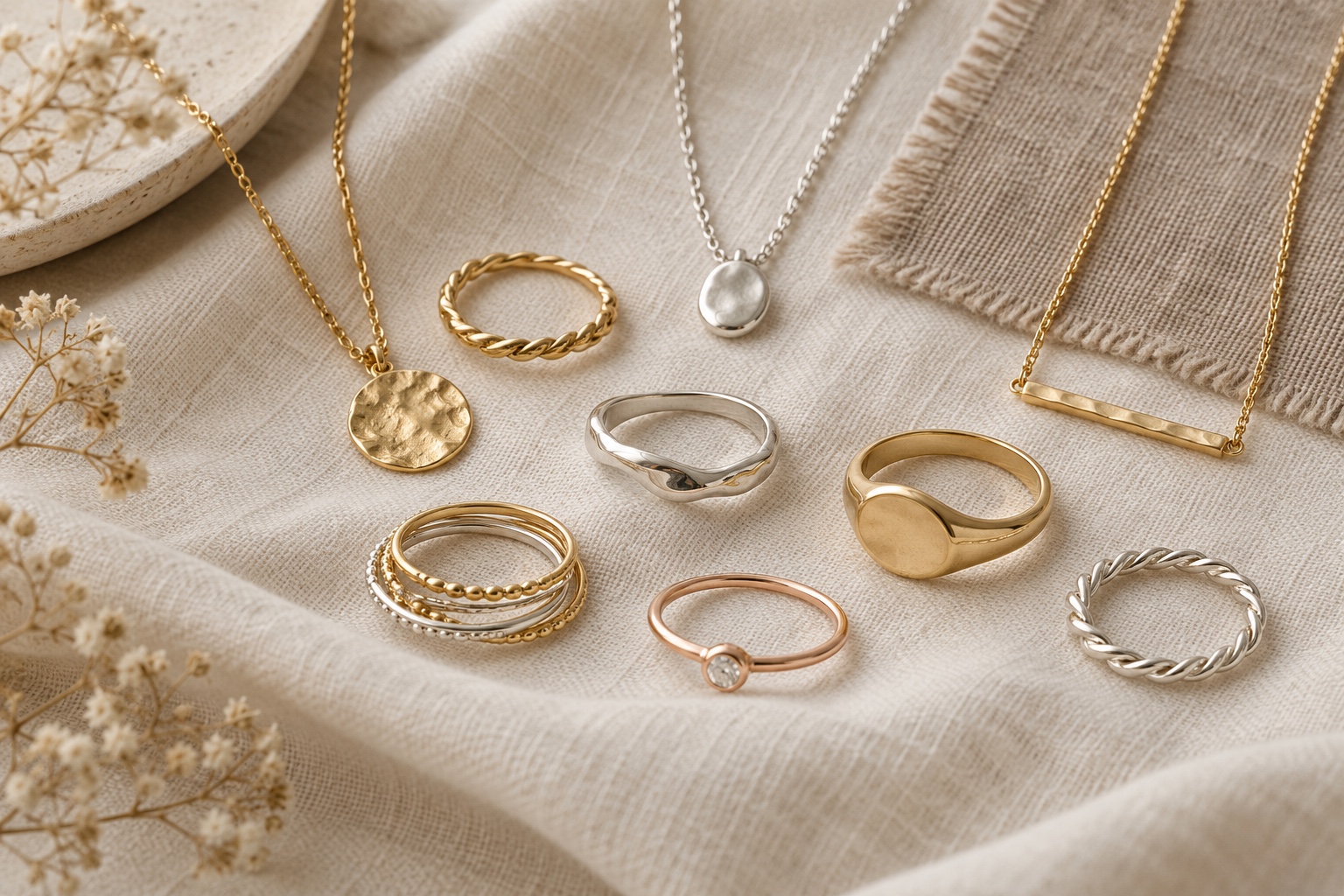
A tie can also suggest that another color dimension matters more. Polished silver may make a bright face look lively while brushed silver looks too subdued. A dark oxidized finish can feel better than either shiny option. These differences point toward contrast and clarity, which a seasonal palette explores in more depth. The 12-season comparison chart maps those dimensions.
What About Rose Gold and White Gold?
The name of a metal tells you less about its visible temperature than its actual finish. Yellow gold usually reads warm. Rose gold gets its pink-copper look from a copper-rich alloy and may read warm or softly neutral depending on the piece. White gold is gold alloyed with whitening metals and is often rhodium plated, so it generally presents as cool white. Platinum also appears cool white, although its exact shade and surface finish differ from silver. The Gemological Institute of America's guide to gold colors explains the alloy and plating differences.
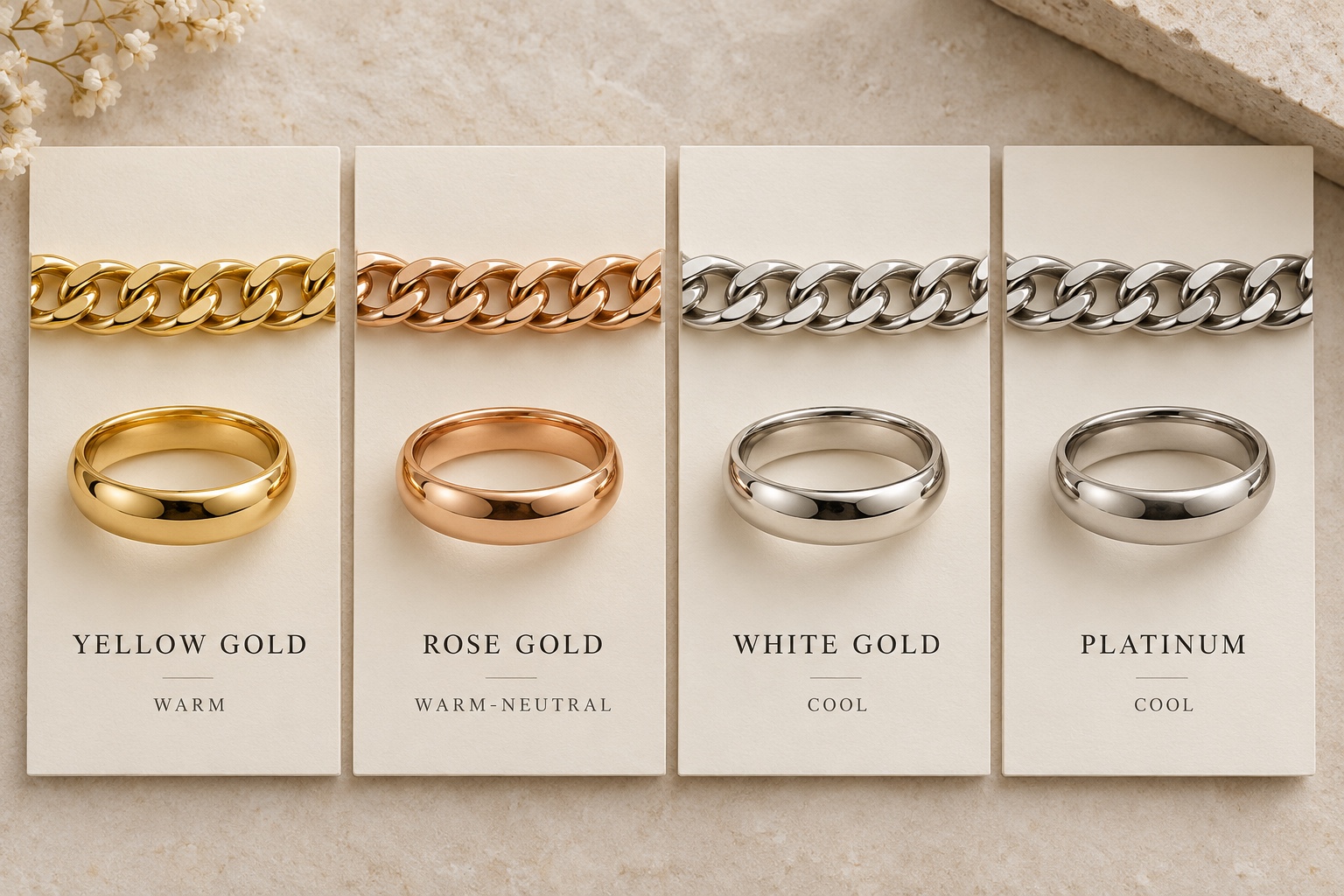
For a jewelry drape test, separate material from appearance. A gold-colored plated chain can serve as the warm comparison even if its core is another metal. A white-gold ring can serve as the cool comparison, especially while its rhodium finish is intact. Do not use a pinkish rose-gold piece as the sole “warm” control if you are trying to decide between distinctly yellow gold and silver. Compare all four finishes only after the clean two-metal baseline.
Rose gold can look lovely on neutral and warm-looking skin, but it can also echo pink in cool skin. That is a styling option, not a diagnostic shortcut. White gold and platinum may be hard to distinguish at a glance; a strong preference between them could come from brightness, shape, or price rather than skin undertone. Choose the piece whose surface you actually see in daylight.
Cross-Checking with the Vein Test & Quiz
Wrist veins are commonly described as blue or purple for cool undertones and green for warm ones. That shortcut is less reliable than it sounds: the apparent color of a vein depends on tissue optics, vessel depth, and lighting. Read our blue and purple veins guide or green veins guide if you want to understand what a wrist observation can and cannot add. A metal result and a vein impression that disagree are a reason to test fabric, not a problem to conceal.
Cross-check with a simple drape: place warm ivory beneath your chin, then cool white, keeping the light fixed. Next try coral-red against blue-red. Look for the same evenness and eye clarity you used with metal. If the clothing comparisons agree with the jewelry test on two days, you have a more useful direction for earrings, necklaces, and tops. If they do not, consider that finish, contrast, or a neutral-olive cast may be affecting the metal result.
For a broader starting point, take the interactive color analysis quiz. It can organize your observations about skin, hair, eyes, and color preferences into a palette to test in real light. You can then compare its suggestions with garments you already own. The at-home undertone guide gives additional checks if your answer is still mixed.
Gold vs Silver FAQ
Does 14K versus 18K yellow gold change the test?
It can. Fourteen-karat gold contains a lower share of pure gold than 18-karat gold, and the remaining alloy mix influences its color. Some 18K yellow pieces appear richer, while a particular 14K alloy can look paler. In European markings, 585 and 750 correspond to 58.5% and 75% gold. The GIA guide to gold content explains fineness markings. Test the actual pieces you plan to wear; karat alone does not establish the best visual match.
Does a tan change which metal looks better?
A tan can change surface color and contrast, so your preferred jewelry may shift with the season. That does not necessarily mean your underlying styling direction changed. Repeat the comparison in the current light with the clothing you actually wear. If gold and silver both continue to work, keep both options available.
Can I use costume jewelry for a silver or gold skin tone test?
Yes, if it has a clean, convincing gold or silver color and similar shine on both pieces. Avoid flaking plating, oxidation, or colored stones near the face during the first comparison. The goal is to compare visible metallic color, not price or metal purity. If inexpensive pieces differ dramatically in reflectivity, try matched metallic fabric instead.
Does gold or silver look better on me if both seem flattering?
There may be no single winner. Decide which effect you want: a warm glow, cool clarity, brighter shine, or quieter contrast. Mix metals if that suits your style. Revisit the test with matched finishes only if you need a specific shopping decision; you do not need a permanent label to wear jewelry confidently.
Can I decide from the wrist alone?
The wrist is a convenient first look at metal color, but necklaces and earrings frame the face. A wrist may be tanned differently and show different shadows. Confirm the effect beside your jaw in even daylight before using the result to select face-framing pieces.
💫 Discover Your Complete Color Palette
Ready to discover all the colors that make you look radiant? Our comprehensive color analysis will reveal your complete personal palette - perfect for hair, makeup, and wardrobe decisions.
Find My Color Palette →