Blue and Purple Veins: Cold Undertone Diagnosis and Outfits
 Reviewed by Alexandra Gilmore
See what blue and purple wrist veins can suggest, then confirm your cool palette with real fabric comparisons.

Blue or purple veins on your wrist are a useful starting clue for a cool skin undertone. If those colors remain visible in neutral daylight, try cool-temperature clothes such as cobalt blue, emerald, berry, lavender, crisp white, and silver jewelry. Purple can also point toward a neutral-cool appearance. The vein test is only a wardrobe clue: skin depth, pigment, vessel depth, lighting, and contrast can change what you see. Confirm the result by comparing real fabrics beside your face, rather than treating one wrist color as a final diagnosis.
For a practical next step, compare icy and berry options with earthy shades in the cool undertone color matrix.
Wondering whether blue veins mean warm or cool skin? They commonly lead color-analysis guides toward cool, but the answer is strongest when several observations agree. This guide compares blue and purple appearances, gives you a repeatable home setup, and turns your result into outfits. If your veins are difficult to see, skip straight to the fabric comparison; the same method works across skin tones. For a broader framework, read our skin undertone guide.
What Blue and Purple Veins Reveal About Your Complexion
Visible veins do not contain blue or purple blood. Vein blood is dark red. The color you perceive above a vessel comes from light passing through and interacting with skin, then returning to your eye. Research on skin optics identifies scattering and absorption, vessel size and depth, oxygenation, and visual perception as contributors. Surrounding skin color also changes the apparent contrast. The original optical study of vein appearance and a study of surrounding-skin contrast explain why a wrist cannot be read like a fixed color chip.
In practical color analysis, a blue or violet appearance often travels with a complexion that looks more balanced against blue-based fabric than yellow-based fabric. The phrase cool undertone describes that visual color relationship, not body temperature or a medical condition. Skin may have pink, red, beige, brown, or olive surface color while its most flattering wardrobe temperature is cool. Fair skin can make vessels easier to inspect because there is less visible surface pigmentation over them, but fair skin is not a requirement for cool coloring.
Melanin and other skin pigments affect which wavelengths are absorbed and how much of a vessel can be seen. It is tempting to say that blue veins prove an absence of yellow melanin filtering. That is too simple: visible vein color is an optical mixture, and melanin levels do not map one-to-one to a seasonal palette. Use the result as a prompt to compare cobalt with orange, icy pink with peach, and crisp white with cream. The fabric test tells you more about how color frames your face than the wrist alone.
A quick vein-color decision table
| What you see in daylight | Possible palette direction | Best next comparison |
|---|---|---|
| Mostly blue | Cool is a useful first hypothesis. | Compare cobalt with orange near the face. |
| Mostly violet or purple | Cool or neutral-cool is possible. | Compare berry with tomato red and icy pink with peach. |
| Mostly green | Warm or olive may be worth exploring. | Compare warm ivory with cool white, then test olive and emerald. |
| Blue and green, or hard to see | Inconclusive; skin depth and light may dominate. | Use several fabric pairs in steady daylight. |
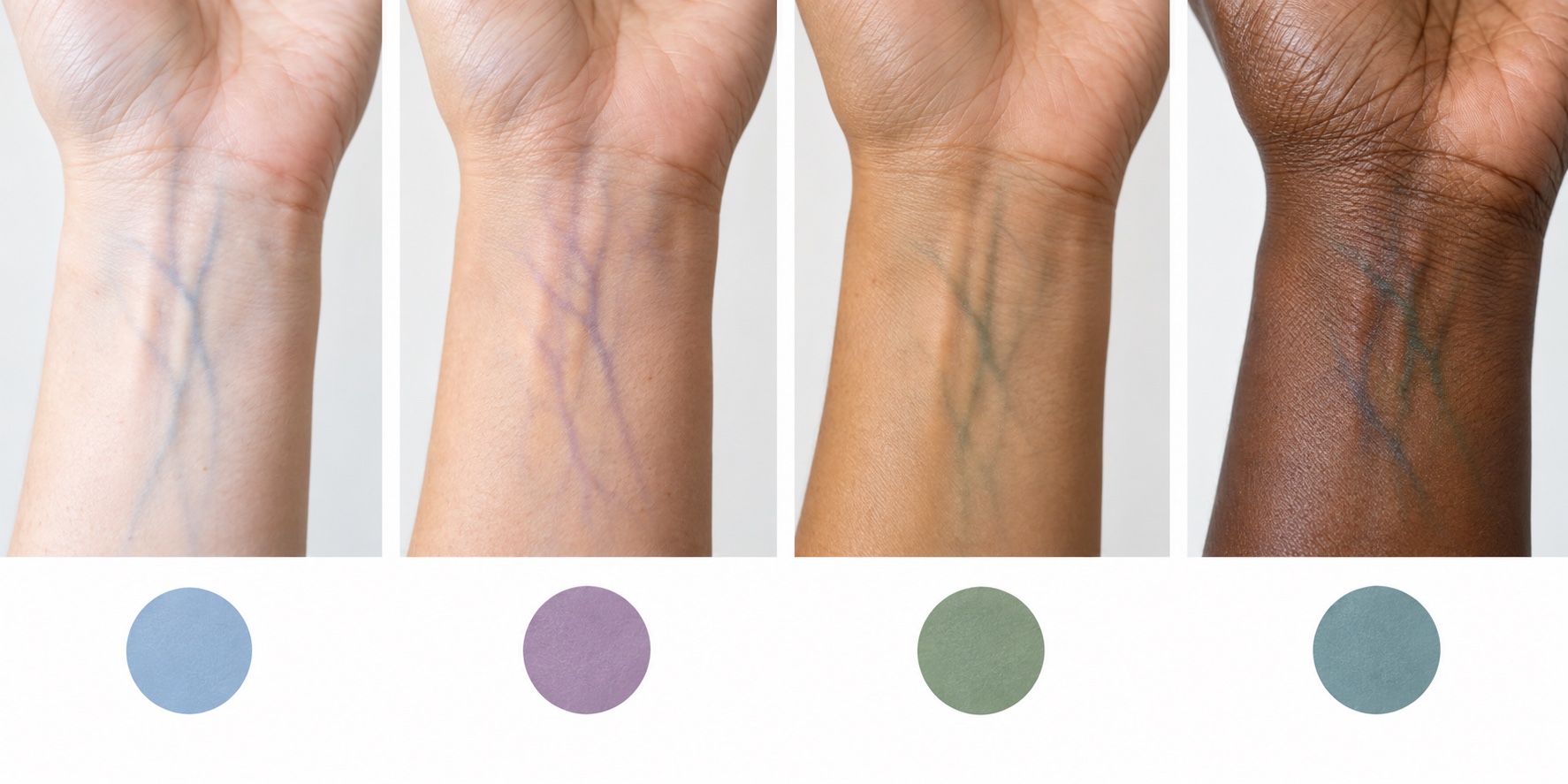
If your wrist looks green, see our vein-test guide. If every vein seems a different color, that is normal enough to make the test inconclusive. Move on to draping instead of forcing a label.
Blue vs Purple: Are They the Same Undertone?
For everyday styling, both blue and purple veins can lead you toward cool colors. A visibly blue wrist may make a pure cool palette your first test; a violet wrist may invite neutral-cool or pink-leaning colors. These are working hypotheses, not separate biological categories. Even along one wrist, two vessels can appear different because their depth, width, and surrounding skin differ. A phone camera may intensify violet or mute blue, particularly under indoor LEDs.
When blue dominates
Start with clean, blue-based colors: royal blue, cool emerald, raspberry, blue-red, and crisp white. Hold one at a time directly below the chin. If the eye sees your face first, the whites of your eyes look clearer, and shadows around the mouth seem less prominent, the direction may be useful. Then test intensity. Some cool complexions prefer saturated jewel tones associated with Cool Winter; others prefer the gentler, gray-softened colors of Cool Summer. The vein test cannot tell those seasons apart. Our 12-season comparison chart gives you the next set of swatches.
When purple dominates
Try berry, plum, blue-based rose, lavender, and charcoal, then compare each with a warmer neighbor. Purple veins may accompany a pink surface flush, but flushing is temporary and should not be mistaken for a permanent undertone. If both silver and softly warm metals look good, you may have a flexible neutral-cool palette. If icy colors wash you out while muted mauve looks natural, move toward a softer cool range rather than assuming every cool color must be vivid.
The useful question is not whether your vein is precisely blue or precisely purple. Ask whether blue-based fabrics make your whole face look more even than their yellow-based alternatives under the same light. That is a more repeatable styling observation. Consider two or three pairs across different color families before committing to a wardrobe shift.
Accurate Testing Setup at Home
Choose a bright room with indirect daylight. Stand near a window without direct sun on your skin, and switch off strongly colored lamps. Let your hands settle to room temperature for several minutes; a very cold or hot room can change how prominent vessels look. Remove watches, bracelets, and tinted sunscreen from the wrist. Look at both inner wrists, then compare a second area such as the inside of the forearm if it is visible. Do not stretch the skin or press on the vessel.
Separate surface redness from undertone
Redness from friction, exercise, heat, acne, or sensitive skin is a surface event. It may make the area around a vein look pinker without changing which clothing temperature flatters you. Wait until the skin returns to its usual appearance. If a flush persists, use fabric draping on your face and neck rather than trying to interpret the wrist. Avoid bright makeup during the first comparison and pull colored hair away from the face if possible.
Set up a mirror and two solid, similarly bright pieces of fabric. Hold cobalt at the neckline for a few seconds; replace it with a clear orange. Repeat with icy pink and peach, and with crisp white and warm ivory. Keep your position, background, and light constant. Notice the overall face: does one fabric emphasize gray shadows or yellow sallowness while the other makes the skin appear clearer? A single favorite garment can bias the answer, so compare several pairs and look for a pattern. Take photos only as a reminder; automatic white balance can shift the apparent result.
If the pairs disagree, mark the vein result as uncertain. You may sit near neutral, or chroma and depth may matter more than temperature. Our neutral-undertone checks can help you test that possibility. The color analysis quiz offers another structured starting point, but real fabric in stable light remains the final check for clothes you will wear.
Top Flattering Outfits for Cool Vein Undertones
Build outfits around one cool color near the face, a versatile neutral, and one smaller accent. Royal blue and cobalt make strong test colors because their blue base is obvious. Emerald can work as a cool green when it leans toward blue rather than yellow. Fuchsia and berry add a vivid alternative to red. Black and cool white create a sharp frame, particularly when you prefer high contrast. If the combination feels severe, use charcoal or soft white and choose slightly muted colors instead.
Four wearable formulas
Office: a royal blue blouse, charcoal trousers, cool white blazer, and polished silver earrings. This puts the strongest color close to the face while the trousers remain easy to repeat. Swap royal blue for softer cornflower blue if vivid color overwhelms you.
Weekend: a lavender or icy pink knit with dark indigo denim, a cool gray coat, and white sneakers. The pale color brightens the neckline without requiring a dramatic jewel-tone wardrobe. Use a cooler, blue-leaning pink rather than a peachy blush.
Evening: an emerald dress or top, black tailored layer, and platinum-tone jewelry. If your best green is subdued, choose deep pine or blue-green teal. The point is the cool direction, not one universally perfect shade named emerald.
Minimal capsule: cool white shirt, charcoal pant, cobalt accent knit, berry scarf, and silver-toned hardware. Those pieces can create several combinations while preserving a recognizable color temperature. The flatlay below shows one compact variation.
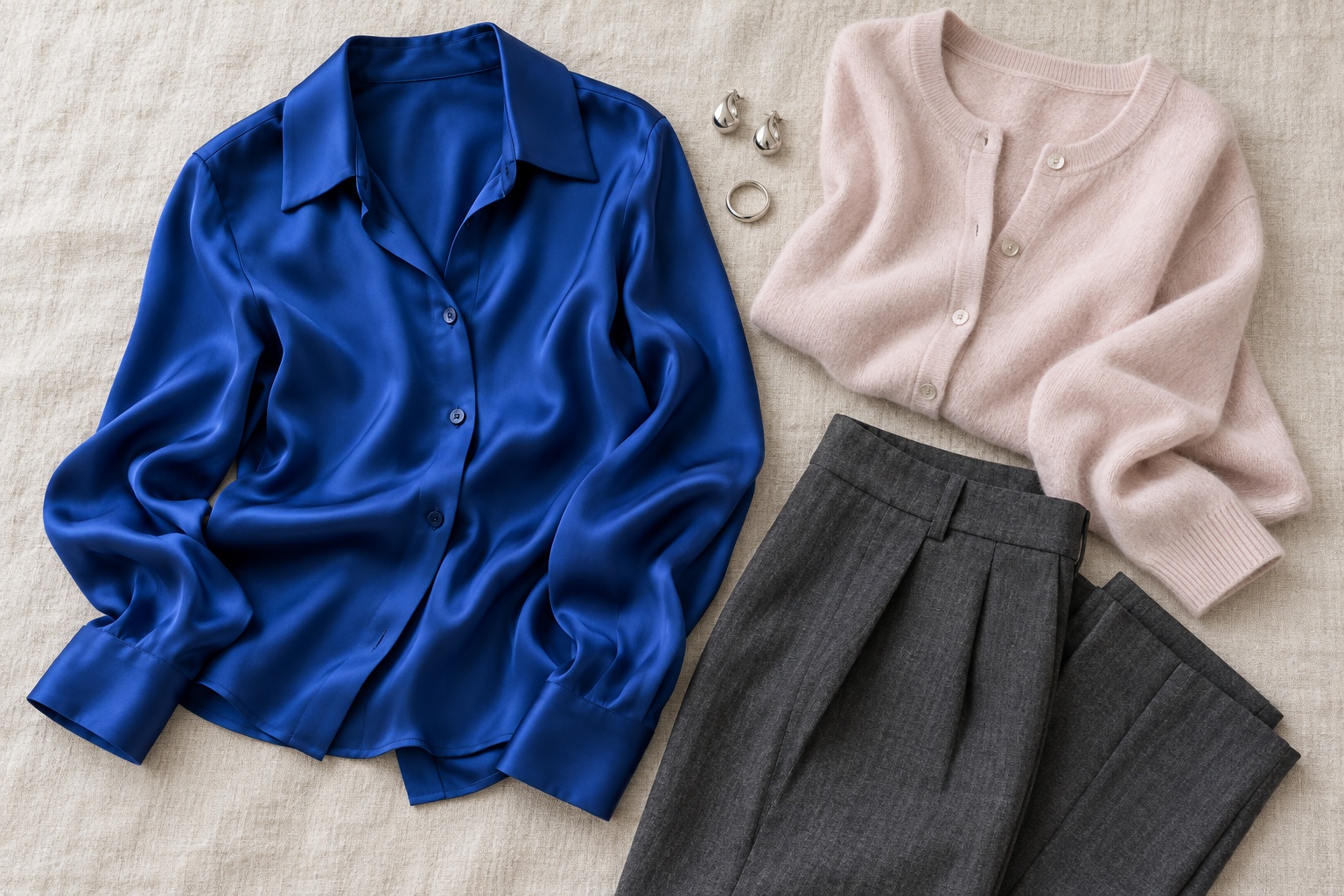
Before buying, repeat these combinations with garments you already own. A blue shirt can differ greatly from the blue shown on a product page. Compare the actual material beside your face and against your existing bottoms. If a saturated shade looks too loud, keep its temperature but soften its intensity. If a pale cool shade makes you look tired, deepen it. Cool Summer and Cool Winter are both cool, yet their preferred depth and chroma differ.
Colors That Make Cool Skin Look Sallow
Orange, saffron yellow, camel, and yellow khaki are useful comparison colors because they can reveal a warm cast against a cool-leaning complexion. A bright orange top might draw attention to uneven redness; a mustard scarf might make the face appear slightly gray or yellow. This is a styling observation, not a defect in the skin or a rule banning a garment. Fabric finish, shade, makeup, and the amount of color visible at the neckline all matter.
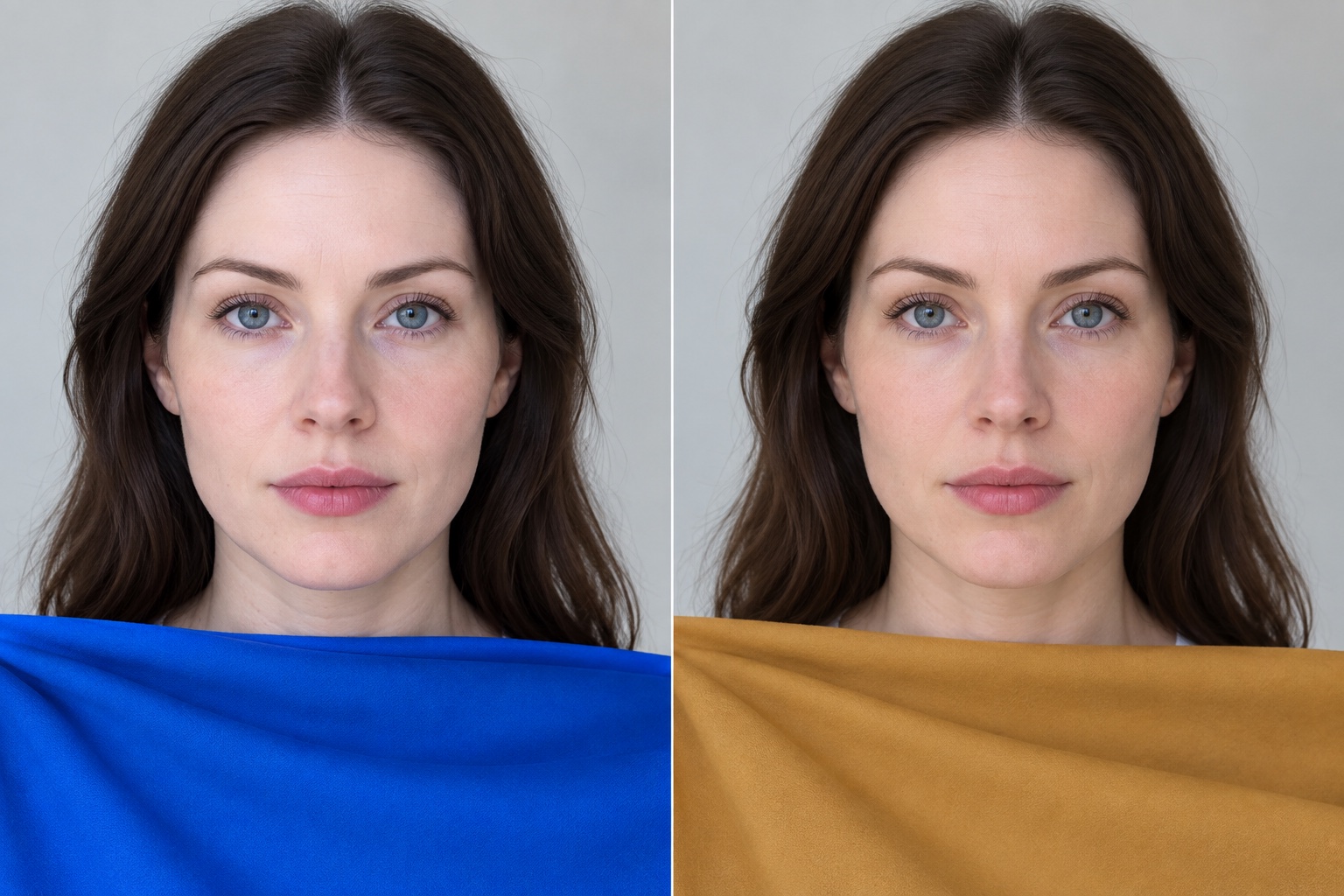
Do not discard clothes just because they are warm. Move camel trousers below the face, add a cool blue shirt between your skin and a khaki jacket, or pair orange accessories with charcoal and white. A warm print can also work when its cooler colors sit closest to your face. If you love a color, styling placement may matter more than a palette rule.
| Warm color to test | Cool comparison | If you keep the warm item |
|---|---|---|
| Orange top | Berry or blue-red top | Wear orange as a bag or shoe. |
| Saffron scarf | Lavender or cool pink scarf | Place a cool collar between scarf and face. |
| Camel coat | Charcoal or cool navy coat | Add a cobalt or berry scarf at the neckline. |
| Yellow khaki shirt | Cool olive or blue-green shirt | Use khaki as trousers with a cool top. |
Silver and Platinum Accents
Silver and platinum have a cool, gray-white reflection that can echo blue-based clothing. Near the face, a silver earring may look harmonious with cobalt, berry, or crisp white. That is why silver jewelry often feels refreshing in a cool outfit. Still, the metal test is not an absolute undertone diagnosis: shine, size, finish, gemstones, and personal preference influence the effect. Compare similar earrings in silver and yellow gold in the same daylight rather than a large statement necklace against a tiny stud.
If silver is your clear favorite, repeat it through watch hardware, belt buckles, bag closures, and glasses. If both metals work, try white gold, pewter, or mixed-metal pieces. You can also keep sentimental gold jewelry and balance it with cool clothing near the face. Our gold-versus-silver test walks through a controlled comparison.
Blue & Purple Veins FAQ
Can people with medium or dark skin have cool undertones and blue veins?
Yes. Cool undertones occur across skin depths. Veins may be less visible through deeper skin, or may appear gray, blue-green, or purple depending on light and location. A hard-to-read wrist does not indicate a warm undertone. Use draping with cobalt versus orange and cool white versus warm ivory, and judge the face as a whole. See our seasonal color analysis for dark skin tones for more context.
Why do my veins look different in a cold or warm room?
Temperature can change circulation and the prominence of surface vessels. Lighting also shifts the colors your eyes or camera record. Repeat the observation after you have settled at a comfortable room temperature and use the same indirect daylight each time. If the apparent vein color keeps changing, place less weight on the wrist and more on fabric comparisons.
Are blue veins always a cool undertone?
No. Blue veins are a common cool-palette clue, not proof. Skin pigment, vessel depth, color contrast, and illumination all affect their appearance. If orange and warm ivory consistently look better on your face than cobalt and cool white, follow the fabric evidence. You may also be neutral or olive, where a simple vein rule is especially unreliable.
Do purple veins mean a pink skin tone?
Not necessarily. Purple-looking veins can appear beside many surface skin colors. A pink flush can be temporary and need not define the best clothing colors. Compare blue-based rose with peach and berry with tomato red. If the cooler fabrics repeatedly improve the whole face, a cool or neutral-cool wardrobe direction is reasonable.
Do blue veins mean Cool Summer or Cool Winter?
They do not distinguish the two. Both families contain cool colors. Cool Summer generally uses softer, lower-contrast colors, while Cool Winter handles clearer, stronger contrast. Compare muted rose and soft navy with cobalt and crisp black-and-white. Whichever set supports your features more naturally gives a better clue than vein color.
Should a sudden change in vein color be treated as a color-analysis result?
No. This guide concerns ordinary, longstanding vein appearance for wardrobe choices. If a vein or the surrounding skin changes suddenly, is painful, swollen, or otherwise concerning, contact a qualified clinician. A clothing palette test cannot assess vascular health.
For your next step, gather one cobalt item, one warm orange item, one cool white item, and one warm ivory item. Compare each pair beside your face in steady daylight. Keep the colors that make you look clear and comfortable, then use the interactive color analysis quiz to explore a fuller palette.
💫 Discover Your Complete Color Palette
Ready to discover all the colors that make you look radiant? Our comprehensive color analysis will reveal your complete personal palette - perfect for hair, makeup, and wardrobe decisions.
Take Color Analysis Quiz →📚 Recent Articles
Keep exploring practical ways to use your palette: review the vein test, revisit undertone testing, and explore the 12 seasons.