Green Veins on Wrist: Undertone Meaning and Best Clothing Colors
 Reviewed by Alexandra Gilmore
Green-looking wrist veins can suggest warmth or olive coloring. Confirm with daylight fabric comparisons before choosing a palette.

Green-looking veins on the inside of your wrist can be a clue toward a warm or olive skin undertone, but they cannot determine your palette by themselves. Blood in a vein is dark red, not blue. A vein may look green when light travels through skin, interacts with the vessel, and returns through skin with a golden or olive-looking cast. Vessel depth, skin pigment, and lighting all affect the result. For clothes, begin with warm earth tones such as terracotta, olive, rust, mustard, warm beige, and ivory, then compare them with cooler alternatives beside your face. If your skin reads more muted green-gray than golden, try softer olive colors before assuming every bright warm shade will work.
The most useful question is not simply “What does green veins mean skin?” It is whether the green you see points toward golden warmth, a muted olive cast, or an inconclusive vein test. This guide explains the optical effect, shows a repeatable wrist check, and turns that first clue into clothing, jewelry, and makeup comparisons. You can use the color analysis quiz as a starting point, then confirm its suggestions with actual fabric in consistent daylight.
The Science: Why Do Veins Look Green?
A vein is a blood vessel beneath the skin. Its contents are not a tube of blue dye. Venous blood is a darker red than oxygen-rich arterial blood. The color your eye sees at the surface comes from light passing into tissue, being absorbed and scattered at different wavelengths, meeting a vessel of a particular size and depth, and returning to your eye. A classic optical study of visible veins identifies skin scattering and absorption, blood oxygenation, vessel depth and diameter, and visual perception as relevant factors. The National Institute of General Medical Sciences likewise explains that a blue-looking vein is an optical appearance, not blue blood.
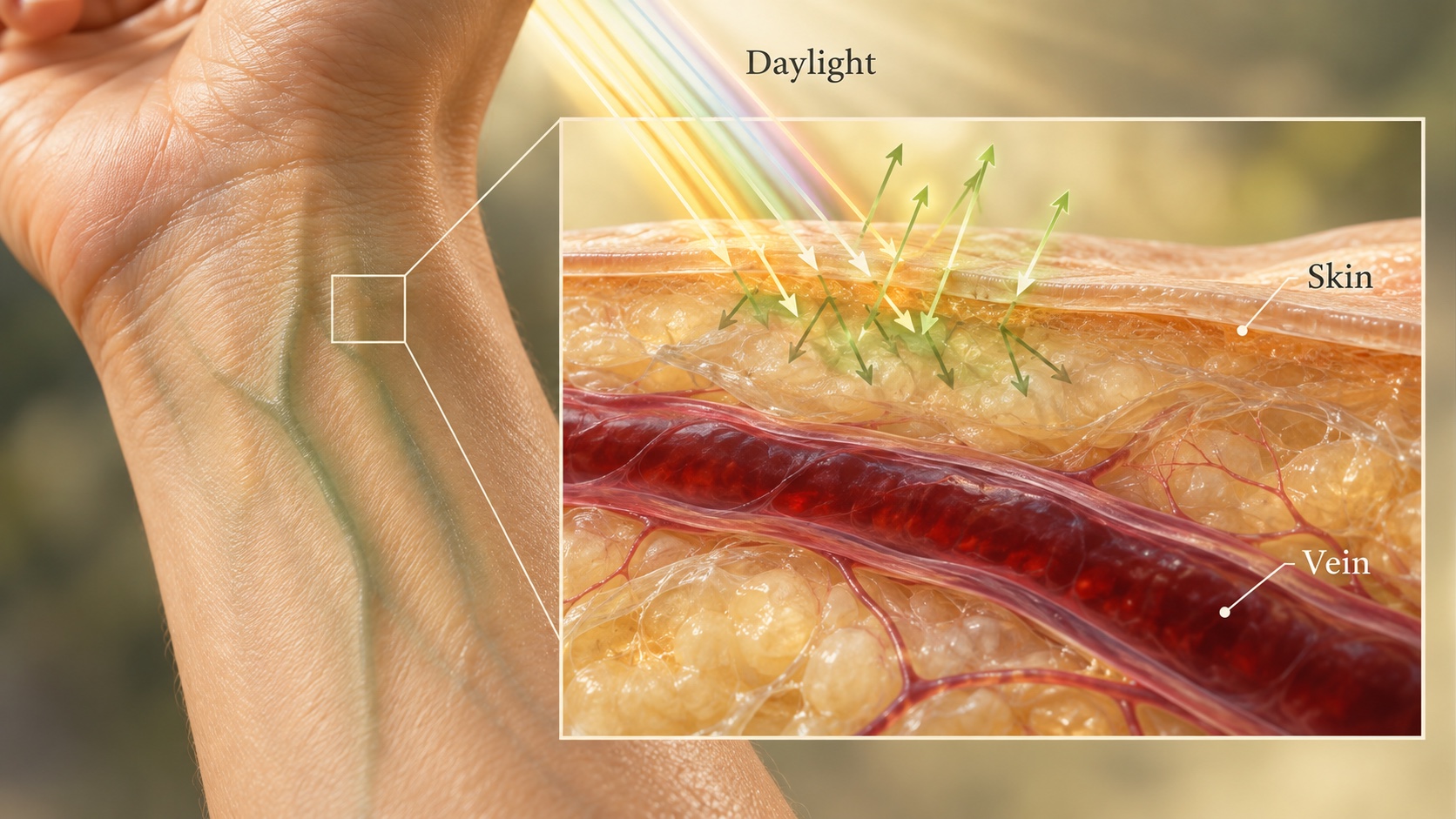
In a color-analysis shorthand, people sometimes say that blue veins seen through yellow skin “turn green.” That metaphor is easy to remember, but skin is not a transparent yellow paint layer and the physics is not a simple blue-plus-yellow mixture. Melanin contributes to the color and optical properties of skin; the epidermis and deeper tissues also absorb and scatter light. Keratin is a structural protein in the outer skin, not a green pigment. The neighboring skin may look golden, beige, or olive, changing the contrast your brain assigns to the vein. A deeper vein or a different lamp can make the same wrist appear bluer or less visible.
That is why the vein test belongs in a wardrobe conversation as a clue, not a scientific diagnosis of undertone. Someone with very fair skin may see many vessels regardless of palette. Someone with deeper skin may not see a clear vein at all. Neither result says anything about whether a person has a valid color palette. For a broader explanation of mixed vein colors, visit our vein-test guide.
Green Veins: Warm Undertone vs Olive Undertone
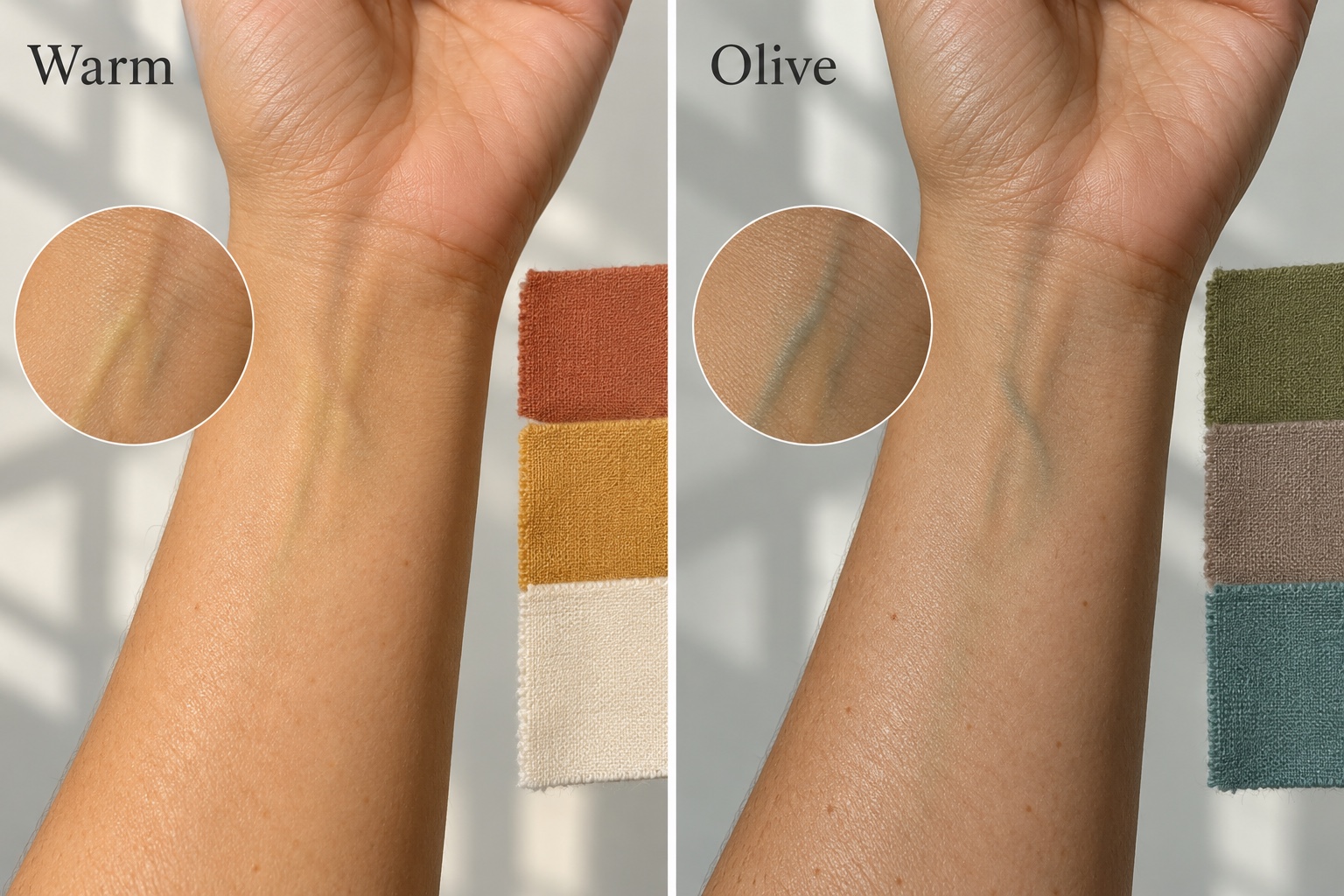
A golden-warm impression and an olive impression can both accompany green-looking veins. “Warm” describes a yellow, peach, or golden direction in a color-analysis comparison. “Olive” describes a muted green-gray or green-brown cast relative to nearby skin; an olive complexion can lean warm, cool, or neutral. Vein color alone cannot settle which description fits. The practical distinction appears when you compare several cloth colors at your neckline and, if relevant, complexion products along the jaw.
Signs to test for a golden-warm direction
Look at the skin beside the vein, not just the vessel. Does it appear golden, peach-gold, or warm beige in indirect daylight? Compare an ivory cloth with a crisp blue-white one at your face. Then try terracotta against blue-based fuchsia, and a clear warm olive against cool emerald. If the warmer set repeatedly makes your complexion look more even while the cool set draws attention to shadows, golden warmth is a useful working direction. This may point toward a Spring or Autumn family, but the wrist cannot tell you which. Brightness, depth, and contrast still matter.
Signs to test for an olive direction
Olive may look subtly green-gray next to a neutral white cloth, even when the skin is fair or deep. A foundation labeled “warm” can appear too orange or peach on olive skin, while a very pink base can look separate from the neck. Try muted olive, soft khaki, mushroom, and restrained teal near the face, then compare them with a bright yellow and a cool pink. If the muted colors settle more naturally, explore olive as a distinct color direction. Our warm-versus-cool olive guide covers that question in more depth, and the olive foundation guide addresses complexion matching.
An olive person can still enjoy terracotta, and a golden-warm person may love a muted khaki. The labels help you choose which comparison to test first; they do not ban a shade. If neither group works consistently, try a neutral direction and compare contrast and saturation before changing all your clothes.
| What you observe | Working interpretation | Next fabric comparison |
|---|---|---|
| Green veins with golden-looking surrounding skin | Warm may be a useful starting point. | Warm ivory vs crisp white; terracotta vs cool berry. |
| Green-gray veins with a muted olive cast | Olive may matter more than simple warmth. | Muted olive and mushroom vs bright mustard and icy pink. |
| One wrist green, the other blue or purple | The vein test is inconclusive. | Repeat three controlled draping pairs beside the face. |
| Veins hard to see | No reliable vein reading. | Skip the wrist and start with near-face fabrics. |
Step-by-Step Wrist Inspection Protocol
A careful vein test green veins check takes only a few minutes. It does not require a special app or a magnifying mirror. Keep the setup stable so you are comparing your own observations rather than changes in light.
1. Set up neutral daylight
Stand near a window on a bright day, out of direct sun. Turn off strongly yellow, pink, or blue lamps. Give your hands a moment to return to a comfortable room temperature. Remove a watch or bracelet and wipe away tinted sunscreen or makeup on the inner wrist. Do not press, stretch, or rub the skin; these can change what you see. If you have just been outdoors or the skin is flushed, wait until it looks like its usual self.
2. Compare both wrists with a white reference
Hold a neutral white napkin or piece of plain white fabric beside the wrist, without covering the vein. Use it as a reference for the ambient light, not as a pass-fail test. Look at each inner wrist from a normal viewing distance. Are the visible lines mostly green, blue, purple, mixed, or too faint to judge? Note whether the surrounding skin reads golden, peach, beige, or gray-green. Avoid zooming a phone photograph to choose a single pixel; automatic processing and white balance can alter color.
3. Cross-check with draping at your face
Hold two similarly bright fabrics one at a time directly below the chin while keeping the same position and light. Start with ivory and cool white, then terracotta and cool berry, then olive and blue-green emerald. Look at the whole face rather than the wrist: which fabric makes the skin appear more even and the eyes easier to notice? Repeat another day if the difference is subtle. This draping step tests the actual clothing decision. Our skin-undertone guide gives a broader set of home comparisons.
If results conflict, write “uncertain” rather than forcing an answer. A green-looking vein is compatible with several palette directions. You can still dress well by using the colors that perform best in your controlled comparisons.
Best Clothing Colors for Green Vein Undertones
The best colors for green veins are candidates to test, not a universal shopping list. A golden-warm direction often welcomes earthy reds, yellow-greens, and cream-based neutrals. Olive coloring can benefit from similar hues when they are muted, balanced, or adjusted for depth. Put your strongest color near the face and use the rest of the outfit to support it.
Warm earth tones to try first
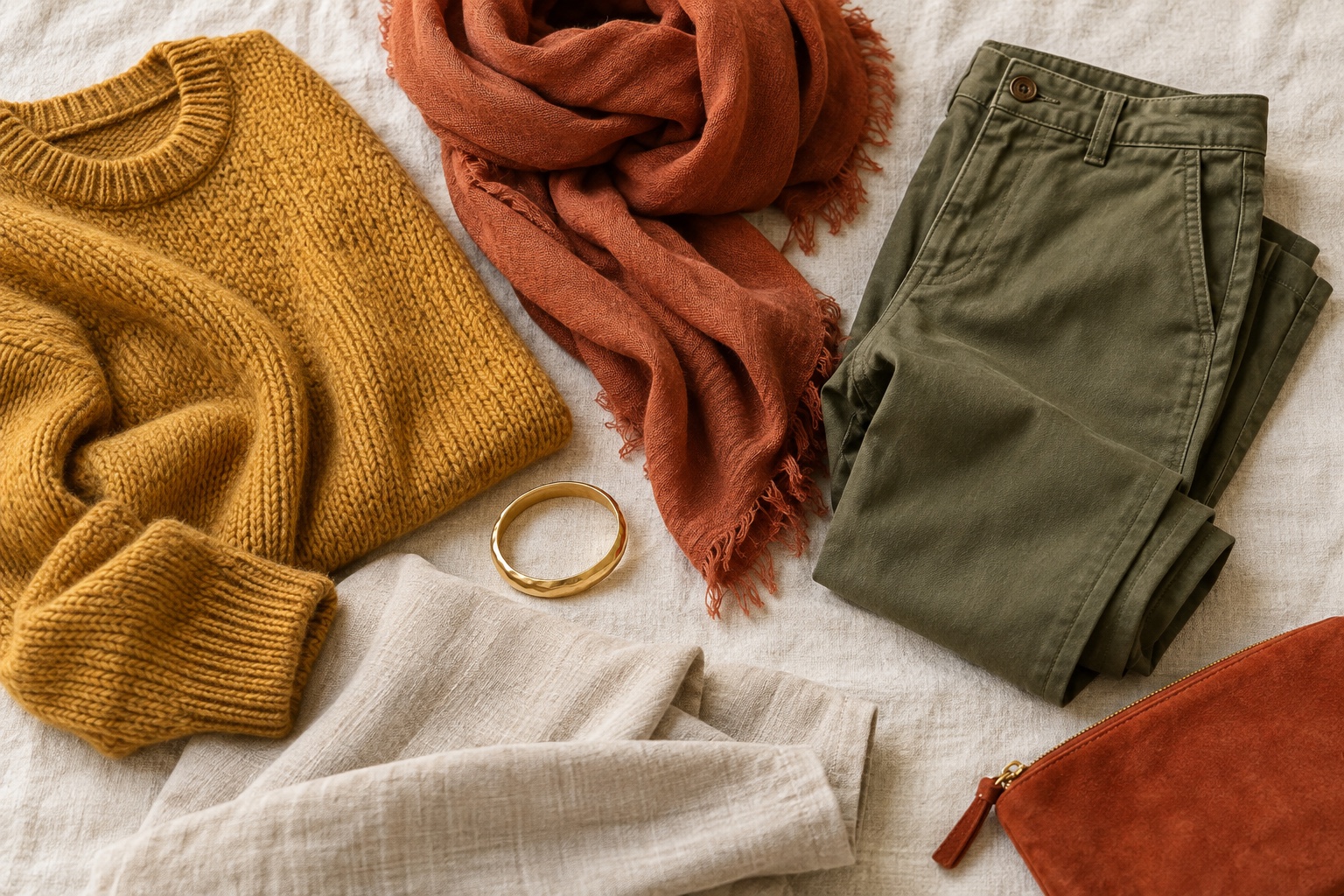
Terracotta and rust: These orange-red shades can bring warmth to a simple shirt, scarf, or jacket. Choose a cleaner terracotta if brighter colors flatter you; choose a browned, muted rust if softer colors feel more balanced. Mustard and ocher: Their yellow base can echo golden warmth, but saturated mustard may overpower a muted olive complexion. Use a small scarf or knit first. Olive and moss: These greens work as versatile near-neutrals with denim, camel, and cream. Compare yellow olive with gray-green moss to see which belongs near your face.
Warm beige, camel, and ivory: These can replace stark white and cool gray in an everyday capsule. Match their depth to your features: very pale beige may disappear against some complexions, while deeper camel can give useful contrast. Warm teal: A blue-green accent may be easier to wear than icy turquoise, especially when combined with olive or chocolate. Color names on shopping sites are inconsistent, so compare the actual textile in daylight.
Four outfit formulas using those colors
Work: ivory shirt, olive trousers, camel jacket, and a terracotta scarf. The scarf carries color close to the face while the trousers stay flexible. Weekend: mustard knit, dark indigo jeans, warm beige overshirt, and brown shoes. If mustard is too vivid, replace it with ocher or muted moss. Evening: rust or warm teal top, chocolate tailored pants, and yellow-gold jewelry. Minimal capsule: ivory tee, olive overshirt, rust knit, camel trousers, and one gold or bronze accessory. These are starting combinations; fit, fabric texture, and your preferred contrast are equally important.
Before buying several pieces, make two outfits with what you own. Compare a proposed warm top with its cooler alternative under the same light and take note of which you would actually wear. The clothing color matching guide helps combine a chosen palette, while the 12-season chart can refine its depth and brightness.
Colors to Avoid—or Move Away From Your Face
Icy pastels, sharp fuchsia, and pure blue-gray are useful challenge colors for someone testing a warm or olive direction. Against some golden-warm complexions, an icy lavender or blue-white can make the face look less even. A strongly blue-based fuchsia may feel disconnected from an earthy outfit. On some muted olive complexions, a clean, cold gray can exaggerate a gray cast. These are possible visual effects, not claims that the skin looks unhealthy or that the garments are forbidden.
Test each suspected mismatch against a nearby alternative: icy lavender versus soft peach, cool fuchsia versus rust-red, blue-gray versus warm mushroom. Keep fabric size, distance, and light similar. If the cooler fabric actually wins, trust the observation. Some olive complexions lean cool and look excellent in berry or blue-gray. Vein color does not override the result of a near-face comparison.
You can also keep a loved color in a bag, trouser, shoe, or print below the neckline. A warm ivory collar can separate a cool jacket from the face. A muted scarf may soften a vivid top. Styling placement is often more useful than purging a wardrobe on the basis of one wrist check.
Jewelry and Makeup Matching
Yellow gold and bronze can repeat the warmth in a golden-looking complexion and pair naturally with terracotta, olive, and camel. Rose gold offers a softer warm option. To compare metals, place similar-sized gold and silver pieces beside the jaw in daylight, then switch them without changing makeup or clothing. Look for an overall harmonious impression, not whether one metal makes your skin “good” or “bad.” Many people can wear both, especially when the finish, size, and outfit differ.
For makeup, begin with one feature. A peach or warm rose blush, cinnamon or terracotta lip color, and restrained bronze eye color can echo a warm wardrobe. If your skin reads olive, check that the base makeup does not turn orange or pink along the jaw. A muted rose-brown lip or soft olive-brown eye may work better than a bright coral even if your veins look green. Bronzer adds surface warmth; it does not diagnose undertone and should not replace a matching base product.
Makeup photographs and store lighting can shift both pigment and skin color. Test a small swatch in daylight and review it after it settles. For a focused side-by-side metal check, see our gold-versus-silver jewelry test. Use the result alongside fabric draping instead of treating it as a second absolute rule.
Green Veins FAQ
What if one wrist has green veins and the other has blue veins?
That can happen because vessels sit at different depths and in different surrounding skin, and because light strikes each wrist differently. It makes the vein result mixed, not a verdict that you have two undertones. Check both wrists in the same indirect daylight and then rely on fabric comparisons at your face. If both warm and cool colors work, explore a neutral palette rather than forcing the wrist into a single category.
Do green veins change when I tan?
Tanning changes the pigment and visible surface color around a vessel, so a vein may look different or become harder to see. It does not mean a temporary tan has revealed a new permanent undertone. Compare fabrics in your usual daylight setup and account for the current color of the skin near your face. Avoid using newly tanned skin as the sole reference for an expensive wardrobe or makeup purchase.
Do green veins mean warm undertone or olive skin?
They can suggest either, and sometimes neither is clear. Golden-looking surrounding skin plus repeated wins for ivory, terracotta, and warm olive supports a warm direction. A muted green-gray cast plus wins for mushroom, restrained olive, and soft teal supports exploring olive. Olive can itself lean warm, neutral, or cool. Your most reliable styling answer comes from several near-face draping pairs.
What if I cannot see my veins clearly on deeper skin?
Skip the vein test. Its usefulness varies with visibility, not with how analyzable your coloring is. Compare fabric colors in steady indirect daylight, start with a few different temperature and depth pairs, and keep the shades that make your face look balanced to you. Our seasonal analysis for dark skin tones covers contrast and palette depth without requiring visible veins.
Can vein color tell me anything about my health?
This article uses visible vein color only as a styling clue. It is not a health test. If you notice a new painful, swollen, red, or otherwise concerning vein, seek medical advice rather than interpreting it through a color palette. The National Heart, Lung, and Blood Institute describes symptoms that warrant attention for vein conditions.
💫 Discover Your Complete Color Palette
Ready to discover all the colors that make you look radiant? Our comprehensive color analysis will reveal your complete personal palette - perfect for hair, makeup, and wardrobe decisions.
Take Color Analysis Quiz →📚 Recent Articles
Keep exploring practical ways to use your palette: review the vein test, compare blue and purple veins, and explore olive undertones.