Color Draping vs Online Color Analysis Quiz: Accuracy, Cost, and Results
 Reviewed by Alexandra Gilmore
A quick quiz and professional draping can both narrow flattering colors, but they offer very different levels of control and feedback. Compare convenience, cost, lighting, observation, and likely accuracy, then choose whether a preliminary direction is enough or whether your uncertainty warrants an in-person session.

Color draping vs online quiz: which should you choose? Professional in-person draping lets a consultant compare physical fabrics beside your face under consistent lighting and discuss subtle color responses with you. An online color analysis quiz is faster, easier to access, and usually less expensive; a photo-based tool may add visual information, but its result depends on lighting, camera processing, and the information you provide. Neither method has a universal measured accuracy rate. Start online if you want a practical direction for everyday choices; consider a studio session if adjacent palettes still look equally plausible or you want guided, tactile comparisons before a major wardrobe purchase.
The methods answer the same useful question: which colors make your natural features look balanced in real life? Their evidence differs. Fabric consultations observe your face beside controlled swatches. A questionnaire organizes your own observations, while photo analysis reads an image filtered through a camera. This guide compares those inputs, cost, timing, and results so you can choose the level of help you need. For a first pass, take the color analysis quiz, then test its suggested colors with fabric at home.
💫 Discover Your Complete Color Palette
Ready to discover all the colors that make you look radiant? Our comprehensive color analysis will reveal your complete personal palette - perfect for hair, makeup, and wardrobe decisions.
Learn Seasonal Analysis →📚 Recent Articles
How Professional In-Person Color Draping Works
At a studio appointment, a consultant places fabric drapes near your face and changes one color property at a time. A warm cream may be compared with a cool white; a muted berry with a brighter red; charcoal with black. Holding the fabrics in the same position helps you notice whether a shade makes facial features appear clearer, adds unwanted shadows, or competes with your face. The consultant can repeat close comparisons immediately and ask which effect you prefer.
Physical fabric, lighting, and a second observer
The practical strength of an in-person session is control. Fabric is viewed in the same room as your face, so it does not pass through a phone's white balance or a display's color settings. A skilled analyst can adjust drape placement, check a borderline choice twice, and explain why a color appears harmonious. House of Colour describes its use of precision-dyed drapes as one example of this process. Studio lighting still matters: a warm bulb or changing daylight can influence perception, so ask how the consultant keeps conditions consistent. Training and methods also vary between consultants; a credential alone is not a published accuracy study.
A consultation can be particularly useful when hair dye, makeup, tan, or strong reflected wall colors make your natural coloring harder to judge. Tell the analyst about those variables. If you want to use your current dyed hair in daily styling, discuss that separately from the underlying seasonal assessment. Ask whether the appointment includes physical swatches, a written palette, outfit advice, and follow-up support before comparing prices.
How AI-Powered Online Color Quizzes Work
Online methods range from illustrated questionnaires to photo-based analysis. A questionnaire may ask about color responses, natural hair and eye appearance, and feature contrast, then map answers to a palette. A photo-based tool can sample pixels, estimate relative lightness and contrast, and compare visible color patterns with its model. Those techniques are different from placing real cloth next to a real face. They can be useful for narrowing possibilities, but the result is only as sound as the input and the tool's design.
Pixel colorimetry and contrast ratios have limits
A pixel value is the color a camera recorded after exposure, white balance, tone mapping, and sometimes automatic retouching. It is not a direct measurement of skin undertone. Apple documents how photographic styles alter image color, and Adobe explains the role of white balance. Contrast estimates can compare the apparent lightness of skin, hair, and eyes in a particular image, yet shadows and dyed hair can alter those relationships. A quiz also relies on self-description, which can mix up what you enjoy wearing with what you observe near your face. Use the result as a hypothesis to test with clothing or fabric, rather than as a fixed label.
For a broader explanation of the variables, see our at-home undertone testing guide and color season quiz guide. They offer ways to compare temperature, depth, and chroma without relying on one photo. If the quiz asks for an image, review its privacy terms before uploading a face photo.
Accuracy Face-Off: Where In-Person Wins and Where AI Digital Tests Excel
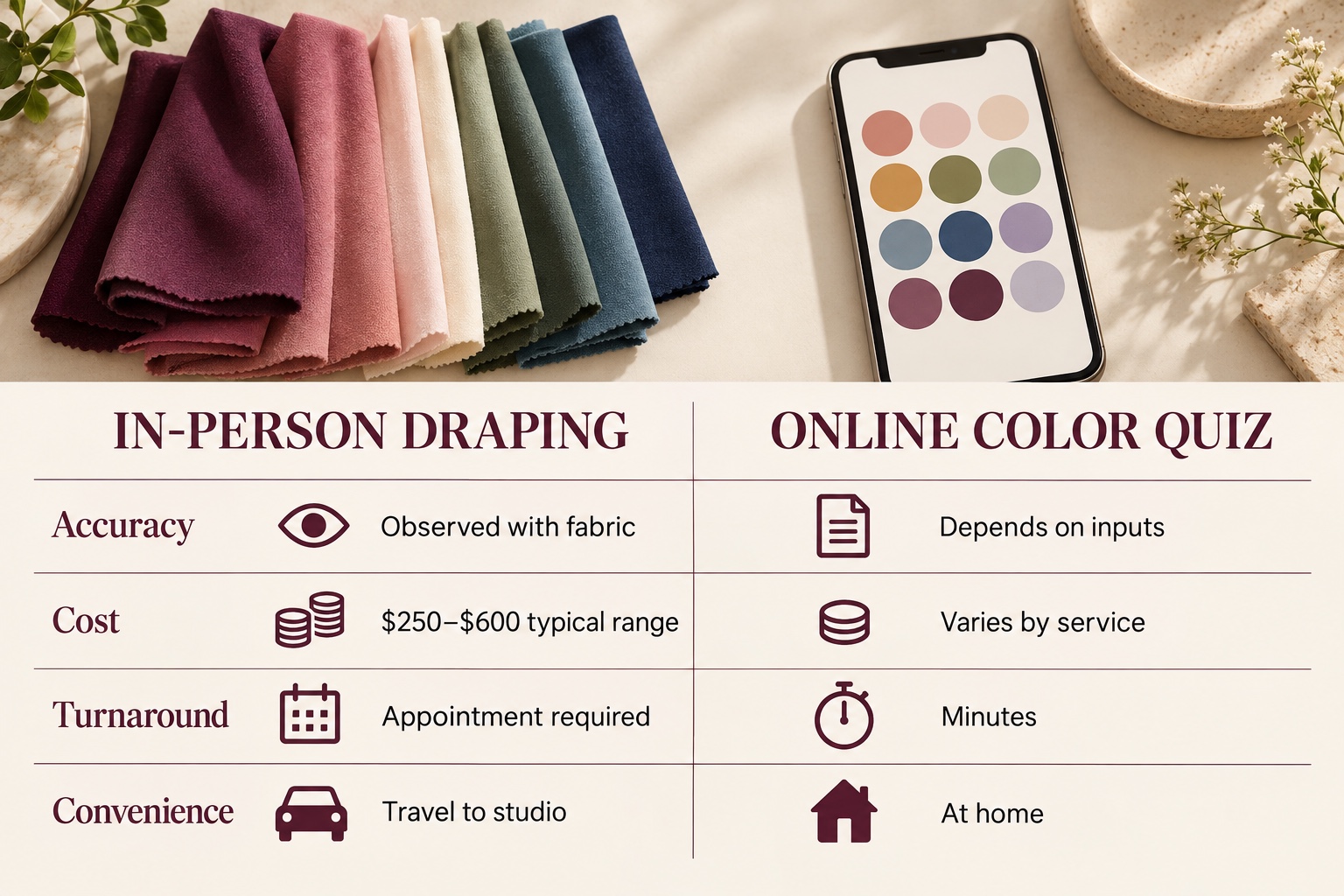
There is no single independent percentage that describes the accuracy of every consultant, quiz, camera, or palette system. In-person draping gives an analyst a live view of subtle fabric changes and opportunities to repeat a close call. Digital tools make it easier to start, revisit results, and compare examples without an appointment. The strongest method for you depends on how clear the result is and how carefully the comparison was made.
| Decision point | In-person draping | Online quiz or photo analysis |
|---|---|---|
| Color evidence | Physical fabric beside your face, observed live | Your answers or camera-rendered pixels |
| Borderline palettes | Consultant can retest subtle differences | Try alternate inputs and verify with real fabric |
| Time | Appointment, travel, and session time | Often minutes from home |
| Cost | Common quoted range in this brief: $250–$600; confirm locally | Free to paid; check the service terms |
| Best fit | Personal guidance or unresolved close comparisons | Fast first direction and low-commitment exploration |
Choose by the decision you need to make
If you simply need a few promising colors for a new top, an online result plus a daylight fabric check may be sufficient. If you are choosing expensive clothing, repeatedly land between two seasons, or want someone to demonstrate subtle color effects, the extra observation of a studio visit may be valuable. Neither path requires treating your palette as a rulebook: comfort, culture, occasion, and personal taste still matter.
Cost and Time Comparison: $300+ Studio Consultation vs Instant Online Access
The issue brief cites roughly $250–$600 for in-person draping. This is a planning range, not a universal price: location, consultant, session length, and deliverables change the quote. A low advertised rate may cover a short consultation without a take-home palette; a higher price may include a more detailed wardrobe review. Get the current price and inclusions directly from the consultant before booking. Online quizzes may be free, subscription-based, or charge for a report, so check what you receive before paying.
Time is more than the test itself. A studio session needs scheduling and travel but gives you immediate human feedback. An online quiz can be completed whenever you are ready, often in minutes, but taking a reliable photo and testing the suggested colors may take longer. If a quick online result would prevent an impulsive shopping decision, that speed has practical value. If you expect to make several costly wardrobe decisions, a longer session may be worth considering.
How to Get 99% Studio Accuracy at Home
No home method can promise 99% studio accuracy. That number would require a defined reference standard and a published comparison across users, lighting conditions, cameras, consultants, and palettes. You can, however, reduce avoidable errors and make an online assessment more useful. The goal is consistent evidence, not a guaranteed percentage.
A photo protocol that reduces common errors
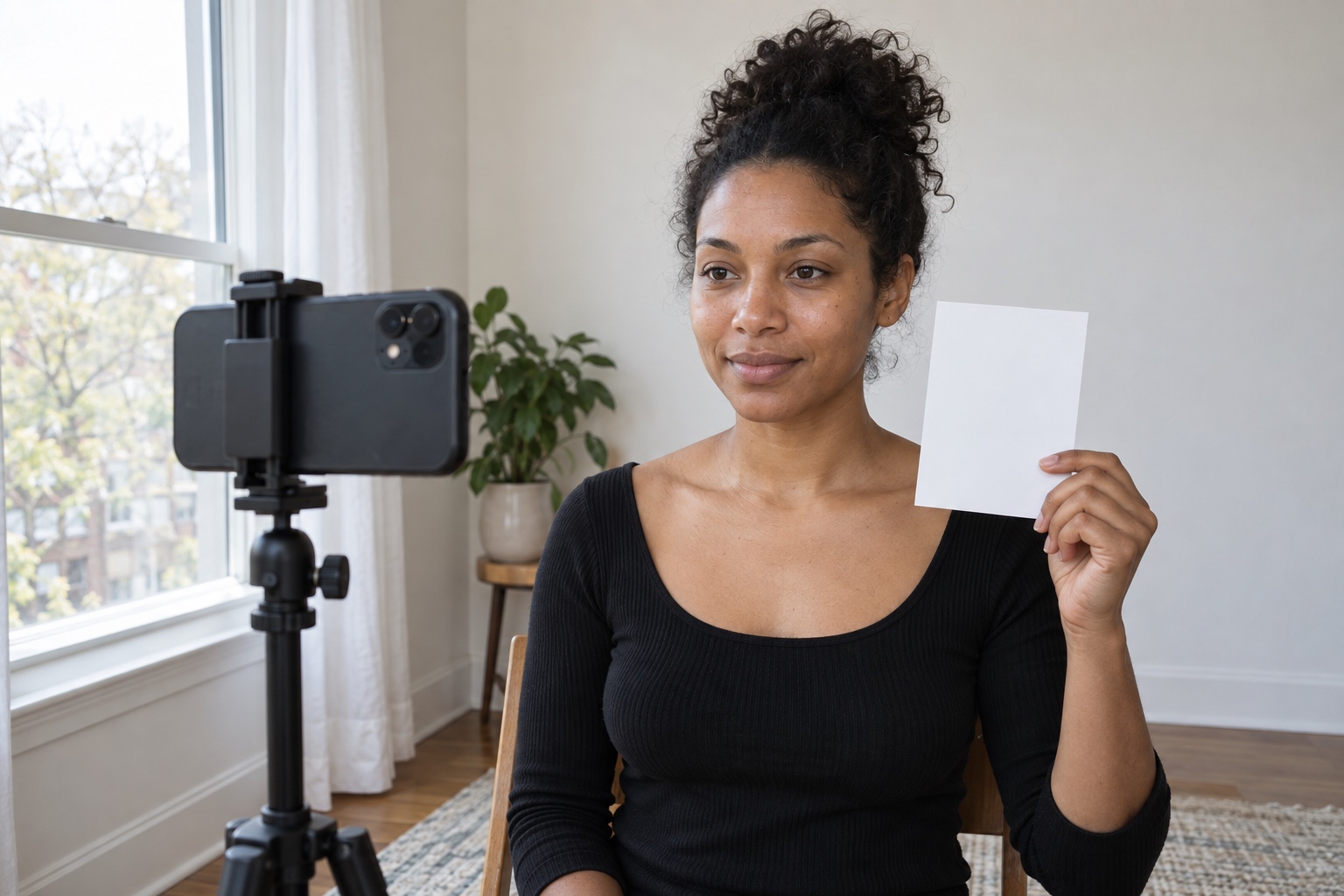
- Use soft daylight. Face a large window without direct sun striking your face. Turn off warm indoor lights, and avoid colored walls or clothing that reflect onto your skin.
- Show natural features. Remove makeup and beauty filters. Pull dyed hair away from your face if you are assessing your natural coloring; mention the dye if the tool asks.
- Keep the camera neutral. Use a plain background, eye-level camera, and a photo that includes your neck. Avoid portrait filters, heavy HDR, and extreme exposure. A white card in frame can help you notice a strong color cast, though it does not calibrate the camera.
- Repeat and compare. Capture more than one image in the same light and check whether the result is stable. Then hold candidate fabric colors near your face and compare them in the same position.
Compare fabric, not just photos of fabric. Put two equally sized tops or swatches under your chin, one at a time. Look for changes in how clearly you see your eyes and facial features, while keeping light and pose steady. Recheck on another day if you are uncertain. The gold-versus-silver test can add a clue, but jewelry preference alone cannot settle a palette.
What to Expect in Your Color Results: Seasonal Palette, Contrast Level, and Swatches
A useful result gives you a direction you can act on: a seasonal palette or nearby palette options, example swatches, a sense of light versus deep and soft versus bright, and practical ways to try those colors. Some services add contrast guidance or wardrobe examples; others provide only a season name. Before paying, check the sample report and whether it explains uncertainty. A precise-looking score is less helpful than a clear reason you can test with real clothing.
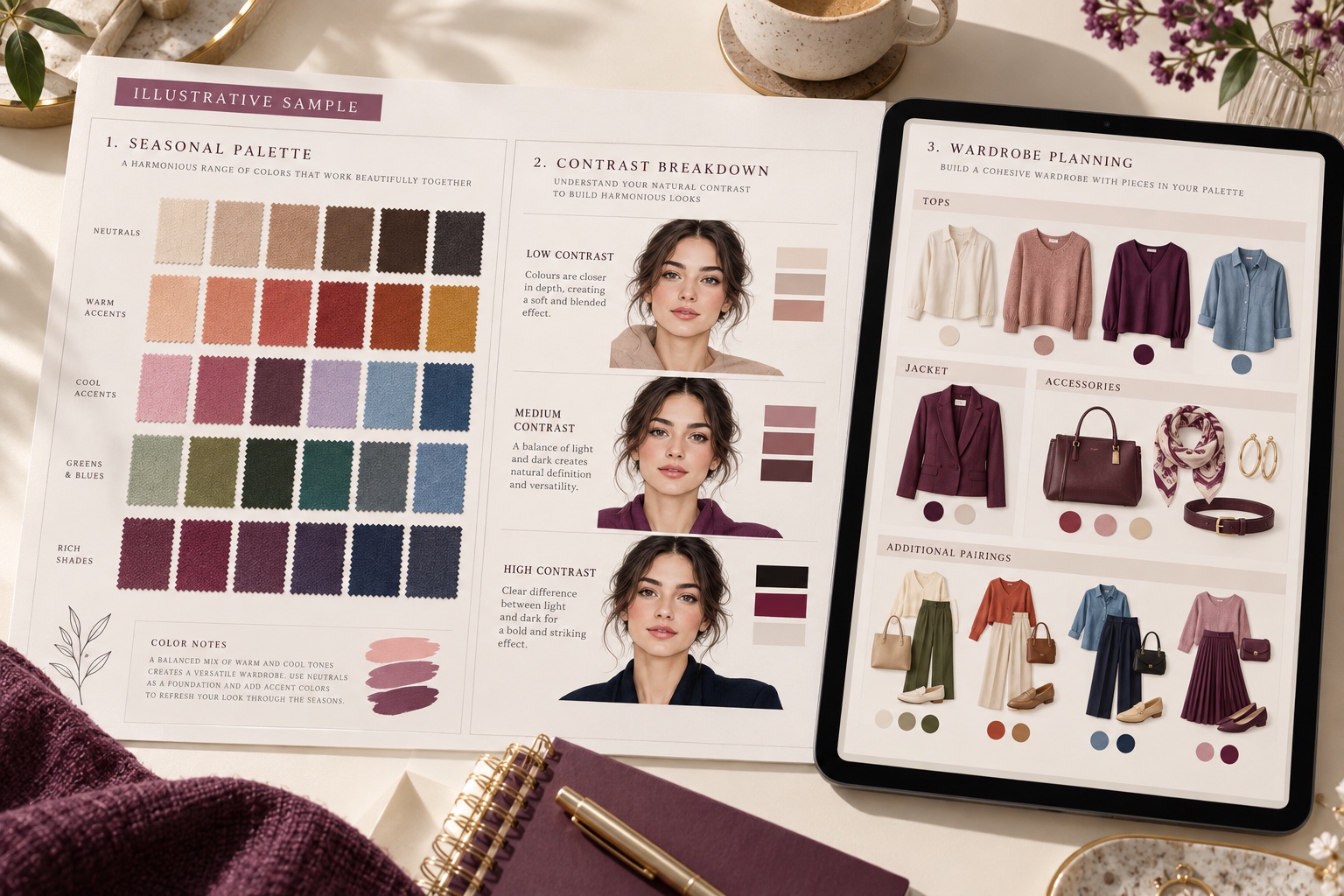
Season names are shortcuts for recurring color relationships, and systems can divide them differently. Treat the swatches as a working range. Test a few colors you already own before replacing a wardrobe. If the suggested palette improves some comparisons but fails others, explore a neighboring season or ask for an in-person second opinion. Our 12-versus-16-season comparison can help you see where adjacent palettes overlap.
The Hybrid Approach: Using an Online Quiz to Build Confidence Before In-Person Draping
Start with an online quiz, record its suggested palette, and choose two or three colors from that palette and a nearby alternative. Compare each pair in indirect daylight using actual fabric. Note which colors make facial features easier to see and which create a cast or stronger shadows. Repeat the comparison before buying anything substantial. If the differences are clear, you may have enough direction for everyday styling. If they remain close, bring your notes and swatches to a consultant; they give the conversation a useful starting point.
A hybrid approach also helps you ask better questions at an appointment: which two palettes are being compared, what changes between them, and which colors are the most informative tests? You can use the consultant's explanation to refine the online result without expecting both methods to produce identical labels. Ready for the first step? Try the color analysis quiz and use the result as a guide for a real-world fabric test.
Color Analysis Methods FAQ
Is online color analysis accurate?
It can give a useful starting direction, especially when inputs are clear and you check the result against fabrics. Accuracy varies by tool, photo conditions, and the palette system used. There is no universal accuracy percentage for online color analysis.
Can phone camera distortion ruin the result?
Yes, automatic white balance, exposure, filters, and colored reflected light can shift apparent skin and fabric colors. Use indirect daylight, a neutral background, no filter, and repeated photos. Confirm important choices with physical fabric near your face.
Is a color analysis drapes test possible at home?
Yes. Use two real garments or swatches of similar size, change only one color variable at a time, and keep your position and light steady. An at-home comparison is less controlled than a guided studio session but can reveal obvious winners.
Should I choose in-person color analysis or an online photo test?
Choose an online option if speed, access, and a provisional palette matter most. Choose in-person draping if you want live feedback, struggle with adjacent palettes, or are making a large wardrobe investment. You can also use both in sequence.
Does a digital result include the same things as a studio session?
Deliverables vary. Both may provide a palette and swatches, while a studio session can add live draping explanations and physical samples. Check the exact report, follow-up, and privacy terms of any service you consider.