Best Foundation for Olive Skin: How to Match Fair, Medium, and Deep Olive Tones
 Reviewed by Alexandra Gilmore
Find foundation for olive skin by matching depth first, then olive undertone. Compare fair, medium, and deep shades, fix orange or pink casts, and swatch in daylight.

Finding foundation for olive skin starts with two separate choices: depth and undertone. Olive complexions can be fair, medium, or deep, yet a standard peach or pink foundation at the right depth may still look orange or ashy. In indirect daylight, compare several narrow swatches along your jaw, then check whether the best one also blends into your neck and upper chest. Look for an olive or muted neutral option at your depth. If a close match is only a little too orange, test a tiny amount of cosmetic blue mixer; if it reads too pink, a suitable green mixer may help. Adjust gradually and recheck after the formula settles.
For clothing comparisons across richer complexions, see seasonal color analysis for dark skin tones.
This guide is about choosing and adjusting a base product, not deciding your color season. For a separate skin-tone check, use our olive undertone test. Olive is a color direction that can appear at any skin depth or in any ethnicity; it is not a fixed shade name.
Why Traditional Foundations Turn Orange or Ashy on Olive Skin
A bottle can seem close in store lighting and still leave a visible edge at home. The common problem is a mismatch in color direction. A peach-heavy formula can look orange against a more muted olive complexion. A rosy or cool-pink formula can leave a gray-pink cast. A very yellow foundation can look bright or mustard even if the label says warm. Coverage makes these shifts more obvious because the product hides more of the skin beneath it.
First distinguish a wrong undertone from a wrong depth. If the swatch is darker than both face and neck but its color direction looks natural, choose a lighter shade in the same family. If it is the right lightness but looks orange, pink, or yellow, switching depth alone will not solve it. Try a different undertone family at the same approximate depth. A sheer formula can disguise a small mismatch, but it cannot make a strongly orange full-coverage base truly disappear.
Compare a fresh swatch with the same swatch after the product has dried for the time you normally need to finish makeup. Some formulas change appearance as they set or as they mix with skincare. If that happens, judge the settled color rather than buying from the wet stripe. Test it with the moisturizer and sunscreen you actually wear, because a changed base routine can change the visual result.
The Anatomy of Olive Skin: Green Overtones, Melanin, and Gray Undertones
“Olive” describes a muted green, yellow-green, or green-gray quality in the skin's overall appearance. It is not literal green pigment sitting on top of the face, nor a diagnosis of skin biology. Natural skin color is affected by multiple pigments and by how light interacts with skin. In makeup shopping, the useful question is simpler: which foundation color visually recedes when placed beside your bare skin?
Surface redness can coexist with olive coloring. A cheek may look pink after exercise or cleansing while the jaw and neck still read muted. Matching only the reddest part of the cheek may produce a foundation that looks too rosy everywhere else. Compare an even area near the jaw and then check the result on the face as a whole. If you want a fuller explanation of visible olive cues, read how to identify olive skin.
Melanin influences how light or deep skin looks, but olive describes a color quality rather than a depth level. A fair olive face may look almost neutral indoors yet green-gray beside a peach swatch. A deep olive complexion can look rich and golden in sun while a red-brown foundation turns visibly warm at the neck. Product labels such as “golden,” “neutral,” and “olive” are helpful starting points, not standardized measurements across brands.
Fair Olive vs Medium Olive vs Deep Olive: Finding Your Exact Depth Level
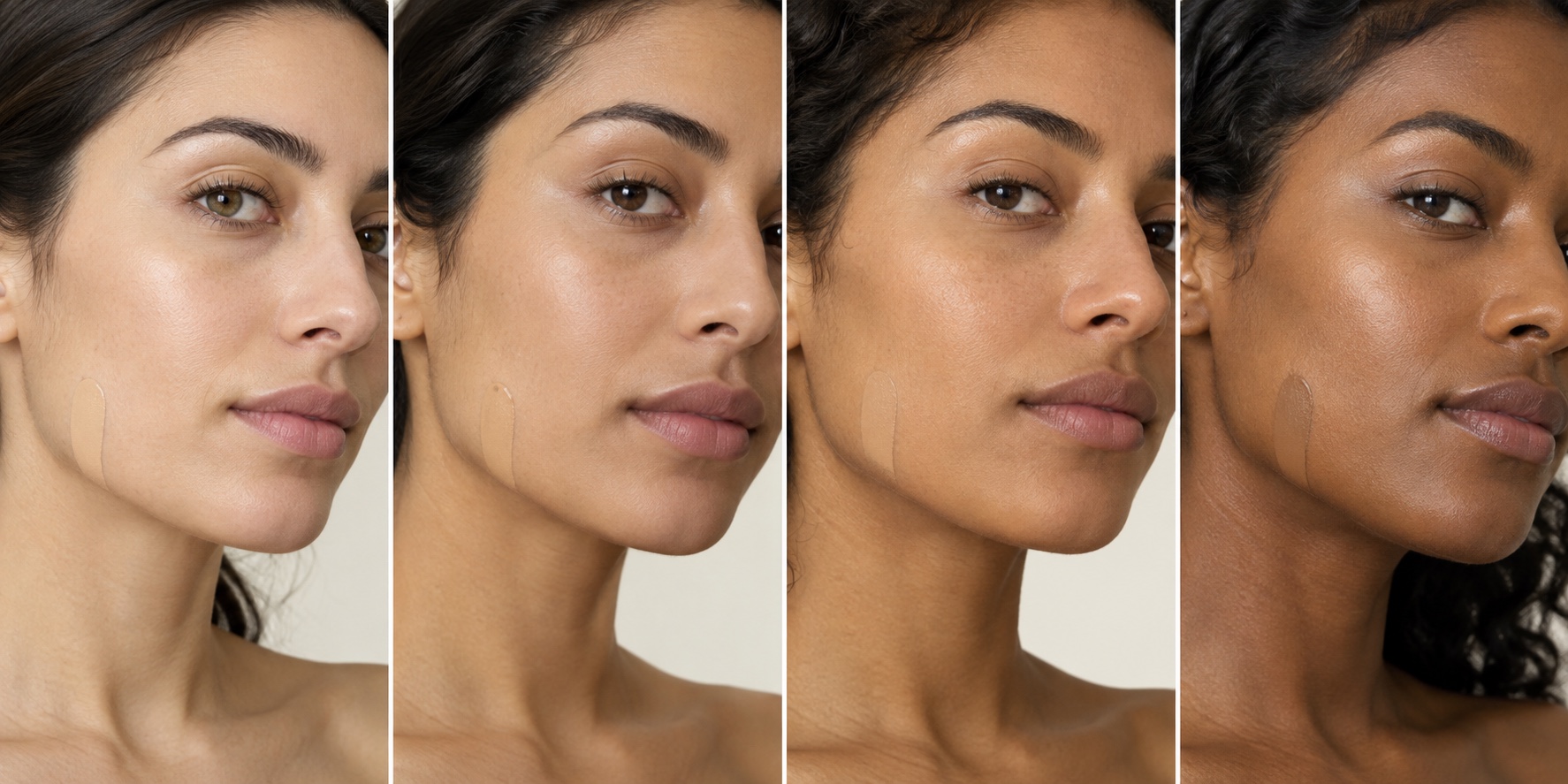
Choose depth before fine-tuning undertone. Put three candidate shades in the same color family next to one another: one that seems slightly light, one close, and one slightly deep. The best depth should not create a pale strip or a dark stripe when you view your jaw, neck, and chest together. Do this in daylight with no strong colored wall reflecting onto the skin.
Fair and light olive skin
Foundation for light olive skin often fails by being too peachy or too saturated. Begin with fair or light neutral-olive shades, then compare a muted yellow-neutral shade at the same depth. A light formula that appears gray in the bottle may be closer than a bright peach shade, but the skin test decides. Keep any mixer dose especially small in a pale base; concentrated pigment can shift it quickly.
Light-medium and medium olive skin
At medium depth, “golden” options are plentiful, but some are more orange than olive. Swatch a true olive, a golden-neutral, and a neutral shade side by side. The winner should keep the jaw connected to the neck without a yellow mask. If your face and chest differ because of sun exposure, select a compromise and use thin coverage, then adjust with bronzer only where you naturally tan.
Tan and deep olive skin
Deep olive does not mean simply adding darkness to a medium olive formula. Undertone can still lean green-gray, golden olive, or neutral olive, and a shade that is too red or orange remains visible even when depth is right. Compare shades on an area with similar pigmentation to your face and check the transition to your neck. Avoid using a pale green mixer to fix a deep foundation: it can add a chalky cast. Start with the closest deep shade and a mixer formulated to preserve depth, or choose a different product line.
| What you see in daylight | Likely issue | Next comparison |
|---|---|---|
| Orange edge at the jaw | Too peach or warm | Same depth, muted olive; tiny blue-mixer trial |
| Pink-gray or ashy veil | Too rosy, cool, or light | Check depth, then compare olive-neutral |
| Yellow or mustard mask | Too saturated yellow | Same depth, softer neutral or olive |
| Clear light or dark stripe | Depth mismatch | Lighter or deeper shade in same undertone family |
Cool Olive vs Warm Olive: Do You Lean Yellow or Green-Gray?
Warm olive often blends more naturally with softened yellow-gold than with pink. Cool olive may need a more gray-green or muted neutral direction. Many people sit between these descriptions; “olive” alone may be more useful than forcing a strict warm/cool label. The decisive comparison is two products at the same depth, one warmer and one cooler, placed beside the jaw in the same light.
Start with three stripes: a neutral, a warm-olive, and a cool or muted-olive candidate. Step back from the mirror. Which stripe disappears first, without making the lower face look dull or the neck unusually yellow? If one side is consistently better but still imperfect, move one small step toward it. Our warm versus cool olive guide focuses on that distinction across clothing and skin.
Do not use vein color or a gold-versus-silver jewelry result as the sole foundation rule. Lighting, skin depth, and surface color can make those clues inconsistent. A jawline product test answers the shopping question more directly. A foundation can suit your skin even if its name lacks the word olive.
The Secret Weapon: How to Use Blue and Green Foundation Adjusting Drops
A mixer is useful when you already own a foundation with nearly correct depth and texture. Blue reduces an overly orange impression; green can mute a formula that reads too pink or red. It does not fix every mismatch. If a shade is several levels too deep, too pale, or too opaque for your preference, start with a different foundation instead.
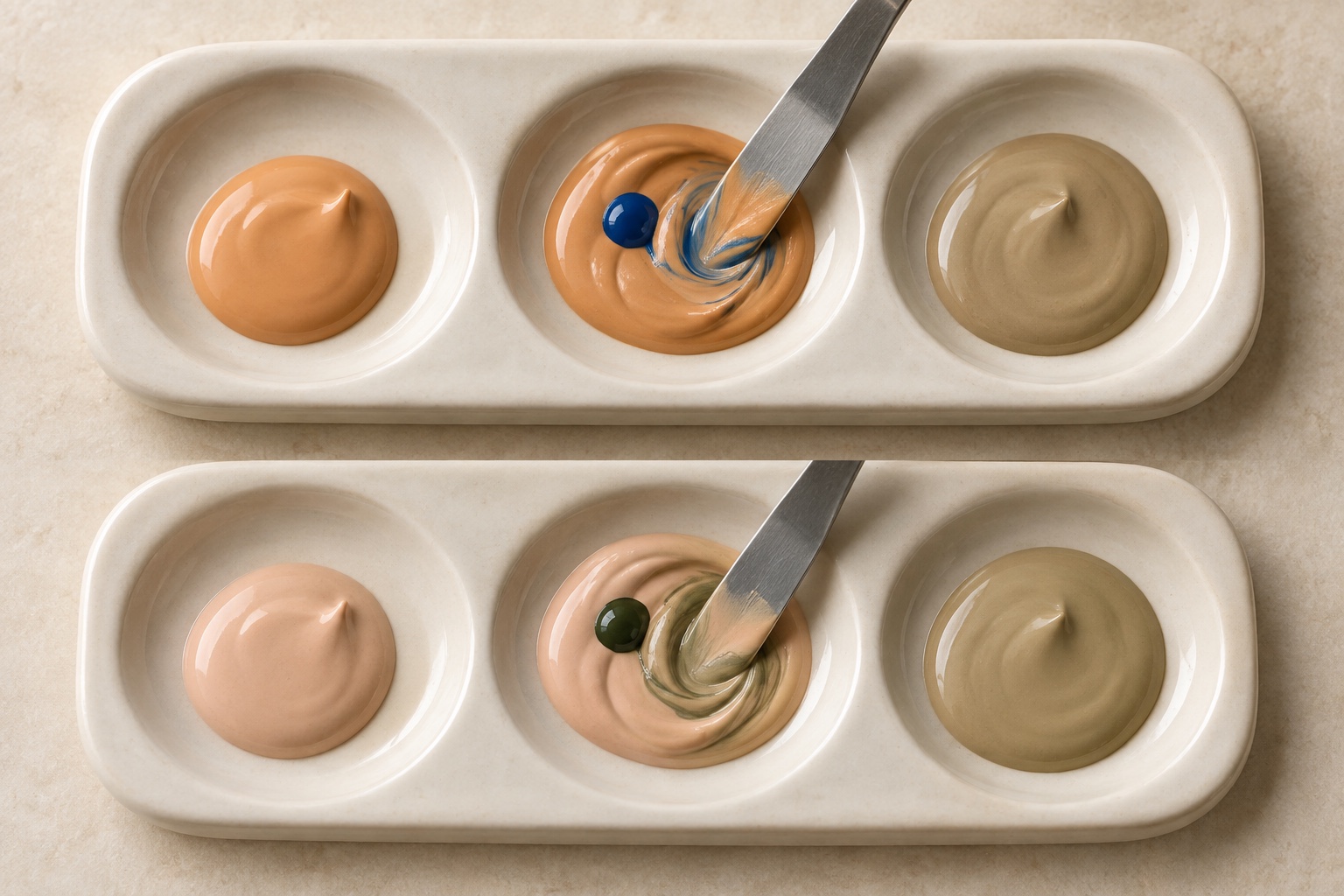
- Place one application-sized amount of foundation on a clean palette, not into the bottle.
- Add the smallest practical touch of a cosmetic mixer made for use with foundation. Blend thoroughly.
- Swatch the original and adjusted mixtures side by side along the jaw. Wait for both to settle.
- If the adjusted stripe is still orange or pink, repeat with another very small addition. Stop when the color begins to look gray, green, blue, or too light.
- Check the finish and wear on a small area before mixing enough for a full face. Formula compatibility varies.
For a concrete product example, e.l.f. explains blue corrector as a way to tone down an overly warm foundation. Its advice also stresses using very little product. A corrector meant only to cover redness may not blend or wear like a foundation mixer; follow the product's instructions. Mixing sunscreen into foundation can undermine the sunscreen's intended application, so keep sun protection as its own step.
One useful shopping example is MAKE UP FOR EVER's current shade listing, which explicitly includes warm-olive options from very fair through deeper skin. Availability and shade names can change, so use its labels to shortlist swatches rather than treating any named shade as a universal match.
How to Swatch Correctly: Jawline, Neck, and Chest Under Natural Daylight
Swatch where the face meets the neck, then verify the result across three visible areas. Remove makeup from the test patch and let moisturizer or sunscreen settle first. Place narrow stripes from the lower cheek across the jaw; do not blend them together immediately. Move into indirect daylight, away from direct sun and colored indoor bulbs. A mirror is more reliable than a phone photo with beauty filters or automatic white-balance shifts.
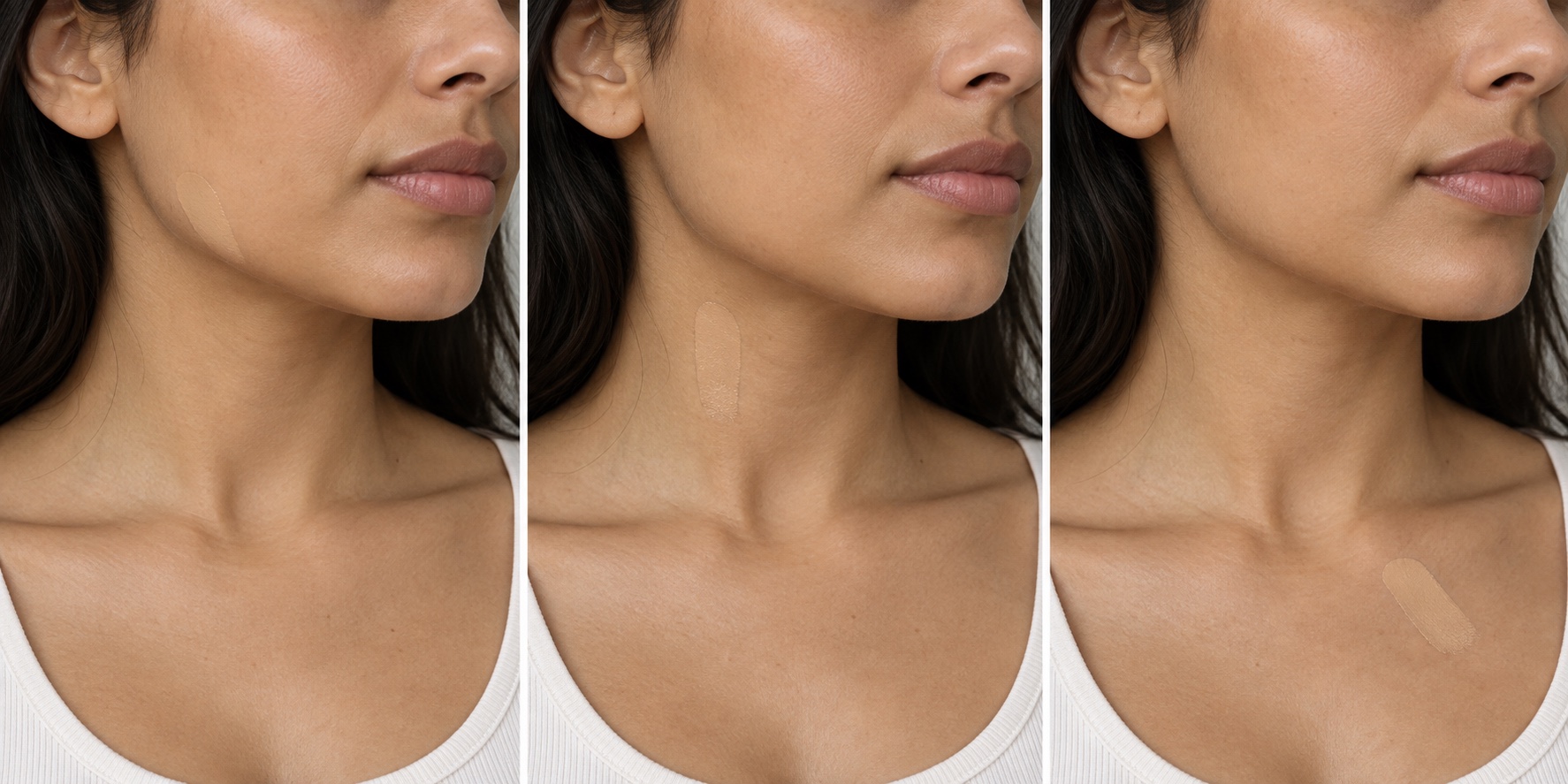
The jawline shows whether the base matches your face. The neck base reveals an obvious mask. The clavicle or upper chest is a useful cross-check when it will be visible with your clothing. The goal is a natural transition, not three perfectly identical body areas. If the chest is much warmer from sun, prioritize the face-to-neck edge and use the lightest coverage that gives the result you want.
Give each candidate time to set. Look straight on and from the side, then lightly blend only the most promising shade over a small section. Check it again after wearing it for an hour or two. A color that vanishes initially but turns orange later may need a different formula, a different skincare pairing, or a slightly cooler starting shade. Keep a note of shade name, finish, and what happened in daylight so you can repeat the test.
Setting Powder and Concealer for Olive Skin
A good foundation match can be altered by the layers on top. A yellow “banana” powder may turn a balanced olive base noticeably yellow, especially at fair or light depth. A very white powder can create a gray cast. Try a translucent or softly tinted powder on one side of the face and view it in daylight before using it all over. Apply the smallest amount needed for your preferred finish.
Choose concealer by its job. To cover a spot, use a shade close to your matched foundation in both depth and undertone. To brighten under the eyes, a slightly lighter product may be appropriate, but a pale pink triangle can stand out against an olive base. Compare the concealer at the outer eye and cheek, not only on the back of your hand. If you use a peach corrector for under-eye darkness, apply it only where needed and layer a skin-compatible concealer over it.
Texture matters too. Heavy powder can emphasize dryness; a very luminous base can look different under flash or strong sun. Shade matching is easiest when finish and coverage are already close to what you actually want to wear. Do not buy an ill-fitting full-coverage formula solely because the bottle's undertone name looks promising.
Olive Foundation FAQ
Why do neutral foundations look pink on me?
“Neutral” is a brand-specific label, not a universal olive category. Some neutral formulas balance peach and pink, which can still read rosy beside muted green-gray skin. Compare another neutral formula and an explicitly olive shade at the same depth. If both look pink, a carefully tested green mixer may help, but a different formula is often simpler.
What brands cater to olive skin?
Shade ranges change, so look for current descriptions such as olive, warm olive, or muted neutral and verify them with real swatches. The MAKE UP FOR EVER range linked above is one example with explicit olive labels. Do not assume every olive-labeled shade in a line shares the same depth or temperature. Sample before buying where possible and check return policies.
Should I choose a green tint foundation mixer or blue?
Choose based on the error in your current foundation. If it looks orange, try a tiny blue addition. If it looks red-pink, try a tiny green addition. If it is simply too dark, neither pigment is the right primary fix. Test one adjustment at a time to see what changed.
Can olive skin have a cool undertone?
Yes. Olive describes a muted greenish quality, while cool or warm describes its relative temperature. A cool olive complexion can look more green-gray than golden. Compare equal-depth foundation stripes in indirect daylight rather than deciding from one feature such as vein color.
What foundation color is best for olive skin?
There is no single foundation color for olive skin. The best shade matches your depth, recedes at the jaw, and connects naturally to the neck after it settles. Fair, medium, and deep olive skin each need their own depth and may lean warm, cool, or neutral within the olive range.
If you have a workable base and want to coordinate the colors around your face, take the interactive color analysis quiz. Its palette suggestions can help with makeup and clothing choices; keep the foundation decision grounded in an actual skin swatch.
💫 Discover Your Complete Color Palette
Ready to discover all the colors that make you look radiant? Our comprehensive color analysis will reveal your complete personal palette - perfect for hair, makeup, and wardrobe decisions.
Take Color Analysis Quiz →