Best Clothing Colors for Gray Hair: Styling and Palette Guide
 Reviewed by Alexandra Gilmore
Choose clear jewel tones and versatile neutrals by your hair brightness, skin undertone, and contrast.

The best clothing colors for gray hair balance the brightness of your silver, pewter, or salt-and-pepper strands with your skin undertone and facial contrast. Sapphire, emerald, ruby red, cobalt, plum, and clear fuchsia are strong starting points because their definition can frame gray hair beautifully. Navy, charcoal, and crisp white make reliable neutrals. Muddy mustard, warm beige, and faded khaki sometimes reflect a yellow or flat cast, especially beside cool silver hair; compare them with clearer alternatives before ruling them out. A gray hair color palette is personal: the same silver hair can sit beside cool, warm, light, or deep skin, so test fabric at your own face.
If your hair has warm copper or auburn tones instead, use the clothing color guide for redheads.
Start with one top you already love and compare it with a similar garment in a different temperature or brightness. Watch the relationship among hair, skin, eyes, and fabric in steady daylight. The aim is an outfit that feels coherent to you, not a rule that limits what you can wear. If you want a wider framework for those comparisons, our guide to finding your best colors explains the dimensions behind a personal palette.
How Gray Hair Shifts Your Color Season and Facial Contrast
Hair gets its color from melanin; lower pigment can make growing strands look gray, silver, or white, as Cleveland Clinic explains. In wardrobe terms, a shift from warm or deep hair to a lighter, cooler-looking silver changes one part of the color frame around your face. Your underlying skin undertone does not automatically become cool, and gray hair does not automatically make you a Winter or Summer season.
Think of three separate questions. Is the gray hair bright white or softly smoky? Is the skin's response to fabric generally cooler, warmer, or mixed? And how much light-dark contrast is there among hair, brows, eyes, and skin? A bright silver head of hair with dark brows may support sharply defined cobalt and white. Soft pewter hair with gently blended features may prefer a slightly softened teal or plum. A deep complexion with silver hair may look striking in high contrast; a fair complexion with the same hair may prefer a smaller area of the same saturated color. These are styling hypotheses, not fixed categories.
Keep your existing color-season label if its clothes still work. If familiar warm browns feel less connected after your hair changes, retest their cooler or clearer neighbors rather than replacing an entire wardrobe. For a structured refresher, see our 12-season color analysis guide. It compares temperature, depth, and clarity, but real fabrics remain the final check.
The 4 Types of Gray Hair
Natural gray hair rarely looks like one uniform paint chip. The names below describe the visible mix of strands and depth; they are practical wardrobe cues, not medical or seasonal classifications. Hair can move between these descriptions as lighting, styling, and the ratio of pigmented strands change.
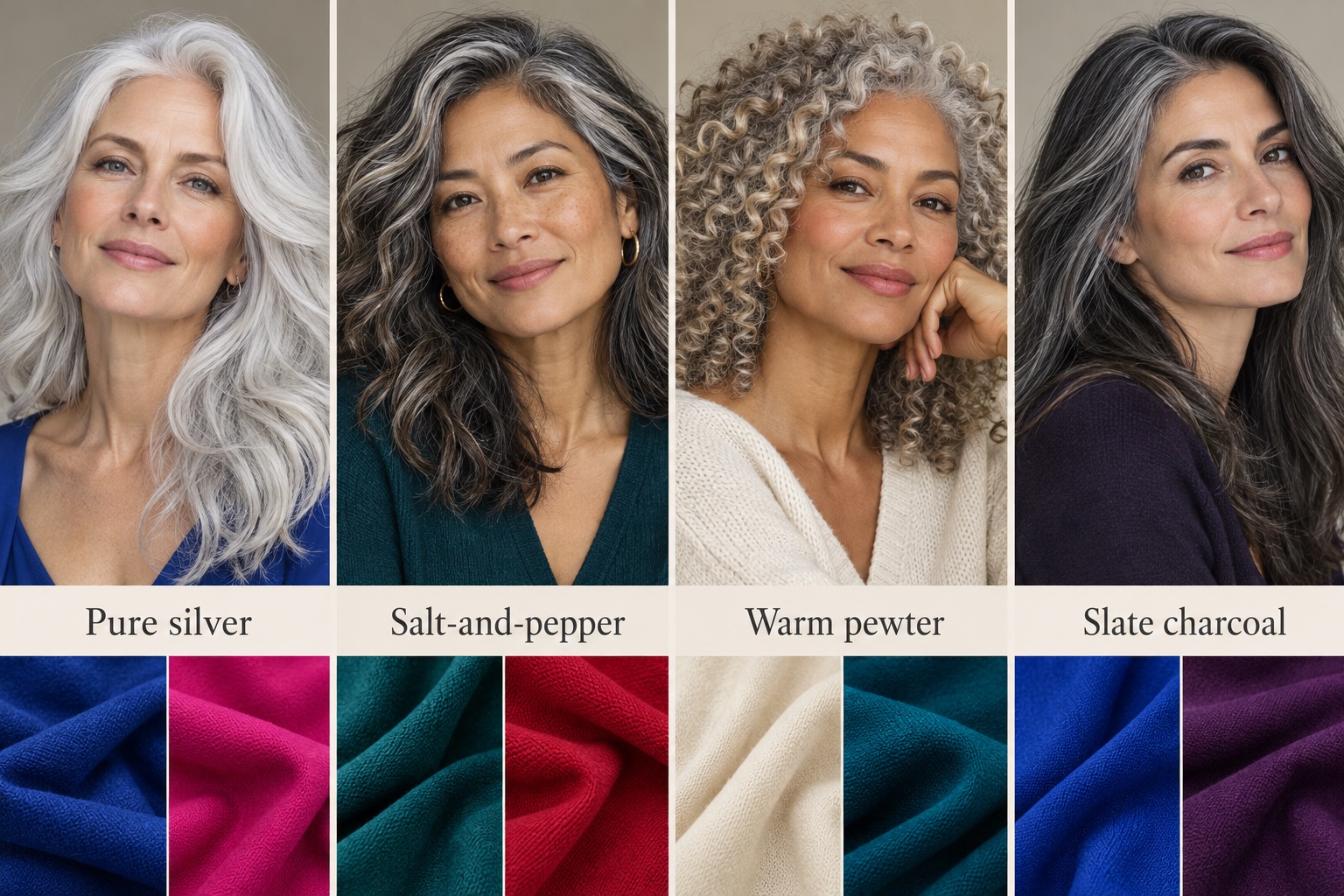
Pure silver or white
Mostly white strands can look luminous and light-reflective. Sapphire, cobalt, berry, fuchsia, crisp white, and charcoal give that brightness a clear edge. If those feel too sharp on your complexion, try a gentler medium blue or raspberry. A near-white sweater can merge with silver hair in a pleasing monochrome outfit; add a darker collar or earrings when you want more definition.
Salt-and-pepper
Dark pigmented strands mixed with white create their own light-dark pattern. Repeat that contrast with ink navy and white, charcoal and ruby, or deep teal and light gray. A tiny black-and-white print can echo the hair, while a solid emerald blouse gives the eye one color to settle on. If the pattern feels busy, keep one garment solid and let the hair supply the texture.
Warm pewter or cream-white
Some gray hair reads beige, champagne, or softly warm under neutral light. Warm ivory, peacock teal, clear coral-red, and softened emerald can bridge the hair and a warmer complexion. Avoid assuming the hair has changed your skin undertone. If stark optical white feels separate, compare it with clean warm ivory. Choose a deliberate cream, rather than a dull beige that disappears into both hair and skin.
Slate charcoal
Predominantly dark gray hair may retain substantial depth. Royal cobalt, plum, ruby, and bright white can create focus; navy and charcoal make understated foundations. If charcoal near the face blends too closely with the hair, lift it with a white collar or jewel-tone scarf. If vivid hues overwhelm your features, choose deeper, slightly muted versions of the same colors.
Top Flattering Clothing Colors for Gray Hair
Jewel tones are popular because their clear color reads distinctly beside achromatic gray. The most useful version depends on undertone and contrast. Test colors of similar darkness and fabric finish so one does not win simply because it is shinier or lighter. Adobe's hue, saturation, and brightness explanation is a helpful vocabulary guide: a vivid blue and a pale gray-blue differ in intensity and brightness as well as hue.
| Color | Why try it | Easy outfit | If it feels too strong |
|---|---|---|---|
| Sapphire blue | Clear blue defines silver and white strands. | Sapphire knit, charcoal pants, silver earrings. | Try denim or deep teal blue. |
| Emerald green | Rich green adds color without relying on yellow. | Emerald blouse, navy trousers, white shirt collar. | Try pine or softened teal. |
| True red or ruby | A defined red creates a confident focal point. | Ruby scarf over navy and white. | Try cranberry or deeper garnet. |
| Royal cobalt | Its bright blue edge works well with clear silver. | Cobalt sweater, dark denim, charcoal coat. | Use cobalt as a scarf or bag. |
| Plum | Deep violet adds richness beside slate and pewter. | Plum blouse, charcoal suit. | Try muted aubergine. |
| Crisp fuchsia | Cool pink can enliven a neutral outfit. | Fuchsia shell under a navy blazer. | Try berry or raspberry. |
This is a decision table, not a list of universally flattering colors. Put two tops of similar weight beside your face: sapphire versus smoky blue, emerald versus olive, ruby versus rust. Stand in indirect daylight with a neutral background. Notice whether the color appears connected to your eyes and skin, and whether you like the overall effect. Repeat with another pair before making a purchase. A gold versus silver jewelry comparison can add another clue, but it cannot settle a clothing palette by itself.
Colors to Avoid With Gray Hair (and How to Wear Them Anyway)
“Avoid” is shorthand for colors worth checking carefully at the neckline. Beige, mustard, and faded khaki can be difficult when their undertone conflicts with cool silver hair or their low contrast blends into the face. A washed-out pastel can also make light silver hair and fair skin merge into one pale area. None of these shades is forbidden. A warm skin undertone may look excellent in mustard; a soft complexion may prefer muted sage to a strong emerald.
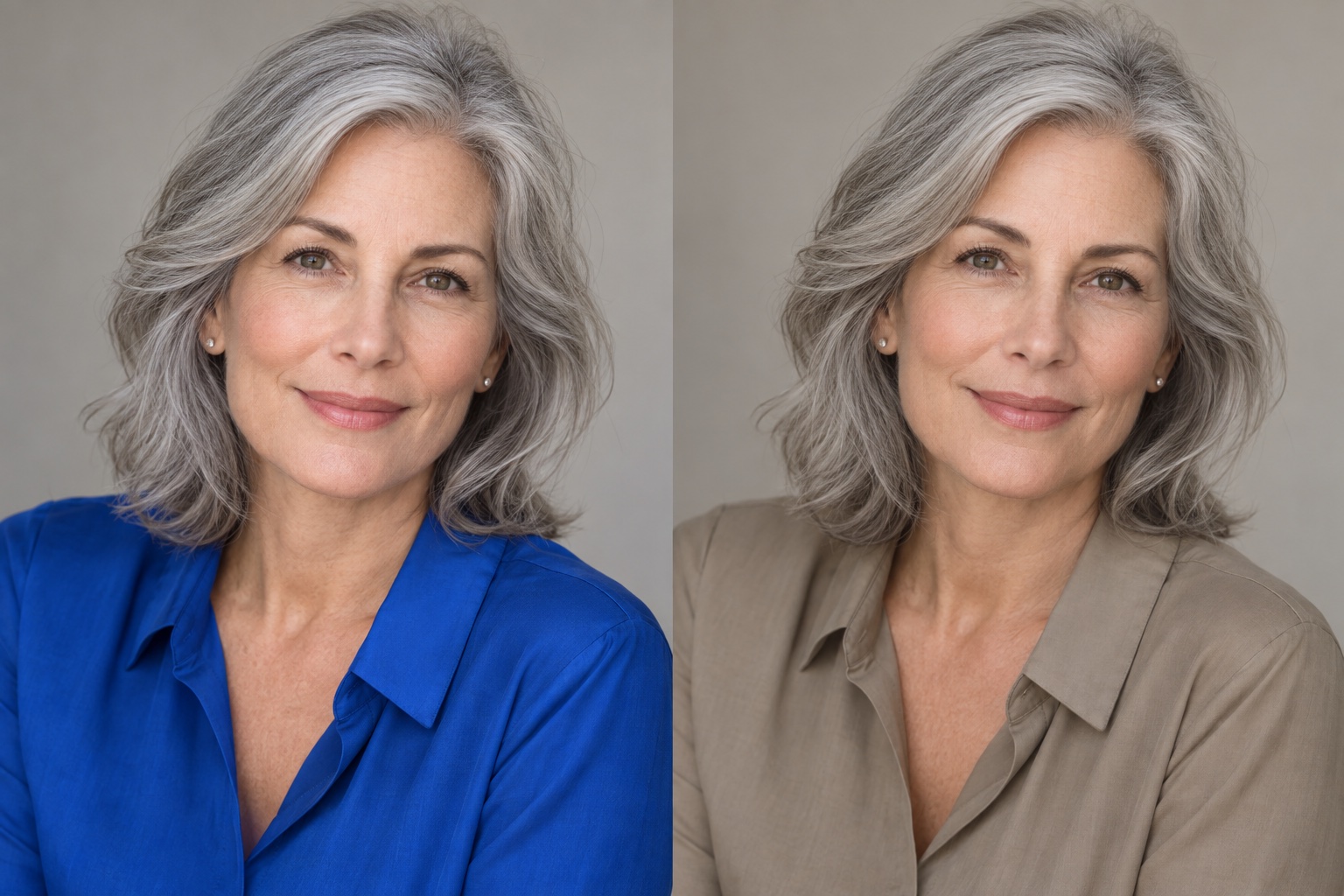
Before retiring a garment, test three fixes. First, move the doubtful color below the waist, where it reflects less light toward the face. Second, insert a reliable neckline color: a white collar between a khaki jacket and your skin, or a berry scarf above a beige coat. Third, choose a cleaner version of the shade: ivory instead of muddy beige, rich olive instead of faded khaki, or lemon-yellow instead of brownish mustard if a clear bright palette suits you. These changes preserve clothes you enjoy while adjusting the near-face effect.
Make the comparison fair. Use similar fabric finishes and hold each swatch at the same height. Turn off strongly yellow indoor lighting, which can make cool grays look warmer. Do not use an automatically corrected phone photo as the only evidence. If both colors seem fine, wear the one that suits your style. Your preferences matter more than a blanket list of colours to avoid with grey hair.
The New Neutrals: Replacing Brown and Tan With Navy, Charcoal, and Crisp White
Brown and tan are not inherently wrong with gray hair, but many wardrobes were built when darker or warmer hair supplied a different frame. If a camel coat or chocolate top now feels visually detached, compare it with navy or charcoal in the same garment area. Deep navy retains the ease of a dark neutral while pairing with sapphire, emerald, ruby, and fuchsia. Charcoal repeats the depth in salt-and-pepper or slate hair. Crisp white can echo silver highlights and provide an intentional light contrast.
Choose the white according to your skin. Optical white has a clean, cool edge; warm ivory has a softer yellow undertone. One may integrate better at the collar even when the hair itself is bright silver. A white button-down with charcoal trousers is a useful baseline because you can change just one accessory and see what the color contributes. If black works better than charcoal, keep it. The choice is about the effect at your face, not a requirement to replace every dark piece.
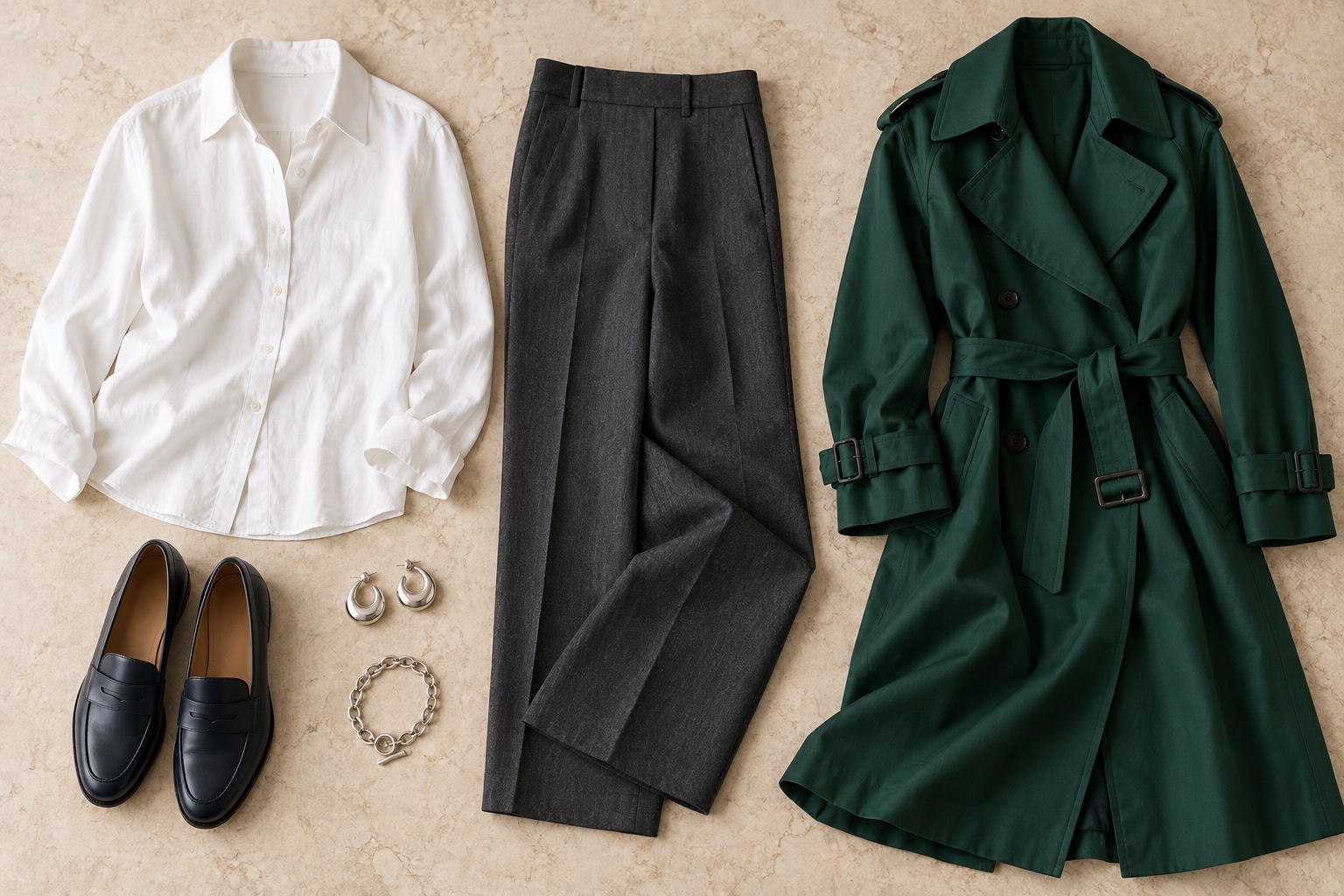
Build a compact gray hair color palette outfits plan: one dark base, one light base, two favorite accents, and a metal finish. For example, navy trousers and a white shirt combine with either an emerald coat or a plum knit. Add silver jewelry if it feels crisp, or a warmer metal if that relates better to your skin. The clothing color and wardrobe guide shows how to repeat this small-palette method across more garments.
How to Coordinate Jewelry and Eyewear Frames
Jewelry and glasses occupy the same visual zone as hair, so they can strengthen or soften its effect. Polished silver and white gold repeat a cool, luminous silver note. Brushed silver or pewter feels quieter beside softer gray hair. Gold can still work when it suits your skin: a warm complexion does not lose that relationship simply because hair has gone gray. Mixed metals can bridge warm skin and cool-looking hair without forcing a single answer.
For eyewear, gunmetal frames echo slate or salt-and-pepper hair and make a neat low-color frame. Black frames add definition; translucent gray frames give a softer edge. Tortoiseshell adds warmth and pattern and may connect well with warm pewter hair or warm skin. Compare frame depth and shape as carefully as color. A thick black frame and a thin gold frame differ in visual weight, so a “metal test” using those two proves little.
Try frames or earrings against a plain top in daylight. Ask whether your eyes remain easy to see, whether the frame relates to the hair rather than disappearing into it, and whether the metal looks comfortable beside your skin. If your favorite frames are a challenging color, repeat that color in a small scarf or lip shade for a deliberate connection. These are proportion choices, not prescriptions.
Real Outfit Formulas for Gray Hair
Casual chic
Pair dark indigo jeans with a crisp white shirt and a sapphire knit, then add polished silver earrings. The shirt creates a light boundary at the neckline while the blue contributes color. For a softer effect, substitute deep teal or denim blue. A warm-pewter version could use warm ivory under a peacock cardigan. Keep the jeans you own; the near-face layer does most of the color work.
Corporate power dressing
Start with charcoal trousers and a navy blazer, then choose an emerald, plum, or fuchsia shell. A small visible strip of accent color is enough to test whether jewel tones help. A white or ivory blouse can create the same clarity with less color. If your office dress code is restrained, repeat the accent in a scarf, tie, or subtle eyeglass frame. The combination stays practical and adaptable across meetings.
Elegant evening wear
A deep plum dress or ruby blouse with dark trousers can make gray hair an intentional part of the look. Choose jewelry according to the dress finish: polished silver adds light beside matte fabric; brushed metal keeps a satin dress quieter. Black evening wear is also possible, especially with a white collar, clear jewel-tone wrap, or bright lipstick when you want more definition. Try the complete outfit in the lighting you expect to wear it, because warm restaurant light changes how both hair and clothes appear.
When planning outfits, photograph the entire combination only after choosing colors in person. Camera white balance can shift silver hair and garment temperature. Save the combinations you liked and note why: “cobalt near face, charcoal below” is more useful than “must wear blue.” The idea is to make your next outfit easier to assemble.
Gray Hair Color Palette FAQ
Does warm skin look bad with gray hair?
No. Warm skin and gray hair are a normal combination. Look for a bridge between them: warm ivory, peacock teal, clear coral-red, or a metal finish that complements the skin. Compare these with cool jewel tones and keep the colors that look coherent on you. Hair color alone does not determine undertone.
Can I still wear black with gray hair?
Yes. Black can give silver or salt-and-pepper hair striking contrast. If it feels harsh at the neckline, add white, berry, or cobalt close to your face, or replace a large black top with charcoal or ink navy. A black skirt or trousers can remain a useful base even when another color works better as a top.
What about red lipstick?
Red lipstick can be an elegant accent with gray hair, especially when it relates to another color in the outfit. Compare a clear blue-red with a warmer tomato or brick red against your skin; try similar opacity so the test is fair. A berry lip may suit a softer plum wardrobe, while a ruby lip can bring focus to navy and white. Wear the shade you enjoy rather than treating gray hair as a lipstick rule.
Are the best colour clothes for grey hair different from the best colors for gray hair?
No. “Colour” and “grey” are British spellings of the same ideas. The useful distinction is among hair brightness, skin undertone, and facial contrast. A color name alone cannot tell you whether the exact fabric at your neckline will work.
If you want a starting palette to test against your own clothes, try the interactive color analysis quiz. Use its suggestions as a shortlist, then compare real garments in consistent daylight and keep the combinations that feel like you.
💫 Discover Your Complete Color Palette
Ready to discover all the colors that make you look radiant? Our comprehensive color analysis will reveal your complete personal palette - perfect for hair, makeup, and wardrobe decisions.
Take Color Analysis Quiz →