Best Clothing Colors for Redheads: Flattering Palettes by Undertone
 Reviewed by Alexandra Gilmore
Find emerald, earth, and jewel-tone outfits that work with copper, auburn, and strawberry-blonde hair.

The best clothing colors for redheads start with rich greens and blue-greens, then shift with your skin undertone, hair depth, and preferred contrast. Emerald, forest green, and deep teal create a striking contrast with copper hair. Warm-toned redheads can also try rust, terracotta, camel, and chocolate brown; cooler complexions may prefer cobalt, plum, and berry. For auburn hair, deepen the colors; for strawberry blonde, soften them. Very bright orange and acidic yellow-green are useful colors to test cautiously near the face, rather than automatic bans. Hold real fabrics beneath your chin in steady daylight: the best shade makes the whole face look balanced, while still feeling like you.
There is no single redhead palette. The same emerald sweater can look vivid against copper curls, quiet beside dark auburn, and intense beside pale strawberry blonde. Clothing color also changes with fabric texture, garment size, makeup, and lighting. Use the guide below as a practical starting point for what colors look good with red hair, then keep the combinations you actually enjoy wearing.
Red Hair Is Not Just One Color: Copper, Auburn, and Strawberry Blonde Nuances
Red hair ranges from pale strawberry blonde through bright ginger and copper to deep auburn. The hue changes how much contrast a shirt creates beside the hair. Copper usually reads orange-red and can stand out dramatically against deep green. Auburn contains more brown or wine-like depth, so a saturated forest green or dark teal often feels more balanced than a barely tinted mint. Strawberry blonde is lighter; softer sea glass, muted sage, and warm ivory may feel easier than an equally large block of dark emerald.
Depth matters as much as the name on a dye box. A person with dark auburn hair and strong brows may happily wear deep cobalt or plum, while someone with light copper hair and gentle contrast may prefer softened versions. A dyed redhead can use the same method as a natural redhead: compare colors beside the face as the hair looks today. Your wardrobe need not change completely when the hair changes; move your strongest colors into scarves, collars, or earrings first and assess what still works.
Freckles, pale skin, and green eyes are familiar redhead images, but red hair occurs with many skin tones and eye colors. Avoid using a photograph of somebody else as a test for your own palette. If your question is specifically about fair skin, our colors for pale skin guide adds a useful comparison without assuming all fair complexions have the same undertone.
Undertone Diagnosis for Redheads: Warm Golden vs Cool Rose or Porcelain Complexions
Hair warmth does not prove skin warmth. A copper-haired person can have a golden, rosy, neutral, or olive complexion. Undertone describes the color direction you see across the skin, while surface redness, freckles, tanning, and makeup can alter the first impression. If your cheeks flush, that surface color alone does not make you cool-toned. Likewise, a tan does not automatically make you warm-toned.
Compare two similar fabrics at the neckline: warm cream versus cool off-white, then terracotta versus berry, and golden olive versus blue-green teal. Keep the fabric area, light, and makeup consistent. Look for repeated changes in overall clarity and ease around the eyes and mouth, rather than judging whether a wrist vein appears green or blue. Our undertone guide explains several at-home clues and why one clue is rarely decisive.
A warm-leaning complexion may feel harmonious in ivory, camel, cinnamon, and warm forest green. A cool-leaning complexion may prefer a blue-based emerald, cobalt, cranberry, charcoal, and a cooler white. Neutral complexions can often borrow from both groups by matching the depth and intensity to their features. Olive skin can be warm, cool, or neutral too; if colors seem unexpectedly yellow or pink beside it, compare the warm and cool olive examples. These are styling observations, not clinical tests.
The Timeless Power Palette: Why Greens and Teals Create Harmony
Emerald is a classic answer to “what colors look good on redheads” because green contrasts with the red-orange family in hair. On a traditional artist’s color wheel, opposite hues create strong visual contrast. Adobe’s guide to complementary colors explains that opposite relationship. Hair is never a flat pigment swatch, however, and “opposite” does not establish a person's skin undertone or guarantee a flattering result. The precise green matters.
Start with deep emerald if you enjoy a clear, dressed-up effect. Choose forest pine for a quieter, slightly earthy version, or rich teal when a blue-green bridge feels easier. Muted sea glass and sage offer gentler options for light or soft coloring. A cool, bluish emerald may make a rosy complexion look more at ease than a very yellow-green leaf shade; a warmer forest green may integrate better with golden skin. Try a scarf before buying a coat, because a large coat makes a stronger color statement.
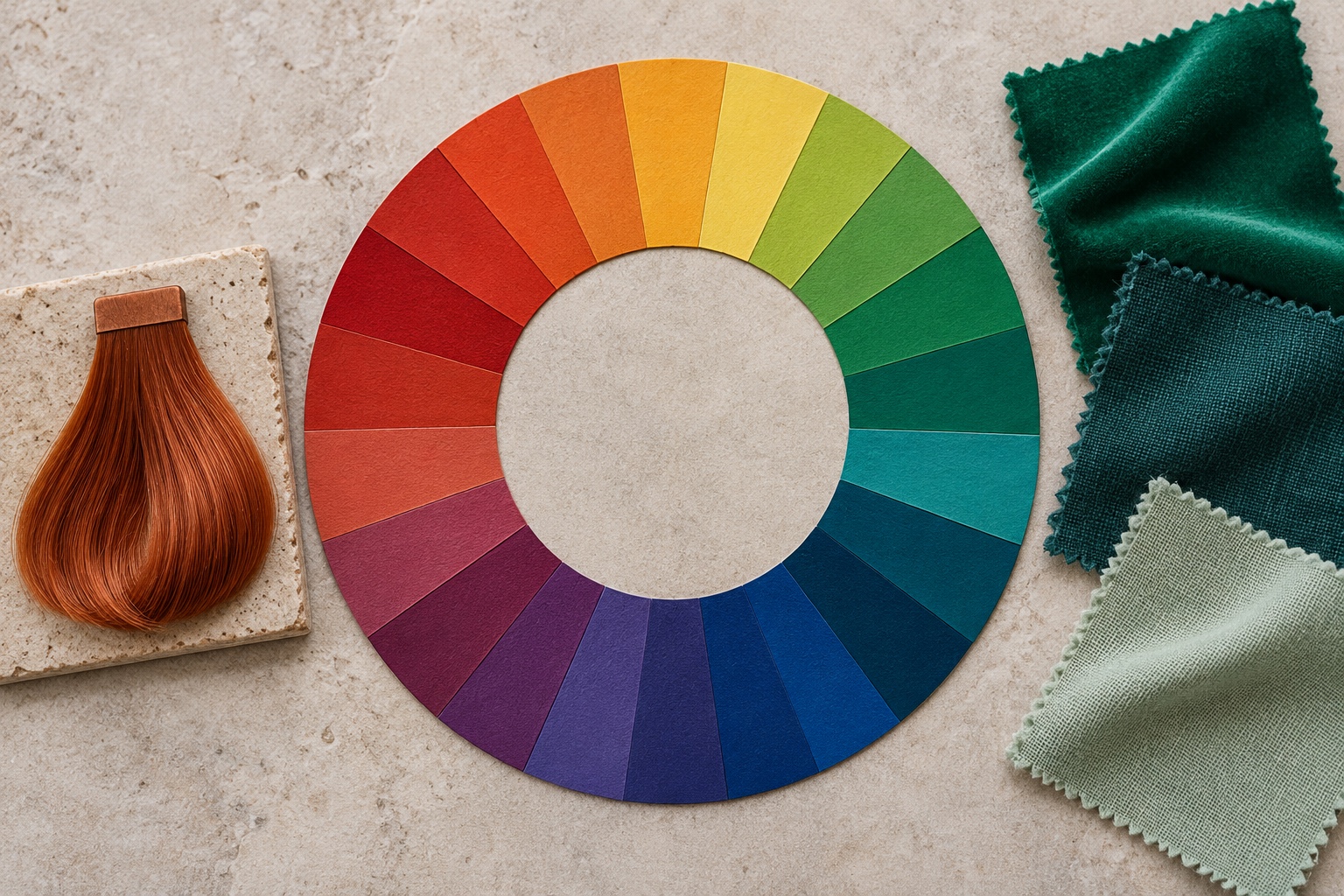
Green need not cover the entire outfit. An emerald cardigan over ivory creates a softer frame than a full emerald dress. A teal blouse under a chocolate jacket gives copper hair contrast without separating it from warm neutrals. If you prefer quiet clothes, use pine in a bag or scarf. For outfit ideas beyond red hair, see our green clothing combination guide.
Warm Earth Tones vs Cool Jewel Shades: Which Direction Fits?
Warm earth shades repeat some of the visual warmth in copper and auburn hair. Rust, terracotta, cinnamon, tobacco brown, camel, and chocolate can create a connected look. The trick is to distinguish your hair from the clothes: if your copper hair and orange top have almost the same intensity, add an ivory collar, deep brown jacket, or forest-green accessory. A rusty silk dress with a chocolate wool coat and warm ivory scarf is a complete outfit because each layer has a different depth and texture.
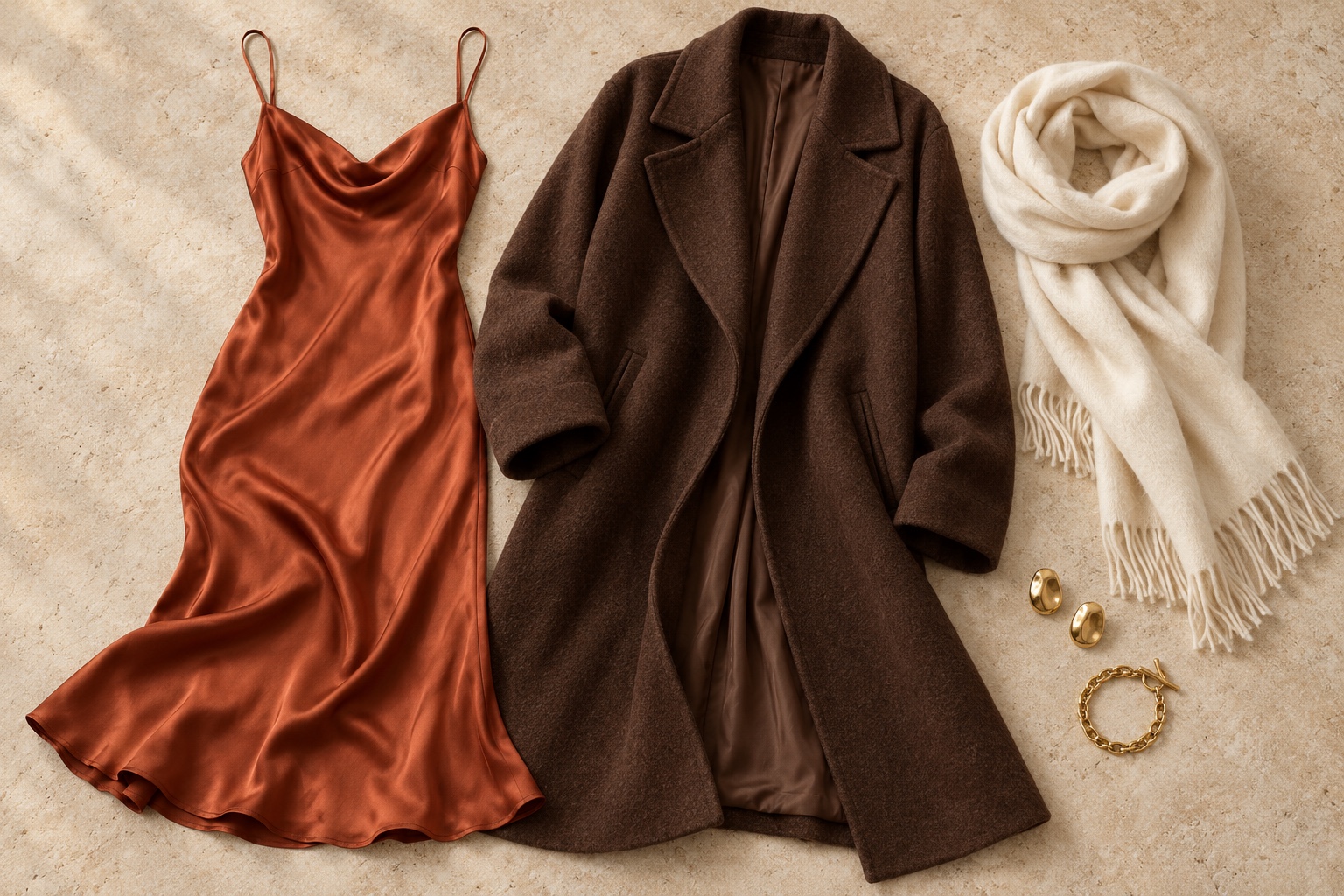
Cool jewel shades offer a different result. Cobalt, royal blue, mulberry, plum, and cranberry can look especially lively beside cooler skin and blue eyes, while still working for some warm-toned redheads who like deliberate contrast. Cobalt is visually stronger than dusty denim blue; mulberry contains more blue-violet than brick red. If a vivid jewel shade overwhelms a lighter strawberry blonde, try a smaller area or a deeper, less saturated version.
| Starting point | Try near the face | If it feels too strong |
|---|---|---|
| Bright copper hair, golden or neutral-warm skin | Forest green, warm teal, terracotta, camel | Try pine or cinnamon instead of neon orange |
| Auburn hair, stronger contrast | Deep emerald, cobalt, plum, chocolate | Use a mid-depth teal or berry accent |
| Strawberry blonde, gentle contrast | Sea glass, soft pine, warm ivory, dusty rose | Move very dark jewel colors below the neckline |
| Cool rosy complexion with red hair | Blue-green emerald, cobalt, cranberry, charcoal | Soften cobalt to denim or berry to muted rose |
This decision table gives first fabrics to pull from a closet, not a fixed season assignment. Test at least two shades in each direction. A warm complexion may like cobalt because of its contrast; a cool complexion may enjoy cinnamon as an intentional accent. The most useful answer comes from several successful outfits, not a rule applied from hair color alone.
Colors Redheads Should Approach With Caution
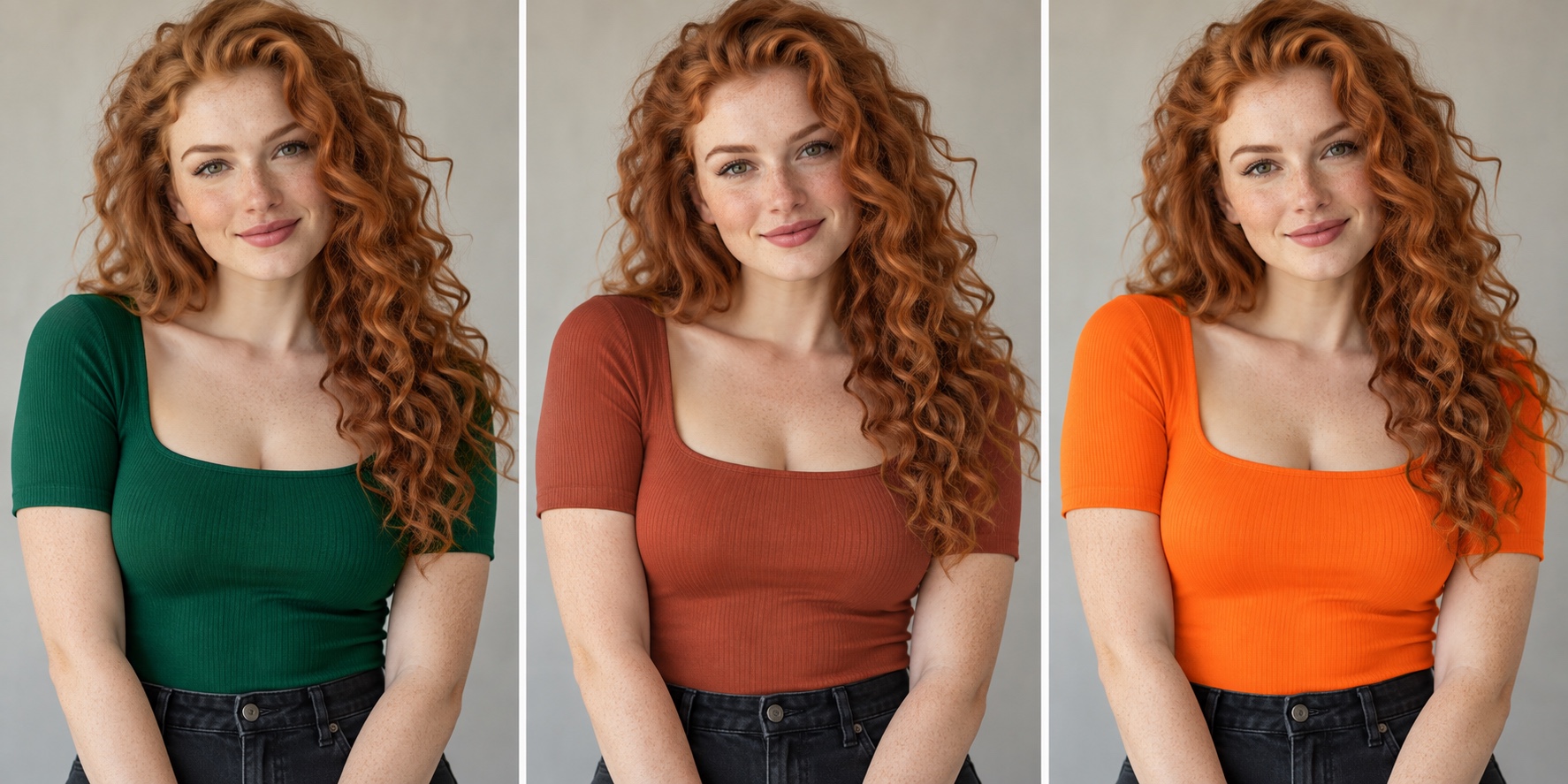
Hot orange, acidic lime, and fluorescent yellow can compete with copper hair because they demand attention at similar or higher intensity. Against a fair, softly colored face, the fabric may become the first thing you notice. That does not mean redheads cannot wear orange or yellow. Burnt orange differs from neon orange; moss differs from acidic lime. A deeper rust, marigold, or muted olive may keep the energy while making an outfit easier to balance.
Use a controlled comparison rather than a universal “avoid” list. Hold a deep emerald top, a muted terracotta top, and a neon-orange top at the same neckline in the same light. Notice where your attention goes, whether your eyes remain distinct, and whether you like the effect. The triptych below is an illustrative styling comparison using a fictional model; it keeps pose and lighting similar but cannot predict your result. On another person, neon orange might be an exciting deliberate choice.
Also reconsider very pale beige if it blends into both hair and skin without adding enough contrast, or a harsh optical white if it seems disconnected from an otherwise warm outfit. Change one element at a time: keep a favorite bright jacket but add a more comfortable neckline shade; keep a beige sweater but deepen the outer layer. If a color makes you happy, a styling adjustment is often more useful than removing it.
Neutral Mastery for Redheads: Cream, Espresso, Navy, and Charcoal
Neutrals decide how easy the accent colors are to wear repeatedly. Warm ivory and cream can soften an emerald jacket and echo light highlights in copper hair. Camel and chocolate brown sit naturally beside rust, pine, and antique gold. Espresso gives dark auburn hair a deep partner while leaving room for a bright teal scarf. Check the precise brown: a cool, gray-brown may look elegant on one person and flat on another.
Navy is an adaptable alternative to black. A warm-leaning, slightly softened navy can ground terracotta or forest green, while a crisp ink navy can frame a cool cobalt or berry accent. Deep charcoal works similarly, especially when the weave adds texture. Jet black is still wearable; it simply creates higher contrast and may feel severe against light red hair or a delicate complexion when it covers the whole neckline. Break it with an ivory shirt, emerald scarf, or berry lip color if you want a gentler frame.
A five-piece starting capsule might use an ivory shirt, chocolate or charcoal trousers, a navy jacket, a green knit, and one rust or plum accent. That gives several outfits without requiring every piece to be “redhead colored.” Our wardrobe color chart guide offers a method for testing a small palette against real outfits. Choose the neutral you wear most often first, then add accents that work with it and your hair.
Dressing by Eye Color: Red Hair with Green, Hazel, and Blue Eyes
Eye color can guide a small accent, but skin undertone and overall contrast still shape the larger garment. With green eyes, pine, olive, teal, and plum can draw attention to different flecks. Green-on-green does not need an exact match: a deep forest sweater may make lighter irises more noticeable, while a muted olive top can create a quieter echo. Compare each with a neutral shirt before deciding the eye effect is worth a full wardrobe shift.
Hazel eyes often contain a mix of green, gold, and brown. Rust and cinnamon can repeat the golden notes; teal and plum can set up contrast. A deep teal top with antique gold earrings is one balanced experiment. Our hazel-eye color guide
Blue eyes can appear more vivid beside cobalt, navy, teal, and berry, but a top should still work with the whole face. For blue eyes, pale skin, and auburn hair, try cobalt and mulberry beside forest green; choose the fabric that brings both eyes and complexion into focus. If cobalt feels too sharp, softened denim blue or deep navy may be easier. Hair and eyes are two parts of the color story, not a formula that excludes other colors.
Redhead Wardrobe FAQ
Can redheads wear red?
Yes. Burgundy, cranberry, tomato red, and brick red each create a different relationship with red hair. Cooler complexions may prefer a blue-based cranberry or berry; warmer complexions may like tomato or brick. Compare the shade with your hair in daylight, then use ivory, navy, or brown to keep the outfit from becoming one solid red-orange block. Red is a styling choice, not a prohibited color.
What about pink with red hair?
Pink can be excellent. A soft dusty rose may flatter strawberry blonde and gentle contrast, while a cooler raspberry or magenta can make a deliberate statement against dark auburn. Very chalky pale pink might fade beside some complexions, and neon pink can dominate others. Try rose, berry, and one brighter pink at the neckline to find the strength you enjoy.
What is the best autumn coat color for a redhead?
Forest green and chocolate brown are versatile starting points; camel, warm navy, and deep charcoal also deserve a try. Choose the coat that works with your most-worn scarves and tops. A green coat gives obvious contrast with copper hair, while chocolate and camel make a calmer capsule. For a cool-leaning complexion, check whether a warmer camel is less flattering than navy or charcoal near the face.
What colors work for auburn hair and pale skin?
Start with deep emerald, pine, teal, plum, and navy, then compare terracotta and chocolate against your undertone. If pale skin has a rosy cast, a blue-green or berry may feel clearer; if it is golden, warm forest and cinnamon may feel more connected. Pale skin alone does not identify undertone. Try the same size fabric swatches under natural light before committing to a coat or dress.
What are flattering clothes for ginger hair without wearing green every day?
Build around ivory, navy, chocolate, charcoal, denim, and whichever rust or berry you prefer. A navy blazer with an ivory shirt, a chocolate coat over a plum knit, or denim with a terracotta top gives variety. Green can remain one accent rather than the entire wardrobe. The best repeatable palette should make getting dressed easier and still leave room for your own style.
Key Takeaways
Green and teal create useful contrast with red hair; earth tones echo warmth; jewel shades add a cooler, higher-contrast option. Hair depth, skin undertone, and the amount of fabric near the face help decide which version to try first. Compare real garments in consistent daylight and treat every recommendation as an invitation to experiment. If you would like a structured starting point, use our interactive color analysis quiz and then check its suggestions against the clothes you already own.
People Also Ask
What color makes red hair stand out? Deep emerald or forest green often gives copper hair clear contrast. Does black suit redheads? It can, especially with stronger contrast or an accent at the neckline. Is orange always a clash? No: muted rust and terracotta behave differently from fluorescent orange. The shade and the whole outfit matter more than the color name alone.
Common Questions: The Ultimate Color FAQ
Is there one best color for every redhead?
No. Emerald is a practical first test, but the most wearable hue depends on the skin, hair depth, garment area, and personal preference. Compare several greens with earth and jewel shades before building a wardrobe around a single answer.
💫 Discover Your Complete Color Palette
Ready to discover all the colors that make you look radiant? Our comprehensive color analysis will reveal your complete personal palette - perfect for hair, makeup, and wardrobe decisions.
Take Color Analysis Quiz →