What Colors Go With Navy Blue Pants and Outfits: Complete Wardrobe Guide
 Reviewed by Alexandra Gilmore
Pair navy pants with white, cream, light blue, camel, burgundy, or coral; choose black, brown, cognac, or oxblood shoes to suit the setting.

Navy blue is a versatile wardrobe neutral that pairs with both quiet basics and expressive accents. With navy pants, start with a crisp white or cream shirt for clean contrast, powder blue or dusty blush for a softer look, or camel and burgundy for depth. Cognac leather shoes and a matching belt add warmth to business casual navy trousers; black shoes create a sharper, more formal finish. For a brighter outfit, keep the navy base and introduce mustard, coral, or emerald in one top or accessory. The best combination depends on the setting, the fabric, and how much contrast you want near your face.
If you are deciding what color goes with navy blue pants, think in three parts: the color nearest your face, the navy garment's texture, and the shoes that connect the outfit. Navy is a deep blue, but not every navy is identical. Some are almost black; others lean brighter or slightly gray. Compare pieces together in daylight before assuming two garments labeled navy will make a matching set. The combinations below work for trousers, chinos, jeans, skirts, jackets, and other navy clothes.
Why Navy Blue Is the Most Flattering Wardrobe Foundation
Navy brings much of black's visual authority to tailoring, yet its visible blue quality often reads softer. A navy blazer or trouser still feels polished in an office, while a navy knit or linen shirt can look relaxed outside it. That range makes navy a practical anchor for a wardrobe: change the shirt, footwear, or fabric, and the same pants can serve several settings.
Flattering is personal rather than automatic. Deep navy creates strong contrast against white and light cream, which may feel crisp on one person and overwhelming on another. Place the lighter or darker color near your face according to the effect you prefer. Someone who likes gentle contrast can use a muted blue or dusty rose top; someone who likes sharper contrast can use bright white. Our guide to choosing your best clothing colors explains how value and saturation change an outfit even when the hue family stays the same.
Navy also gives accessories a clear job. Brown leather introduces warmth, silver jewelry echoes its cooler side, and burgundy adds depth without being as bright as red. Keep one dominant color, one support color, and at most one small accent when you want an easy formula. For example: navy trousers, an ivory blouse, a camel coat, and cognac shoes. The colors relate without every item matching exactly.
Infallible Neutrals: White, Cream, Camel, Grey, and Black Combinations
White with navy is the clearest classic. A white oxford shirt, navy chinos, and brown leather shoes suit many business casual settings. A white tee and navy wide-leg pants feel more casual. If optic white is too stark near your face, try a softer white shirt while keeping a bright white sneaker farther away from it.
Cream and ivory reduce the contrast slightly and make navy feel warmer. The combination works especially well when the cream item has texture, such as silk, ribbed cotton, or a fine knit. Cream can be close to white but not identical, so avoid accidentally mixing several near-white tones in the same small area unless the variation looks intentional. Our guide to white shades helps you compare bright white with softer alternatives.
Camel and cognac bridge cool navy and warm leather. A camel coat over navy trousers is an easy autumn outfit; a cognac bag or belt can carry the idea into any season. If camel looks too warm at your face, put it in a bag or shoe and choose a cooler top. Taupe or stone may be easier substitutes.
Gray creates a quieter office palette. Light gray gives separation from dark navy; charcoal can look nearly monochromatic. Add a white shirt or silver accessory if the combination feels flat. Black with navy is also workable when the difference is clear: a black knit, dark navy trousers, and black boots can look deliberate. Use texture, such as wool against leather, or a lighter layer to prevent two near-black items from looking like a mismatched suit.
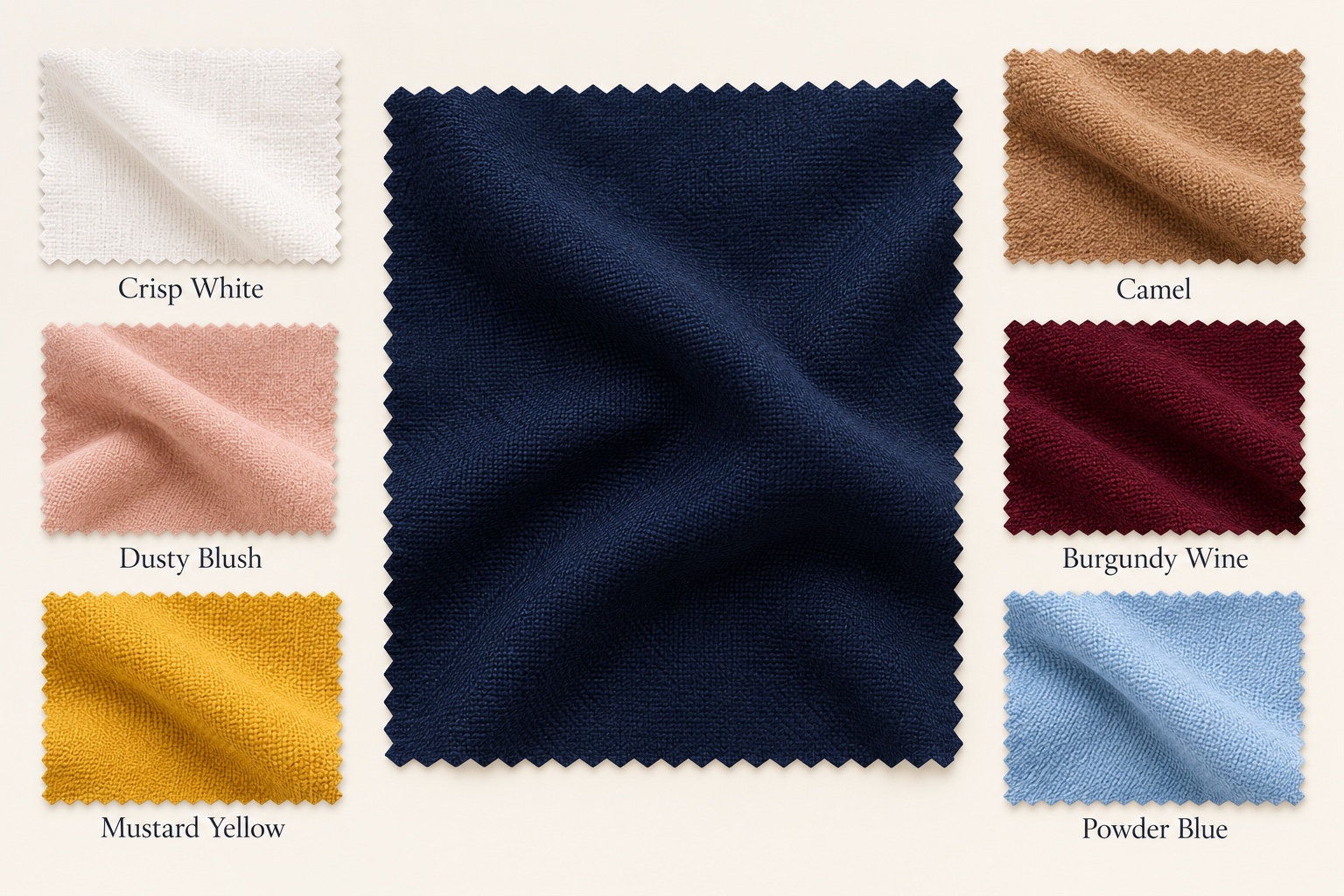
Bold and Chic Accent Colors: Mustard Yellow, Coral, Burgundy, and Emerald
A navy base makes color easier to wear because the bright shade does not have to cover the whole outfit. Mustard yellow brings a warm, earthy accent to navy. Try a mustard sweater with navy pants and brown shoes, or keep it to a scarf if you prefer a smaller dose. A clear lemon yellow has a different, more graphic effect; compare the two in daylight rather than treating all yellows alike.
Coral gives navy an energetic spring and summer direction. A coral blouse with navy trousers can stand alone without patterned accessories. For a quieter version, choose a dusty peach or salmon and add cream shoes. Burgundy wine is a lower-key alternative to vivid red. A burgundy knit, navy pants, and dark brown leather feel rich in fall or winter; a burgundy belt or shoe can make the same pairing more subtle.
Emerald green supplies cool, saturated contrast while keeping the outfit sophisticated. A jewel-toned green top can be the one statement piece against a navy suit. Olive green gives a more muted, utilitarian result. The distinction matters: emerald and olive may both be green, but they create very different moods next to navy. See our green and yellow outfit ideas for more options if green is already a major part of your closet.
These pairings are style options, not rules about who may wear a shade. To build a coherent color scheme, choose the accent's intensity deliberately. A bright mustard or coral often looks best as one focal point; burgundy can occupy a larger area without dominating. The Art Institute of Chicago's color glossary describes how neighboring and opposing hues influence visual contrast. In clothing, fabric finish and the size of each color area matter just as much as a wheel diagram.
Styling Navy Pants for Men and Women
The cut of the pants sets the outfit's formality before you choose a shirt. Tailored wool trousers with a crease can handle a crisp oxford, fine knit, blazer, or silk blouse. Navy chinos are more flexible with tees, polos, casual button-downs, and soft jackets. Wide-leg navy pants create volume, so a tucked shirt, shorter jacket, or defined waist helps make the proportions legible. These are proportion tools for any gender; wear the silhouette that fits your style.
Tailored trousers for work
Build from a light blue or white shirt, then select one leather color for both belt and shoes when the dress code is traditional. A navy trouser, powder blue shirt, brown belt, and cognac Oxford shoe is a dependable office formula. For a cooler look, switch to a soft gray knit and black shoes. A blazer can be navy if the fabrics are a true set; otherwise choose gray, camel, or a visibly different blue so the variation looks intentional.
Chinos, jeans, and wide-leg shapes
Navy chinos with an ivory tee, olive overshirt, and tan sneakers work for weekends. A coral or striped top can brighten navy jeans without changing the foundation. With wide-leg trousers, try a fitted cream top and a cropped camel jacket, then repeat camel or cognac in the bag. If both the top and pants are loose, a visible waistline or distinct neckline gives the outfit structure.
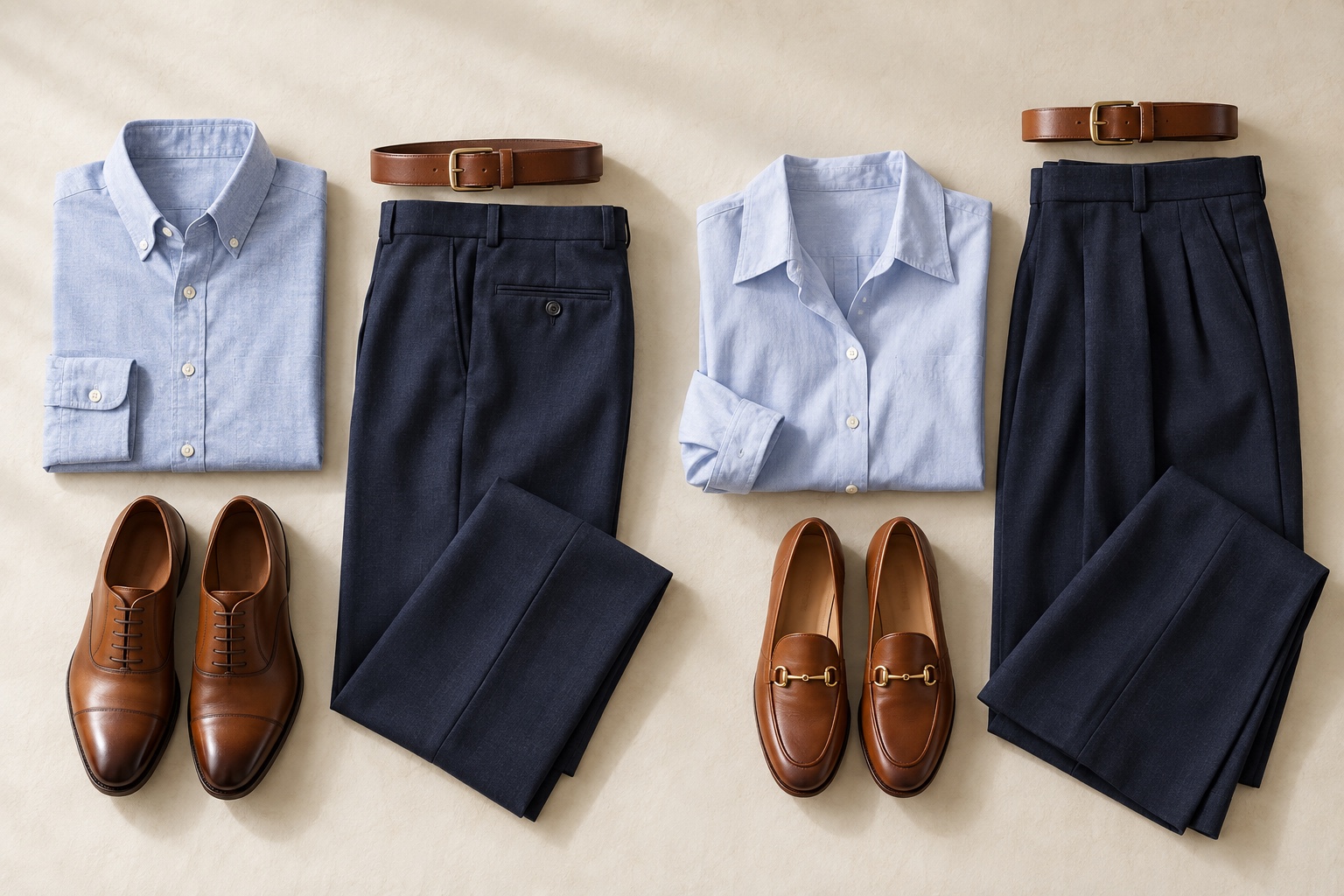
Fit and fabric are worth checking before buying another accent. A good trouser hem should meet the shoe in a way you like, and a shirt should sit comfortably when tucked or untucked. Navy can fade at different rates across fabrics, so wash and care for coordinated pieces according to their labels. A slightly faded navy chino can still look good beside fresh white; it simply reads more casual than a crisp dark wool trouser.
What Color Tops and Shirts Go Best with Navy Bottoms
For a fast answer to what shirt goes with navy trousers, choose white, ivory, light blue, or a fine blue-and-white stripe. These create enough difference from the pants to look purposeful. Light blue is especially forgiving because it stays in the blue family but contrasts in value. If a shirt and pants are both dark navy, break them up with a lighter jacket, belt, jewelry, or visibly different textures.
For a softer outfit, select dusty blush, muted lavender, pale gray, or a washed denim shirt. The goal is controlled contrast, not a perfect match. A blouse in blush and pants in navy make a gentler combination than optic white and navy. For a strong accent, choose burgundy, coral, emerald, or mustard in the top and keep the remaining items neutral. The color nearest the face has the greatest effect on how the outfit frames you.
Patterns can do some of the coordination for you. A white-and-navy Breton stripe is casual and familiar; a thin pinstripe shirt can be office-ready. A scarf or printed blouse containing navy plus one accent ties the palette together. Avoid relying on a pattern to rescue two colors that feel wrong in person: the pattern should repeat a shade you already like. If you want to identify colors that suit your own features, the interactive color analysis quiz is a practical next step after trying these outfit formulas.
| Situation | Top with navy pants | Shoes and finishing detail | Why it works |
|---|---|---|---|
| Traditional office | White or light blue shirt | Dark brown Oxfords and matching belt | Clear contrast with restrained warmth |
| Creative office | Ivory blouse or fine knit | Cognac loafers and camel layer | Soft, connected neutrals |
| Weekend casual | Striped tee or coral top | Clean white sneakers or tan loafers | Relaxed color with a navy anchor |
| Evening | Black silk, emerald, or burgundy top | Black or oxblood leather | Deeper contrast and richer texture |
| Summer | Cream linen or pale blue cotton | Tan loafers or simple sandals | Light fabrics keep dark navy airy |
The Shoe Color Blueprint: Black vs Cognac Brown vs Burgundy Oxblood
The shoes that match navy blue pants depend on the setting. Brooks Brothers' navy suit styling guide likewise pairs navy tailoring with white or pale blue shirts and black or dark brown Oxfords for office wear. Black makes navy sharper and more formal. It works with a white shirt and dark jacket or with a black top for an evening look. If the navy is very close to black, add a clear difference in fabric or another visible color so the outfit does not seem like two almost-matching pieces.
Dark brown is restrained enough for many workplaces while being warmer than black. It pairs naturally with navy wool trousers, an ivory or blue shirt, and a brown belt. Cognac or tan produces more visible contrast and a lighter business casual mood. A camel coat, warm watch strap, or cognac bag can repeat that color elsewhere; exact matching is optional, but a consistent warm leather family keeps the look coherent.
Burgundy oxblood is an elegant midpoint: deeper than tan, more colorful than dark brown. It looks particularly good with cream, pale blue, gray, or a burgundy knit above navy trousers. In a conservative dress code, check the actual policy before choosing a vivid shoe. Footwear material also changes the message: polished leather reads dressier than suede or canvas even when the color is the same.
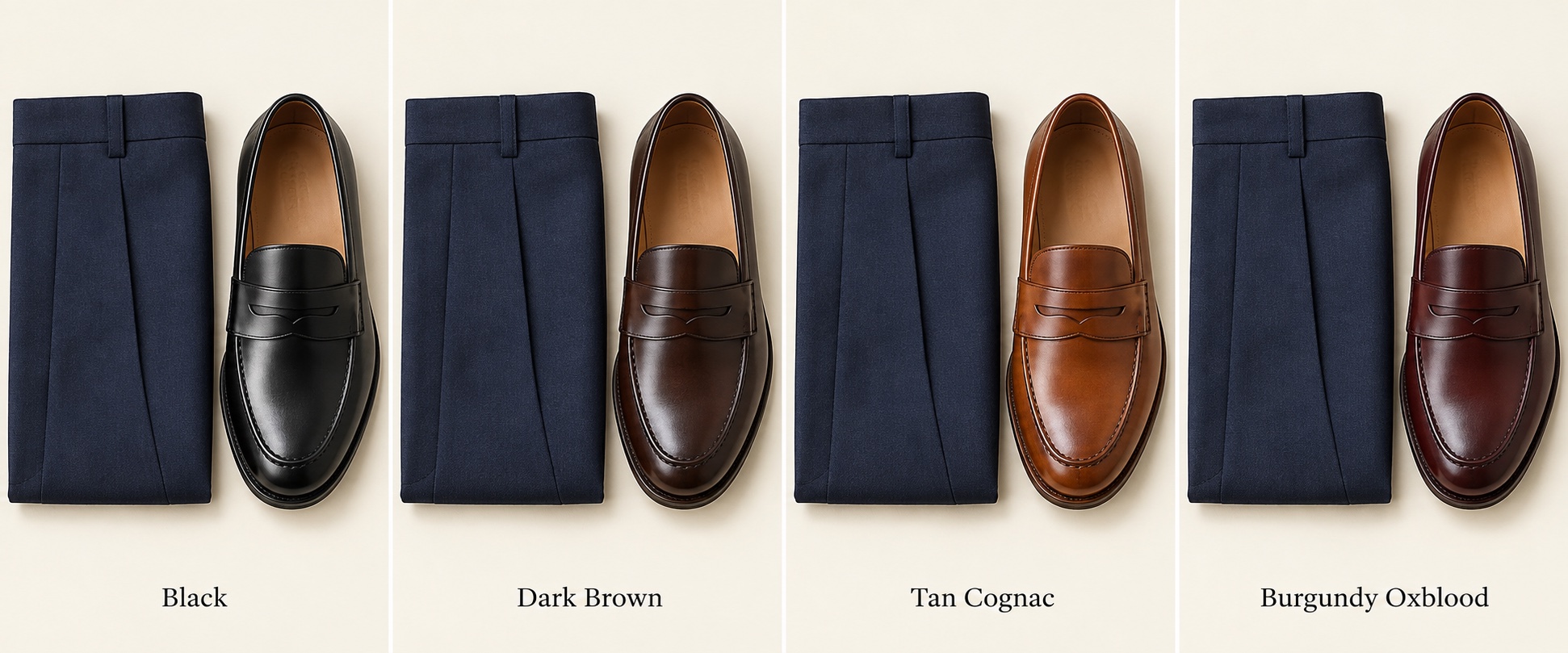
If you own only one pair of dress shoes, choose for the outfits you wear most. Black is useful when your wardrobe and workplace lean formal or cool-toned. Dark brown is flexible with navy and many warm neutrals. Cognac is expressive but draws more attention; oxblood is distinctive while still deep. The right answer is a combination you can repeat, not a universal shoe-color rule.
Seasonal Adaptations: Light Linen Navy for Summer vs Wool Navy for Winter
In summer, let fabric and light colors counterbalance navy's depth. Navy linen trousers with a cream cotton shirt and tan loafers feel breathable and informal. Navy shorts with a white tee and canvas shoes take the same palette even further into casual wear. Powder blue and coral are useful accents when you want more color. Linen naturally wrinkles, so a relaxed finish fits its character; avoid expecting it to look like pressed worsted wool.
In winter, navy wool, corduroy, or heavy cotton can support more visual weight. A navy trouser with a burgundy knit, camel coat, and dark brown boots is warm without relying on black. A gray turtleneck and black coat make a cooler version. Keep texture in mind: matte wool against polished leather, or a soft scarf against a structured jacket, gives interest to an otherwise narrow color scheme.
For transitional weather, layer a cream knit over a light blue shirt and keep the navy pants. You can remove one layer without changing the palette. When changing seasons, inspect the navy itself: a very bright marine blue may work differently with camel than a muted ink navy. Lay the garments together in natural light. Our capsule wardrobe guide shows how to repeat a small set of colors across layers and occasions.
Navy Blue Styling FAQ
Can you wear black shoes with navy pants?
Yes. Black shoes make navy pants look more formal or graphic, especially with a white shirt or black outer layer. Keep the shoes clean and deliberate, and give nearly black navy some visual separation through texture or a lighter item.
Does a brown jacket go with navy trousers?
Yes. Camel, chocolate, and tobacco brown can all work with navy. Camel gives strong warm contrast; dark chocolate is subtler. Repeat the brown family in shoes or a bag if you want a more connected outfit, while keeping the shirt light enough to separate the layers.
What shirt color is safest with navy trousers?
White or light blue is the easiest starting point. Cream is softer, gray is quieter, and a fine stripe adds detail. Choose the shirt color by the contrast you enjoy near your face and the formality of the occasion.
Does navy go with burgundy?
Yes. A burgundy sweater or blouse gives depth to navy pants without the brightness of red. Cream, gray, and dark brown are easy third colors. Keep one of those supporting shades visible so the two deep colors do not merge.
Can I wear navy on navy?
Yes. If the pieces are intended as a suit, match their cloth and dye. If they are separate items, make the difference intentional: combine an ink navy trouser with a lighter blue knit or vary matte and glossy textures. A white or cream layer can provide a clear break.
Start with a navy piece you already own and try two light tops, one accent, and two shoe colors in daylight. Notice which combination feels right for the occasion and for your preferred contrast. For more personalized colors beyond navy, take the color analysis quiz and use its palette as a starting point for real outfit comparisons.
💫 Discover Your Complete Color Palette
Ready to discover all the colors that make you look radiant? Our comprehensive color analysis will reveal your complete personal palette - perfect for hair, makeup, and wardrobe decisions.
Take Color Analysis Quiz →