How to Match Foundation Shade to Your Skin Tone and Undertone
 Reviewed by Alexandra Gilmore
Match skin depth and undertone separately, then compare foundation swatches along your jaw and neck in daylight after they dry.

Finding your true foundation shade requires matching two independent variables: skin depth (fair through deep) and undertone (cool, warm, neutral, or olive). A formula can match your surface lightness yet look pink, orange, or gray because its undertone is wrong. To choose the right foundation shade, place narrow swatches from the lower cheek across the jawline, compare the face-to-neck transition in indirect daylight, and wait for each swatch to dry. The winner is the shade that still looks connected to your neck after it settles, without a visible mask line. A photo can help you shortlist candidates, but an in-person jawline test makes the final decision.
Foundation names and letters are clues rather than universal color measurements. This guide gives you a repeatable test, a decision table for common mismatches, and a way to separate a poor undertone match from a formula that changes as it dries. If you are new to makeup shopping, our beginner foundation shade guide covers the wider buying process.
The Two-Part Foundation Matrix: Depth vs Undertone
Depth describes how light or dark the foundation is. Retailers often group shades as fair, light, medium, tan, and deep, with more steps inside each group. Undertone describes the color direction within that depth: relatively cool pink or rosy, warm golden or yellow, balanced neutral, or muted olive. You can have a deep cool complexion or a fair olive one. Skin depth does not automatically tell you its undertone, and neither one alone determines your color season.
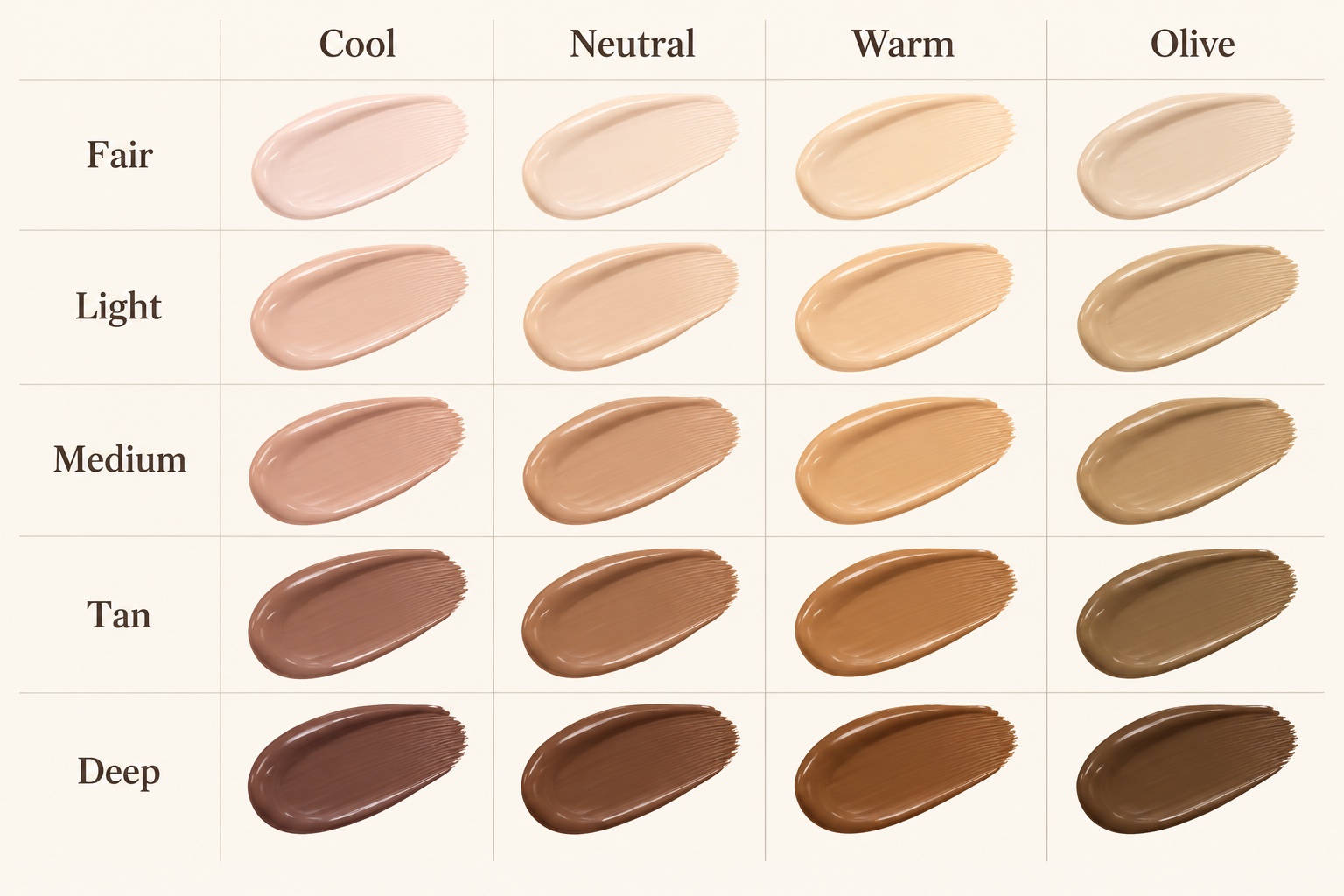
Choose a depth neighborhood first
Start by identifying three neighboring depths in one formula: your likely match, one slightly lighter, and one slightly deeper. Compare them at the jaw, not on your arm. The inside of the wrist is often a different depth from the face, and a hand can be more tanned or red than the neck. Do not use a deep shade to compensate for an undertone that is too pale or washed out; you may trade one visible edge for another.
Some faces are more deeply colored than their necks because of sun exposure, redness, or pigmentation. A thin layer close to your face-to-neck transition often looks more natural than forcing the full face to exactly match either one area. Check the upper chest too if it will be visible. If three nearby shades all look too pink at the correct depth, keep the depth and change undertone family rather than moving randomly through the shade range.
Decode C, W, N, NC, and NW without assuming a universal key
Many brands use C for cool, W for warm, and N for neutral, but those letters are not standardized between companies. Even a familiar two-letter code can be brand-specific: a product labeled NC or NW should be read with that brand's own shade description rather than decoded from a different range. Product names such as beige, sand, honey, and caramel are equally inconsistent. Read the current product page, then test the exact formula and shade; the same shade name in another finish can look different on skin.
Cool foundations may read rosy or redder beside the neck. Warm ones may lean yellow, golden, peach, or orange. Neutral does not mean colorless; it means a relative balance within that line. Olive shades often have a softer yellow-green or green-gray direction. If you want a deeper explanation of brand labels, see our foundation undertone label guide. For a focused comparison of olive shades, see foundation for olive skin.
Why Your Foundation Looks Orange, Pink, or Ashy
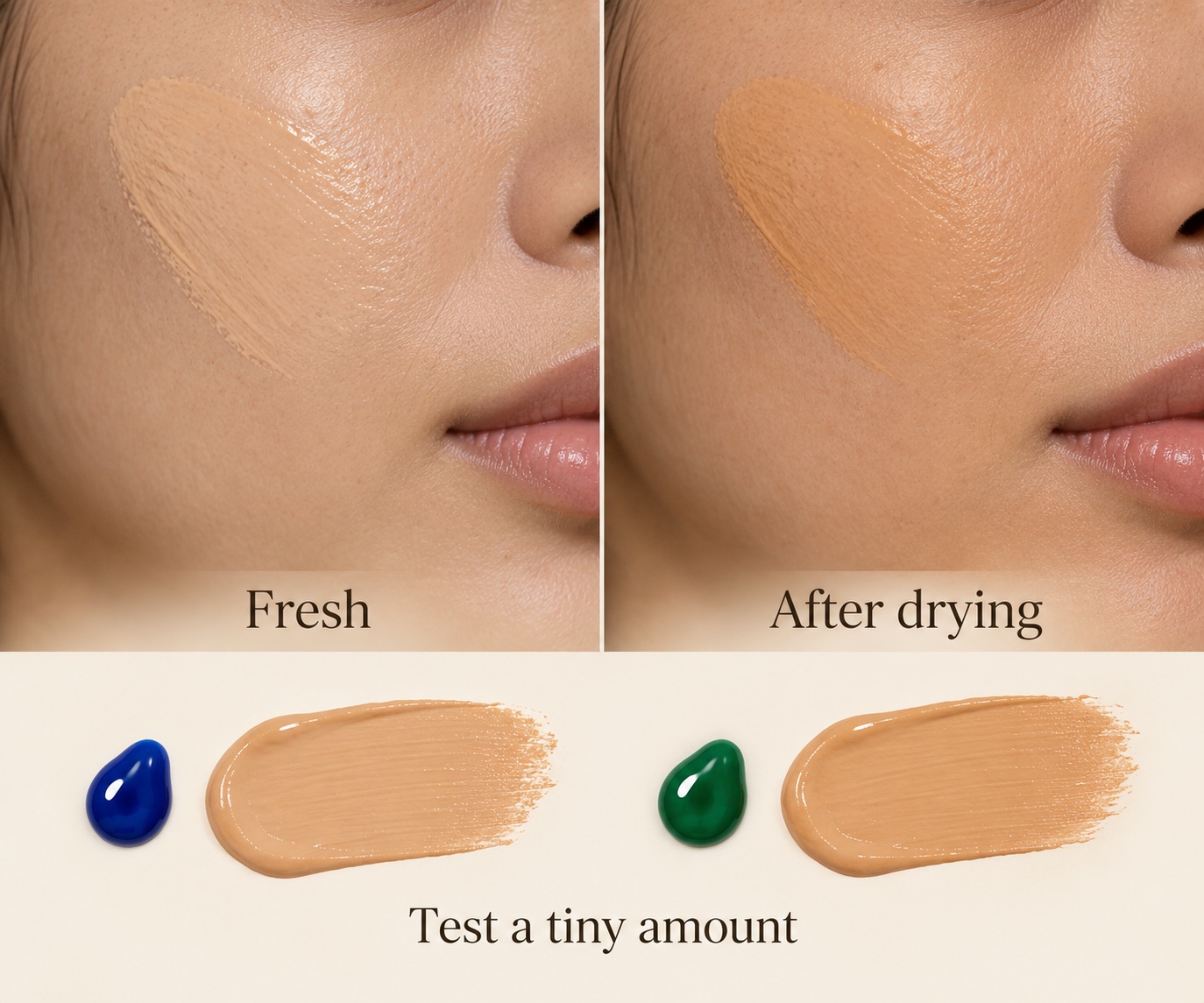
A visible color cast can come from the wrong depth, the wrong undertone, too much coverage, or a formula that changes appearance after application. Inspect a fresh swatch and the same swatch after it has fully set. A stripe that is orange immediately probably started too warm or too saturated. A stripe that begins close and turns orange later may be changing as it dries or interacts with skin products. People often call this oxidation, although drying, oil, skincare, and lighting can also change what you see. The practical fix begins with observing when the mismatch appears.
| What you see in daylight | Possible cause | Best next comparison |
|---|---|---|
| Orange or rusty from the start | Undertone too warm or peachy; shade may also be too deep | Same depth in neutral or cooler family |
| Close when wet, orange after drying | Formula changes as it sets or wears | Retest with your usual skincare; compare another formula after 20–30 minutes |
| Pink edge beside the neck | Cool or rosy base; cheek redness may have misled you | Same depth in neutral or warm-neutral |
| Gray or ashy veil | Too light, too muted, or wrong undertone for your skin | Check depth first, then compare a clearer or warmer version |
| Pale or dark line without a hue shift | Depth mismatch | Neighboring depth in the same undertone |
Use that table as a starting diagnosis, not a verdict from one look. A heavily powdered base can appear ashy even if the foundation itself fits. A warm bathroom bulb can hide an orange edge. Apply the product at the coverage you intend to wear and check the complete makeup routine before committing to a bottle. If you only notice a problem after setting powder, test the foundation without powder on one side of your face.
A fair oxidation check
Put two small stripes of the same shade on clean areas of the jaw. Photograph one immediately if you want a memory aid, but use your eyes in consistent daylight for the comparison. Leave both untouched until the product sets; revisit at about 20 to 30 minutes and after normal wear if possible. Compare them with bare skin and the neck. If a shade changes substantially, you can try a slightly different starting shade, another formula, or a different pairing with moisturizer and sunscreen. Avoid assuming every orange result is true chemical oxidation.
The Jawline Swatch Method: The Only Reliable Test
For a final foundation purchase, the jawline is a reliable place to compare actual products because it shows the face and neck at once. It is more informative than the back of the hand or a wrist vein, which cannot tell you how a foundation wears on facial skin. “Only” here means the deciding test for a product you can sample in person; online tools remain useful for narrowing the shelf. Try to sample three candidates from one formula so finish and coverage remain controlled.
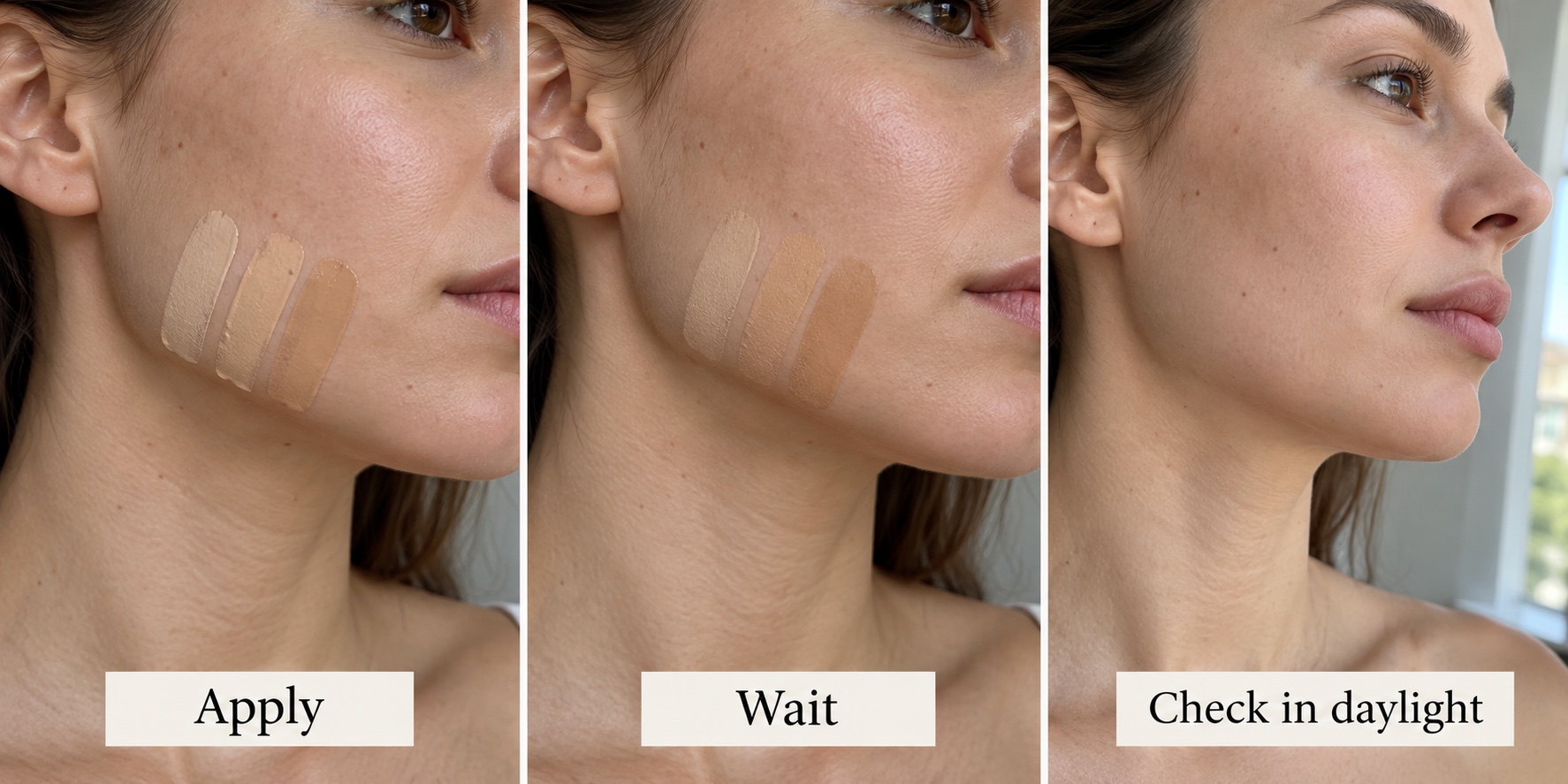
- Prepare the skin. Remove makeup from a small lower-cheek area. Let your regular moisturizer and sunscreen settle first so the test reflects your daily routine.
- Stripe three candidates. Apply narrow, separate strokes from lower cheek over the jawline. Keep enough bare skin between them to compare each clearly. Choose adjacent depths or undertones, not three unrelated colors.
- Wait and verify. Let them dry according to the product's normal setting time, then check again after roughly 20 to 30 minutes. Move beside a window in indirect daylight. Look straight on and from the side, including the neck and any visible chest.
- Blend the finalist. Feather only the best stripe over a small cheek area. Check whether it remains natural at the coverage you actually like. If two candidates are close, test each on a separate side for several hours.
The best foundation shade is the one with the least visible transition, not necessarily the stripe that vanishes into one patch of cheek. If your face is redder than your neck, matching only the redness may create an all-over pink mask. If the neck is much paler than the chest, use a natural compromise and lighter coverage. A salesperson's shade match can be a useful shortlist, but look at the result yourself outside the store's lighting.
Keep a useful shade record
Record brand, product line, shade, finish, date, lighting, and whether the swatch deepened after drying. “Medium neutral” alone is too vague to recreate a match months later. A quick unfiltered photo beside the window can help you remember a comparison, but automatic white balance can alter the color, so keep written notes about what you saw. Recheck when you switch formula or change your sunscreen.
The Olive Skin Foundation Trap
Olive is a muted color direction that can appear at fair, medium, tan, or deep depth. A classic warm foundation may become bright orange, while a cool-pink one can appear gray or rosy. A “neutral” shade may still lean peach. The solution is not simply to choose a darker shade; line up an olive or muted neutral option beside warm and cool shades at the same depth. If it looks quieter and blends better at the jaw and neck, you have a more promising family.
Surface redness does not rule out olive skin. A red cheek after exercise may coexist with a more muted jaw and neck. Test on an even area and step back. Likewise, no ethnicity or eye color proves an olive undertone. Our olive undertone test offers more comparisons, but the foundation swatch is still the deciding evidence for a bottle.
When blue or green adjusters help
If you already own a nearly correct formula, a cosmetic mixer may fine-tune it. A tiny amount of blue can soften an overly orange impression; green can mute a too-pink or red impression. Put one application-sized amount of foundation on a clean palette and mix there, never into the full bottle. Swatch the original and adjusted portions side by side and wait for both to settle. Too much pigment can make skin look gray, green, or too pale, especially with fair or very deep shades. An adjustment cannot repair a foundation that is several depth levels wrong or wears badly.
Choose a mixer intended for use with complexion products and follow its directions. For an example of the color logic, e.l.f.'s blue corrector guide describes using blue sparingly to tone down an overly warm foundation. Test compatibility and wear on a small area before a full face. Keep sunscreen as a separate, properly applied layer rather than mixing it into foundation.
How Lighting Tricks Your Foundation Match
Store bulbs can make warm shades look flattering while hiding an orange edge. Cool LEDs can make a pink formula look less pink. Direct sun creates strong highlights and shadows; a colored wall or shirt can bounce hue onto the face. For the final comparison, stand near a window in bright indirect daylight with a neutral background. Return to the same spot when checking the swatch after it dries. Consistent light makes the before-and-after comparison more meaningful.
Phone cameras are convenient but imperfect judges. Automatic exposure, white balance, portrait modes, and beauty filters may shift skin color or smooth away the line you need to inspect. Turn filters off and use the back camera only as a supporting record. If you buy in a store without a window, ask for a sample, look outside before paying when possible, or check the store's return terms. A shade that appears perfect only in one artificial light deserves another test.
When face and neck differ naturally, consider how you will wear the foundation. A sheer tint allows more skin color through and may accommodate a slightly wider shade range. Full coverage makes a small mismatch more obvious. Repeating the same jawline test at your intended coverage is better than trying to correct a wrong shade with heavy bronzer or powder.
Testing with Photo & Online Quizzes
A foundation shade finder with photo can help estimate a starting depth and color direction before you shop, especially when comparing a large online range. Use a recent, unfiltered image in indirect daylight. Keep makeup, colored lighting, and strong shadows out of the image. Compare the suggested shade family with a brand's own descriptions, then order samples or test in store if possible. A photo cannot reliably show how a formula dries, oxidizes, or looks beside your neck in person.
For a closer look at the strengths and limits of photo tools, see our photo shade finder guide. Our foundation shade finder tools comparison can help you choose a workflow. An online color analysis quiz serves a related but different purpose: it may suggest colors for makeup and clothing, while the foundation shade still needs a direct skin test. Use the interactive color analysis quiz if you want to explore your broader palette after finding your base.
When shopping online without samples, buy the most plausible depth and undertone from a range with clear descriptions and a workable return policy. Do not buy several expensive bottles solely because an app gave a highly specific shade number. Shade algorithms and brand inventories can change, and a camera cannot reproduce the exact color of your skin under every light.
Foundation Matching FAQ
Does foundation oxidize on everyone?
No. Some formulas stay visually stable, while others look darker, warmer, duller, or grayer after setting or wear. Skin oil, skincare layers, and lighting can influence the result. Compare a fresh and settled swatch of the same product in consistent light before deciding what happened. If the change is pronounced, test another formula instead of automatically buying a much lighter shade.
Should concealer match foundation exactly?
For covering a blemish, a concealer close to your foundation in both depth and undertone usually blends most naturally. Under the eyes, you may choose a slightly lighter or differently toned product depending on whether the goal is correction or brightening. Test the concealer beside your foundation and check it after powder; a very pale under-eye shade can look gray or obvious even when the foundation is well matched.
Do I need different foundation shades for winter and summer?
Possibly. If your skin depth changes noticeably with sun exposure, the same undertone family may need a lighter winter and deeper summer shade. Retest both at the jaw and neck; tanning can change the relative look of your face and chest. Shade drops or blending two compatible shades can bridge a small seasonal gap, but verify the mixed product's finish and wear. Never choose a darker summer shade just because a month has changed.
Can a photo or quiz tell me my exact foundation shade?
It can suggest candidates, not guarantee a match. Camera processing, lighting, screen display, and formula behavior introduce uncertainty. Use the result to narrow the shade range, then compare real swatches in daylight and after drying. If online shopping is your only option, look for samples and a fair return policy.
Should foundation match my face, neck, or chest?
Prioritize a believable transition from face to neck and check the chest if it will be visible. These areas often differ naturally. A thin application near a sensible compromise can look more seamless than a thick layer matched perfectly to only one patch. The jawline test lets you judge the transition instead of relying on a single body area.
Once your base looks natural, explore the clothing and makeup colors that work around it with our color analysis quiz. Keep your foundation choice grounded in the swatch that works on your actual skin.
💫 Discover Your Complete Color Palette
Ready to discover all the colors that make you look radiant? Our comprehensive color analysis will reveal your complete personal palette - perfect for hair, makeup, and wardrobe decisions.
Take Color Analysis Quiz →