Deep Autumn Celebrities and Why: Contrast and Warm Tone Breakdown
 Reviewed by Alexandra Gilmore
See how deep warmth, contrast, and rich colors shape celebrity-inspired Deep Autumn outfits, then compare the same shades in your own daylight draping test.

Deep Autumn celebrities show how rich, warm color and visible depth can work together. Think chocolate brown, dark terracotta, forest olive, burnt amber, and bronze near the face, with a dark neutral to keep the outfit grounded. Zendaya, Julia Roberts, Eva Mendes, and Halle Berry offer useful style references for this combination, though no public photograph can prove anyone's personal color season. Deep Autumn sits near Deep Winter in the 12-season system: both favor depth, while Deep Autumn usually responds better to an earthy, golden direction. Compare a warm dark drape with an equally dark cool one in daylight before borrowing a celebrity look. Icy pastels and optical white can be striking fashion choices, but they may separate visually from a warmer, shadowed palette.
This guide studies color relationships in photographed outfits, not the celebrities' private undertones. Red-carpet lighting, retouching, self-tanner, hair color, and makeup can change the impression. Use each example as a styling experiment, then test the colors against your own face. For the full seasonal palette, see our Deep Autumn color guide.
The Hallmarks of Deep Autumn: Rich Melanin, Warm Golden Glow, and Depth
Deep Autumn is a color palette built around three visible qualities: substantial depth, a warm to neutral-warm direction, and enough richness to avoid looking dusty. The word deep describes the overall effect of colors close to the face. It does not require one skin tone, ethnicity, eye color, or amount of melanin. People across a range of complexions can find that deep warm drapes bring definition to the face. A golden glow is one possible appearance, but it is not a diagnostic requirement.
Imagine placing espresso brown, black, and pale beige under the chin in the same indirect daylight. Espresso can create a softer bridge between dark hair or eyes and warm-looking skin than flat black; pale beige may remove too much definition. Next compare espresso with cool charcoal at similar darkness. That second pair isolates temperature instead of confusing warmth with depth. If chocolate or dark olive repeatedly keeps the face in focus, you have a useful reason to explore Deep Autumn. If charcoal and cool burgundy win, explore the adjacent Deep Winter palette.
Contrast in this context means the difference between light and dark elements: skin, hair, eyes, and clothing. Deep Autumn outfits often use medium to high contrast, yet their colors remain connected by warm undertones. A cream shirt under a dark brown jacket gives a clearer edge than camel on tan, while avoiding the sharp black-and-optical-white combination associated with Winter styling. That is a wardrobe choice, not a rule about who is allowed to wear white.
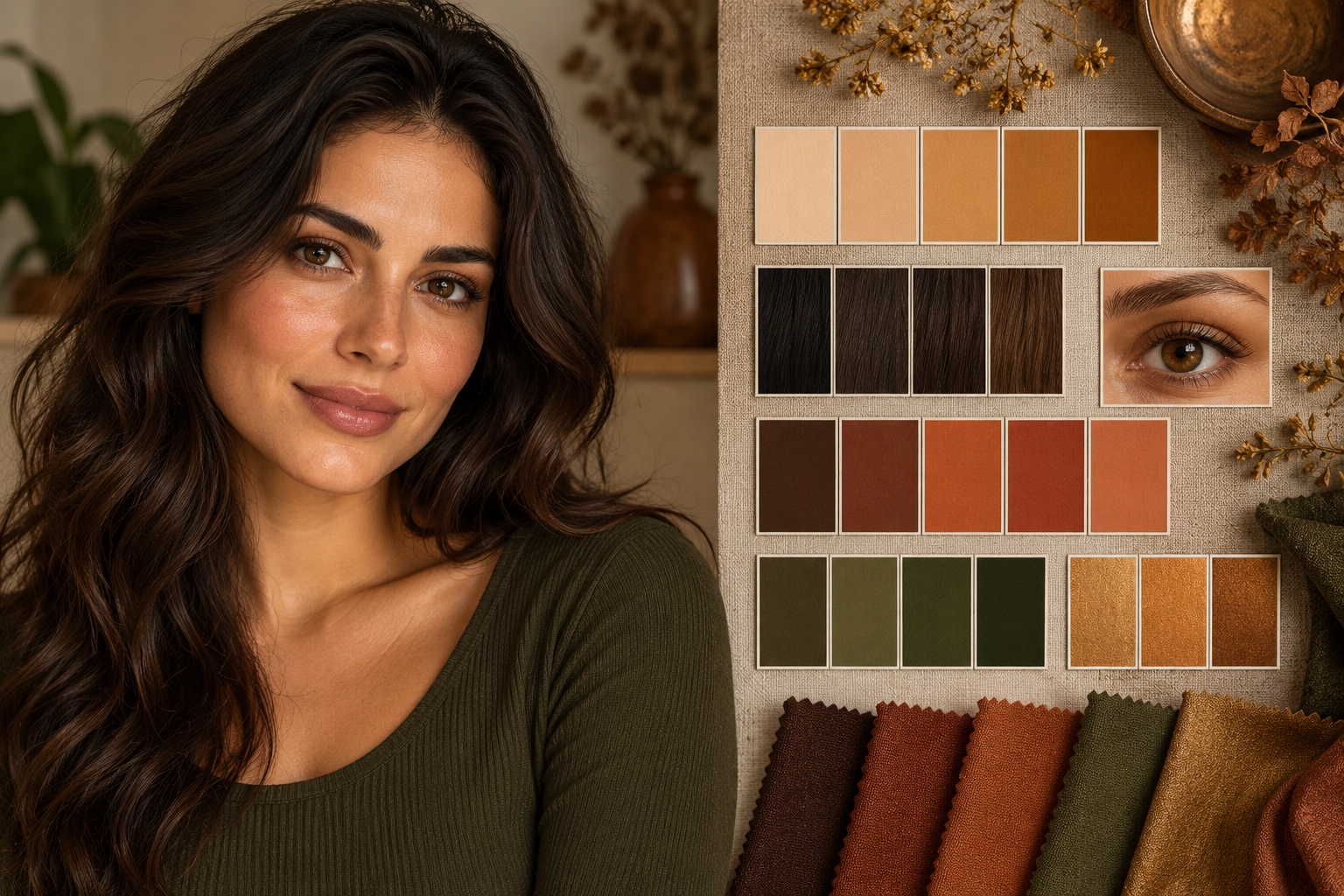
The color swatches above show the relationship the article is describing. The portrait is generated and represents no actual celebrity or analysis result. Swatches on a screen are approximate; fabric against your face in consistent daylight is more useful for a personal decision. For a wider look at how the Autumn family divides into soft, true, and deep variations, use our Autumn color palette guide.
Zendaya: The Modern Queen of Deep Autumn Monochrome and Terracotta
Zendaya's styling is a good lesson in using dark hair as part of an outfit's visual structure. A dark brunette hairstyle beside bronze, cinnamon, or terracotta clothing makes the warm fabric look deliberate rather than isolated. When a look uses one brown family from collar to hem, the interest comes from value and texture: a deeper chocolate at the shoulder, a lighter copper highlight in satin, or a muted golden accessory. This is what makes warm monochrome practical, even without a formal red-carpet gown.
A Vogue beauty account of Zendaya's brunette curls and pared-back makeup is one documented styling reference. It does not identify her season. Her professional image changes dramatically between campaigns and film roles, so a single warm photo would be weak evidence of her natural coloring. The actionable idea is to coordinate the warmth of clothing, lip color, and metal while keeping a deep anchor near the face.
To adapt that idea, begin with a chocolate knit and dark brown trousers. Add a terracotta scarf or copper-toned earring so the warmth appears near the face, then compare the same outfit with a cool gray scarf. If gray gives better clarity, the Zendaya-inspired warm combination may still be wearable, but it should not settle your season. Color analysis is a comparison, not a celebrity match.
Julia Roberts and Halle Berry: Warm Golden Undertones in Hollywood Spotlight
Julia Roberts offers an especially clear styling reference for the relationship between warm hair, tailoring, and rich neutrals. Her auburn and brunette looks make copper, tobacco, and espresso interesting options to examine. A dark brown suit can feel softer than black while retaining the formal depth needed for an evening event. Vogue's coverage of her Cannes tailoring shows how a strong silhouette can carry a look without relying on icy contrast. It is evidence of a documented outfit, not of a fixed undertone.
Halle Berry shows a different route: warm metals and rich dark colors can frame a deeper complexion with light-catching detail. Her celebrated Elie Saab gown, which she wore again in 2024, is documented by Vogue's report on the rewear. The lesson to borrow is the placement of warmth and shine near the face, not a claim that one gown establishes her personal season. A bronze earring or copper-brown satin neckline can create a similar effect in ordinary clothes.
Eva Mendes is another useful reference for warm dark styling: espresso, rust, and golden accessories recur in celebrity mood boards around her. As with the others, hair dye, spray tan, flash, and editorial grading make photographs unreliable evidence of a person's natural coloring. Look at the outfit's color relationship first. A person with any complexion can borrow a warm dark combination, then adjust the specific shade to suit their own preferred contrast.
Red Carpet Masterpieces: Copper Metallics, Dark Moss, and Rich Mahogany
Deep Autumn eveningwear works when the darkest color has warmth inside it. Mahogany reads differently from cool burgundy; dark moss is greener and earthier than a blue-leaning emerald; copper metallic has an orange-brown base that silver does not. These distinctions are easiest to see when two similar swatches sit side by side, away from a colored spotlight. Adobe's color-wheel guide describes the warm and cool sides of the wheel and how adjacent colors create relationships. Clothing adds depth, finish, and lighting to that basic color principle.
For a formal look, pair a mahogany jacket with antique-gold jewelry and dark chocolate shoes. A moss gown can take bronze earrings and a cinnamon lip. Copper satin has enough visual energy that the rest of the outfit can stay quiet: espresso hair accessories, a brown bag, and little additional shine. The aim is controlled richness, not matching every item to one shade of orange. Warm contrast can be strong without becoming bright.
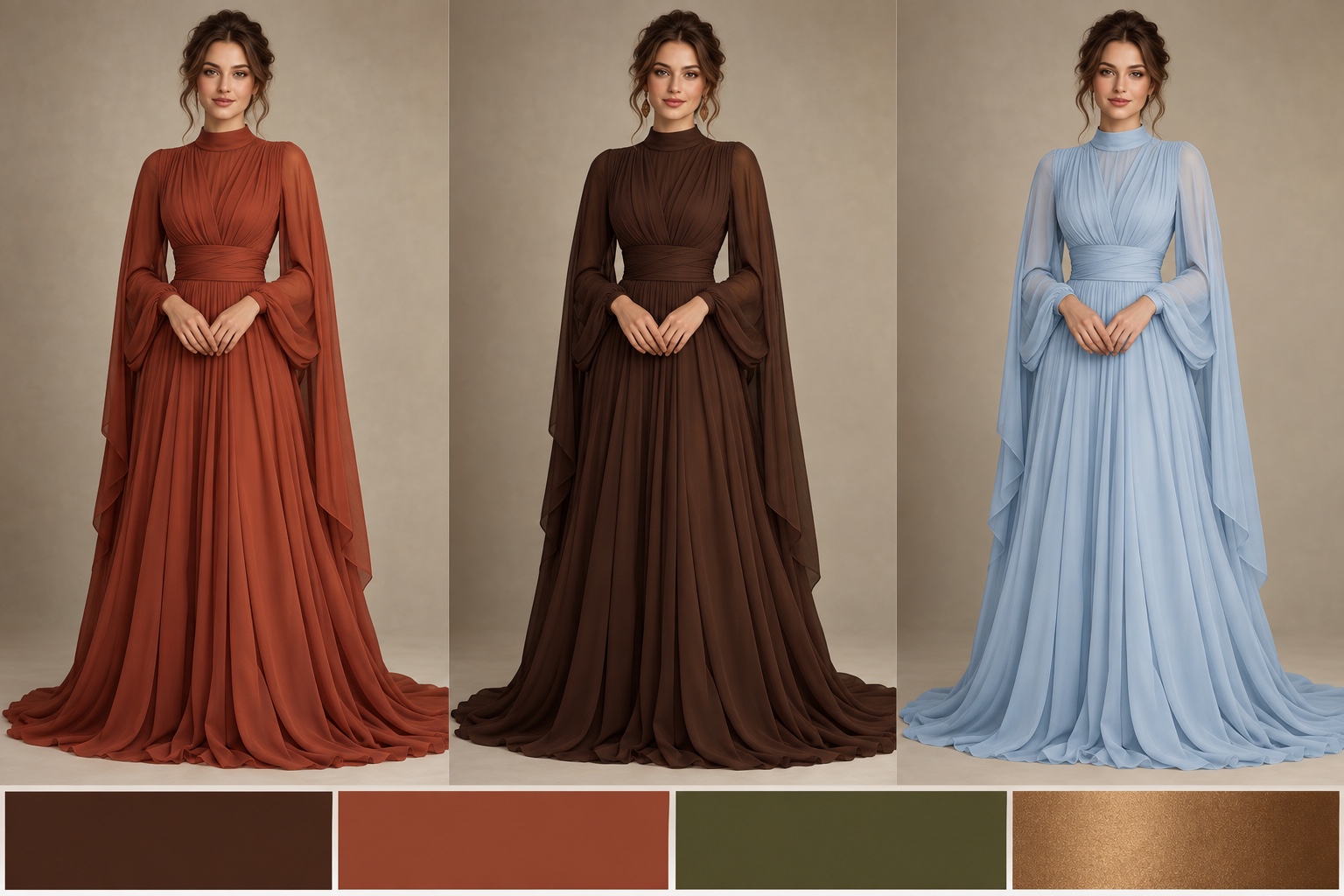
This image isolates garment color by using similar silhouettes and light. Real red-carpet photos rarely offer such a controlled comparison: one dress may have flash, another sunset, and a third a different camera grade. The illustration is therefore a palette exercise. For a more complete wardrobe plan, the Deep Autumn guide lists related neutrals and accents.
Color Missteps: Why Icy Blue and Stark White Flatten Deep Autumn Warmth
An icy pastel blue introduces two changes at once: it is cooler and much lighter than the rich colors above. If it dominates the area under the chin, a warm dark outfit can lose continuity. Stark optical white is similarly high in lightness and often slightly blue in effect, especially under cool LED light. In photos, either shade may pull attention toward the garment before the face. That is an aesthetic effect, not a judgment about anyone's skin.
Before concluding that a color is a poor choice, control the comparison. Place ivory next to optical white at the same neckline. Then compare dark warm teal with icy blue so the two blues are closer in depth. If the warm alternatives look more integrated in repeated daylight checks, that is useful evidence for your wardrobe. If you love optical white, wear it intentionally with a warm scarf, bronze jewelry, or a deeper jacket separating it from the face.
Photos of celebrities are particularly misleading here. Blue stage light can cool a brown dress; gold reflectors can warm a white dress; makeup can correct or amplify the effect. The phrase “pastels clash” is shorthand for a specific comparison under specific light, not a universal ban. The best test is the same person, similar styling, equal lighting, and two fabric colors near the face.
Hair and Makeup Formulas of Deep Autumn Stars (Warm Bronzer and Brick-Nude Lips)
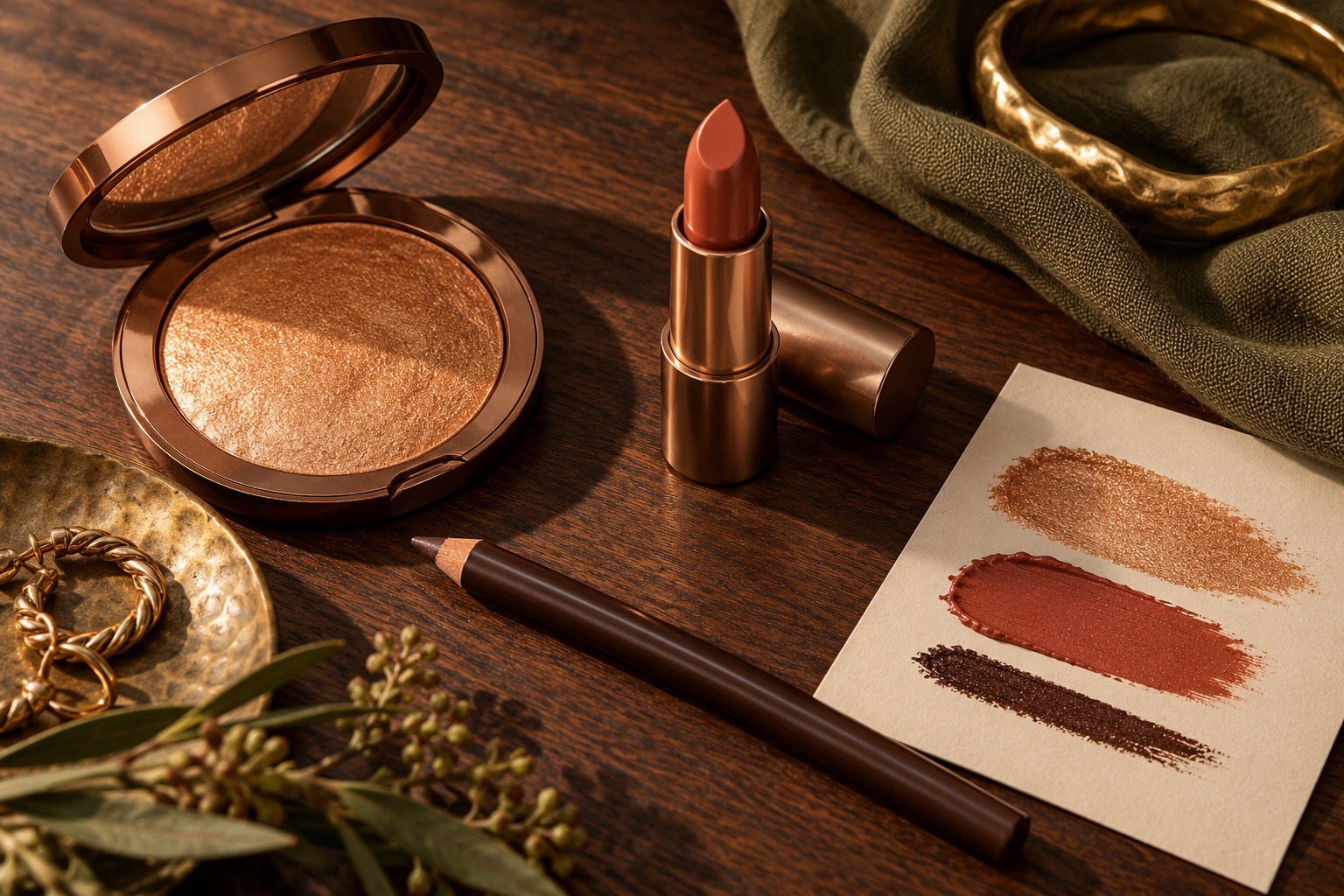
A Deep Autumn-inspired makeup look usually starts with a warm, deep anchor rather than maximum sparkle. Chocolate eyeliner defines the lashes with less cool contrast than jet black. A brick-nude or cinnamon satin lip brings warmth near the center of the face. Warm bronzer can connect the cheeks to copper and terracotta clothing, provided its depth matches the person's skin and it is blended for the finish they want. These are style options, not rules about natural undertone or product suitability.
Hair color can follow the same logic. Deep chestnut, espresso, or dark auburn can echo the wardrobe without requiring highlights. A bright ash blonde or blue-black dye changes the visual temperature substantially, so compare a temporary sample or reference image before making a permanent change. Natural hair does not need alteration to “qualify” for a season. If you already wear silver hair, the fabric drape still matters more than a celebrity hair formula.
Use texture to keep a monochrome look lively: matte chocolate liner, satin cinnamon lip, and one subtle copper highlight. If all three are metallic, the shine can compete with the clothing. For everyday wear, use one accent and leave the rest neutral. Makeup also behaves differently across skin depths; the same brick-nude lipstick may be a pale nude on one person and a strong red on another. Test the actual product in daylight.
How to Borrow Celebrity Deep Autumn Color Combinations for Work and Play
The practical route is to copy a color relationship, not an outfit or a claimed celebrity season. Pick one deep neutral, one warm accent, and one metal or texture. Keep the dark color near the face if depth is the effect you want. Move the accent into a scarf, top, lip, or earrings according to dress code. The table gives starting combinations and the single comparison that will tell you whether the look works for you.
| Setting | Deep Autumn starting look | Compare in daylight |
|---|---|---|
| Work | Espresso blazer, warm ivory shirt, bronze earrings | Warm ivory versus optical white at the collar |
| Weekend | Forest-olive knit, dark denim, cognac leather | Olive versus cool pine near the face |
| Evening | Mahogany dress, antique gold, chocolate shoes | Mahogany versus cool wine at equal depth |
| Bold accent | Terracotta top under a dark brown coat | Terracotta versus bright orange for saturation |
These comparisons answer separate questions. Ivory versus white tests temperature and brightness. Olive versus pine tests warm versus cool green. Mahogany versus wine holds depth roughly steady. Terracotta versus orange tests how much vividness you prefer. If every warm dark option seems heavy, try a lighter Autumn direction; if cool darks win, compare Deep Winter. Our quiz and draping comparison explains what each method can and cannot tell you.
A five-minute home check is enough to choose what to investigate next. Remove strong colored makeup, stand near indirect daylight, and take two photos with the camera's settings unchanged. Hold the candidate fabrics at the same position under the face. Look for consistency across several pairs rather than one dramatic winner. If you want a guided starting point after the comparisons, try the interactive color analysis quiz and treat its result as a palette hypothesis to test with real clothes.
Deep Autumn Celebrity FAQ
Can Deep Autumn wear gold and silver?
Yes. Antique gold, bronze, and copper often echo warm earthy clothing, while silver can provide a deliberate contrast. Compare two similar pieces beside the same top in daylight. If bright chrome silver feels separate, try oxidized silver, pewter, or mixed metal; no jewelry test alone proves your season. Our gold versus silver guide gives a more careful way to compare metals.
How does lighting affect celebrity color analysis?
Flash, colored spotlights, reflected walls, filters, and retouching can all shift apparent skin and fabric color. Two photographs from the same event may disagree. A public image is useful for studying an outfit's intended palette, but it cannot establish a person's natural undertone. For yourself, use consistent indirect daylight and actual fabric near the face.
Is Zendaya definitely Deep Autumn?
No public photo set can establish that definitively. Zendaya is a versatile style reference because brunette hair, warm metallics, and terracotta can demonstrate a deep warm combination. Her styling changes with projects, so “Zendaya color analysis season” searches should be read as inspiration rather than a verified personal assessment.
Is Dark Autumn the same as Deep Autumn?
Many 12-season systems use Dark Autumn and Deep Autumn for the same neighboring-to-Winter palette. Individual analysts may set different boundaries for brown, burgundy, and teal. Compare the actual swatches rather than relying on the name printed on a palette card.
Can someone with light or deep skin be Deep Autumn?
Yes. Skin depth alone does not determine a season. The useful observation is whether deep, warm colors support the whole face more consistently than equally deep cool colors or lighter warm colors. A person with light skin may use stronger clothing contrast; a person with deep skin may use a different ivory or metallic. Both can test the same color relationships.
💫 Discover Your Complete Color Palette
Ready to discover all the colors that make you look radiant? Our comprehensive color analysis will reveal your complete personal palette - perfect for hair, makeup, and wardrobe decisions.
Take Color Analysis Quiz →