What Colors Make Brown Eyes Pop: Clothing Palettes for Rich Dark Eyes
 Reviewed by Alexandra Gilmore
Cobalt, navy, and turquoise create contrast with brown eyes; terracotta, gold, and bronze bring out warm flecks.

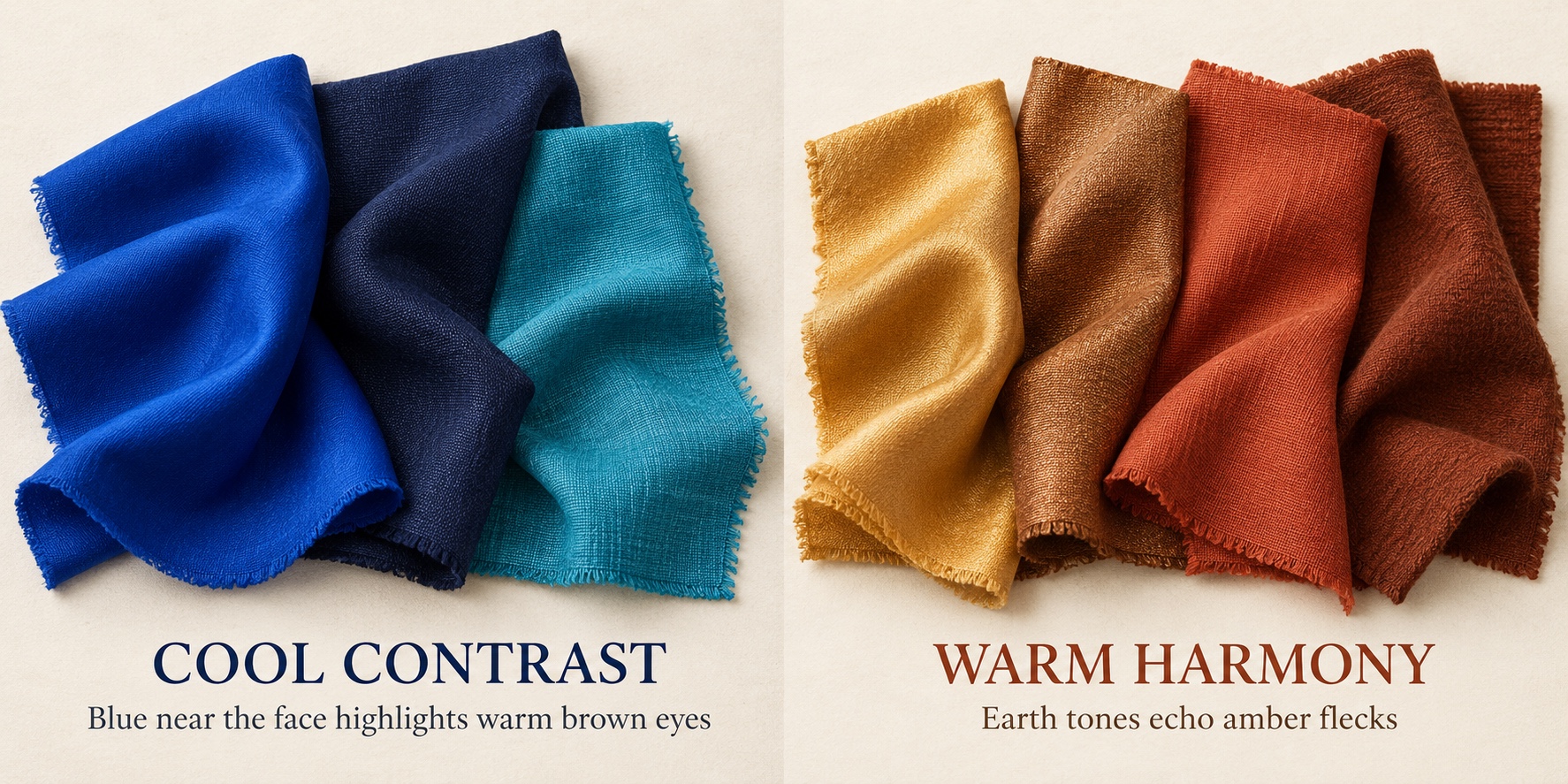
What colors make brown eyes pop? Royal cobalt blue, midnight navy, and rich turquoise create clear visual contrast with the warm tones many people see in brown irises. Gold, copper, terracotta, and cinnamon can echo amber or honey flecks, while emerald and deep amethyst add a polished jewel-tone option. Start with a shirt, scarf, or frame near your face; that placement has more impact on the eye area than a color worn only in shoes. The best choice depends on your eye depth, the rest of your coloring, the light, and whether you want bold contrast or quiet harmony.
Brown eyes are not one flat shade. They can appear nearly black, chestnut, golden honey, or amber, with different patterns visible in daylight. A color does not change the iris itself; it changes the visual frame around it. This guide turns that simple idea into wearable tops, outfit combinations, neutrals, and glasses. Try two options beside your face in the same light, then keep the effect you actually prefer.
The Spectrum of Brown Eyes: Dark Chocolate, Warm Honey, and Amber Depth
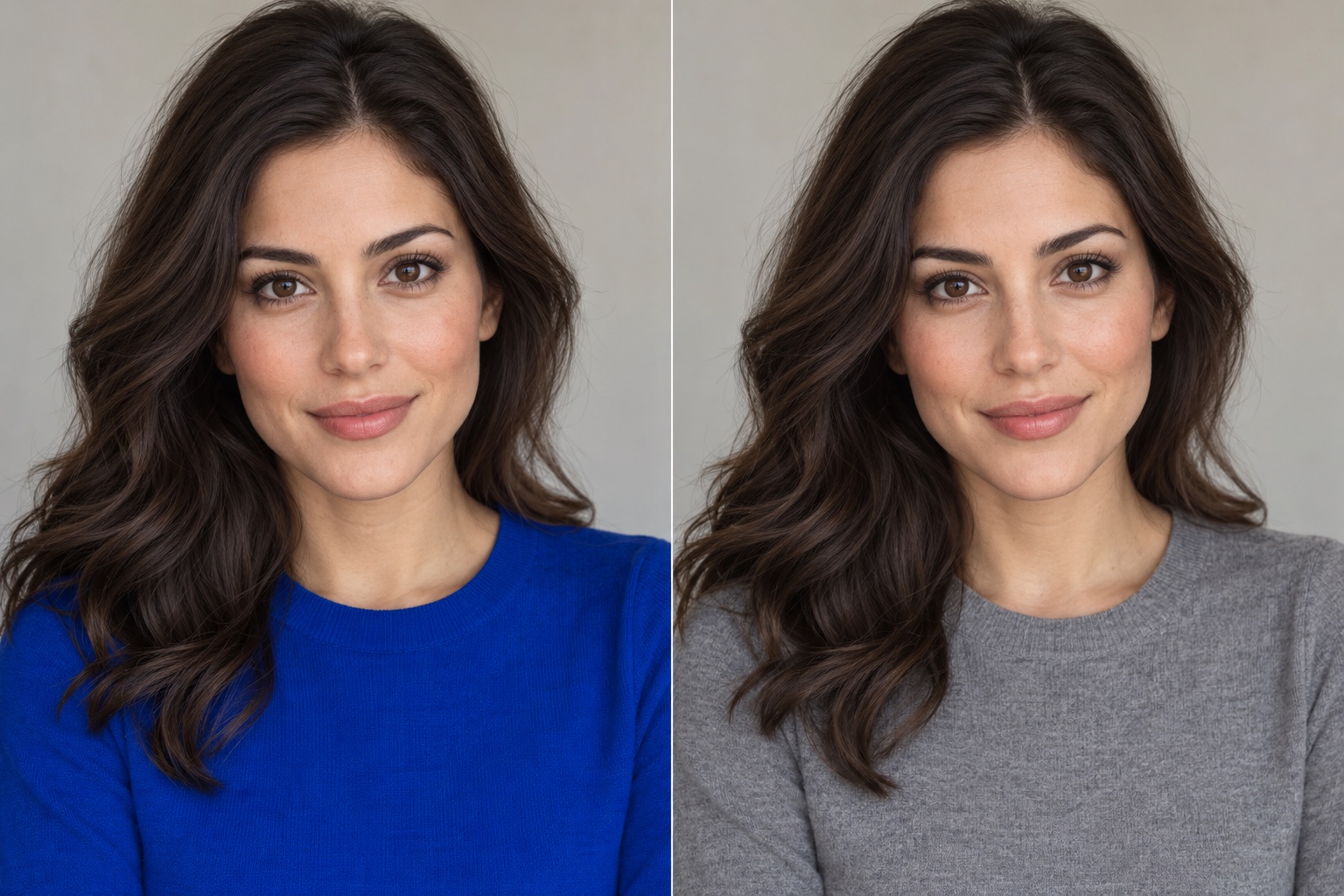
Dark chocolate brown often reads deep and even from a conversational distance. A bright or light color near the face can make that depth more noticeable by setting a clear boundary around the eye area. Royal blue, crisp white, and saturated emerald are useful first comparisons. A deep navy top creates a quieter effect: the eyes and garment share depth, while the blue adds a different hue. If your eyes look almost black indoors, check the color outdoors before choosing a shade solely from a photograph.
Warm honey brown may show golden, caramel, or copper areas. Terracotta and bronze can repeat those notes for a connected look, while cobalt and turquoise offer stronger contrast. Amber brown may read lighter and more golden; aubergine or amethyst can set off its yellow-orange quality without relying on a very bright blue. These labels are descriptive, not fixed categories. One iris can contain several tones, and the impression changes with light, pupil size, makeup, and the colors around your face.
The American Academy of Ophthalmology's EyeWiki overview of the iris links eye-color variation to differences in melanocyte distribution and density. Clothing is a styling choice, not a way to alter that biology. For a fair comparison, face a window, remove strong color filters, and hold each top or scarf in the same place. Notice whether you see the iris outline first, the warm flecks first, or simply a color you enjoy wearing.
Skin and hair also shape the overall result. A very vivid cobalt can make dark eyes stand out but still feel too intense for someone who prefers muted outfits. The guide to finding your best clothing colors explains how temperature, depth, and saturation work together. Use eye color as one helpful clue, not the only deciding factor.
The High-Contrast Blueprint: Why Royal Blue and Cobalt Make Brown Eyes Glow
Brown often contains orange, red, and yellow visual notes. Blue sits opposite orange on a traditional color wheel, so a blue garment can create a lively contrast beside warm brown eyes. Adobe's explanation of complementary colors describes that blue-orange relationship. This is an optical styling principle, not a promise that a particular shirt will make every pair of brown eyes look identical.
Royal cobalt is the direct statement option. Put it in a blouse, knit, shirt collar, or scarf and keep the rest of the look simple: dark jeans, tailored charcoal trousers, or an ivory skirt. The saturated blue draws attention upward, while the warm iris remains visually distinct. If a full cobalt top feels overwhelming, use a narrower blue scarf at the neckline or an open cobalt overshirt over a neutral tee.
Midnight navy is easier for work and repeated wear. It supplies blue contrast without the brightness of cobalt, especially against honey eyes or lighter skin. With very dark eyes, navy can become a low-contrast frame; reveal a white or ivory collar, add gold earrings, or choose a navy with a visible blue cast instead of near-black. Our navy outfit guide offers more ways to build the rest of the look.
Rich turquoise brings blue and green together and can look especially lively beside warm brown. Choose a clear, medium-to-deep turquoise rather than a pale, chalky aqua when you want the garment to hold its own against dark eyes. The exact hue matters less than the visible contrast at your face. Try cobalt, navy, and turquoise in sequence with the same neckline and lighting, then take a neutral photo of each. The photos are useful for comparison even if the camera cannot capture every fleck in your iris.
Warm Harmony: Gold, Bronze, Terracotta, and Cinnamon Styling
Contrast is only one way to make an eye color noticeable. Repeating a color already present in the iris can draw attention to its details. A soft metallic gold earring beside honey brown eyes can pick up golden flecks without turning the whole outfit yellow. Bronze offers a deeper, less shiny version. Try these metals with a cream blouse or dark navy shirt so the eye and accessory have a calm background.
Terracotta and cinnamon are practical clothing colors for warm brown eyes. A terracotta knit and dark denim create a relaxed weekend outfit; a cinnamon silk shirt with chocolate trousers feels richer and more tonal. Rust is stronger and redder than many terracottas, so test it separately. If warm orange-brown near your face makes the rest of your complexion look tired to you, keep that shade in a bag or skirt and use a cooler blue or cream at the neckline.
Copper is useful in small doses: a satin scarf, a patterned shirt, or a piece of jewelry. Metallic shine catches light, which can make it more prominent than a matte fabric of the same hue. An entire copper satin blouse creates a dramatic evening effect; a matte copper-brown knit is quieter. Try the finish as well as the color before deciding whether the palette suits your day-to-day style.
Aubergine is a good bridge when you want warmth and contrast at once. Its deep purple-red character can complement the golden notes of brown eyes, especially with a gold or bronze detail. Do not feel obliged to match every accessory to the eye color. One warm element near the face, one supporting neutral, and a clean neckline are usually enough. For more help comparing a warm and cool effect on your own face, use the gold versus silver jewelry guide as a styling experiment rather than a strict rule.
Jewel Tones for Evening Glamour: Emerald Green and Deep Amethyst Purple
Emerald green gives brown eyes a rich, saturated frame without using blue. A deep emerald blouse with black trousers is simple enough for dinner and vivid enough to stand alone. Gold jewelry warms it; silver makes the pairing cooler. Keep a little light at the neckline when both the top and eyes are very dark. An open collar, visible skin, or a pale layer can prevent the whole look from merging into one dark area.
Deep amethyst and aubergine can be especially effective when your brown eyes show amber or gold. Purple and yellow sit opposite on the color wheel, but brown eyes are not pure yellow; the effect is softer and more personal than a textbook complementary pair. A plum velvet jacket, amethyst silk shirt, or deep purple scarf offers evening depth. If purple makes your complexion feel flat, move it into a smaller accessory and try a bluer violet or richer burgundy.
For an event, choose one jewel tone as the focal point. Emerald dress, dark shoes, and gold hoops is complete. An amethyst shirt under a charcoal suit needs little else. Avoid piling cobalt, emerald, and purple near the face unless a print deliberately connects them; three saturated colors can compete with the eyes. Fabric helps set the mood: matte crepe feels quieter, while satin and velvet reflect light and make the same color more prominent.
Jewel colors also translate into everyday clothes. An emerald fine-gauge sweater with dark jeans or an amethyst button-down under a navy jacket uses the same principle with less shine. The best color is one you will actually wear. Compare an evening swatch with a cotton or wool version before assuming a shade only works for formal occasions.
Everyday Tops and Scarves: Choosing Necklines and Colors Near the Face
If you want the quickest change, start with the garment nearest your face. A cobalt tee under an open jacket, a turquoise scarf, or a cinnamon shirt collar occupies the visual space closest to your eyes. A cobalt shoe can complete an outfit, but it will do much less to frame your face. The best shirt colors for brown eyes therefore depend partly on how much of the shirt is visible above your jacket or sweater.
Neckline shapes affect the amount of color you see. A crewneck puts a broad band of fabric directly under the chin. A V-neck shows more skin and makes a vivid shade feel less dominant. An open collar breaks a deep navy or emerald top with a lighter area. If bright cobalt feels too strong in a high crewneck, try a V-neck, a slim scarf, or a small patterned collar containing the same blue.
Scarves make controlled trials inexpensive and easy. Hold a royal blue scarf under one side of your face and a terracotta scarf under the other in consistent daylight. Then repeat one at a time, since side-by-side fabric can influence what you see. Look for the eye effect you want and whether the skin around your face still feels balanced. If one shade wins for your eyes and the other wins for your complexion, try a print with both or use the eye-enhancing shade in a narrower strip.
For an easy wardrobe, choose two reliable near-face colors: one contrast color, such as cobalt or turquoise, and one harmony color, such as terracotta or bronze. Add a neutral shirt you enjoy. This gives you three directions without buying an entirely new palette. The clothing color matching guide can help you combine those tops with trousers and outer layers you already own.
| Eye impression | Try near the face | Outfit formula | Effect to check |
|---|---|---|---|
| Very dark chocolate | Royal cobalt or crisp white | Cobalt shirt, charcoal trousers, small gold earrings | Clear separation around the eye area |
| Deep warm brown | Midnight navy or emerald | Navy knit, ivory collar, dark denim | Depth with a visible blue or green frame |
| Honey or caramel | Turquoise or terracotta | Turquoise scarf, cream shirt, cognac belt | Contrast or warmth without visual clutter |
| Amber or golden brown | Amethyst or bronze | Amethyst blouse, charcoal skirt, bronze hoops | Golden flecks and balanced complexion |
Use this decision table as a starting point, not a verdict about what you can wear. Your lighting, personal style, and the exact dye in a garment can change the result. Keep the shade that makes you feel most like yourself, even if another option creates a stronger theoretical contrast.
Neutrals That Do Not Dull Brown Eyes: Ivory, Crisp White, and Rich Charcoal
A neutral top can give the eyes room to stand out. Ivory offers gentle light-dark contrast beside dark brown eyes and connects easily to warm gold jewelry. It is softer than optic white, particularly in textured cotton, knit, or silk. An ivory blouse, dark jeans, and bronze hoops create a simple look that still draws attention to the face. Compare cream and ivory in daylight; some creams lean noticeably yellow, while others are almost white.
Crisp white makes a sharper frame. It can look clean against deep brown eyes, especially with dark hair or a navy jacket. If brilliant white feels harsh on your complexion, use a softer white at the neckline and keep the optical white in a shirt cuff or accessory. The guide to white shades
Rich charcoal is a useful dark alternative to flat medium gray. It has enough depth to support brown eyes and works with cobalt, emerald, or terracotta accents. A charcoal blazer over a cobalt shirt is more vivid than charcoal alone; a gold earring provides a small warm point. Dull mid-gray is not forbidden, but if it feels draining, add visible contrast at the collar rather than discarding the entire garment.
Black, chocolate, and camel can also work. Black makes a crisp graphic frame, while chocolate repeats the depth of dark brown eyes. Camel feels warm and softer. The practical test is whether the outfit has a clear value difference, useful texture, or a small accent near the face. A brown-on-brown look can be striking when one brown is lighter or redder than the other.
Coordinating Eyeglass Frames with Brown Eyes (Tortoise, Gold Wire, and Navy Acetate)
Eyeglasses sit closer to your eyes than any shirt, so frame color can make a noticeable difference. Tortoiseshell repeats the mixed amber and chocolate notes present in many brown eyes. A medium tortoise can bring warmth without looking like an exact eye-color match. Choose a frame with enough contrast against your skin and brows to remain visible; very dark tortoise may read almost black from a distance.
Gold wire is a lighter, reflective option. It can echo honey or amber flecks while leaving much of the face unobstructed. Bronze wire is a quieter alternative, and brushed metal reads softer than polished metal. Frame shape and fit still matter more than a color theory rule: the bridge should sit comfortably, the eyes should be well positioned within the lenses, and the frame should suit the way you move and dress.
Navy acetate brings the blue contrast principle directly to the eye area. Pick a navy that looks blue in normal light rather than nearly black if contrast is the goal. A cobalt acetate is bolder; dark navy is easier for everyday wear. For very dark eyes and hair, a translucent blue or two-tone navy frame can add separation without a heavy solid edge.
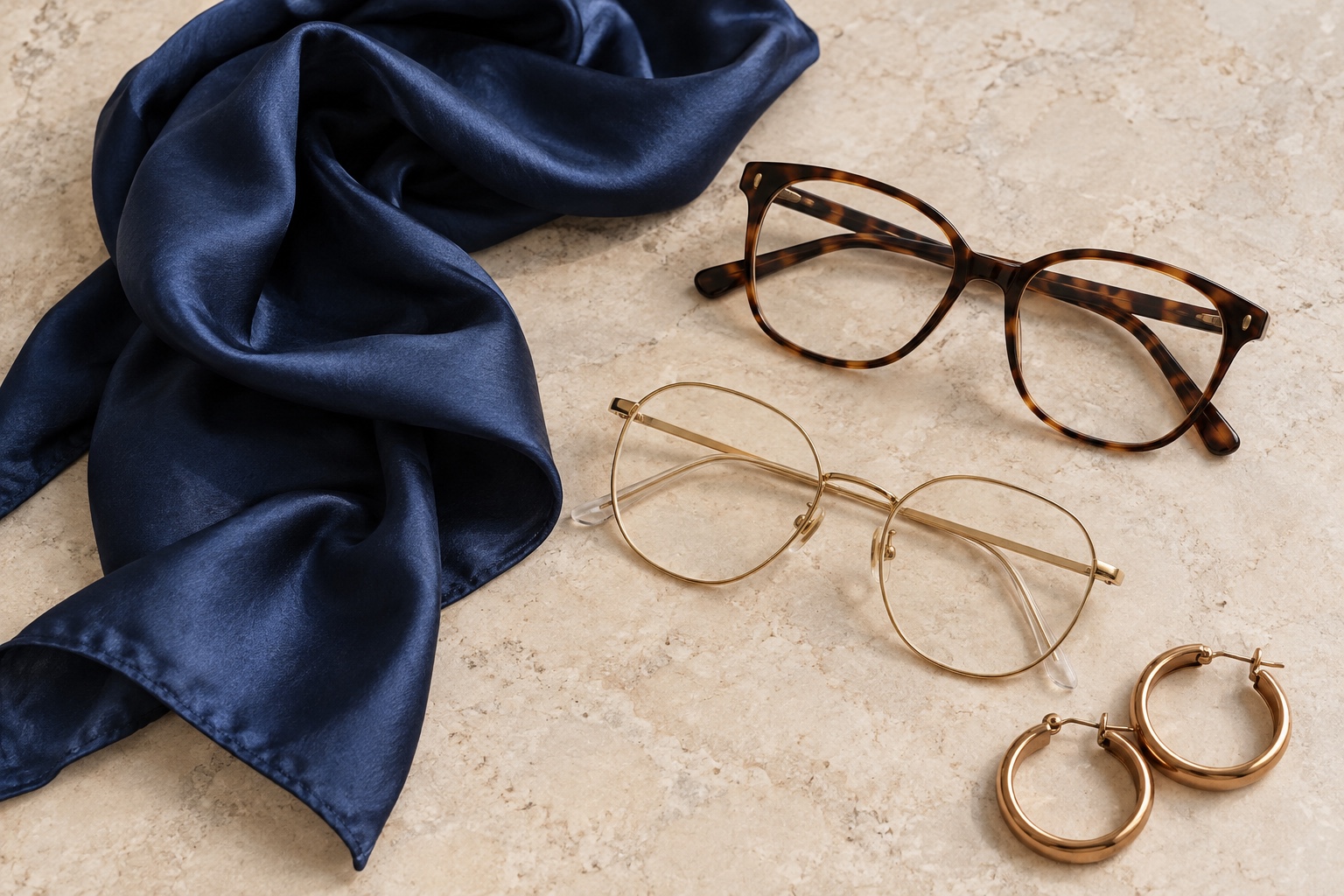
Bring the scarf or top you wear most often when trying frames. A frame that looks ideal against a bare face in store lighting may interact differently with your usual clothing. View it in natural light if possible, and take a straight-on photo at normal conversation distance. You should like the entire face and outfit, not only the frame color in isolation.
Brown Eyes Styling FAQ
Can brown eyes wear brown clothes?
Yes. Brown can create a rich tonal look. Make the garment noticeably lighter, redder, or more textured than your irises, or add an ivory collar, gold earring, or blue scarf to keep the eye area defined. A chocolate knit with cognac leather is one easy example.
What about pastel pink?
Pastel pink can be a soft, flattering frame, especially when you prefer gentle contrast. Dusty rose feels quieter than icy baby pink; a clearer pink reads fresher. Compare both with the same makeup and lighting. If the pink feels too pale on its own, add navy or charcoal near the neckline.
What is the best shirt color for very dark brown eyes?
Royal cobalt is a strong first test because it adds saturated hue contrast to very dark eyes. Crisp white offers light-dark contrast, and emerald gives a rich alternative. There is no universal winner: hold the shirts at your face and choose the effect that suits your whole coloring.
How can I make brown eyes pop without makeup?
Put a clear color near your face: a cobalt top, turquoise scarf, emerald collar, or navy eyeglass frame. Gold or bronze earrings can draw out warm flecks. Consistent lighting and a visible neckline help you judge the result without changing the eyes themselves.
Can brown eyes wear gray?
Yes. Charcoal has depth; pale gray can give gentle contrast. If a flat medium gray looks dull, add a cobalt scarf, crisp white shirt, or warm metallic accessory. Texture such as heathered wool can also make gray more interesting.
Start with one blue, one warm earth tone, and one neutral you already own. Try each beside your face in daylight and note how your eyes and complexion look together. If you want to place those results within a broader wardrobe palette, take the interactive color analysis quiz and use its suggestions as another set of colors to compare in person.
💫 Discover Your Complete Color Palette
Ready to discover all the colors that make you look radiant? Our comprehensive color analysis will reveal your complete personal palette - perfect for hair, makeup, and wardrobe decisions.
Take Color Analysis Quiz →