What Colors Make Hazel Eyes Pop: Best Outfits, Tops, and Makeup Shades
 Reviewed by Alexandra Gilmore
Try plum for green, mustard for amber, and forest green for depth—then compare near-face colors in steady daylight.

What colors make hazel eyes pop? Deep plum, violet, eggplant, and burgundy can emphasize their green notes. Mustard, camel, bronze, and chocolate brown draw attention to gold and amber flecks. Forest green and emerald create a rich tonal frame, while slate gray can make the iris appear softer and mossier. Put the color near your face in a top, scarf, or eyeglass frame. The iris itself does not change color: light, surrounding colors, and contrast change which parts you notice. Start with one plum and one warm earth tone, then compare both in the same daylight before deciding which effect you prefer.
For a deeper iris with fewer visible green or amber shifts, compare the outfit colors for brown eyes.
Hazel is a varied mix rather than one fixed shade. Some irises look green around a brown center; others are mostly golden brown with a muted green outer ring. A color that flatters one person's eyes may frame another person's skin less well. This guide helps you choose clothing colors for hazel eyes, test them fairly, and translate the same ideas into glasses and makeup. If you want a broader wardrobe starting point, our guide to your best clothing colors explains how eyes, skin, hair, and contrast work together.
The Science of Hazel Eyes: The Chameleon Iris Anatomy
The iris is the colored ring around the pupil. Its appearance depends on the amount and placement of melanin, the iris's structure, and the light that reaches it. Cleveland Clinic's eye-color overview describes hazel as a variable combination of brown, gold, and green, generally with less front-layer melanin than brown eyes and more than blue or green eyes. No single pigment called “green” or “blue” has to be painted into each part of the iris for those colors to appear.
Light scattering also contributes to the way lighter irises look. Discussions of eye color sometimes call this Rayleigh scattering, but a real iris is more complex than a simple blue-sky analogy. Pigment distribution, tissue structure, viewing angle, pupil size, and illumination interact. The practical point for styling is modest: a plum sweater cannot change melanin or turn brown flecks green. It can change the contrast around the face so a viewer pays more attention to the green that is already present.
Hazel eyes may seem greener outdoors and warmer indoors. Golden-hour light, a yellow wall, camera white balance, and even a phone's automatic color processing can shift a photograph. For a useful wardrobe test, stand near a window in indirect daylight, remove strong colored filters, and hold each fabric in the same position. Look at the full face as well as the iris. A beautiful eye effect is more useful when you also like how the color relates to your skin and hair.
How to Bring Out the Green in Hazel Eyes
Start with a deep plum top or violet scarf. Purple-family colors create a noticeable hue contrast with the yellow-green and amber portions often found in hazel irises. The precise complementary color of pure green on a conventional color wheel is red, while red-violet sits nearer the opposite side of yellow-green. That distinction matters if you use a wheel literally; in an outfit, the textured blend of eye colors makes plum, berry, and burgundy useful experiments rather than rigid formulas. Adobe's green color guide also discusses red-green contrast and purple or violet accents.
Deep plum is a forgiving first choice. A ribbed plum sweater with dark denim places a generous block of color beneath the face and still feels wearable. Eggplant is darker and quieter; try an eggplant blouse with charcoal trousers for an office outfit. Violet is clearer and more playful, especially in a scarf or fine knit. Berry and burgundy bring a redder edge that can echo the warmth of amber flecks while letting green remain visible. Choose a depth that creates some separation from your hair and skin.
If a saturated purple overwhelms your face, do not discard the entire family. Try a dustier mauve, a smaller scarf, or a plum pattern on an ivory ground. If a very dark eggplant merges with dark hair, add a light collar or visible earring. The aim is to focus attention on the eye area, not to force every person with hazel eyes into the same purple. Our color-wheel styling guide
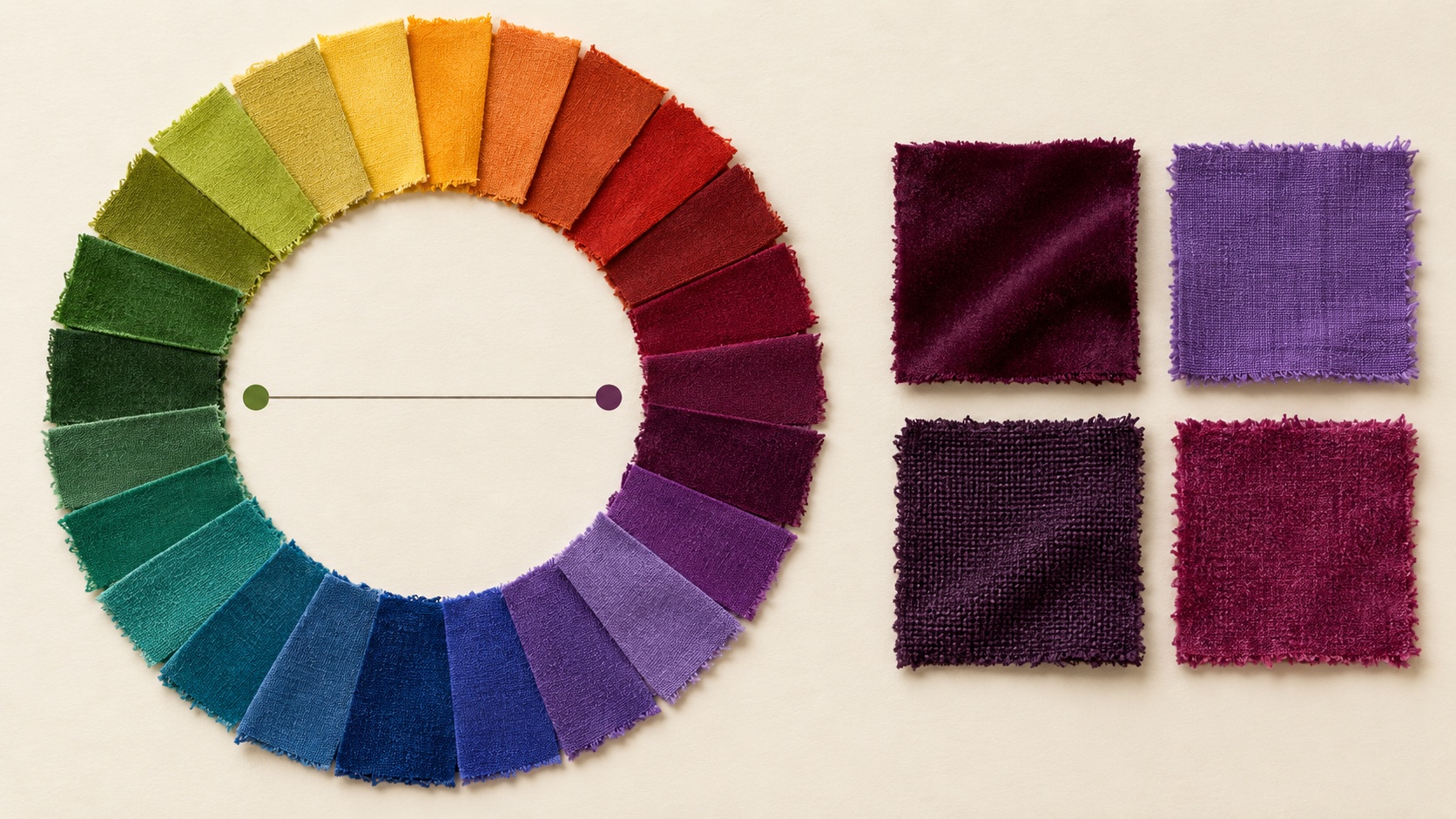
For an easy outfit, pair a plum crewneck with medium blue jeans and a neutral coat. For a softer version, tie a mauve silk scarf above a cream shirt. For a stronger evening look, place burgundy velvet near the face and keep jewelry simple. Make the eye-area color the focus; matching lipstick, earrings, and shoes to the same bold shade can distract from it. If you own only one plum accessory, try it before buying a new top.
How to Highlight the Gold and Amber Flecks
Warm colors can visually connect with amber in a hazel iris. Mustard, warm camel, terracotta, bronze, and rich chocolate brown are good starting points. A mustard knit often brings a gold center forward; a camel coat frames the face more softly; terracotta adds a lively orange-brown note. These effects vary with the exact eye pattern. Gold-heavy hazel may look particularly warm against mustard, while a greener hazel may gain only a subtle honey glow.
Try a mustard cardigan over an ivory tee when you want warmth without a full mustard shirt. A camel turtleneck creates a broad tonal frame, but compare a golden camel and a cooler taupe before choosing: beige labels can hide big color differences. Terracotta is useful in a scarf, knit, or clay-colored jacket; it works especially well with deep denim and cream. Chocolate brown gives depth and lets tiny gold flecks appear luminous by comparison. Bronze earrings can repeat that warmth in a smaller area.
Olive knits bridge the green and gold sides of hazel. A muted olive top can connect to an iris's outer green ring while its yellow base echoes amber near the pupil. If olive feels too muddy, select a clearer moss or use olive below the face and bring cream to the neckline. Similarly, bronze can be a small accessory if a metallic blouse is too much. Look for the smallest change that produces the effect you want.
Do not judge mustard under a warm store spotlight alone. Warm lighting can make every eye and garment appear more golden. Hold mustard, plum, and a neutral beside your face in the same window light, and take photos with the same exposure if you want a record. In the images, compare both eyes and complexion. This consistent setup makes a subjective color test more useful.
Analogous Green Magic: Forest Green, Sage, and Emerald for Depth
Green clothing can echo the green already visible in hazel eyes. Forest green provides a dark, quiet background that may make a lighter olive iris seem more distinct. Emerald is clearer and more saturated, so it can create a vivid frame around green-and-gold eyes. Sage is softer and grayer; it tends to emphasize a muted, mossy impression rather than a bright green one. These are analogous or related-color effects, not a change in iris pigment.
A forest-green knit under a cream coat is a practical daytime formula. An emerald blouse with dark trousers produces a more polished effect. Sage can be worn as a shirt with cocoa trousers or as a scarf above an ivory tee. Compare these greens with one another: a blue-leaning emerald and a yellow-leaning olive may frame the same eyes very differently. If one makes your skin look washed out, keep the green in a smaller scarf or shift toward a different depth.
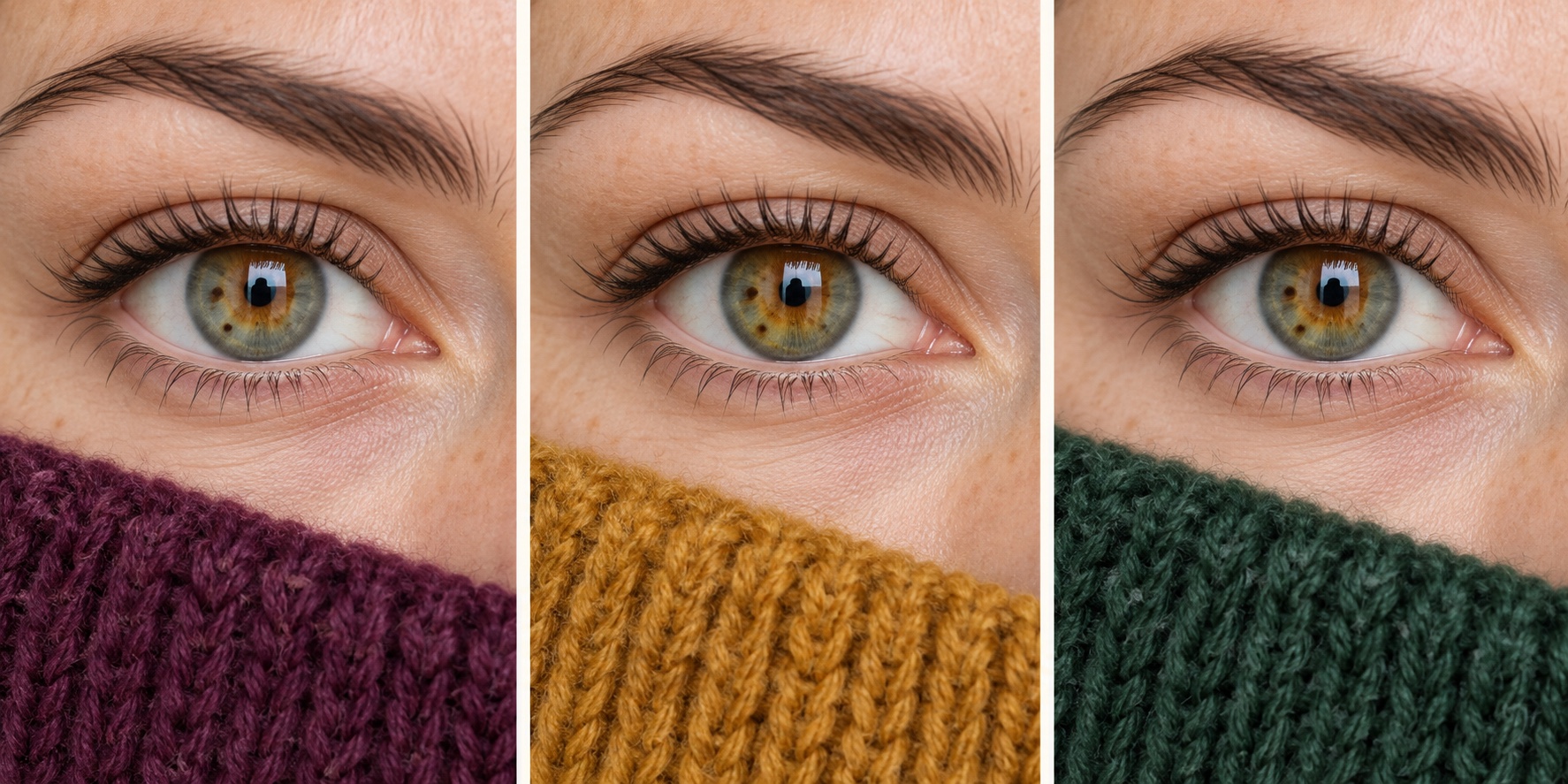
The three-panel illustration below keeps the same eye pattern and lighting while changing the fabric below it. Use it to see how a plum, mustard, or forest-green surround can draw attention to different existing parts of a hazel iris. It is a styling illustration, not evidence that fabric alters eye color or a prediction of your own result.
Colors That Dull Hazel Eyes
Flat muddy beige can blur the distinction between a hazel eye and the surrounding outfit, especially when both are similar in value and saturation. A very pale, washed-out pastel may provide so little contrast that the eyes stop being the focal point. These are useful cautions, not universal bans. A beige shirt can work beautifully when its undertone suits your skin and a darker frame, scarf, or earring adds definition.
Ask what seems missing. If a pale lavender top makes the eyes look quiet, test deeper violet. If tan feels flat, try warmer camel or a chocolate-brown neckline. If a muted olive seems to merge with the iris, switch to forest green for more depth or emerald for more clarity. A small adjustment in lightness or saturation often matters more than changing the hue family altogether.
Some people find icy blue or cool pastel pink underplays their eyes' warm flecks. Others like the airy contrast with dark hair or deeper skin. Do not describe those colors as “wrong for hazel eyes”; eye color alone is too narrow a styling rule. The whole-face color guide can help you account for undertone, contrast, and personal preference. A favorite pastel can also sit farther from the face in trousers or a bag.
Eyewear Frames and Scarf Styling: Positioning Color Close to the Gaze
Eyeglass frames may have more visual impact than a top because they surround the eyes directly. Tortoiseshell with amber and brown notes can repeat warm flecks. Deep plum frames bring a purple-family contrast without requiring a purple wardrobe. Forest or olive frames create a quieter tonal relationship. If a full colorful frame feels strong, try a translucent frame with a plum, bronze, or green detail along the rim.
Frame thickness matters too. A thick dark frame can define the eye area but may dominate delicate features; a thin bronze or tortoiseshell frame can be subtler. Compare frames at normal conversation distance, not only close to a mirror. Check them in daylight and with the shirts you actually wear. Lenses, reflections, and tinted coatings may also change how clearly someone sees your irises.
A scarf is the fastest low-commitment test. Fold a plum scarf along the neckline, take a photo, then replace it with mustard or forest green while keeping your position and lighting fixed. If the eyes look more vivid but the scarf is unflattering to your complexion, narrow it or place an ivory collar between scarf and skin. A printed scarf with plum, olive, and camel can connect several hazel-eye colors in one piece.
| Effect you want | Start with | Easy near-face piece | If it feels too strong |
|---|---|---|---|
| Greener-looking hazel | Deep plum or berry | Sweater or scarf | Dusty mauve print |
| More visible amber | Mustard or camel | Knit or coat collar | Bronze jewelry |
| Richer olive depth | Forest green | Shirt or frame | Muted sage scarf |
| Soft mossy look | Slate gray | Fine knit | Gray with plum accent |
| Balanced everyday look | Chocolate brown | Cardigan or glasses | Brown accessory over ivory |
Use the table as a decision aid, then test your own pieces. There is no single best color to wear with hazel eyes for every complexion, setting, or mood. Matte wool, shiny satin, and a translucent acetate frame can produce different effects in the same named color.
Makeup Pairings: Copper Eyeliner and Mauve Eyeshadow Formulas
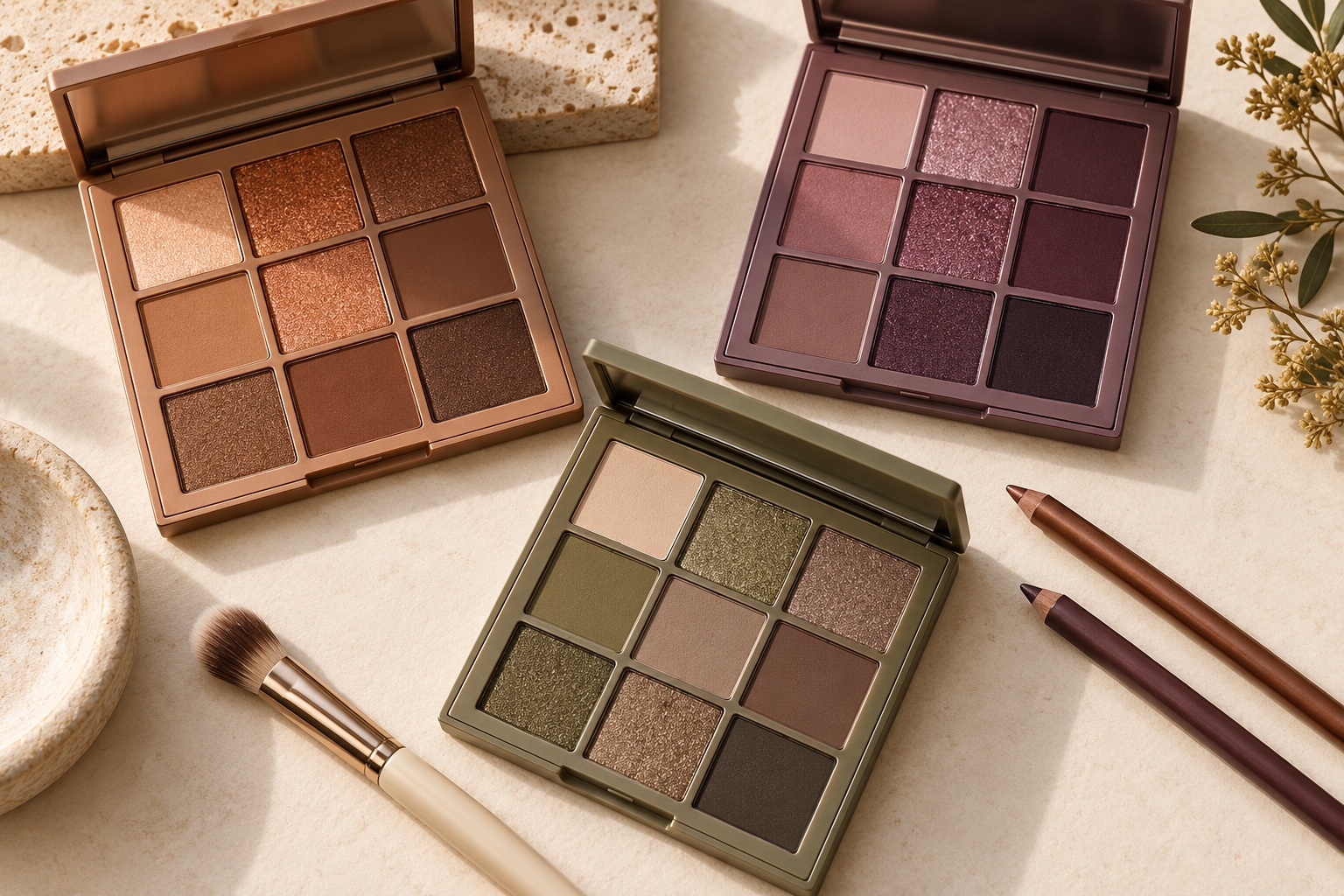
For an understated daytime look, sweep a soft taupe or warm brown over the lid and use a narrow copper-brown pencil close to the upper lashes. Copper can echo amber flecks without covering the iris; a brown pencil defines the eye more gently than a heavy black line. Keep mascara and blending neat so the color remains close to the lash line. No one needs makeup to make hazel eyes worth noticing, but it can be another way to choose the visual emphasis.
For greener-looking hazel, try mauve or plum eyeshadow with a muted brown liner. A sheer mauve wash is easier for daytime; a deep plum at the outer corner adds evening depth. If purple shadow looks bruised on your skin, move it into a narrow eyeliner or soften it with a neutral lid. For a warmer result, use bronze on the lid, chocolate in the crease, and a small touch of copper near the lashes. Blending matters more than matching a product name exactly.
Olive and khaki eyeshadows can echo green in the iris, but place a neutral shade between the shadow and skin if the result looks flat. Slate gray can cool the surrounding color and create a smoky moss impression. If you prefer blue, a muted navy liner can add definition without competing with both green and gold. Test cosmetics in the same light as your clothes; shimmer and flash photography can change the apparent hue significantly.
If you have sensitive eyes or wear contacts, follow the product's label and your eye-care professional's advice. Avoid applying cosmetics to the waterline if that irritates your eyes, replace products according to their packaging guidance, and stop using a product that causes discomfort. The styling effect is optional; eye comfort comes first.
Hazel Eyes Wardrobe FAQ
Do blue clothes work with hazel eyes?
Yes. Navy gives hazel eyes a dark, cool frame and often works as a flexible neutral. Teal can connect to their green side, while cobalt creates a clearer contrast. Light powder blue may be gentler and let warm flecks stand out by comparison. Try the blue beside your face; its depth and clarity matter more than the word “blue” on the tag.
Can hazel eyes look green in photos?
They can appear greener in a particular photo because the green parts receive different light, surrounding colors shift perception, or camera processing changes the balance. A photo alone does not show that the iris changed color. Compare unfiltered images in similar light if you want to judge a clothing color fairly. If you notice a sudden real change in eye color, especially with pain or vision changes, seek advice from an eye-care professional.
What is the best top color for hazel eyes?
Deep plum is a useful first experiment if you want green to stand out. Mustard or camel is a better first test if amber is your favorite feature. Forest green gives a rich tonal look. Hold all three near your face in the same light and choose the one that makes both your eyes and complexion look the way you want.
Can I wear black or white with hazel eyes?
Absolutely. Black can give the face strong contrast; white can brighten the area around the eyes. Neither has to be your most expressive iris color. Add a plum scarf, bronze frame, or forest-green collar if you want more specific emphasis. If optic white feels harsh, try ivory; if black feels heavy, try chocolate or charcoal.
Do hazel eyes determine my color season?
No. Hazel eyes appear across many combinations of skin tone, hair color, and overall contrast. Eye color alone cannot assign a season. Try several near-face colors, notice the whole face, and use the interactive color analysis quiz if you want a structured starting palette to test in person.
Begin with what you own: one purple-family piece, one warm earth tone, and one green or neutral. Compare each in stable daylight and choose the effect you like. The best wardrobe color is the one that brings your eyes into focus while still feeling comfortable and true to your style.
💫 Discover Your Complete Color Palette
Ready to discover all the colors that make you look radiant? Our comprehensive color analysis will reveal your complete personal palette - perfect for hair, makeup, and wardrobe decisions.
Take Color Analysis Quiz →