What Colors Go With Green Clothes: Outfit Combinations and Styling Rules
 Reviewed by Alexandra Gilmore
Pair olive with camel and cream, emerald with white and navy, and sage with blush or lavender; choose shoes by the green shade and occasion.

The best colors that go with green clothes depend on the shade of green. Olive green looks grounded with camel, cream, rust, and mustard. Emerald green looks crisp with white, black, deep navy, and a little metallic gold. Soft sage and mint suit blush pink, lavender, and heather gray. For an easy outfit, choose one green garment, one neutral, and one small accent. Saturated primary green with equally bright true red can read festive; soften one color or use red sparingly when that is not the effect you want.
A green trouser, shirt, skirt, or coat can all anchor an outfit, but they do not ask for exactly the same partners. The green's warmth, depth, and saturation change the result, and the fabric and occasion matter too. This guide gives you shade-by-shade pairings, practical outfit formulas, and shoe and bag options you can test with pieces already in your closet. If you are also choosing which colors to wear near your face, see our guide to finding your best clothing colors.
The Green Spectrum: Olive, Emerald, Sage, Forest, and Mint Classified
Olive is a muted yellow-green, often medium to deep. Its dusty, earthy quality makes warm neutrals feel connected rather than competing. Emerald is clearer, cooler, and more saturated; it can carry a sharper contrast against white or black. Sage is a grayed, quiet green that pairs with other softened colors. Forest is dark and rich, while mint is pale, fresh, and usually cooler than olive. These are useful wardrobe descriptions, not standardized dye names: two garments sold as sage can look different in daylight.
To classify a piece, lay it beside bright white, cream, and medium gray. Does the green look yellow and warm, blue and cool, or grayed and muted? Then compare how light or dark it is. A bright grass-green shirt may need simpler supporting colors than a dusty olive jacket. A deep forest sweater may need a light shirt or visible neckline so its details do not disappear. The clothing color matching guide explains these contrast choices in more detail.
Use the matrix as a starting point, then compare actual garments in the same light. Screen swatches cannot guarantee a match because dye, texture, and lighting shift how colors appear. A silk emerald blouse reflects light differently from a matte wool forest coat even if both are called green.
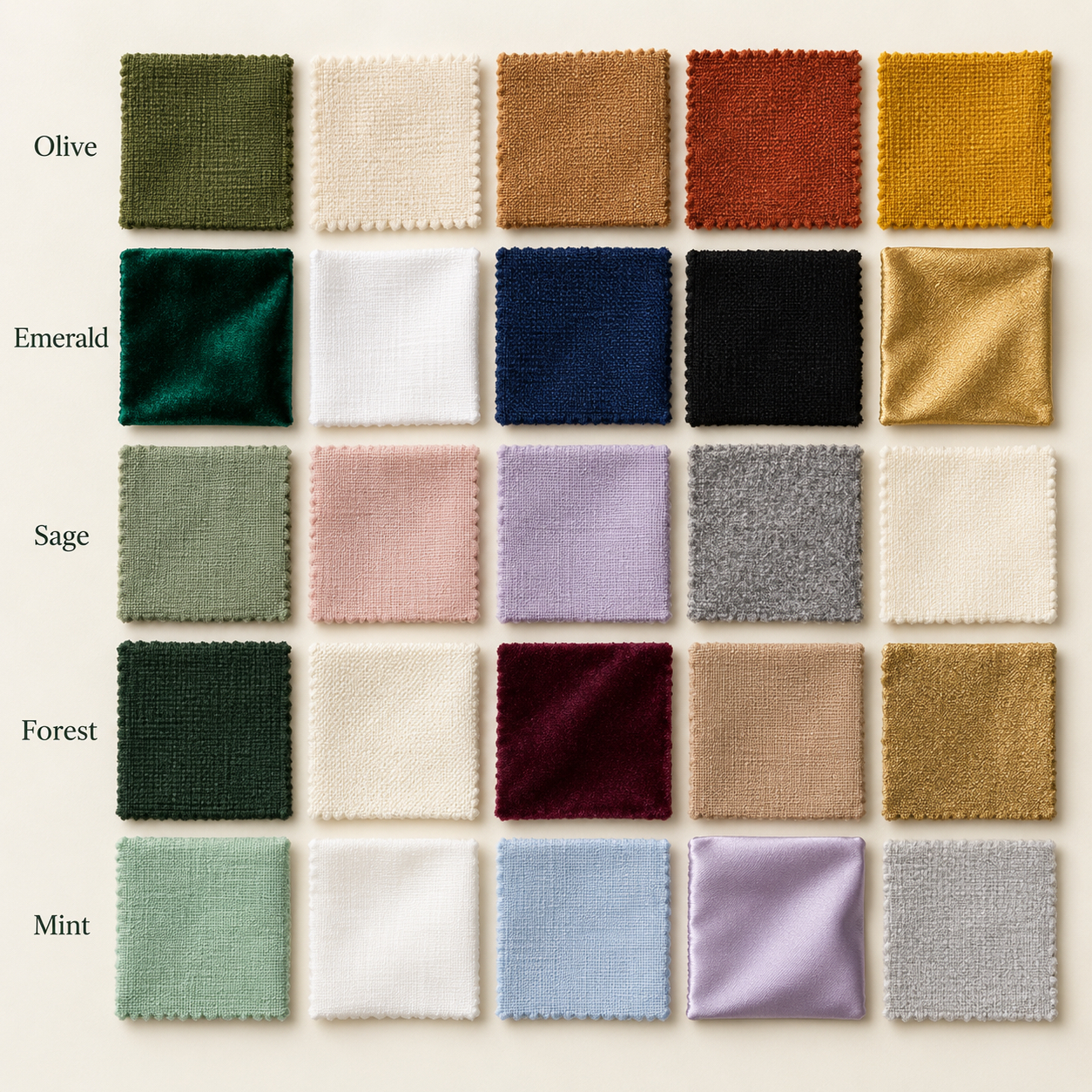
Rule 1: The Neutral Anchors (Cream, Camel, Crisp White, and Deep Navy)
Cream is one of the easiest partners for olive, sage, and forest. It lightens a green outfit without the high contrast of optical white. Try an ivory knit with olive pants, or a cream shirt under a forest blazer. If the green is very dark, leave enough cream visible at the collar or waist to define the layers. Cream also echoes the soft quality of sage, especially in cotton, linen, and knitwear.
Camel warms olive and forest. A camel wool coat over olive trousers, or a camel blazer over a muted green skirt, makes a cohesive earthy palette. Camel beside cool mint may feel disconnected; switch to stone, light gray, or a cooler beige if you want a quieter match. A camel piece near your face is optional: if you prefer a different top color, use camel in a coat, belt, or bag.
Crisp white gives emerald and mint a clean edge. An emerald shirt with white trousers reads fresh; a white shirt under a dark green suit creates deliberate separation. White can make an olive piece look more utilitarian and high contrast, which can also be effective. For a softer effect, move from optic white toward ivory. Our white shades guide shows how these near-neutrals differ.
Deep navy grounds vivid emerald without making the outfit as severe as black. An emerald blouse with navy trousers works for an office or dinner; a forest green sweater and navy jeans produce a subtler, low contrast version. Keep a slight value difference or add a white shirt, lighter shoe, or metal detail when both pieces are deep. Navy and green share a cool direction in many combinations, but a warm olive still works with navy when a cream or cognac item bridges them. See the navy outfit guide for more ways to use navy as the base.
Rule 2: Complementary Contrasts (Blush Pink, Terracotta, and Plum Accents)
Green and red sit opposite each other on a traditional color wheel, so the relationship can be lively. That does not mean every green garment needs primary red. Adobe's guide to complementary colors describes how opposing hues create contrast; in clothing, lowering the saturation or changing the area of one color often makes that contrast easier to wear. Treat these pairings as styling choices rather than strict rules.
Blush pink softens sage and mint. A dusty blush shirt with sage trousers looks calmer than hot pink with bright green. If your green is emerald, a pale blush accessory can be an unexpected small contrast against a white or navy base. Terracotta brings the red-orange side into an olive outfit: try an olive overshirt, cream tee, and a terracotta scarf, or olive trousers with a muted rust knit. Their similarly earthy saturation makes the outfit feel intentional.
Plum and wine tones give depth to forest and emerald. A plum bag with a forest dress, or a burgundy knit with olive trousers, is more restrained than fire-engine red. Keep the third color neutral so the two rich shades have room. If the colors seem to merge, add ivory between them or choose a lighter plum. A bright true red can still be a deliberate fashion statement; use a small amount, or alter one color's depth, if you want to avoid a holiday association.
Size matters as much as hue. A rust bag is an accent; a rust coat changes the entire palette. Start with one green garment and one neutral garment, then add the contrast color through a shoe, scarf, or bag. This gives you a quick way to test a new combination before committing to a large piece.
Rule 3: Analogous Green-Blue and Green-Yellow Color Schemes
Analogous colors sit near each other on the color wheel and usually create a calmer transition than an opposing pair. Adobe's color wheel guide distinguishes adjacent, analogous hues from complementary ones. For a green outfit, blue-green and yellow-green directions are useful, but the garments still need enough difference in value or texture to be legible.
Green with blue is easiest through familiar denim or navy. A sage knit with faded light blue jeans is casual and airy. Emerald with deep navy is richer and more formal. Forest with dark indigo denim can look almost monochrome; a white tee or cognac belt separates the layers. Teal is another neighbor to green, but if both pieces are equally saturated, let one dominate and use a neutral to give the eye a rest.
Green with yellow moves toward warmth. Olive and mustard share an earthy character, especially with cream between them. A tiny mustard scarf can brighten a forest coat. Mint and pale butter yellow create a light spring palette, while bright lime and bright yellow are intentionally bold. Choose the level of energy you want rather than assuming all adjacent hues will be subtle.
Monochrome green can work too. Pair a dark forest jacket with a lighter sage shirt, or olive trousers with a pale green tee. Varying lightness and fabric finish keeps two greens from looking like a failed dye match. If the colors are very close, make the difference clear through a patterned layer, a visible neutral, or contrasting textures.
How to Style Green Pants and Skirts (Office, Casual, and Night Out Outfits)
Green bottoms are often simpler than they appear because the top can remain a familiar neutral. For olive trousers at work, start with a cream silk shirt and camel blazer, then add cognac loafers. For a cooler workplace palette, use a crisp white shirt, dark navy blazer, and black shoes. Tailored fabric and neat shoes do more to set formality than a single color choice. If the pants are cargo-style or washed cotton, the same colors will feel more casual.
For casual weekends, combine sage or olive with light denim, white sneakers, and a tee. Sage knitwear above jeans is low effort because blue denim already behaves like a wardrobe neutral. Olive pants with a white tee and chambray overshirt use the same principle. A green skirt can take a cream ribbed tank and flat sandals in warm weather, or a fine knit and boots when it is cool. Let the skirt's silhouette decide whether the top should be tucked or cropped.
For evening, an emerald slip dress with gold sandals is one focused statement. A forest satin skirt with a black silk top and black heeled boots gives a darker mood. If you prefer separates, pair an emerald shirt with black tailored trousers; keep jewelry simple so the saturated green remains the focal point. A metallic accessory often supplies enough contrast without adding another fabric color.
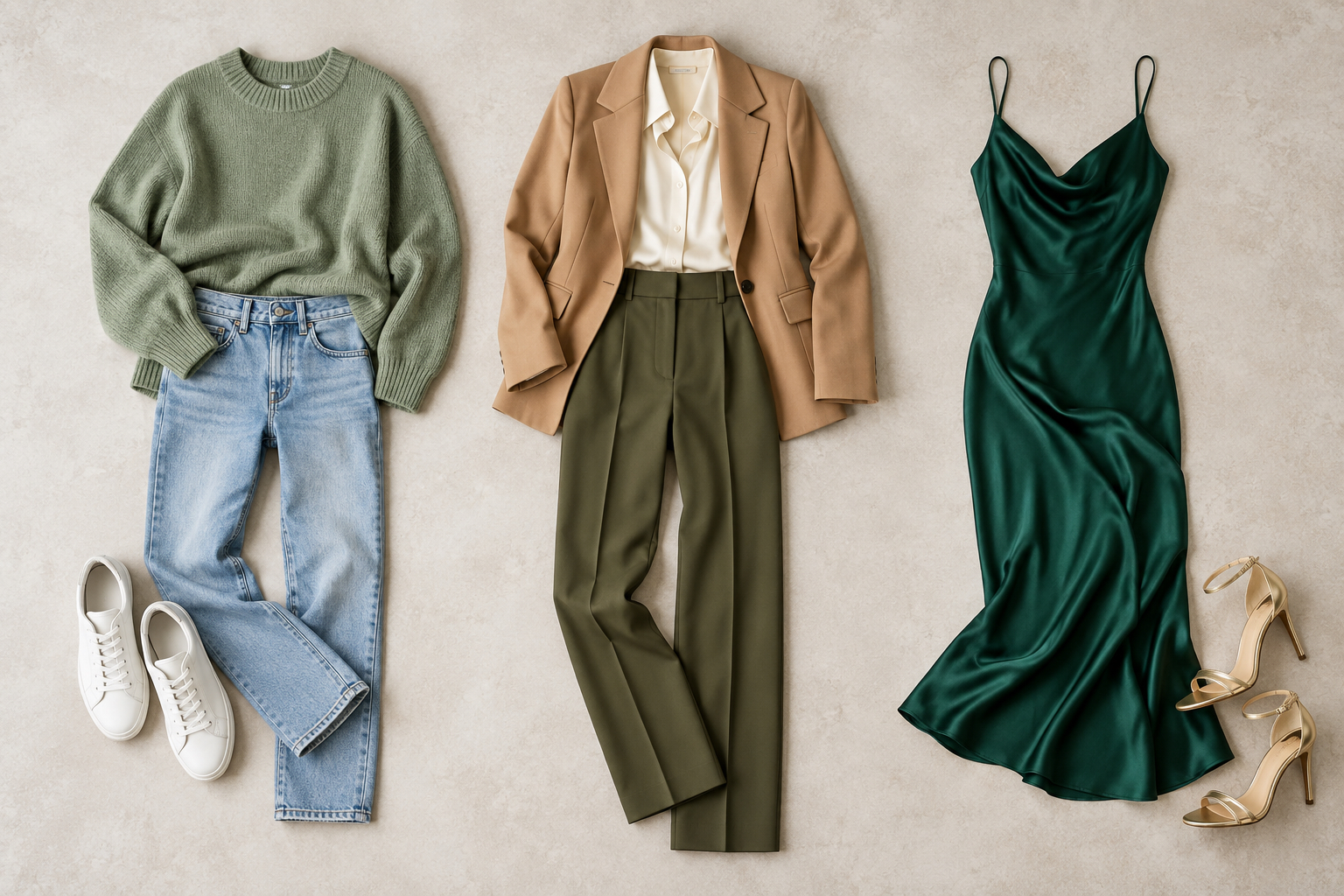
| Green garment | Choose this base | Add this accent | Best effect |
|---|---|---|---|
| Olive trousers | Cream shirt and camel layer | Cognac leather | Grounded office look |
| Emerald shirt | Navy or black trousers | Gold jewelry | Polished contrast |
| Sage skirt | Ivory knit | Blush accessory | Soft daytime palette |
| Forest dress | Neutral outer layer | Plum bag or gold shoe | Rich evening depth |
| Mint top | Light denim or white | Lavender accent | Fresh casual color |
Use the table as a decision aid, not a shopping list. Begin with the green garment you own and the setting you need it for. Then choose a neutral that establishes the level of contrast and one accent that changes the mood. If the green is near your face and you want to explore a more personal palette, the interactive color analysis quiz can give you a starting point to compare against real clothes in daylight.
Outerwear and Layering: Trench Coats and Sweaters Over Green Bases
A trench or coat covers a large part of the outfit, so it should connect the green and the rest of the look. A classic camel trench over olive pants is cohesive when an ivory sweater separates the two warm tones. Over emerald, a stone or navy trench may feel cleaner than camel. A black coat gives emerald or forest a dramatic frame; keep a light shirt or visible neckline if both coat and green garment are dark.
Try a sweater as the bridge rather than the focal point. A cream crewneck over a green shirt makes a small line of color at the collar and hem. A sage sweater over a white shirt and dark jeans gives three clear values. A mustard knit under an olive jacket creates an analogous warm scheme, while a heather gray knit under a forest coat lowers the overall contrast. Layering works best when each garment can still be identified at a glance.
Texture can solve a pairing that feels flat. Wool over smooth cotton, denim under a soft knit, or satin against matte tailoring creates separation without a new hue. Keep the practical setting in mind: a bulky wool layer may distort a fitted coat, while a lightweight knit can sit neatly under tailoring. When buying outerwear to wear with several greens, take a photo of your actual garments in daylight and compare them with the coat, rather than matching color names on tags.
Footwear and Accessories to Match Green Clothes (Cognac Leather, Nude, and Metallic)
Cognac leather naturally warms olive. Loafers, ankle boots, or a tote can repeat camel or rust elsewhere in the outfit. It can also pair with forest for a relaxed fall look. Black leather sharpens emerald and dark forest, especially with black tailoring or a white shirt. If you use black shoes with olive, repeat black at the belt, bag, or outer layer so the shoes look integrated.
Nude or beige shoes keep attention on sage, mint, or a printed green garment. The most unobtrusive beige depends on the wearer's skin tone and the shoe's finish, so choose the shade you like rather than a supposedly universal nude. Tan is more visible and warmer than a pale beige; it can be a deliberate part of an olive outfit. White sneakers are another easy choice for casual sage, mint, or olive combinations.
Metallic gold adds warmth and shine to emerald or forest for an evening look. Silver makes a cooler, cleaner accent with mint or emerald. Either metal can work with any green if it connects to the rest of the accessories. Match shoe and bag materials loosely rather than forcing an exact shade: two cognac leathers can differ, yet still belong to the same warm family.
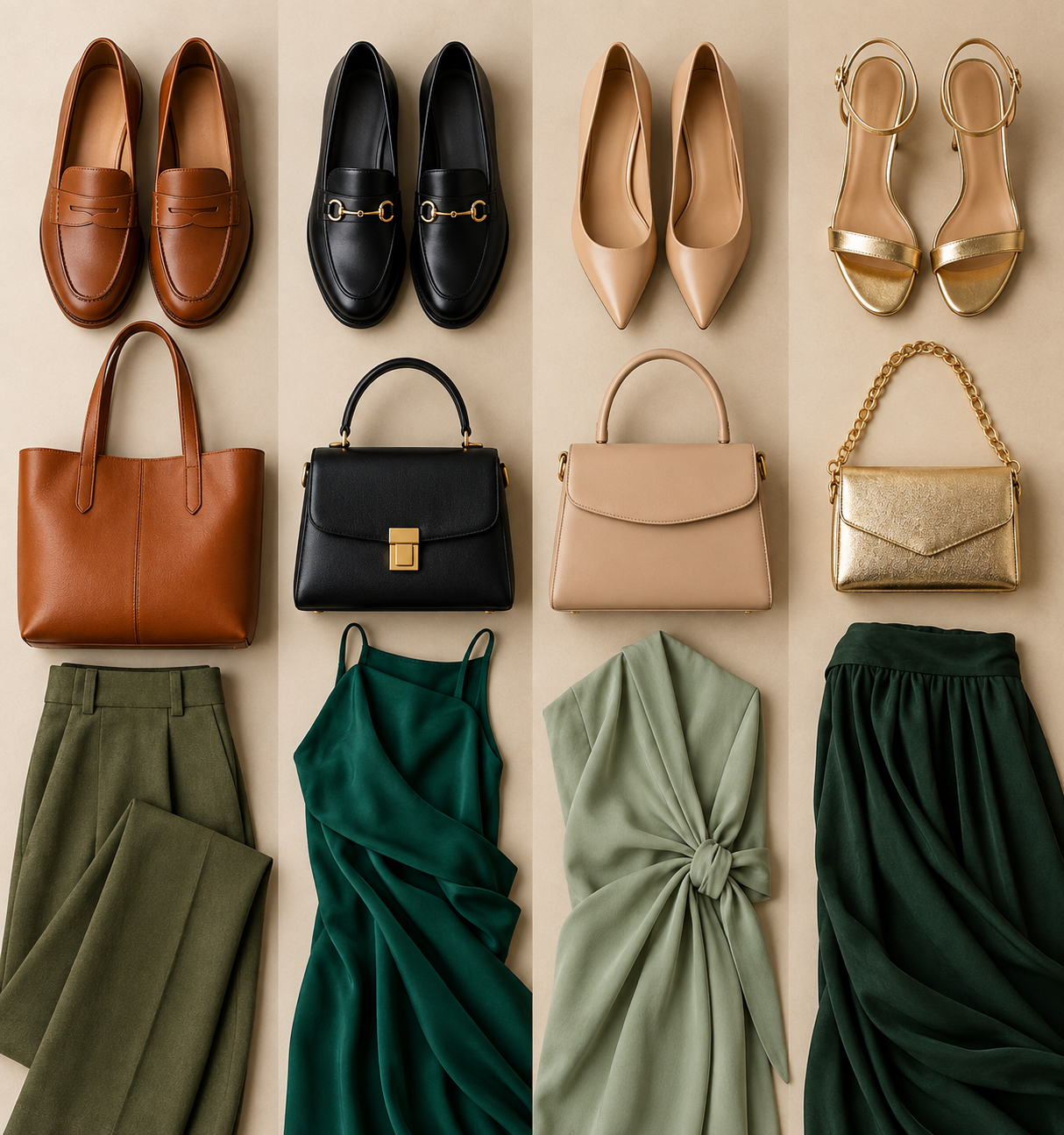
Accessories can also adjust the amount of color in an outfit. If a green coat already occupies most of the visible area, a small neutral bag keeps the palette calm. If green appears only in a top, shoes or a bag can carry an accent. Check the whole look from head to toe, not each item in isolation. A combination can look balanced when colors are repeated at different scales rather than matched precisely.
Green Clothing Styling FAQ
Can green and blue be worn together?
Yes. Sage with light denim is soft and casual; emerald with navy is more polished. Put a light or neutral item between two deep colors if they blend together. Different fabric textures can create separation too.
What shoes go with olive green pants?
Cognac or dark brown loafers make an earthy outfit, white sneakers make it casual, and black shoes look sharper when black appears elsewhere. Choose the pair that suits the fabric, cut, and setting of the pants.
What colors can I wear with an emerald green shirt?
Crisp white, black, and deep navy make emerald the main color. Gold jewelry adds warmth, while silver keeps the look cooler. For a softer contrast, try a small blush accent.
Is red always a bad match for green clothes?
No. Bright primary red with saturated green has a festive association, but rust with olive and plum with forest are more muted variations of the same broad contrast. Change the shade or limit one color to an accessory for a different effect.
Can I wear two shades of green in one outfit?
Yes. Use a visible difference in depth, such as forest and sage, or in texture, such as matte olive wool and a smoother pale green shirt. A cream or white layer can make the two shades feel deliberately separated.
Start with the green piece you reach for most. Compare a cream or white base, then a navy or black one, and finally one accent in daylight. Photograph the combinations if that helps you see the balance. Keep the outfit that feels right for your style and setting; the most useful color rule is one you can repeat with clothes you actually wear.
💫 Discover Your Complete Color Palette
Ready to discover all the colors that make you look radiant? Our comprehensive color analysis will reveal your complete personal palette - perfect for hair, makeup, and wardrobe decisions.
Take Color Analysis Quiz →