Men’s Color Analysis: Suit, Shirt, and Wardrobe Colors by Season
 Reviewed by Alexandra Gilmore
Choose suit, shirt, tie, and coat colors that work together using a practical seasonal palette.

Men’s color analysis turns seasonal color theory into practical wardrobe choices: the suit navy, shirt white, knitwear, coat, and tie colors you wear near your face. Start by comparing cool versus warm fabrics, then clear versus muted ones in steady daylight. Winter often suits clear navy and charcoal; Summer, softer gray-blue and slate; Spring, warm marine blue and camel; Autumn, espresso and olive. These are starting points, not rules tied to gender or skin depth. A well-fitting suit in a slightly imperfect color can still work. Use the palette to decide which replacement to try first, especially at the collar and lapels where color meets your face.
You do not need to buy a new wardrobe or identify a precise twelve-season subtype today. Compare two shirts and two jackets you already own, photograph each under the same light, and keep the combinations that look balanced to you. This guide covers suits, shirts, business casual layers, ties, leather, and a compact capsule. For the wider method behind the four seasonal families, read our seasonal color analysis introduction.
Why Color Analysis Matters for Men
A suit occupies a large area, but the shirt collar, tie, lapels, and coat collar frame the face. Their temperature, depth, and intensity affect the overall impression more directly than trousers or shoes. A stark white shirt against a softly colored face can look more prominent than the person wearing it. A warm ivory shirt can read yellow beside a cool jacket. Neither reaction is a diagnosis; it is a visual comparison you can make in the mirror.
Seasonal color analysis organizes those comparisons into four broad directions. Winter combines coolness with clarity and stronger contrast. Summer is cool and softer. Spring is warm and clear. Autumn is warm and muted or earthy. Within each family, individual depth and contrast vary. Men with any skin tone can fall in any season; dark skin does not automatically mean Winter, and light skin does not automatically mean Spring or Summer. The useful question is how particular fabrics behave beside your face.
For business dress, this framework helps with decisions that otherwise sound vague: which navy, which white, whether charcoal or brown feels more coherent, and how much tie contrast to add. Fit, dress code, fabric quality, and comfort still come first. A seasonal palette is a filter for choosing between suitable garments, not a demand to abandon pieces you already wear.

Finding Your Season: Quick 3-Step Self-Assessment
1. Compare undertone with fabric, not a single vein clue
Place a cool white shirt and a warm ivory shirt below your face in indirect daylight. Keep the same camera exposure, no colored wall reflection, and no makeup or filter that shifts your coloring. Ask which makes your face look more even and which seems to sit apart from it. Then compare a cool charcoal or blue-gray jacket with camel or olive. If cool colors repeatedly seem more harmonious, explore Winter or Summer; if warm colors do, explore Spring or Autumn. Mixed results are normal. Our undertone guide gives a more detailed comparison method.
2. Check clarity and depth
Now compare clear navy with muted slate, or a bright burgundy tie with a dusty burgundy tie. Clear colors have a cleaner, more vivid appearance; muted colors look grayer or softer. Check whether the fabric complements your eyes, hair, and skin as a whole, rather than focusing on one feature. Depth matters too: a very dark suit can feel heavy on a lightly colored person, while a pale jacket may lack the visual weight some people prefer. Hair and eye colors are clues to contrast, not a season label by themselves.
3. Test a complete outfit
Try the jacket, shirt, and tie together. A good single swatch can fail when combined with a conflicting shirt. Take side-by-side photos at the same distance and time of day; review them later, then ask a trusted person what they notice first. If your face remains the focus, you have a useful combination. If the outfit shouts before you do, reduce its contrast or saturation. For a more granular comparison, use the 12-season chart, but do not delay getting dressed until a subtype is certain.
The relationship is simple: skin undertone guides the first warm-cool comparison; overall contrast guides how light and dark the suit and shirt should be; clarity guides how vivid the tie and knitwear can be. None of these variables can be reliably inferred from gender, ethnicity, tanning, or one eye color.
Suit Colors by Season
Think of the suit as an anchor neutral. A business wardrobe needs a color that pairs with at least two shirts, two ties, and an outer layer. Navy is versatile, but one navy may be crisp and blue while another is dusty or green-leaning. Likewise, charcoal can be cool and clean or warm and brownish. Compare real wool samples against your shirts rather than shopping by color name alone.
| Season | Suit anchor | Shirt near face | Tie accent | Leather |
|---|---|---|---|---|
| Winter | Clear deep navy or cool charcoal | Pure white or icy blue | Burgundy, cobalt, or cool red | Black |
| Spring | Warm marine blue or lighter warm navy | Ivory or warm pale blue | Coral, clear teal, or warm red | Cognac |
| Summer | Gray-blue, soft navy, or slate | Soft white or powder blue | Dusty blue, mauve, or soft berry | Cool dark brown or subdued black |
| Autumn | Espresso, olive, or warm deep brown | Warm cream or muted blue-green | Rust, moss, or warm burgundy | Chocolate brown |
This decision table is a first shopping shortlist. A navy suit may still be the practical choice for a formal workplace even if espresso is your strongest Autumn neutral. Use the shirt and tie to bring your best colors back toward your face. If you already own a black suit, keep it for the setting that calls for it; change a replaceable shirt, tie, or knit first.
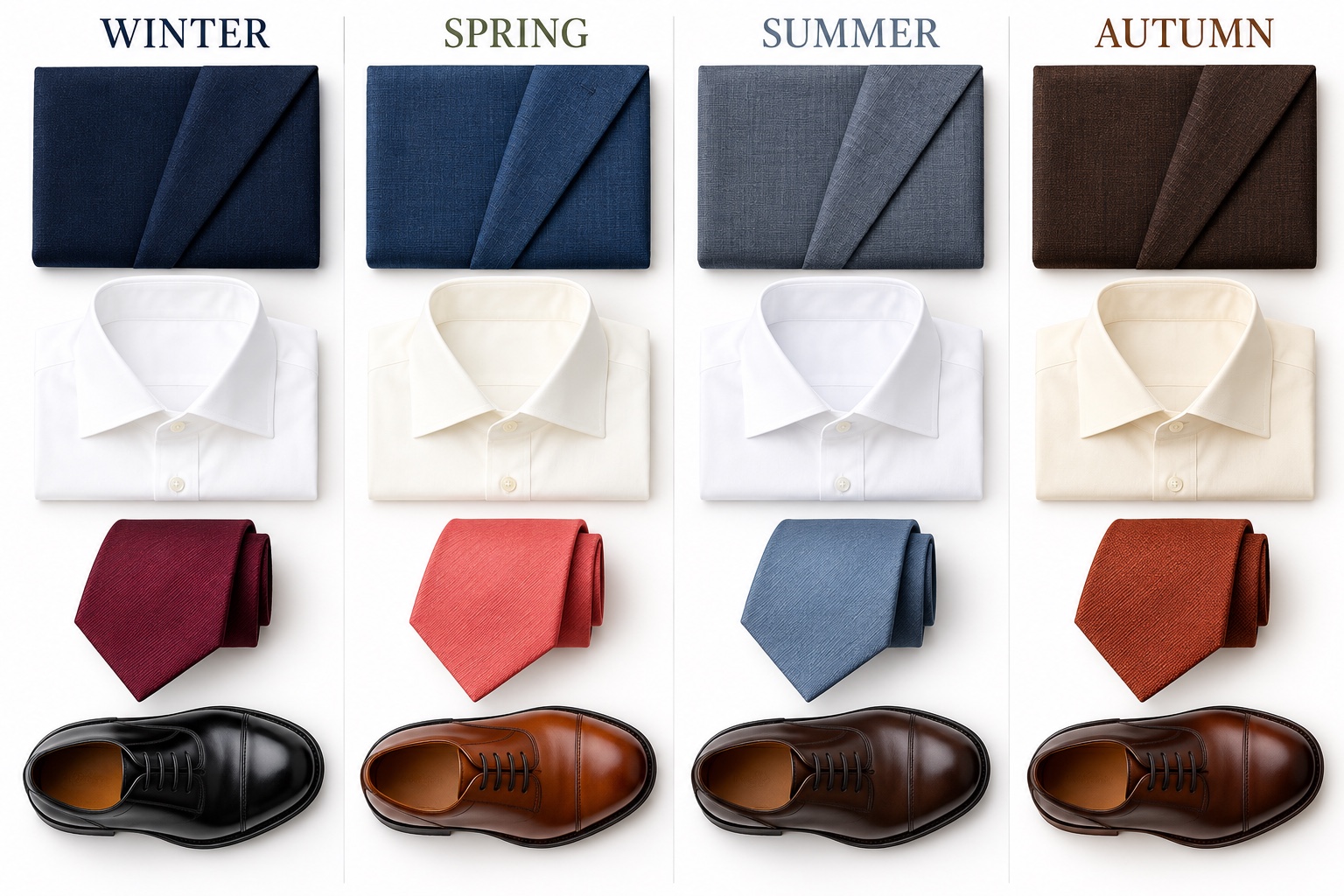
Winter: clean navy and charcoal
Choose a blue-based deep navy, cool charcoal, or, where appropriate, black. A crisp white or icy blue collar can echo Winter's clear contrast. A saturated burgundy tie gives color without competing with the suit. Black shoes and a matching belt make the ensemble coherent. If the contrast between a dark suit and pure white shirt feels too stark for you, choose a cooler blue shirt or slightly gentler charcoal while keeping the palette clean.
Spring: warm marine blue and camel
Spring generally benefits from warmth with a lively, clear finish. Try a marine blue suit that is not dusty or purple-leaning, an ivory shirt, and a clear coral or teal tie. Camel works especially well as a coat or business casual jacket where the dress code allows it. Cognac leather adds a warm accent. For formal settings that require a dark suit, use a warm navy and let a lighter shirt keep the face area open.
Summer: gray-blue and slate
Summer's cool but softened palette often looks at ease in gray-blue, soft navy, and slate wool. Pair a slate suit with soft white or powder blue rather than the brightest optic white. A dusty blue or mauve tie gives definition without creating a hard stripe of color. Choose matte, subtly textured fabrics if shiny silk makes the outfit feel too intense. A darker Summer may need more depth than these examples; keep the cool softness while adjusting the value.
Autumn: espresso and olive
Espresso brown, muted olive, and warm dark navy can serve as Autumn suit anchors. Warm cream at the collar and a rust or moss tie create a related color story. Chocolate shoes and belt complete it without forcing a perfect fabric-to-leather match. Olive is also effective as an overshirt or sports coat when a full olive suit is too casual for work. Deep Autumn may want almost-black espresso; Soft Autumn may prefer a lighter, quieter brown.
The Shirt Formula: Pure White vs Ivory vs Ice Blue
The shirt is the closest large fabric to your face, so test it before replacing a suit. Hold three clean shirts at your collar in the same daylight: pure white, warm ivory, and cool pale or icy blue. Pure white gives a sharp edge and often supports a clearer Winter combination. Ivory warms the frame and can connect a Spring or Autumn outfit. Ice blue keeps a cool direction while reducing the starkness of white; a softened powder blue can be especially useful for Summer.
Do not treat every off-white shirt as ivory. Some lean yellow, others gray, and laundering changes them over time. A shirt that looks right alone should also work with your suit and tie. If you wear business casual most days, run the same collar test with polos, henleys, and fine-gauge knits. The shape of the garment changes; its color relationship to your face does not. For more ways to combine shirt and jacket hues, see our clothing color matching guide. Adobe's color wheel guide explains the hue, value, and saturation terms used in these comparisons.
Tie, Knitwear, and Leather Accents
A necktie is a small but prominent color block. Start with a shade that relates to your seasonal direction, then adjust its contrast against the shirt. Winter can carry a deep clear burgundy or cobalt tie; Spring, a clear coral or warm teal; Summer, dusty blue or muted berry; Autumn, rust or moss. A matte grenadine or textured wool tie often blends more gently than glossy silk. Pattern is useful when it repeats the suit and shirt colors, but a pattern with several unrelated bright hues can make a simple outfit feel busy.
Knitwear gives a softer route into color. A navy sweater under a charcoal coat supports a cool palette; an olive knit under a camel coat supports a warm muted one. Keep the layer at the neckline in mind. A warm brown sweater can alter the overall effect of a cool suit even if the trousers remain navy. For business casual, a jacket, knit, and shirt can replace the suit-and-tie formula while following the same hierarchy: anchor neutral, near-face color, small accent.
Shoes and belts sit farther from the face, so they are a lower-risk place to keep a favorite color outside your season. Black leather is a natural partner for many clear cool outfits; chocolate brown can ground warm muted ones; cognac brings light warmth to Spring combinations. Match the general warmth and formality of belt and shoes rather than seeking an exact dye match. If the workplace calls for black shoes, wear them. The palette does not outrank a dress code.
Building a 12-Piece Seasonal Business Capsule
A capsule wardrobe is a small set of pieces designed to combine repeatedly. Start with your most common workweek, not an idealized closet. The following 12 slots create several suit, separate, and business casual outfits: two jackets or suits, two trousers, three shirts, one knit, one coat, two ties, and one pair of dress shoes. Count a suit jacket and its trousers as separate slots. A belt and watch can be worn from your existing accessories; add them if you need a fuller inventory. The point is to make each shirt work with both jackets and at least one trouser.
| Slots | Wardrobe role | Winter example | Autumn example |
|---|---|---|---|
| 1–2 | Two jackets or suit jackets | Clear navy; charcoal | Espresso; muted olive |
| 3–4 | Two trousers | Matching navy; cool gray | Matching espresso; warm dark brown |
| 5–7 | Three shirts | White; icy blue; cool blue stripe | Cream; muted blue-green; warm ivory stripe |
| 8 | One fine knit | Cool burgundy | Moss green |
| 9 | One coat | Charcoal | Camel |
| 10–11 | Two ties | Burgundy; cobalt | Rust; warm burgundy |
| 12 | Dress shoes | Black leather | Chocolate leather |
For Spring, substitute warm marine blue and camel anchors, ivory and warm pale blue shirts, a clear teal knit, and cognac shoes. For Summer, use gray-blue and slate anchors, soft white and powder-blue shirts, a muted berry knit, and subdued dark shoes. Swap the coat for a light overshirt in a warm climate or add a weatherproof layer if commuting requires it. Fit, care, and climate determine whether these pieces earn a place.
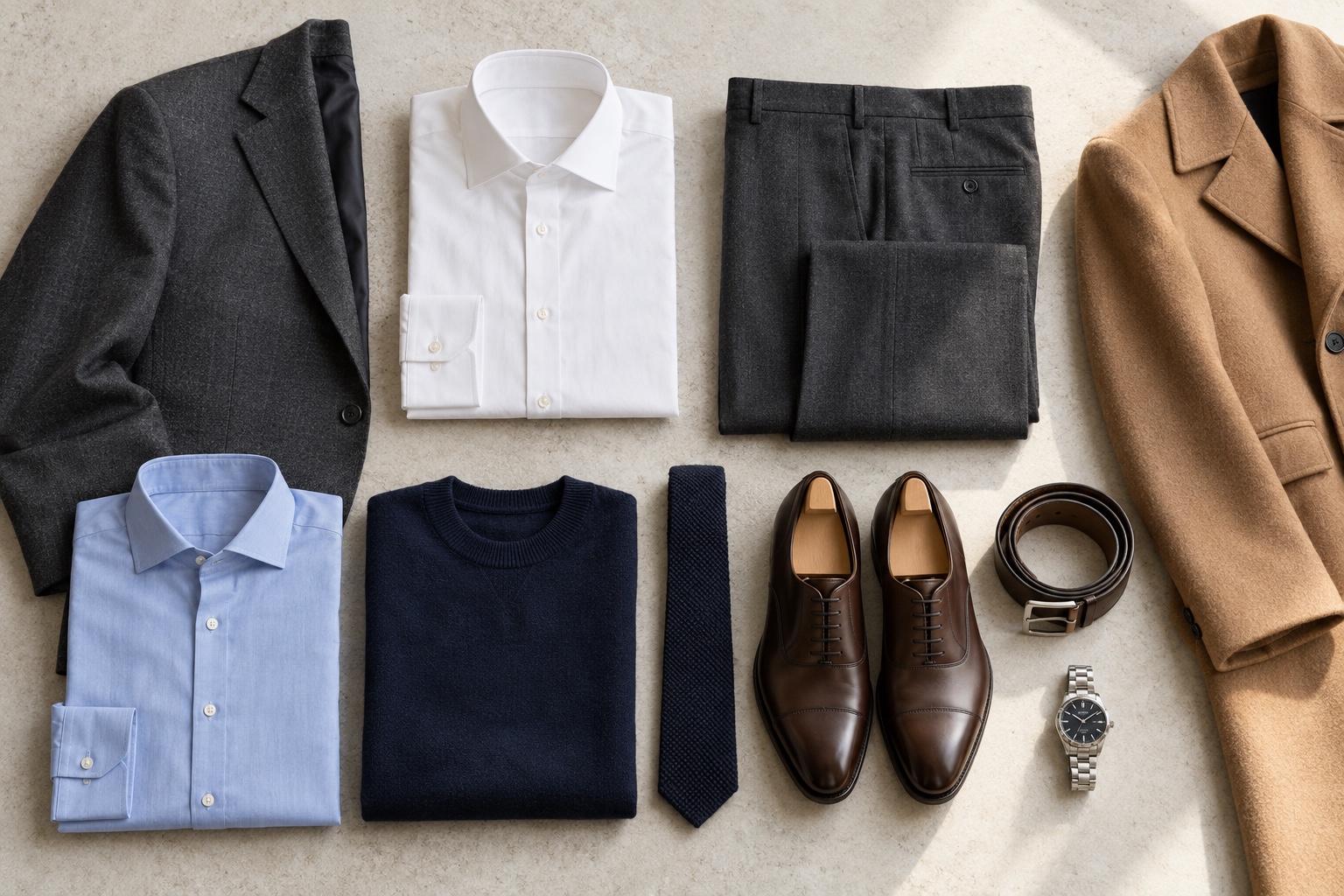
Before buying, make three complete outfits from each prospective piece: a formal meeting look, an ordinary office day, and a business casual version. If the new item works only once, it may belong outside the capsule. Our seasonal capsule wardrobe guide expands this process for a whole closet. Avoid buying all 12 pieces at once; test the shirt and jacket combination first, then fill real gaps.
Men's Color Analysis FAQ
What if I own a black tuxedo outside the Winter palette?
Wear it when the occasion calls for black tie. Formal conventions and a good fit matter more than a palette chart. You can choose a shirt white that works for you, consider a texture that softens the effect, and keep other details simple. A black tuxedo used a few times a year does not need replacing because your everyday best neutral may be brown or soft navy.
Does going gray change my season?
Gray hair can change your overall contrast and which depth feels most comfortable, but it does not automatically change your skin's warm-cool response. Repeat the same daylight fabric comparison when your hair changes noticeably. You may prefer a softer shirt or a different tie intensity while retaining the same broad palette direction. Our gray-hair clothing guide offers more specific outfit examples.
Should I buy a different suit when I tan?
Usually there is no need. A tan may shift visible depth and the contrast you enjoy, but temporary sun exposure is not a reliable season test. Recheck your collar and tie choices in daylight before buying a new suit. If a lighter shirt suddenly feels too sharp, try a nearby shade; keep the suit if it still works for your dress code and wardrobe.
Can men with dark skin wear light suits or pastel shirts?
Yes. Skin depth alone does not determine a season or forbid a color. The relevant questions are whether the garment's warmth and clarity connect with your coloring and whether the outfit has enough contrast for your preference. A pale shirt can create a crisp frame, while a light suit may need a darker tie or knit for definition. Test the actual fabrics rather than using skin-tone rules as a shortcut.
What if I cannot tell whether I am Spring or Autumn, or Summer or Winter?
Stay with the temperature direction that seems reliable, then compare clear and muted versions of one color. For warm options, try clear marine blue versus muted olive. For cool options, try crisp navy versus gray-blue. Photograph the same shirt and jacket combinations in daylight. Keep the pieces you wear confidently while you learn. The color analysis quiz can provide another starting point to test with your own clothes.
Begin with one decision this week: place your two most worn shirts beside your face, choose the better collar color, and build a suit or business casual outfit around it. That small comparison is more useful than purchasing an entire seasonal wardrobe from a chart.
💫 Discover Your Complete Color Palette
Use your results as a starting point for comparing real suit, shirt, and tie colors in daylight.
Take Color Analysis Quiz →📚 Recent Articles
Compare all 12 seasonal palettes, plan a seasonal capsule, or explore clothing colors for gray hair.