
Best Hair Colors for Olive Skin: Warm, Cool, and Neutral Options
 Reviewed by Alexandra Gilmore
Olive skin does not point to one automatic hair color, because its temperature, depth, and natural contrast still vary. Compare blonde, brunette, black, red, copper, and fashion shades by those three factors, then factor in your starting color, hair condition, and realistic maintenance before choosing.

The best hair color for olive skin is chosen through three decisions: warm, cool, or neutral olive direction; natural hair depth; and the amount of contrast you want around the face. A generic list misses those relationships. Golden brunette may illuminate one olive complexion and make another look yellow. Ash blonde may look refined on one person and gray on the next.
Use this guide to compare blonde, brown, black, red, copper, and fashion colors without treating olive as one uniform category. Keep maintenance and hair condition in the decision from the beginning. A beautiful reference photo is useful only when the shade can be reached and maintained safely for your starting point.
Key Takeaways
- Identify warm, cool, or neutral olive direction before choosing a dye shade.
- Changing depth affects facial contrast as much as changing hue.
- Use dimensional color when one flat shade feels heavy or disconnected.
- Compare a proposed shade beside the face in daylight and against the natural root.
- Follow product instructions, allergy warnings, strand tests, and professional advice for major lightening or correction.
💫 Find Your Best Hair Color Direction
Compare hair depth, undertone, and contrast together before taking a shade reference to your colorist.
Start Hair Color Analysis →📚 Recent Articles
Start With Your Olive Direction, Not a Hair-Color List
Olive describes a muted visual cast, not one fixed temperature. Warm olive coloring often responds well to golden brown, caramel, chestnut, warm espresso, copper-brown, and honey-beige. Cool olive coloring may prefer ash brown, mushroom, cool espresso, blue-black, burgundy, or beige blonde. Neutral olive can often bridge both sides when the shade is balanced rather than extremely yellow or violet.
If your olive direction is not established, compare muted warm and cool fabrics before looking at dye charts. Moss versus pine, terracotta rose versus berry, and warm taupe versus cool mushroom are useful pairs. The olive skin warm-versus-cool guide gives a complete process.
Surface redness, a tan, colored contact lenses, and current hair dye can distract from the stable result. Look at the jaw, neck, eyes, and natural root in indirect daylight. Cover the dyed lengths with a neutral towel if they reflect strongly onto the face. A hair change should relate to the coloring you actually have, not to the cast created by the previous dye.
Also decide whether your priority is harmony or transformation. A harmonious shade usually stays close to natural temperature, depth, and softness. A transforming shade may deliberately create more contrast, more warmth, or a fashion focal point. Both are valid, but they require different maintenance and styling.
Best Hair Color Families for Warm, Cool, and Neutral Olive Skin
| Olive direction | Blonde family | Brown or black family | Red or fashion family |
|---|---|---|---|
| Warm olive | Honey beige, caramel blonde, dark golden blonde | Chestnut, golden brown, warm espresso | Copper-brown, cinnamon, warm auburn |
| Cool olive | Mushroom blonde, ash beige, smoky dark blonde | Ash brown, cool espresso, soft blue-black | Burgundy, cool cherry, blue-violet |
| Neutral olive | Balanced beige, bronde, neutral dark blonde | Neutral chocolate, dimensional brunette, balanced black-brown | Muted auburn, wine, balanced rose-brown |
Shade names are inconsistent between brands and salons. One "ash brown" may look green-gray, another blue-violet, and another nearly neutral. Bring visual references, but also describe depth, warmth, and desired contrast. A colorist can translate the goal for your starting hair and the products they use.
Dimension often makes a shade easier to wear. A neutral brown base with fine warm ribbons can support warm-neutral olive coloring without becoming orange. Cool lowlights can keep beige blonde from looking flat on cool olive skin. A natural root shadow may connect light lengths to dark brows and reduce a sudden value break.
Keep or Change Your Natural Depth?
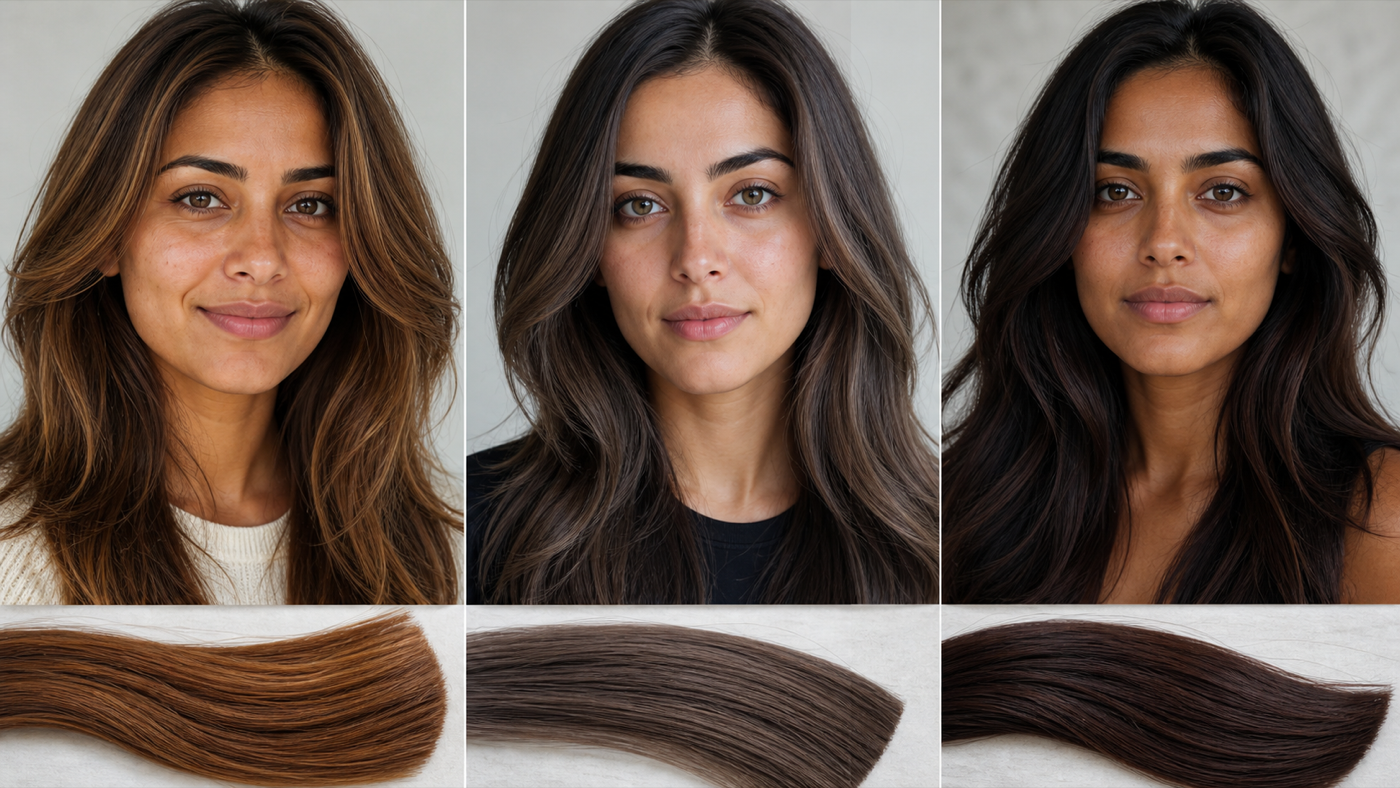
Natural depth is the uncolored root's light-to-dark level. Staying within a small range of it usually creates an easier transition with brows and eyes. Moving much lighter or darker changes facial contrast and may require different makeup, brow definition, wardrobe contrast, and salon maintenance.
To test depth, photograph yourself in indirect daylight and convert a copy to grayscale. Hold light, medium, and dark hair swatches around the face, or use a careful virtual try-on that does not reshape features or recolor skin. Ignore hue for this stage. Ask whether the face remains the focal point and whether eyes and brows look connected to the proposed depth.
Going darker can sharpen light skin, strengthen brows and eyes, and make clear colors easier to wear. It can also look heavy if the features are gentle. Going lighter can soften strong contrast and add movement, but it may remove the frame that dark eyes or brows need. Medium or dimensional changes often preserve flexibility.
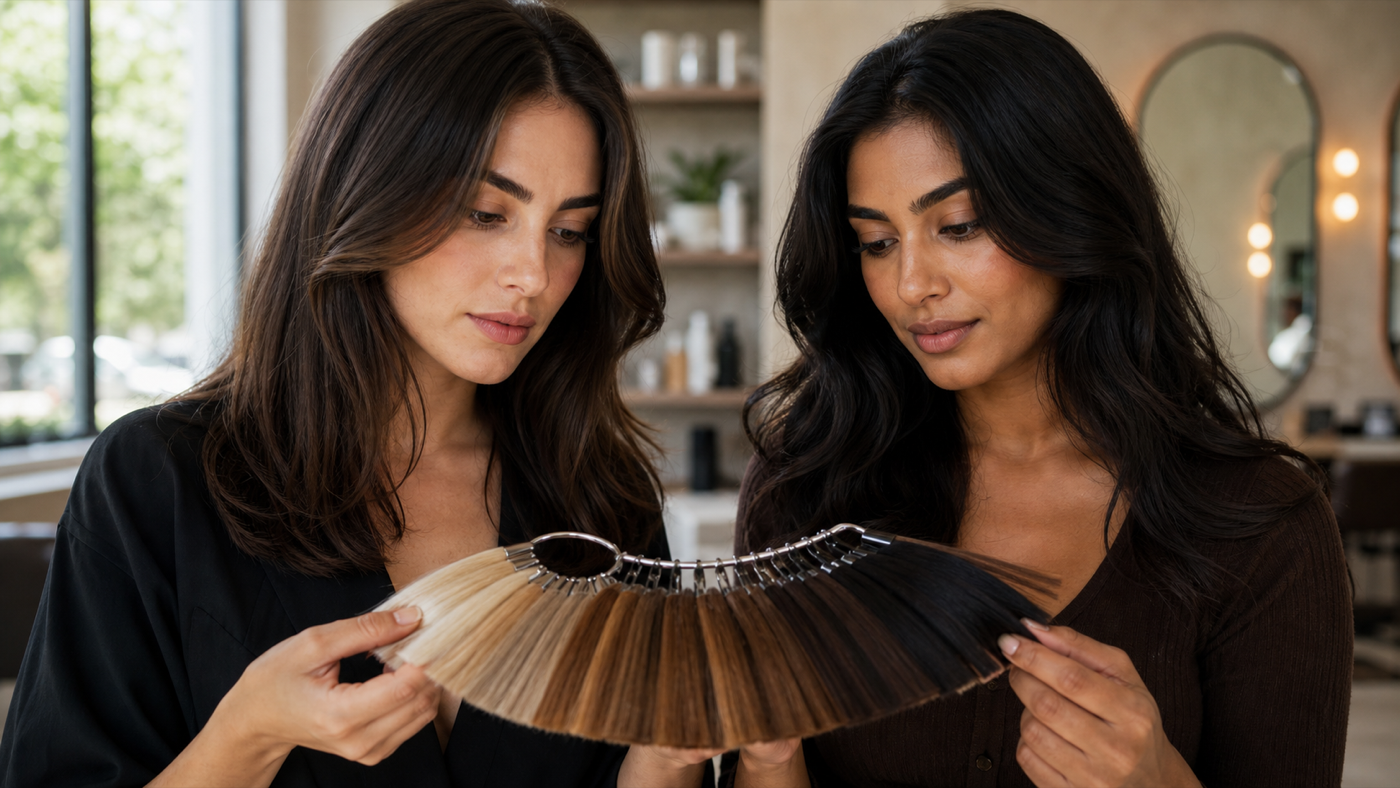
The hair contrast guide explains this relationship in detail. Use it when the question is less about olive undertone and more about whether blonde, brunette, or black creates the right frame.
Blonde Hair for Olive Skin
Blonde can work across olive directions, but the transition from natural depth matters. Warm olive coloring can start with dark honey, caramel-beige, golden bronde, or a warm root with lighter ribbons. The goal is warmth that looks luminous rather than brassy. If yellow becomes separate from the skin, move toward balanced beige or retain more natural depth at the root.
Cool olive coloring can compare mushroom blonde, smoky beige, ash-beige, and cool dark blonde. Very gray ash may emphasize a muted cast and make the face look flat, so include some neutral beige or dimensional lowlights when needed. Icy platinum creates a large contrast and maintenance commitment; preview both the value and temperature before lightening.
Neutral olive coloring often suits bronde: a brown-blonde range with mixed dimension. Balanced beige highlights over a neutral brown base can avoid both strong gold and heavy ash. Face-framing pieces change the effect more than hidden interior highlights, so test the lightest placement beside the jaw and eyes.
For fair or pale olive skin, blonde should not be chosen only because the skin is light. Dark brows and eyes may need a root shadow or deeper lowlights. For medium and deep olive skin, caramel or beige ribbons can add light without requiring the whole base to become blonde.
Brown and Black Hair for Olive Skin
Brown offers the widest adjustment range. Warm olive skin can compare chestnut, toasted walnut, golden brown, chocolate with caramel dimension, and warm espresso. Cool olive skin can compare mushroom brown, ash brown, cool chocolate, and espresso with minimal red. Neutral olive skin often responds well to balanced chocolate and dimensional brunette.
If brown looks orange, it may be too warm, too light, or exposing underlying warmth during fading. If ash brown looks greenish or dull, the formula may be too cool or too muted. A neutral base with controlled warm or cool dimension is often easier to maintain than an extreme correction.
Black creates a strong frame. Natural soft black, black-brown, neutral black, and blue-black are visibly different beside olive skin. Warm olive coloring may prefer black-brown or deep espresso. Cool olive coloring may carry soft blue-black, especially with strong brows and eyes. Neutral olive can test natural black against deep neutral brown.
Permanent very dark color is difficult to remove cleanly. If you are moving from lighter hair, preview a deep demi-permanent direction or professional strand plan before committing. The visual question and the chemical process are separate decisions.
Red, Copper, and Fashion Colors
Red hair color contains both hue and depth choices. Warm olive coloring can test copper-brown, cinnamon, warm auburn, and mahogany with golden dimension. A very bright orange copper may overpower muted features, while a deeper brown-based copper keeps the relationship more grounded.
Cool olive coloring can compare burgundy, cool cherry, wine, red-violet, and plum-brown. Extremely violet formulas can reflect onto the skin, so check the shade in daylight rather than salon lighting alone. Neutral olive coloring may suit muted auburn, balanced mahogany, or wine that is neither strongly orange nor strongly purple.
Fashion colors follow the same logic. Petrol, deep teal, smoky blue, muted violet, and burgundy often relate naturally to olive palettes. Pastel mint, icy lavender, or neon shades create a larger value and intensity contrast. That may be the desired effect, but it usually asks more of makeup and wardrobe styling.
Direct dyes fade according to base lightness, porosity, washing, water, heat, and product. Ask what the color will look like after several washes, not only on appointment day. A pleasing fade path can matter more than the first result.
Hair Colors for Fair or Pale Olive Skin
Fair olive skin is often misread as simply cool, especially when its surface looks gray or pink in winter. Test mushroom, balanced beige, honey-beige, neutral brown, cool chocolate, and soft black-brown rather than choosing from depth alone. The best direction depends on whether fabrics show warm, cool, or neutral olive harmony.
Light hair with light skin creates gentle value contrast. This can look airy and integrated, but it may reduce definition around dark eyes or brows. A root shadow, lowlights, or a slightly deeper face frame can restore structure without abandoning blonde. Conversely, very dark flat color may become the only visible feature; soft black-brown or dimensional espresso can be easier to balance.
The fair olive skin color guide helps connect hair with clothing and makeup. Use a shared palette so the new shade does not require replacing everything near the face. If hair becomes warmer, a compatible blush or neckline color may be enough to make the transition feel intentional.
Pale appearance can also be temporary or photographic. Compare your normal complexion in stable daylight before making a permanent decision from one washed-out selfie. Hair color should be matched to the baseline you recognize across ordinary days.
Use Contrast and Maintenance to Make the Final Choice
List three candidates in order of change: close to natural, moderate transformation, and high transformation. For each, record the target depth, warm-cool direction, root plan, expected appointments, home products, and acceptable fade. This turns an inspiration image into a decision you can discuss.
| Choice | Visual effect | Maintenance question | Useful strategy |
|---|---|---|---|
| Close to natural depth | Preserves current facial contrast | How will tone fade? | Gloss, subtle dimension, targeted face frame |
| Several levels lighter | Softens or redistributes contrast | Can the starting hair support the lightening plan? | Stages, root shadow, bond and condition assessment |
| Several levels darker | Strengthens the frame around the face | How reversible is the formula? | Preview depth, use dimension, discuss demi versus permanent |
| Red or fashion shade | Adds hue contrast and a focal point | What is the fade path? | Strand test, maintenance color, compatible wardrobe accents |
Use the planning process in how to find your hair color ideas to turn references into a salon brief. Include one image showing color, one showing dimension, and one showing placement. Avoid presenting several photos that contradict one another without explaining what you like in each.
Maintenance is part of color suitability. A cool beige that warms quickly may require toning. Copper and red may need regular refresh. Dark permanent dye may create a visible regrowth line and limit future lightening. Choose the version whose upkeep fits your time, budget, hair condition, and tolerance for change.
Hair-Dye Safety Checklist
Read the full product label every time, even if you have used hair dye before. The FDA's hair-dye guidance advises following directions, performing the instructed skin test, wearing gloves, observing timing, and not using hair dye on eyelashes or eyebrows. A previous uneventful use does not remove the need to follow current instructions.
The American Academy of Dermatology's coloring and perming tips recommend practical steps such as staying within a limited range of natural color when coloring at home and spacing chemical services. Major lightening, correction, or work on compromised hair deserves professional assessment.
- Perform the product's allergy alert or patch test exactly as directed and within its stated timing.
- Do a strand test for color result, processing behavior, and condition.
- Do not apply dye to an irritated, sunburned, or damaged scalp.
- Use gloves, ventilation, timing, rinsing, and mixing instructions from the manufacturer.
- Tell a colorist about previous dye, bleach, relaxer, henna, metallic salts, and reactions.
- Stop and seek appropriate help if a reaction occurs.
Color analysis predicts visual harmony; it cannot assess allergy risk, hair integrity, or chemical compatibility. Keep those safety decisions independent from whether a shade is flattering.
People Also Ask
What hair color looks best on olive skin?
Start with the olive direction. Warm olive often suits caramel, chestnut, warm espresso, and copper-brown; cool olive often suits mushroom, ash brown, cool espresso, and burgundy; neutral olive often suits beige bronde and balanced chocolate.
Does blonde hair suit olive skin?
Yes, when tone, depth, and contrast are coordinated. Compare honey or caramel blonde for warmer direction, mushroom or ash-beige for cooler direction, and balanced bronde for neutral olive.
Does black hair suit olive skin?
It can. Compare soft black-brown, natural black, and blue-black beside the face. Stronger feature contrast often carries deeper black more easily, while gentle coloring may prefer dimension or espresso.
What hair color makes olive skin look less yellow?
A less golden, more balanced or cooler shade may reduce yellow reflection, but the exact answer depends on direction. Test mushroom brown, cool chocolate, neutral beige, or burgundy against a warm option at the same depth.
Common Questions: The Ultimate Color FAQ
Is ash brown good for olive skin?
It can suit cool or neutral olive coloring. If it looks gray-green or dull, choose a less muted ash, add neutral dimension, or move slightly warmer.
Is copper hair good for olive skin?
Copper-brown and cinnamon can support warm olive coloring. Bright orange copper creates more intensity and may need deeper roots or muted dimension to connect with the face.
Should olive skin avoid golden blonde?
No universal ban is useful. Warm olive may look luminous in controlled gold, while cool olive may prefer beige or mushroom. Compare the actual shade beside the skin.
Can I choose hair color from eye color alone?
No. Eyes contribute to contrast and harmony, but skin direction, natural depth, brows, starting hair, and maintenance also shape the result.
How do I show a colorist what I want?
Bring references for tone, depth, dimension, and placement. Explain what you like in each image and share your color history. Ask how the target translates to your starting hair and expected upkeep.
How often should I refresh the color?
Timing depends on formula, regrowth contrast, porosity, washing, heat, water, and desired fade. Ask for a maintenance schedule tailored to the service rather than relying on a universal interval.