What Color Season Am I Quiz
 Reviewed by Alexandra Gilmore
A seasonal quiz can organize clues from skin, hair, eyes, undertone, depth, and contrast, but the first result should remain a hypothesis. Answer from your natural coloring, then validate the suggested Spring, Summer, Autumn, or Winter palette with real fabrics before changing your wardrobe.

You've probably heard someone say "I'm a soft summer" or "I'm a deep winter" and wondered exactly what that means — and whether the same system applies to you. Seasonal color analysis is a framework that matches your natural coloring to a curated palette of shades that harmonize with your skin, hair, and eyes. A well-designed what color season am I quiz gives you a structured shortcut to that answer in a matter of minutes, without needing a professional draping session.
💫 Discover Your Complete Color Palette
Ready to discover all the colors that make you look radiant? Our comprehensive color analysis will reveal your complete personal palette - perfect for hair, makeup, and wardrobe decisions.
Find My Season →The core idea is straightforward: every person's natural coloring carries specific qualities — warmth or coolness, depth, and saturation — and certain colors amplify those qualities while others work against them. Once you know your season, you have a practical filter for clothing, makeup, and accessories that consistently look like they were made for you.
Here's what you can expect from taking a color season quiz:
- A clear seasonal result — typically one of four base seasons (Spring, Summer, Autumn, Winter) or one of up to 12 sub-seasons in more detailed systems
- A palette of flattering colors you can reference when shopping or getting dressed
- A way to explain what's already working in your wardrobe — and what isn't
- Guidance grounded in your actual features, not just your skin tone alone
Personal stylists and color experts use the same underlying logic in professional consultations. A quiz translates those questions into a self-guided format, asking about the traits that matter most: skin undertone, hair depth, eye color, and how your complexion responds to warm versus cool colors placed near your face.
This guide walks you through exactly how the quiz works, what each season means, and how to use your result practically — so you leave with more than just a label.
📚 Recent Articles
What the 'Color Season' System Actually Means
Seasonal color analysis sorts everyone's natural coloring into one of 12 color seasons based on three qualities: skin tone depth, skin undertone, and the overall contrast between hair, eyes, and skin. The system started as a simpler four-season model — Spring, Summer, Autumn, Winter — and was later expanded so each base season splits into three sub-types, giving you a result specific enough to actually be useful.
When someone says "I'm a deep winter" or "I'm a soft summer," they're using that 12-season language. Each label comes with a set of colors that are supposed to harmonize with your specific mix of warmth, depth, and contrast — so those shades look intentional on you rather than like a guess.
The practical upside: instead of buying colors you hope will work, you shop from a palette that's already matched to your features.
Why a Quiz Works Better Than Guessing From Photos
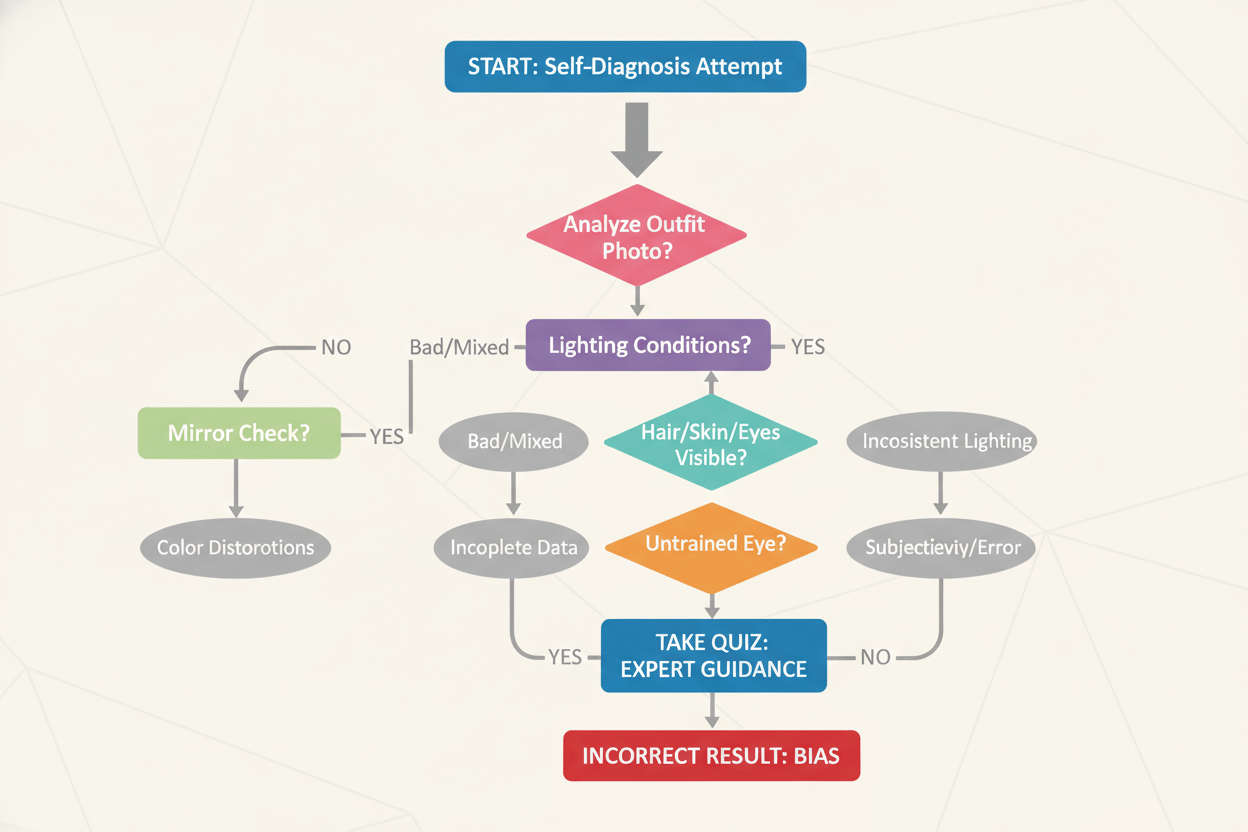
Most people try to figure out their season by staring in the mirror, scrolling through "what season am I?" images online, or asking a friend. Self-assessment without structure is unreliable — lighting shifts, phone screens skew colors, and evaluating your own features objectively is genuinely hard.
Even trained professionals run into this. A personal stylist without proper draping tools can get stuck between two seasons and walk away with no clear answer. If that happens to someone with trained eyes, an informal mirror check doesn't stand much of a chance.
A quiz solves this by asking structured questions that guide your attention to the right features in the right order. Instead of trying to see everything at once, you observe one trait at a time — undertone, depth, contrast — and the questions do the work of combining those observations into a result. That structure is what turns a vague impression into an actual answer.
What the Quiz Actually Measures: The Three Key Traits
Every reliable color season quiz is built around the same three inputs. Knowing what they are before you start helps you answer each question more confidently.
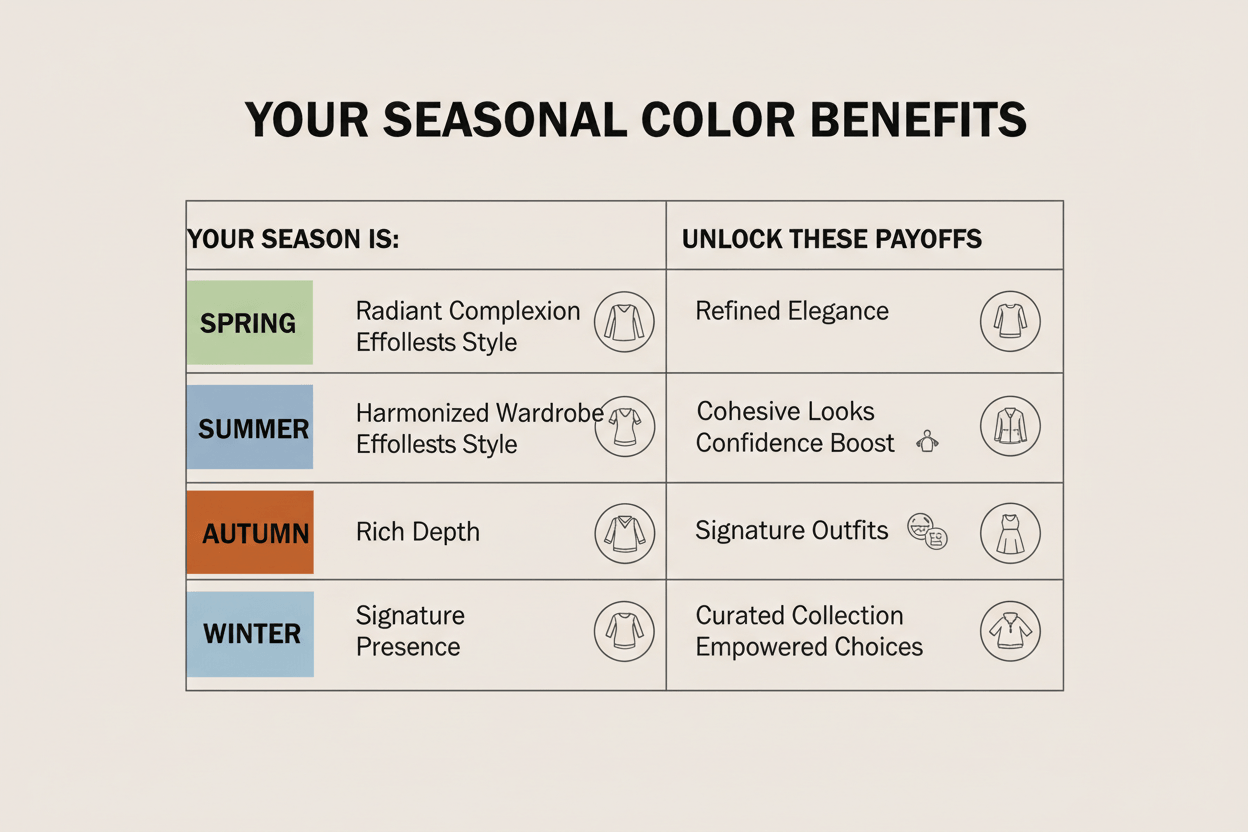
1. Skin undertone This is the single most decisive factor. Undertone is the underlying hue beneath your skin's surface — warm (yellow, peachy, golden), cool (pink, red, bluish), or neutral (a mix of both). It determines whether you fall into the warm seasons (Spring, Autumn) or cool seasons (Summer, Winter), and it doesn't shift with a tan or change under different lighting.
2. Skin tone depth How light or deep your complexion reads overall. Depth influences which end of a season's palette works best for you — a light spring and a deep autumn are both warm, but the shades that flatter each look very different.
3. Overall contrast The visual difference between your skin, hair, and eyes taken together. Pale skin with very dark hair is high contrast; hair, eyes, and skin that are all close in value is low contrast. High-contrast people tend to carry bold, defined colors well. Low-contrast people usually look better in softer, blended palettes.
Six well-designed quiz questions targeting the traits visible on your face — and asking about shades you already notice looking good on you — are enough to point you toward the right season with reasonable accuracy.
How to Identify Your Skin Undertone Before You Start
The vein test is the fastest self-check: look at the inside of your wrist in natural daylight. Blue or purple veins suggest cool; green suggests warm; a mix suggests neutral. You can also hold a piece of bright white fabric and a piece of off-white or ivory near your face in natural light — if the true white makes your skin look cleaner and brighter, you probably lean cool; if the ivory does, you probably lean warm. Have that answer ready before you open the quiz, since undertone is usually the first question.
A Quick Look at the 12 Color Seasons
The table below gives you a quick orientation. Each base season divides into three sub-seasons that vary in depth or saturation.
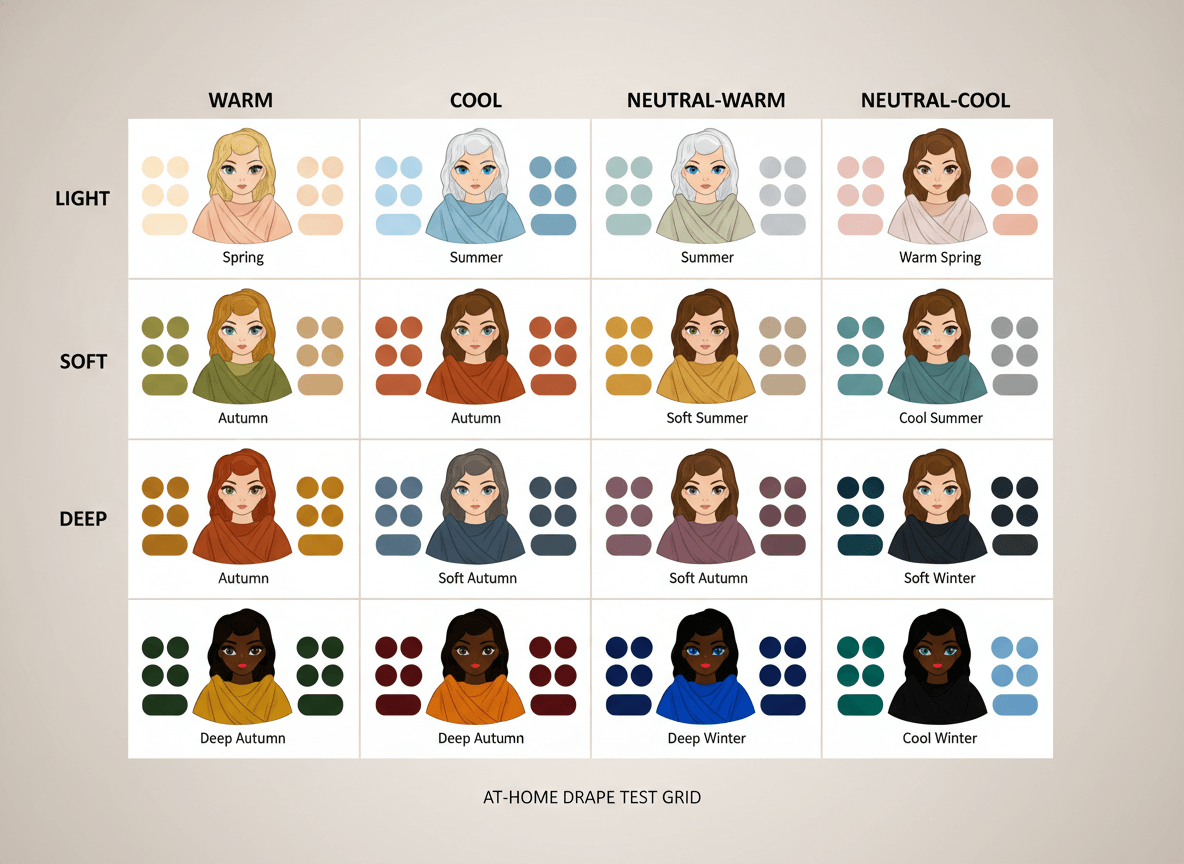
Spring — warm undertones, lighter depth, higher clarity
- Light Spring
- True (Warm) Spring
- Bright Spring
Summer — cool undertones, lighter to medium depth, muted saturation
- Light Summer
- True (Cool) Summer
- Soft Summer
Autumn — warm undertones, medium to deep depth, earthy richness
- Soft Autumn
- True (Warm) Autumn
- Deep Autumn
Winter — cool undertones, deeper depth, high contrast
- Deep Winter
- True (Cool) Winter
- Bright Winter
If one of those labels already feels right when you scan the list, note it — but hold off on committing until you've gone through the quiz questions. First impressions here are sometimes accurate and sometimes completely off.
Ready to find your season? Take the color season quiz →
How to Take the Quiz for the Most Accurate Result
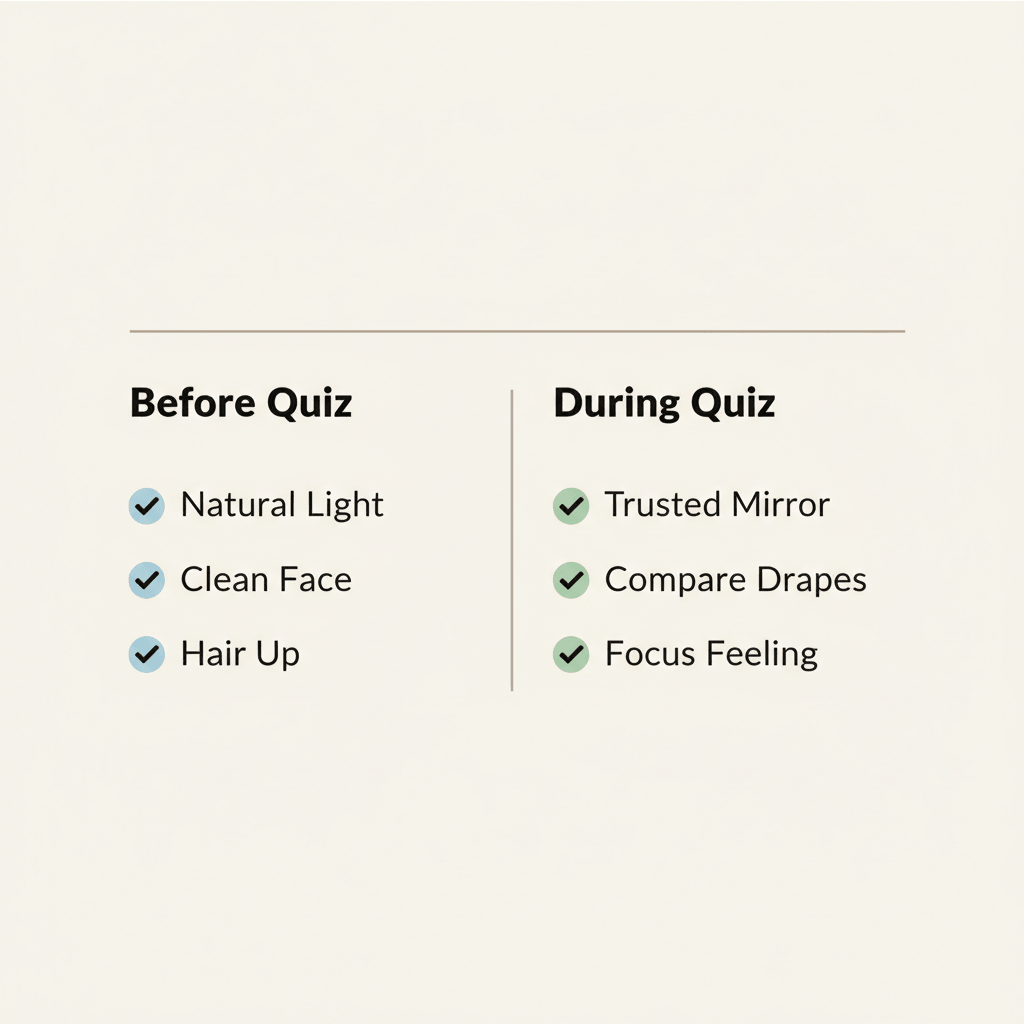
Your result is only as good as the conditions you observe yourself in. A few minutes of prep actually matters here.
- Use natural daylight. Sit near a window with indirect light. Warm indoor bulbs distort undertone and depth readings more than most people expect.
- Remove makeup. Foundation, bronzer, and blush all mask your skin's real undertone and depth. Bare skin gives you an honest baseline.
- Wear a neutral top. White or grey near your face removes color interference from clothing. Skip the patterns.
- Pull your hair back if you can. It's easier to read contrast and skin depth when hair isn't framing your face.
- Look at your face, not your hands or arms. Seasonal color analysis is based on the coloring around your face. Your arms can read completely differently.
When you answer questions about your facial features and the shades you already reach for in outfits that tend to get compliments, the quiz has something real to work with.
What to Do With Your Color Season Result
Your color season result is most useful as a practical shopping and styling filter, not a label to share online. Each season comes with a defined set of colors — the hues, saturations, and temperatures that work with your specific combination of undertone, depth, and contrast.
Here's how to put it to work:
- Audit your wardrobe. Pull out clothes you consistently get compliments in. They almost certainly fall within your season's palette — your result explains why they work.
- Identify what to retire. Pieces that always look slightly off, no matter how much you like them on the hanger, probably clash with your undertone or contrast level.
- Use your palette when shopping. Before buying, check whether the color belongs in your season's range. This one habit cuts down on expensive mistakes.
- Apply it to makeup. Foundation undertone, blush tones, lipstick families, and eyeshadow palettes all land better when they're season-aligned.
- Solve the "looks great on her, not on me" problem. Colors that look stunning on a friend with a different season will fight with your coloring. Your season tells you what to reach for instead.
Knowing your season turns color choices from guesswork into something repeatable.
Frequently Asked Questions About Color Season Quizzes
How to Identify Your Skin Undertone Before You Start
(Covered in full above under "What the Quiz Actually Measures.")
The short version: check your wrist veins in natural light (blue-purple = cool, green = warm, mixed = neutral), or hold true white and off-white fabric near your bare face and see which one makes your skin look more alive. That single observation answers the most important quiz question before you even click the first option.
The Difference Between the Four Base Seasons and Their Sub-Seasons
The four base seasons — Spring, Summer, Autumn, Winter — each describe a broad combination of undertone and overall energy: warm-light, cool-muted, warm-deep, and cool-deep respectively. They're a useful starting point, but not specific enough to build a reliable palette from.
The 12-season model breaks each base season into three sub-types that account for variation in depth and saturation within the same undertone family. All three Autumn sub-seasons share warm undertones, for instance, but Soft Autumn leans toward muted, dusty tones, True Autumn wears the richest earthy shades, and Deep Autumn handles deeper, more intense versions of those same warm hues. Your actual palette lives in the sub-season. The base season just tells you which neighborhood you're in.
People Also Ask
How do I find out my color season?
The most practical place to start is a structured quiz that walks you through the three traits that determine your season: skin undertone, depth, and the contrast between your hair, eyes, and skin. Each question targets one feature at a time, and your answers combine into a season result. Before you begin, check your undertone in natural daylight — look at the veins on your inner wrist (blue-purple means cool, green means warm) or hold white and off-white fabric near your bare face and see which makes your complexion look clearer. That one observation anchors most of what follows.
What are the 12 color seasons in seasonal color analysis?
Seasonal color analysis starts with four base seasons — Spring, Summer, Autumn, and Winter — each covering a broad combination of undertone and coloring energy. The 12-season model splits each base into three sub-types to account for differences in depth and saturation within the same undertone family:
- Spring: Light Spring, True Spring, Bright Spring
- Summer: Light Summer, True Summer, Soft Summer
- Autumn: Soft Autumn, True Autumn, Deep Autumn
- Winter: Deep Winter, True Winter, Bright Winter
Your season is based on skin tone depth, undertone, and the contrast across your hair, eyes, and skin together. The sub-season is where your actual working palette lives — the base season alone is too broad to be useful for shopping or getting dressed.
Can I do a color season quiz without a professional?
Yes. In-person draping by a trained analyst is the gold standard, but a well-designed online quiz is a legitimate alternative for most people. It replicates the same logic a professional uses — isolating undertone, depth, and contrast one trait at a time — without requiring specialist tools. Even experienced analysts sometimes can't decide between two seasons when they don't have draping materials in front of them, which suggests the structured, question-by-question approach matters more than the setting. For best results, take the quiz in natural daylight with bare skin and a neutral top, so your answers reflect your actual coloring rather than your makeup or the overhead lights.
What is the difference between a warm and cool color season?
Warm and cool describe the underlying hue in your skin — its undertone. Warm undertones carry yellow, peachy, or golden tones beneath the surface; cool undertones carry pink, red, or bluish ones. That distinction determines which half of the seasonal system you fall into:
- Warm seasons — Spring and Autumn — are built around golden, earthy, or sun-warmed tones.
- Cool seasons — Summer and Winter — are built around icy, rose-toned, or blue-based tones.
Colors from the wrong temperature group tend to make skin look dull, sallow, or washed out. Colors that match your season do the opposite: they make your complexion and eye color look more vivid. Undertone is the single most decisive factor in the whole system, which is why getting it right before you take a quiz matters so much.
How accurate are online color season quizzes?
Two things determine accuracy: how the quiz is built, and how you take it. A quiz structured around the three core traits — undertone, depth, and contrast — with each question targeting one observable feature at a time will work well for most people, especially in natural daylight, without makeup, and with a neutral top near the face. Quizzes that lean on color preferences or general aesthetic vibes rather than actual physical features tend to be inconsistent.
If your result lands clearly within one season, it's reliable enough to start building a palette from. If you fall between two adjacent seasons, that's common — those palettes share a lot of colors anyway, and working from either one is still far more useful than picking colors with no framework at all.
FAQ
What is a color season quiz and how does it work?
A color season quiz asks you a series of questions about your natural coloring and uses your answers to place you in one of the 12 seasonal color palettes. It looks at three things: how light or deep your skin is, whether your undertone runs warm, cool, or neutral, and how much contrast exists between your hair, eyes, and skin. Each question targets one of those traits. You don't need a color analyst or special draping equipment — just decent lighting and honest answers.
How many color seasons are there?
There are 12 color seasons in the expanded seasonal color analysis framework. They fall under four base seasons — Spring, Summer, Autumn, and Winter — each split into three sub-seasons based on differences in depth and saturation:
- Spring: Light, True, Bright
- Summer: Light, True, Soft
- Autumn: Soft, True, Deep
- Winter: Deep, True, Bright
Your sub-season is where your actual working palette lives. The base season alone is too broad to be useful for practical styling or shopping decisions.
Do I need to remove makeup before taking a color season quiz?
Yes, wherever possible. Makeup changes how your skin tone, undertone, and contrast read—and those are exactly the three things the quiz measures. Take it bare-faced in natural daylight if you can. If removing everything isn't practical, at least take off foundation and concealer before you start.
What if my quiz result puts me between two seasons?
Landing between two seasons is normal. The 12-season system is a continuous gradient, and some people genuinely sit near a boundary. That's fine. Adjacent seasons share a lot of colors, so either palette still gets you much closer than picking colors with no system at all.
If you're still unsure, hold swatches from both palettes near your face and notice which one makes your skin, eyes, and hair look more alive. That physical response is usually the clearest answer.
Can men take a color season quiz?
Yes. Seasonal color analysis works for anyone — it classifies your natural coloring (undertone, depth, and contrast), not your gender. The quiz format is actually a good fit for men since in-person consultations can feel less accessible, and the structured approach works just as well without a professional in the room.
How is seasonal color analysis different from just knowing my skin undertone?
Undertone is one input, not the whole answer. Knowing you have a warm or cool undertone tells you which half of the seasonal spectrum you're in — Spring/Autumn for warm, Summer/Winter for cool — but it doesn't tell you your season. Depth (how light or dark your overall coloring is) and contrast (how much difference there is between your hair, eyes, and skin) matter just as much. Two people can have the same undertone and end up in completely different seasons, needing completely different palettes, because their depth and contrast levels don't match.
What can I do with my color season result once I know it?
Your season comes with a defined palette matched to your natural coloring. Once you have that result, you can put it to use in a few ways:
- Wardrobe: Focus on tops and scarves in your palette colors. The pieces closest to your face have the biggest impact on how your complexion reads.
- Makeup: Choose foundation undertones, blush shades, lip colors, and eyeshadow families that match your season's temperature and depth range.
- Hair color: Use your palette as a reference when considering highlights, lowlights, or dye changes. Colors within your season tend to look natural; those outside it can look harsh or disconnected.
- Shopping: Check choices against your palette before buying. It cuts down on impulse purchases that don't work with the rest of your wardrobe.
Ready to find your palette? Take the color season quiz now →