Deep Winter Celebrities and Why: Red Carpet Analysis and Palette Breakdown
 Reviewed by Alexandra Gilmore
Anne Hathaway, Salma Hayek, Lucy Liu, and Kendall Jenner offer visual references for Deep Winter depth, contrast, and cool jewel colors; test the relationships on your own face.

Deep Winter celebrities illustrate a striking color relationship: depth leads, facial contrast stays clear, and a cool or neutral-cool direction with relative warmth from neighboring Deep Autumn supports saturated color. Anne Hathaway, Salma Hayek, Lucy Liu, and Kendall Jenner are useful red-carpet references, though photographs cannot confirm anyone's season. Blackened ruby, deep emerald, royal purple, and sharp black-and-white often echo the drama of dark hair and defined features. Dusty pastels, muted beige, and warm mustard can soften that contrast or shift attention toward the clothing. The useful lesson is to compare fabric beside your own face in consistent daylight, rather than copy a celebrity label as a diagnosis.
Deep Winter is also called Dark Winter. In a twelve-season palette, it sits next to Deep Autumn: both have substantial depth, while Winter's version generally looks cooler and clearer. A person may have fair, olive, medium, or deep skin and still explore this palette. Hair and eye color provide clues to contrast, but neither proves undertone on its own. This guide uses famous looks to explain the palette's design choices, then gives you a repeatable way to test them.
What Makes a Celebrity a True Deep Winter?
The dominant feature is depth. Imagine black, ink navy, dark emerald, and blackened cherry around the face before you imagine pale tints. The second feature is clear contrast: a dark frame paired with a bright eye white, defined lip, or crisp white collar can appear more coherent than a continuous wash of medium beige. Temperature matters too, but Deep Winter is often neutral-cool rather than extremely icy. That slight flexibility explains why a dark jewel color can be easier to wear than a sharp neon.
These are color relationships, not a checklist of ethnicities or skin shades. A fair person with dark hair may have obvious light-to-dark contrast; a person with deeper skin may create the same visual definition through the difference between hair, eyes, skin, and vivid fabric. An olive complexion can lean warm, cool, or neutral. The best observation is what happens when a deep cool swatch replaces a similarly deep warm one directly under the chin. For a broader explanation of the Winter family, see the Winter color palette guide.
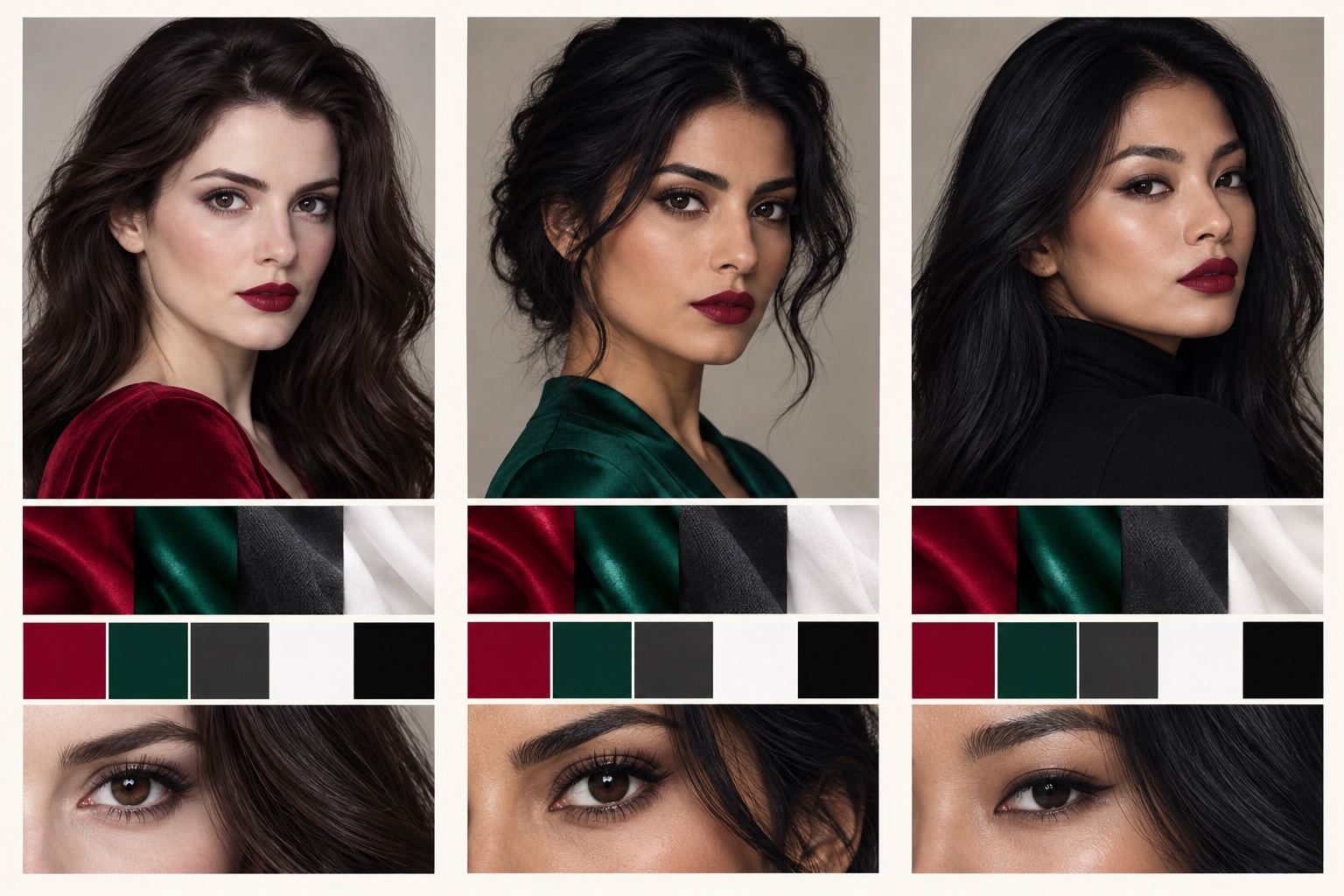
Look at the board as a set of questions. Does dark fabric create a clear frame without hiding the face? Does crisp white separate cleanly from dark hair? Does a saturated ruby or emerald keep definition where a grayed shade becomes quiet? If all three happen repeatedly in live draping, Deep Winter becomes a useful hypothesis. If rich brown and warm olive consistently work better than black and cool ruby, compare Deep Autumn. A single polished portrait cannot settle that boundary.
Anne Hathaway: The Classic Fair Skin and Deep Brunette Case Study
Anne Hathaway is a familiar example in conversations about dark hair against fair skin. The high value contrast is easy to see in a portrait: dark brunette hair frames a lighter face, while dark lashes and brows add definition. Her red-carpet wardrobe also gives us useful comparisons. Vogue's gallery of Hathaway's red-carpet looks includes a black-and-white ensemble with sapphire jewelry as well as a wide range of other colors. The black-and-white look is an example of graphic styling; it is not evidence of a professionally verified color season.
Why black, white, and jewel colors make an instructive comparison
Place a white collar beside dark hair and the edge between them is unmistakable. A black dress repeats the hair's depth; a white detail restores light. Sapphire, ruby, or emerald can supply color without sacrificing that dark-to-light structure. In a pale dusty gown, the edge may be gentler and the effect more romantic. Neither outfit is inherently a mistake. The Deep Winter question is whether the sharper color relationship makes the person's features look more connected to the outfit.
Hathaway has changed hair styling, makeup, and lighting across events. A close-up with a cool flash and a full-length shot in warm stage light are not a controlled pair. When using her as inspiration, compare garment colors within similarly lit images and then reproduce the comparison with your own fabric. If you have fair skin and deep hair, avoid assuming that contrast alone guarantees cool undertone; test black against espresso brown and crisp white against warm ivory.
Salma Hayek and Lucy Liu: Deep Winter Across Olive and Warm-Leaning Complexions
Salma Hayek and Lucy Liu show why a seasonal palette cannot be reduced to alabaster skin. Their public styling includes dark hair, defined eyes, and rich evening colors, but photographs of either person can look warmer or cooler depending on light, makeup, and color grading. Calling them definite Deep Winters would overstate what a viewer can know. They are useful because their looks invite a more careful question: can a cool deep color hold its own beside an olive or warm-looking complexion without looking separate from the face?
Salma Hayek: read depth before temperature
In a red-carpet portrait of Hayek, dark hair and dark eye definition can make deep fabric feel continuous with the face. A saturated emerald or wine shade may supply interest while staying close to that depth. A camel or bronzed gold look can also be beautiful, particularly with warm lighting and makeup. Compare the same depth first: dark emerald against dark olive or chocolate, then compare clear ruby against warm brick. That isolates temperature more effectively than comparing a black gown with a pale beige one.
Lucy Liu: contrast without assuming a single undertone
Liu's dark hair can create a precise outline beside white, black, and saturated color. A sharp neckline or concentrated berry lip can repeat that definition. Yet a camera can render skin more golden than it is in daylight, and styling can intentionally soften contrast. Use her looks to study the placement of dark and light, not to infer an immutable undertone from one photo. Vogue's photographed Tonys gallery is one example of how event lighting shapes the visual record.
Olive skin and Deep Winter are compatible possibilities, but they are not synonyms. Some olive complexions respond better to warm Deep Autumn colors; others prefer neutral-cool jewel shades. If you have olive skin, hold a cool deep emerald and warm dark moss at the same distance from your face. Keep the hair, makeup, room light, and camera settings steady. The fabric comparison tells you more than a celebrity resemblance.
Iconic Red Carpet Hits: Deep Ruby, Liquid Black, and Stark White Gowns
A Deep Winter-inspired red-carpet wardrobe starts with concentration of color. Blackened ruby is a red with enough blue and darkness to behave almost like a neutral. Deep emerald gives color in a similarly dark value. Royal purple brings a cooler, more electric edge. Liquid black satin and black velvet create different reflections while preserving the same dark frame. A stark white gown or white collar can be equally striking when black hair, dark accessories, or a defined lip reintroduces contrast.
Kendall Jenner offers a useful graphic-black reference. Vogue's account of her Met Gala looks documents repeated black outfits. That repetition shows a styling preference, not her measured season. A black gown can look polished on many palettes with the right cut and makeup. What makes it instructive here is the clear, dark frame near the face and the way one bright accessory can become the focal point.
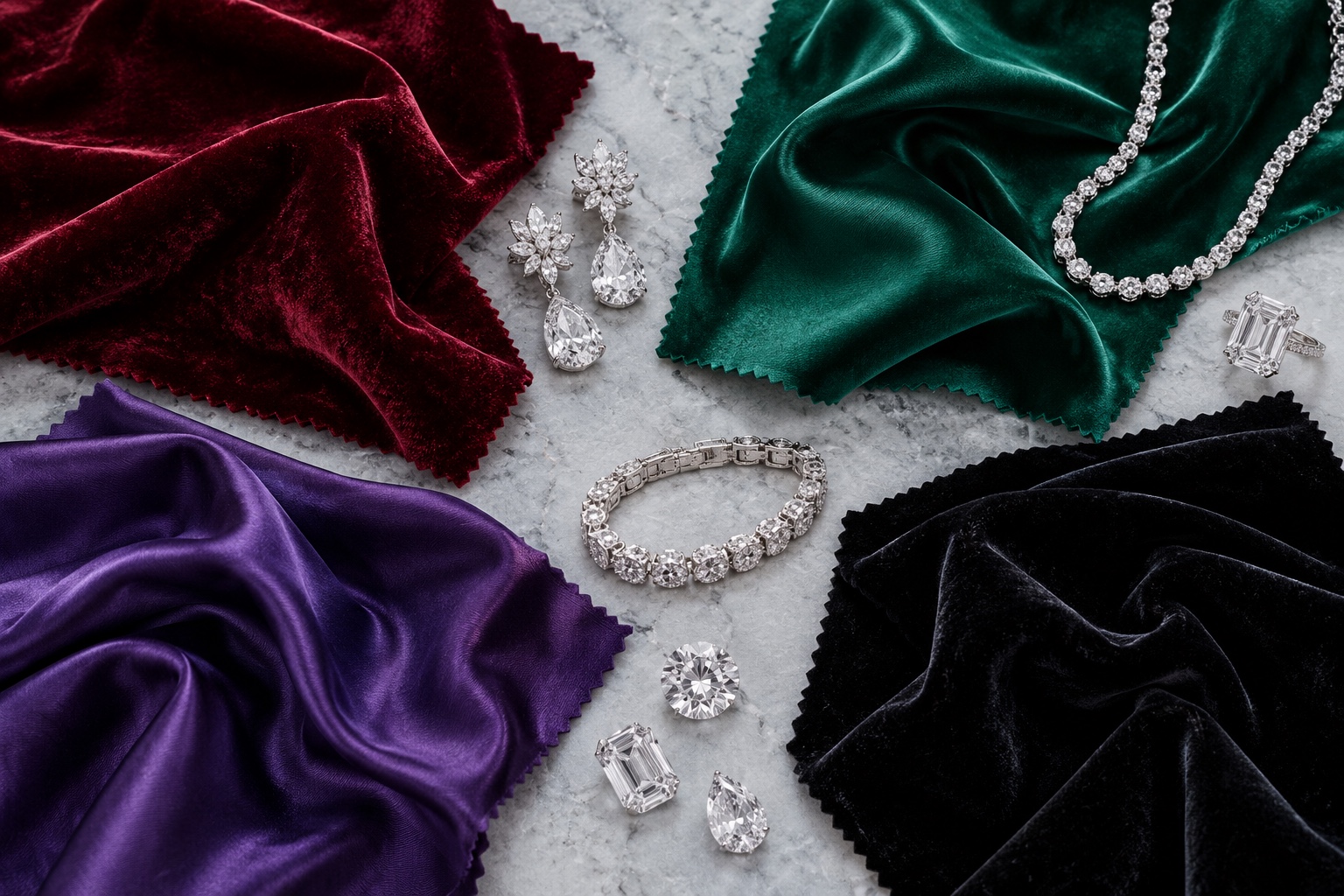
The fabrics above also show why texture matters. Velvet absorbs light and makes ruby appear deeper. Satin sends highlights toward the camera, so emerald may look lighter along a fold. Silk gives purple a changing sheen. When buying an outfit, judge the fabric against your face in the light where you will wear it; a color name on a product page cannot tell you how the material reflects light.
Red Carpet Misses: The Washed-Out Effect of Dusty Mauve and Pale Beige
“Miss” here describes a less useful palette comparison, not a verdict on anyone's appearance. Dusty mauve carries gray; pale beige may have little depth or contrast; warm mustard adds a strong yellow cast. Against a face whose features read dark and defined, these colors can create a quieter frame. A garment may still be elegant, and a stylist may want that softness. The practical concern is that a muted neckline may call for stronger makeup or jewelry to restore the visual definition that a rich color supplies by itself.
The controlled image below changes garment color while keeping the same fictional model and broadly similar lighting. Deep ruby repeats the dark hair and gives a saturated accent. Camel beige lowers the contrast at the neckline and shifts the overall palette warmer. The comparison isolates a styling variable; it does not show a medical or objective improvement to skin. Camera exposure and display settings may alter the apparent effect.
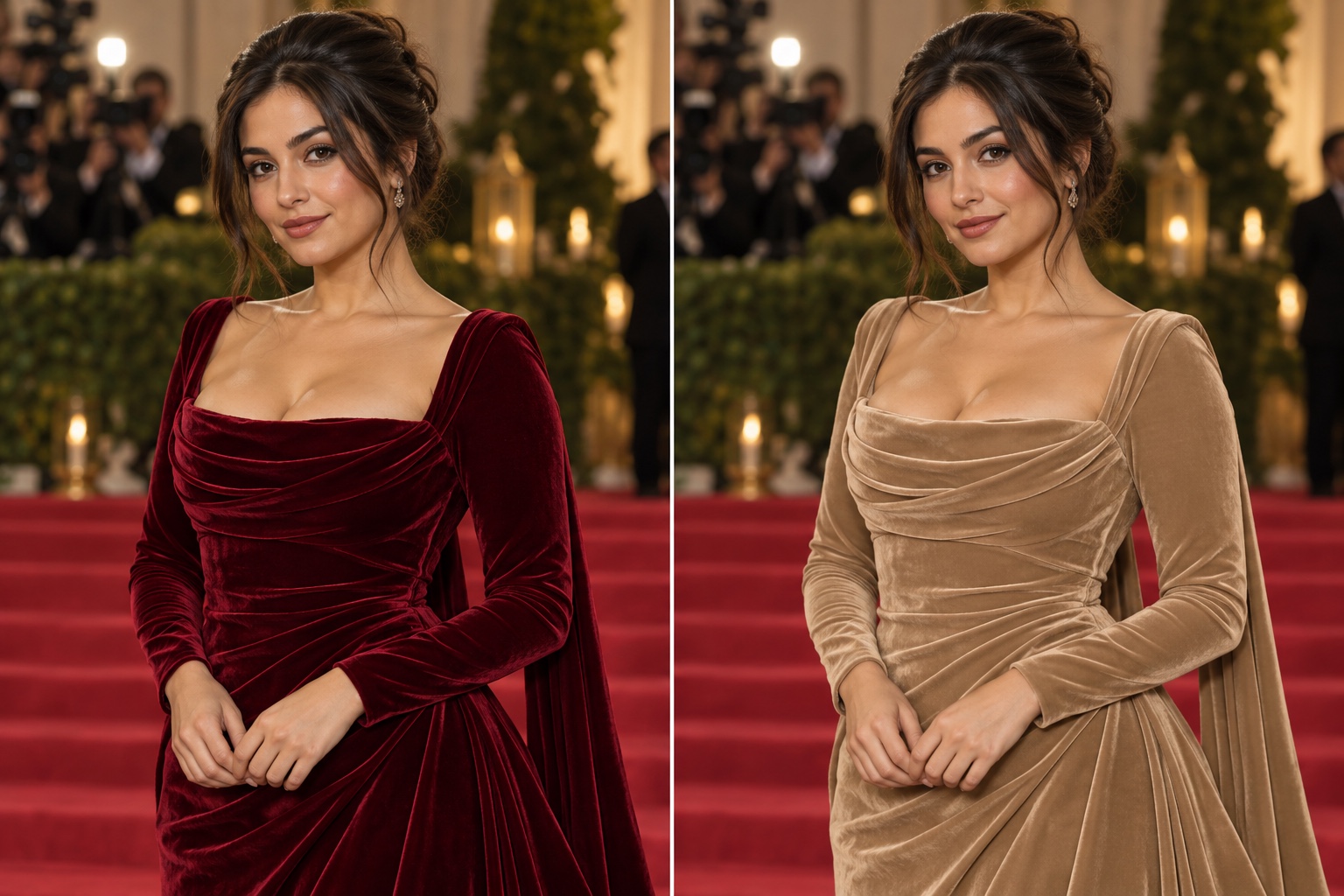
A pale shade is not automatically excluded from Deep Winter. Icy pink or crisp white can work because they stay clear and create strong contrast with dark elements. Dusty pink and cream beige do something different: they blur the edge and can introduce warmth. Similarly, mustard is not simply “yellow”; its muted brown-yellow quality is the issue. If you enjoy these colors, wear them below the waist or frame them with a black jacket, dark scarf, or saturated lip. Personal style can make room for colors outside a suggested palette.
How Deep Winter Stars Style Makeup
Deep Winter makeup often repeats the same three traits as the wardrobe: depth, clarity, and a cool to neutral-cool direction. A bold berry or blackened cherry lip offers a focused color point. Plum liner or charcoal shadow can frame the eyes without relying on warm bronze. A clear rose blush can add color while keeping the overall look cooler than terracotta. The goal is a coherent color story, not a rule that everyone needs full-coverage makeup or pale skin.
“Porcelain skin” is sometimes used in red-carpet descriptions, but it is a finish created by lighting and makeup, not a Deep Winter requirement. Foundation should match the person's actual skin tone and undertone. A fair wearer may choose a satin base and crisp berry lip; a medium or deep wearer might use the same berry family at a darker value. Test the lip color on your face: a shade that looks plum in the tube may become fuchsia or brown after application.
For evening wear, choose one anchor. If the gown is black, a saturated berry lip and small silver earrings may be enough. If the gown is ruby, keep the eye definition dark but let the garment carry most of the color. If you prefer subtle makeup, a sheer cool berry balm can repeat the palette without copying a celebrity's camera-ready intensity. Hair dye, spray tan, and flash can change the apparent result in photographs, so use a mirror in neutral daylight for your own comparison.
Translating Red Carpet Glamour to Everyday Outfits
You do not need an evening gown to use the idea. Put the strongest color closest to your face: a ruby knit, emerald scarf, ink-navy shirt, or black blazer over a white tee. Repeat one dark element in shoes, bag, belt, or glasses so the look has a visible frame. Keep a small bright or icy accent if an all-dark outfit feels heavy. For more palette options, see the Dark Winter color palette guide.
The decision table below translates the dramatic examples into paired tests. Compare fabrics of similar weight and similar value when possible. Change one variable at a time; a thick matte sweater and a sheer shiny blouse may appear different because of texture even if their colors are close.
| If you notice | Compare near your face | What to test next |
|---|---|---|
| Black creates a clear frame | Black versus dark warm espresso | Cool-neutral versus warm dark neutrals |
| Ruby looks more connected than brick | Blackened ruby versus rusty brick at similar depth | Temperature within saturated reds |
| Dusty mauve feels quiet | Muted mauve versus clear deep berry | Clarity and depth before changing hue |
| White looks crisp but cream blends away | Optic white versus warm ivory | Neutral temperature and contrast |
Stand in indirect daylight with minimal makeup and hold each garment under the chin. Look at whether your eyes, lips, and facial outline remain easy to see. Avoid labeling every shadow as a flaw; you are comparing overall color balance. Swap the order and repeat so your first choice does not bias the result. If ruby and espresso are equally useful, try two more cool-warm pairs before deciding. The interactive color analysis quiz can organize your observations, while real fabric remains the best way to check them.
Deep Winter Celebrity FAQ
Is Megan Fox a Deep Winter?
Megan Fox is often discussed as a possible Deep Winter because dark hair, defined features, and cool-looking dramatic styling appear in many photographs. No public photo can verify her undertone or a controlled draping result. Her hair color, makeup, lighting, and editing vary. Use a particular look as inspiration, then compare similar colors on yourself instead of relying on a definitive celebrity label.
Are Deep Winter and Dark Winter the same?
Usually, yes. Many twelve-season guides use the names interchangeably for the Winter palette where depth is dominant and coolness and clarity support it. Individual analysts may draw the boundary with Deep Autumn differently, so use actual swatches rather than treating the label as a precise formula.
Can someone with olive or deep skin be Deep Winter?
Yes. Seasonal color analysis compares how colors interact with a whole face; it does not assign seasons by skin depth or ethnicity. Olive skin can lean in several temperature directions. Try deep cool and warm swatches at similar values, then compare a clear and a muted option.
How can I drape like a celebrity stylist at home?
Use two clean fabrics at a time, keep your face in indirect daylight, and avoid beauty filters. Start with black versus dark espresso, then blackened ruby versus warm brick, and finally crisp white versus warm ivory. Keep the neckline area visible and photograph each pair from the same position if useful. Repeat another day before changing your wardrobe around a result.
Must Deep Winters avoid every pastel?
No. A clear icy pink or blue can make a deliberate contrast with black or ink navy. A gray-dusted pastel produces a softer effect. If you love the muted version, add a darker frame near your face or wear it away from the neckline. A palette is a practical guide, not a prohibition.
💫 Discover Your Complete Color Palette
Ready to discover all the colors that make you look radiant? Our comprehensive color analysis will reveal your complete personal palette - perfect for hair, makeup, and wardrobe decisions.
Take Color Analysis Quiz →