Best Clothing Colors for Blondes With Fair Skin
 Reviewed by Alexandra Gilmore
Blonde hair and fair skin do not determine one palette; ash, honey, platinum, and strawberry shades create different temperature and contrast needs. Match your blonde family with undertone and feature contrast, then test specific navies, reds, greens, neutrals, and whites near your face.

Key Takeaways
- Blonde hair and fair skin do not point to one universal palette. Use undertone, blonde family, and feature contrast together.
- Ash or platinum blonde often works with cool navy, blue-red, berry, pine, charcoal, and crisp or soft white.
- Golden or honey blonde often works with warm teal, coral, tomato red, camel, olive, chocolate, and ivory.
- Strawberry blonde can bridge warm and neutral palettes; petrol blue, moss, cinnamon, peacock, cream, and warm navy are useful starting points.
- Test difficult colors instead of banning them. Change the temperature, depth, or saturation, and judge the fabric near your face in indirect daylight.
Best Clothing Colors for Blondes With Fair Skin at a Glance
For a quick first fitting, compare navy, teal, berry, pine green, soft white, charcoal, camel, and a medium blue. These colors cover both warm and cool directions while adding enough definition that fair skin and light hair do not disappear into the outfit. The better shade should make the skin look more even, keep the jawline visible, and draw attention to the eyes rather than to redness or shadows.
| Your coloring | Start with | Useful neutrals | Test carefully |
|---|---|---|---|
| Cool undertone + ash or platinum blonde | Berry, cobalt, cool teal, pine, blue-red | Charcoal, ink navy, cool taupe, soft white | Orange, mustard, yellow beige |
| Warm undertone + golden or honey blonde | Coral, warm teal, tomato red, moss, cinnamon | Ivory, camel, chocolate, warm navy | Icy lavender, blue-gray, optic white |
| Neutral undertone + beige or dark blonde | Peacock, balanced red, jade, dusty blue, plum | Soft white, mushroom, cocoa, navy | Very gray pastels and neon brights |
| Warm-neutral undertone + strawberry blonde | Petrol blue, moss, peacock, rust, warm berry | Cream, cognac, warm navy, olive-brown | Colors that exactly repeat hair or skin |
💫 Find Your Color Palette
Wondering what colors look best with blonde hair and fair skin — for your specific shade? Our color analysis pinpoints the exact palette that makes your complexion glow and your hair look its most luminous.
Find My Color Palette →📚 Recent Articles
This guide owns the broad clothing intent for blonde hair with fair or pale skin. If blue eyes are a defining part of your coloring, use the narrower blonde hair, blue eyes, and pale skin guide for eye-specific combinations. For a palette based on skin rather than hair, see the complete pale-skin clothing guide.
Start With Undertone, Blonde Family, and Contrast
Three variables explain why the same pink, beige, or green can look lively on one fair-skinned blonde and flat on another. Undertone is the relatively stable warm, cool, or neutral direction beneath temporary redness or tanning. Blonde family describes whether the hair reads ash, platinum, beige, golden, honey, strawberry, or dark blonde. Contrast is the light-dark difference among skin, hair, brows, and eyes.
Hair color affects the frame around the face, but it should not overrule the skin. A cool-toned person with salon-warmed blonde hair may still look clearer in berry than in orange. A warm-toned person with beige blonde hair may need coral rather than icy pink. If you do not know your undertone, use the controlled comparisons in the undertone test for fair skin before buying a full palette.
Contrast determines intensity. Very pale hair, light brows, and light eyes often suit medium-value colors and restrained contrast. Dark blonde hair, defined brows, or darker eyes can carry deeper navy, forest, burgundy, and sharper light-dark combinations. Use the contrast-level guide if colors seem correct in temperature but still overpower or underwhelm you.
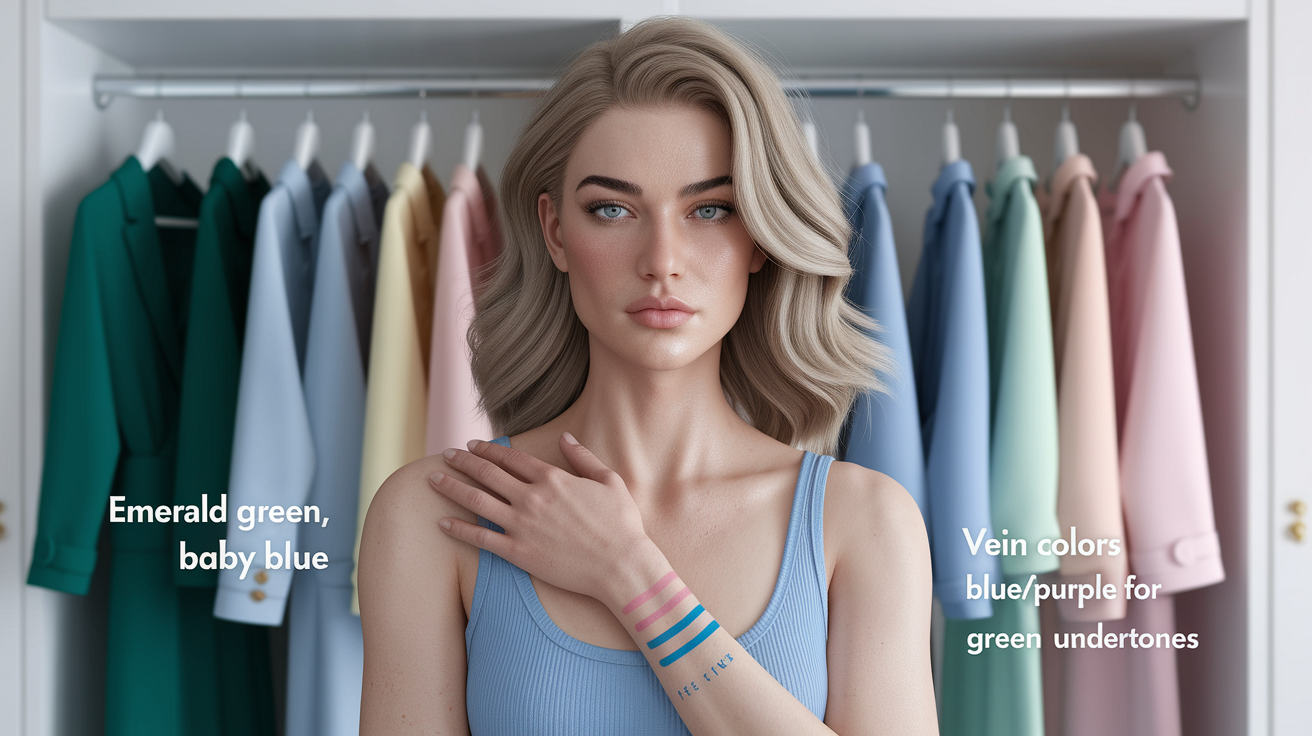
Undertone and Blonde Depth Clothing Matrix
Choose the row closest to your hair depth, then compare the warm, cool, and neutral columns. These are fitting-room starting points, not rigid seasonal labels. Dyed hair may change the contrast you can comfortably wear without changing your skin undertone.
| Blonde depth | Cool undertone | Warm undertone | Neutral undertone |
|---|---|---|---|
| Very light: platinum or pale ash | Periwinkle, raspberry, cool navy, blue spruce, charcoal | Clear peach, warm aqua, light camel, ivory, fresh green | Dusty blue, peacock, soft white, mushroom, balanced rose |
| Medium: beige, golden, or honey | Cobalt, berry, pine, blue-red, graphite | Teal, coral, olive, tomato red, chocolate | Jade, plum, denim blue, cocoa, warm navy |
| Deeper: dark blonde or bronde | Ink navy, burgundy, emerald, cool red, charcoal | Forest, rust, petrol blue, cinnamon, cream | Deep teal, aubergine, balanced red, espresso, stone |
| Red-blonde: strawberry | Cool teal, muted berry, slate blue, pine, soft white | Peacock, moss, paprika, warm navy, cream | Petrol, jade, dusty rose, cocoa, oyster |
If two columns work, you may be neutral or simply tolerant of a wider temperature range. Compare matched pairs of similar depth: coral against cool rose, camel against mushroom, warm teal against blue teal, and ivory against soft white. The comparison is more useful than judging one isolated garment.
Best Colors for Ash and Platinum Blonde Hair
Ash and platinum blonde contain little obvious gold, so cool and neutral colors often repeat the hair direction cleanly. Begin with raspberry, cranberry, blue-red, cobalt, periwinkle, cool teal, pine, and blue spruce. These colors add definition without relying on black. If your eyebrows and eyes create stronger contrast, test ink navy, burgundy, emerald, and charcoal. If your coloring is very light and soft, use medium denim blue, dusty rose, heathered navy, and softened berry instead.
White is not one color. Optic white can look sharp beside icy platinum hair, while soft white may be easier on low-contrast ash blonde coloring. Cool taupe, mushroom, graphite, and navy are usually more useful than yellow beige. Warm colors are still possible: choose a pinked coral, neutral red, or clear turquoise rather than a strongly orange or mustard version.
Best Colors for Golden and Honey Blonde Hair
Golden and honey blonde hair reflects yellow, amber, or caramel notes. Warm teal, petrol blue, coral, tomato red, moss, olive, cinnamon, and warm forest green can connect with that warmth while remaining distinct from fair skin. Ivory, camel, cognac, chocolate, warm navy, and olive-brown make practical neutrals.
Avoid matching the hair so closely that the outfit loses shape. Pale yellow beside golden hair and fair skin can blend into one light area; a deeper saffron, olive, teal, or chocolate layer restores definition. If warm beige makes the face look yellow, move toward neutral stone or cocoa. If orange-red feels loud, compare brick, paprika, and coral at the same depth.
Best Colors for Strawberry Blonde Hair
Strawberry blonde ranges from pale copper-gold to a more neutral red-blonde. Petrol blue, peacock, teal, moss, warm navy, cinnamon, cream, and cognac are dependable starting points because they either complement the red note or echo its warmth without copying it exactly. Warm berry and muted plum can also work when the skin leans neutral rather than strongly golden.
Test green by temperature. Blue-green teal creates a clear complementary effect, forest feels deeper and quieter, and yellow olive connects with warm freckles or golden skin. A green that is too gray can make surface redness more obvious. The same principle applies to pink: salmon and coral lean warm, while rose and berry lean cool.
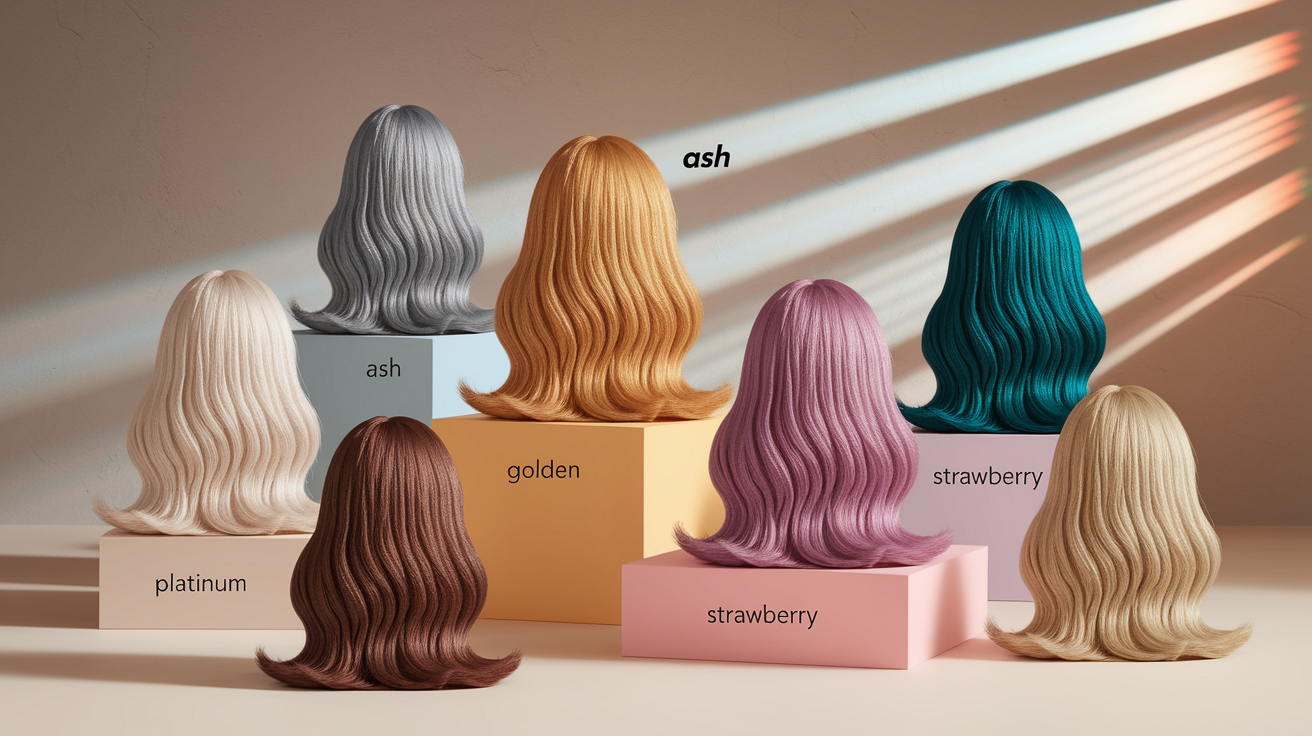
Reliable Neutrals for Fair-Skinned Blondes
Neutrals build the wardrobe, but they still have temperature, depth, and saturation. Keep at least one light neutral and two darker neutrals so an outfit can create a visible frame around the face.
| Neutral | Best starting version | If it feels wrong |
|---|---|---|
| White | Soft white for most low-contrast blondes; optic white for cool, clearer coloring | Try ivory for warmth or add a navy, teal, or berry neckline. |
| Navy | Ink navy for cool coloring; warmer navy for golden and strawberry blonde | Use medium denim blue if very dark navy feels heavy. |
| Gray | Charcoal and blue-gray for cool undertones; warm graphite for neutral skin | Replace pale gray with mushroom, cocoa, or navy if the face looks flat. |
| Beige and camel | Cool taupe or mushroom for cool skin; camel and cognac for warm skin | Choose a version clearly deeper than the skin and separate it with a colored top. |
| Brown | Cocoa, chocolate, espresso, or olive-brown | Shift cooler or deeper if tan repeats the hair too closely. |
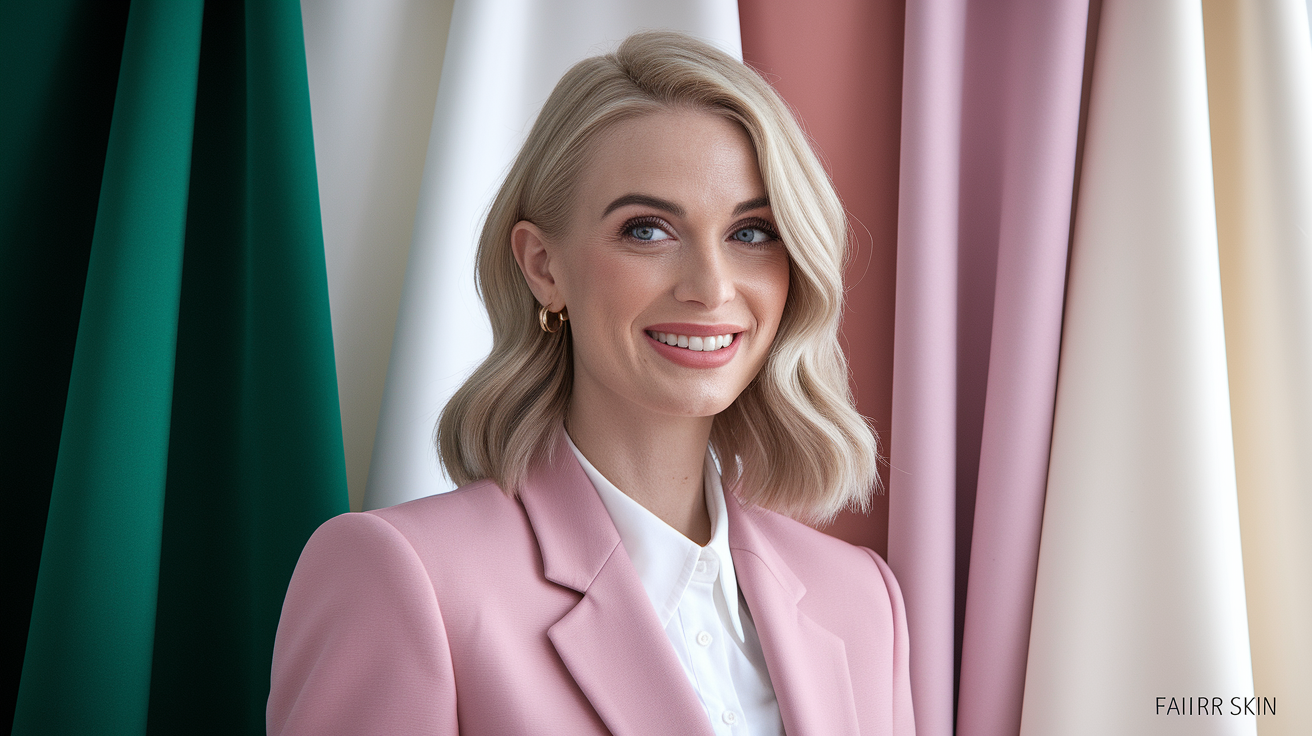
Accent Colors That Add Definition
Accent colors are most useful near the face: a top, scarf, jacket lapel, necklace, or collar has more effect than shoes. Cool fair-skinned blondes can start with berry, raspberry, cobalt, periwinkle, pine, and blue-red. Warm fair-skinned blondes can test coral, tomato red, warm teal, moss, paprika, and fresh green. Neutral undertones often handle peacock, jade, plum, dusty blue, and balanced red.
Choose saturation based on contrast. A clear cobalt may support platinum hair with dark brows, while a softened denim blue may suit pale ash hair and light eyes. Golden hair with defined brown eyes may carry forest and rust; the same colors can feel heavy on very low-contrast coloring unless they are used in a smaller area.
Colors to Test Carefully, Not Automatically Avoid
No color family is forbidden. A difficult result usually comes from a specific version of the color or from too little separation between skin, hair, and fabric.
| If this happens | Likely issue | Try this adjustment |
|---|---|---|
| Pastel makes the face look faded | Too close to skin and hair in value | Choose a clearer or medium-depth version: lavender to periwinkle, mint to teal. |
| Black looks disconnected | Contrast is too hard | Use ink navy, charcoal, espresso, or a colored neckline between black and the face. |
| Beige disappears | It repeats both skin and hair | Move to mushroom, camel, cocoa, or stone and add berry, teal, or navy. |
| Yellow makes redness stronger | The yellow is too green, pale, or close to the skin | Compare ivory, saffron, warm camel, or a smaller yellow accent. |
| Neon overpowers the face | Saturation exceeds feature contrast | Reduce the area, choose a clearer mid-bright, or ground it with navy. |
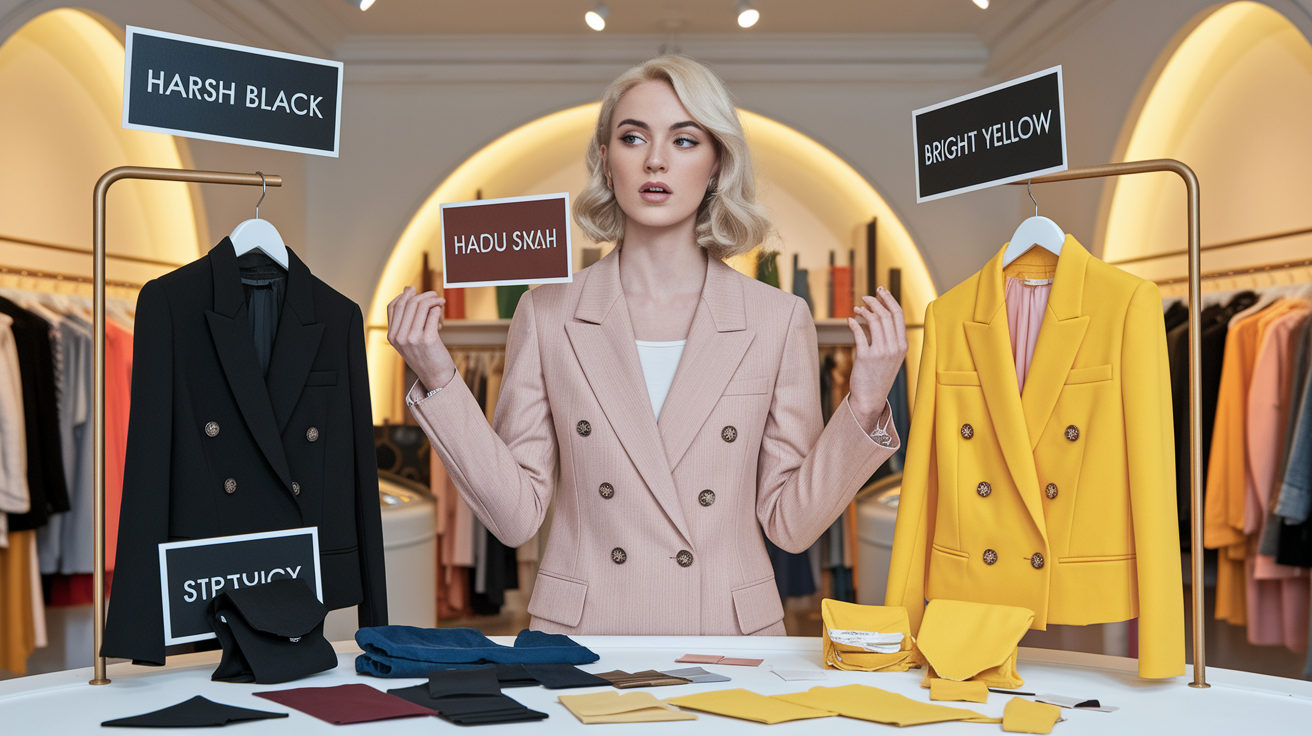
Outfit Formulas for Fair Skin and Blonde Hair
Use these formulas as combinations to test, then shift one color warmer, cooler, lighter, or deeper. The garment names are interchangeable; the useful part is the color relationship.
- Cool and polished: ink navy blazer, soft white shirt, charcoal trousers, and a berry scarf or tie.
- Warm and relaxed: warm teal knit, cream jeans, camel jacket, and cognac shoes.
- Neutral office palette: mushroom jacket, dusty blue top, navy trousers, and a balanced red accent.
- Strawberry blonde contrast: petrol blue dress or shirt, warm navy layer, and cream accessories.
- Low-contrast casual: medium denim, soft white, muted teal, and cocoa rather than stark black.
- Higher-contrast evening: burgundy, emerald, or cobalt near the face with one dark neutral and simple metallic accents.
How to Test a Color Near Your Face
- Use indirect daylight. Stand near a window without direct sun. Turn off warm or colored room lights.
- Keep everything else stable. Compare fabrics in the same position, with minimal makeup and hair pulled away from the cheeks if possible.
- Use matched pairs. Compare soft white with ivory, berry with coral, cool teal with warm teal, charcoal with camel, and cobalt with denim blue.
- Watch the face, not the garment. Look for more even skin, clearer eye definition, a visible jawline, and less emphasis on shadows or surface redness.
- Repeat the winner. Check it on another day and with a second fabric. Texture and reflectivity can change the result even when the color name is the same.
Photos can help you compare, but automatic white balance may cool or warm the image. Treat the camera as a record of the test, not as the final judge. For a broader clothing palette that connects these observations, try the personal color palette tool.
People Also Ask
What colors look best on blondes with fair skin?
Navy, teal, berry, pine, soft white, charcoal, camel, and medium blue are useful starting points. Cool undertones can move toward cobalt, raspberry, and blue-red; warm undertones toward coral, moss, tomato red, and warm teal.
Should fair-skinned blondes wear black or navy?
Both can work, but navy usually creates a gentler transition beside light hair and fair skin. If black feels hard, keep it below the waist or add a flattering neckline color such as teal, berry, soft white, or coral.
What neutrals suit blonde hair and fair skin?
Compare soft white, ivory, navy, charcoal, mushroom, camel, cocoa, and chocolate. Select the temperature by undertone and keep enough depth difference that the clothing does not merge with both skin and hair.
Does eye color change the best clothing palette?
Eye color can suggest useful accents, but undertone and overall contrast are stronger starting points. Blue eyes may be emphasized by navy, petrol, teal, berry, or complementary warm accents; use the eye-specific guide when that combination is your main concern.
Common Questions: The Ultimate Color FAQ
How do I know whether my blonde hair reads warm or cool?
Ash, silver, and icy beige read cooler; gold, honey, caramel, and copper read warmer. Check the hair in neutral daylight rather than under salon or bathroom lighting. If it is dyed, use the current visible color for outfit contrast while keeping skin undertone as the main temperature guide.
Can fair-skinned blondes wear pastels?
Yes. Pastels work best when they remain visibly different from the skin and hair. Try periwinkle, dusty blue, cool rose, peach, or mint, then choose a clearer or slightly deeper version if the face loses definition.
What dress color suits a fair-skinned blonde?
Teal, berry, navy, cobalt, coral, forest green, and burgundy are versatile choices. Pick a cooler or warmer version based on undertone, then adjust depth for your feature contrast and the lighting of the event.
What shirt colors work for blonde men with fair skin?
Navy, denim blue, teal, pine, burgundy, soft white, charcoal, and muted coral cover a useful range. The same undertone and contrast principles apply: test the shirt collar near the face and soften stark black or optic white when needed.
Does a tan change the best clothing colors?
A tan changes surface depth and may allow slightly stronger contrast, but it usually does not replace the underlying warm, cool, or neutral direction. Retest your light neutrals and pale accents while keeping the core palette stable.