Cool Olive Skin Tone Colors
 Reviewed by Alexandra Gilmore
Cool olive skin combines an olive cast with a cooler underlying direction, so it may look wrong in colors recommended for generic warm olive complexions. Learn to recognize the layered effect, then test berries, blue-greens, cool reds, charcoal, and softened blues against yellow-heavy or orange-based alternatives.

Olive skin is already one of the trickier complexions to decode — and the cool olive variation adds another layer of nuance that most generic color guides simply miss. If you've ever walked away from the "warm vs. cool" undertone test feeling like neither answer quite fits, you're not imagining it. Cool olive skin has a shape-shifting quality that can make standard identification methods genuinely misleading.
💫 Discover Your Complete Color Palette
One feature rarely explains every color that works for you. Compare your undertone, depth, clarity, and contrast as a complete palette, then use the results to test clothing, makeup, and hair colors more consistently.
Find My Color Palette →Here's what makes it so confusing: olive skin carries green or muted yellow-green pigmentation on top of a separate underlying undertone. When that underlying tone leans cool — toward pink, blue, or ashy hues — the result is a cool olive complexion that sits in its own distinct category, separate from both warm olive and the typical cool skin tones most charts describe.
This guide cuts through the confusion with a straightforward breakdown of:
- How to accurately identify a cool olive undertone beyond the usual vein and jewelry tests
- The clothing colors that genuinely complement cool olive skin rather than clash with its unique pigmentation
- Makeup shade recommendations — including foundation undertones, blush, and lip colors — chosen specifically for the cool olive palette
- Colors and shades to avoid that tend to wash out or muddy this complexion
- Hair color directions that work with cool olive's natural depth and coolness
Whether you're trying to find a foundation that doesn't pull orange or building a wardrobe that makes your complexion glow, knowing exactly where your skin falls on the olive spectrum changes everything. Getting those shades right starts with a clear identification — and that's exactly where we'll begin.
What Is a Cool Olive Skin Tone?
Olive skin has a greenish or muted yellow-green cast at the surface. Most people assume that automatically makes it "warm" — but surface color and undertone are two different things. When the undertone beneath that green-tinged surface leans pink, blue, or ash, you have a cool olive skin tone.
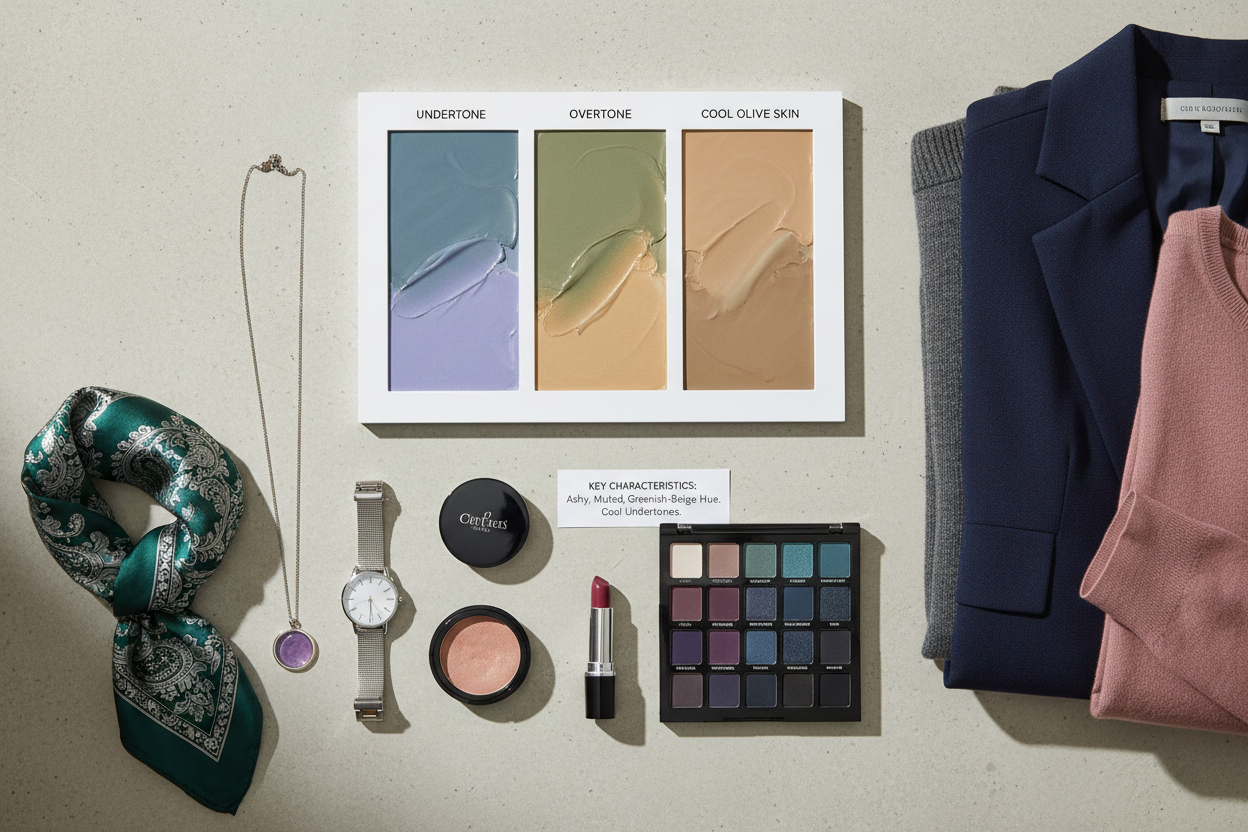
Think of it as two overlapping layers:
- Surface layer: green or grey-green pigment that gives olive skin its characteristic muted, earthy look
- Undertone layer: a cool pink or bluish-grey cast underneath, which affects how colors read against your skin
This combination sits in its own category — not quite warm olive (golden or yellow beneath the green), not quite the standard pink-cool or porcelain-cool that most color guides are built around. Because it doesn't fit cleanly into either bucket, cool olive is genuinely hard to identify. The way it seems to shift depending on lighting and surrounding colors is a real source of confusion, not just you second-guessing yourself.
The short version: Cool olive skin looks green or grey-green at the surface but behaves like a cool complexion — it works with blue-based hues and fights with anything too golden or brassy.
[Take the color analysis quiz →]
How to Tell If You Have a Cool Olive Undertone
Standard undertone tests were designed for complexions that clearly read as warm, neutral, or cool. Olive skin adds a complicating layer — literally — which means the same tests can point in different directions depending on the day, your lighting, or how much sun exposure you've had. Here's how to work through the most common methods with the olive context in mind.
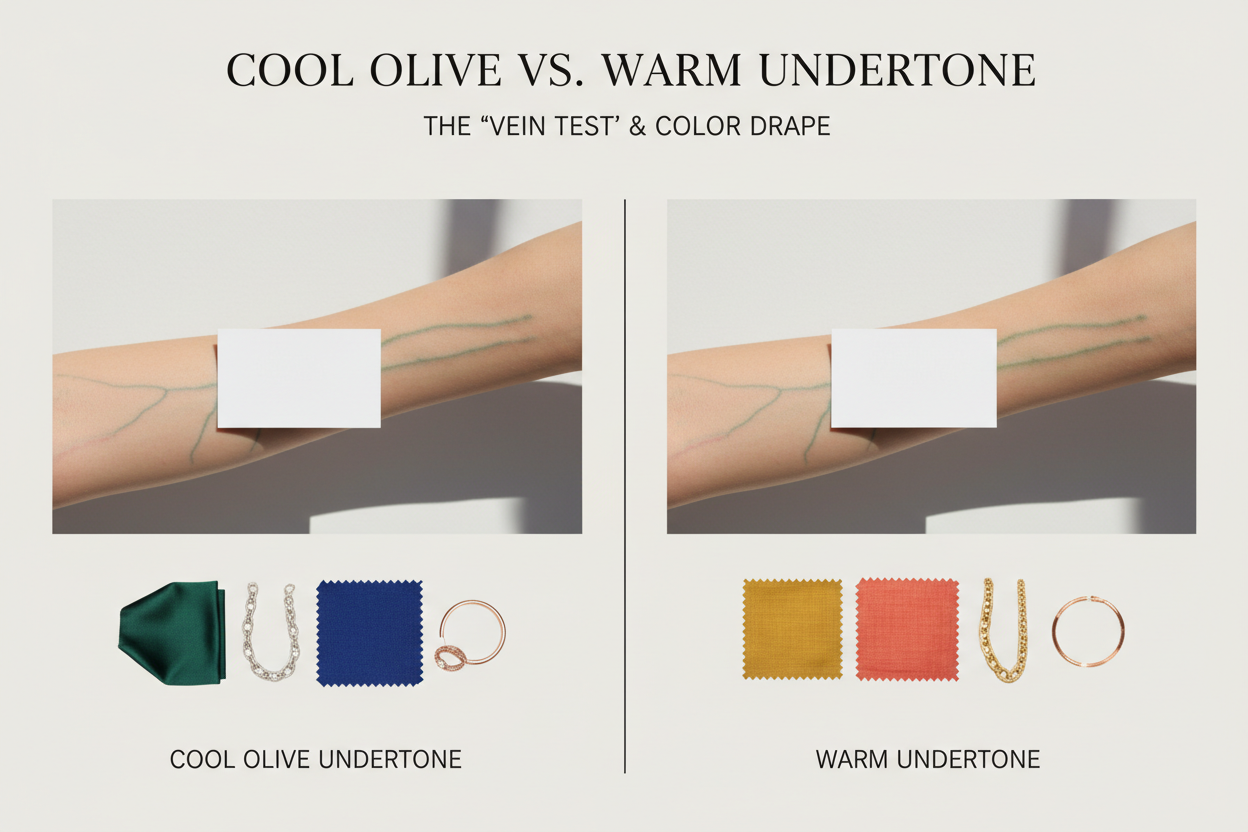
Why Standard Undertone Tests Can Mislead Olive Skin
The green-grey pigment in olive skin can absorb and neutralize the visual cues these tests rely on. The result: you get a warm reading on one test and a cool reading on another, leaving you more confused than when you started. This isn't a sign the tests are useless — it's a sign you need to interpret them carefully for the olive sub-type.
The vein test Look at the veins on your inner wrist in natural daylight.
- Blue or purple veins → cool undertone
- Green veins → warm undertone
- A mix of both → neutral
The catch for olive skin: The greenish tint in the skin can make veins appear greener than they actually are, nudging the reading toward "warm" even when the true undertone is cool or neutral-cool. If your veins look blue-purple through that green cast, trust that reading over everything else.
The jewelry test Hold a piece of silver jewelry and a piece of gold jewelry against your bare wrist in natural light.
- Silver makes your skin look brighter and clearer → cool undertone
- Gold is more flattering → warm undertone
- Both look equally good → neutral
For olive skin: Olive complexions are naturally muted, so both metals can look fine without either one looking luminous. Try to catch which one creates a visible glow versus which one just sits there. Silver giving your skin a subtle lift is a reasonable signal toward cool.
The white-fabric test Hold a crisp white fabric against your face (no makeup) in natural light.
- Pure white makes your skin look healthy and clear → cool undertone
- Off-white or cream is more flattering → warm undertone
For olive skin: This one tends to be more reliable than the others. Cool olive skin often looks surprisingly clear next to stark white. Warm olive skin usually looks a bit sallow by comparison.
Additional signals to look for:
- You tan easily but the tan looks ashy or grey rather than golden
- Your skin looks dull in camel, warm brown, or mustard tones
- Burgundy, plum, and cool pink lip colors suit you better than coral or peachy ones
- You've been told you look "sallow" in warm-toned clothing
No single test is definitive for olive skin. The more of these signals you recognize, the more confident you can be in a cool olive identification.
The Best Clothing Colors for Cool Olive Skin
Once you know your undertone is cool, the goal with clothing is to choose colors that work with the cool-pink or ashy base in your skin — not against it. The green surface pigment also means avoiding colors that amplify or clash with that green cast. Here's what consistently works.
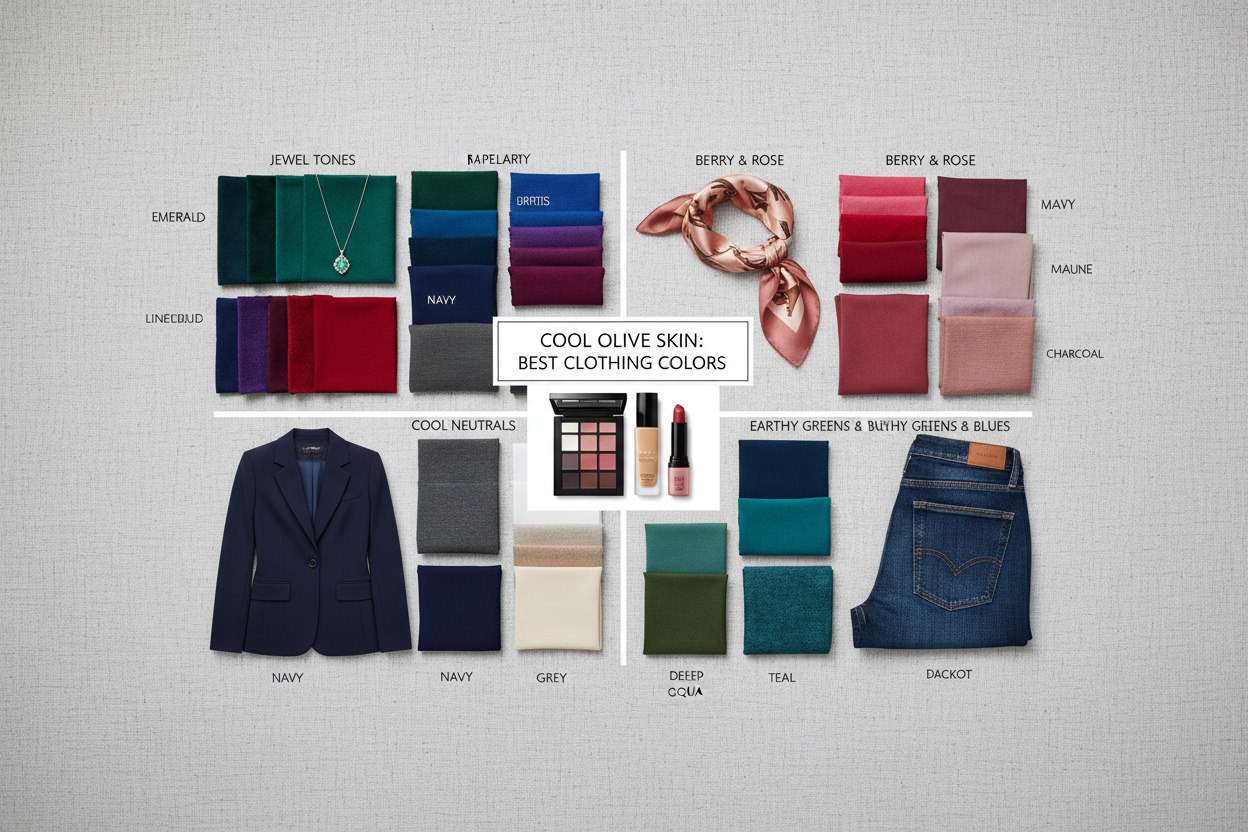
Jewel tones Rich, saturated colors with a blue or purple base tend to be the most flattering. They create contrast that makes the complexion look luminous rather than muddy.
- Sapphire blue
- Amethyst and deep violet
- Emerald green (the depth neutralizes the green in the skin rather than competing with it)
- Deep teal
Cool-based neutrals Warm camels and tans get recommended for "olive skin" a lot, but cool olive skin does better with neutrals that have grey or blue-grey undertones.
- Charcoal grey
- Navy
- Cool taupe (grey-brown, not yellow-brown)
- Soft white and ice blue
Berry and mauve shades Pinks with a blue or red base harmonize with the cool undertone. Peachy or coral pinks tend to fight it.
- Dusty rose
- Berry red
- Raspberry
- Plum
True red A clear, blue-based red — think classic crimson rather than tomato or brick — is a strong choice. It creates a striking, high-contrast look.
Why these work: All of these share blue, purple, or ashy undertones that echo the cool layer in your complexion. When your undertone and the colors closest to your face align, the skin looks more even, brighter, and more defined.
Makeup Colors That Work With Cool Olive Skin
Getting makeup right for cool olive skin means knowing where to match undertones and where to lean into contrast. Foundation, blush, eye shadow, and lip color each follow slightly different logic.
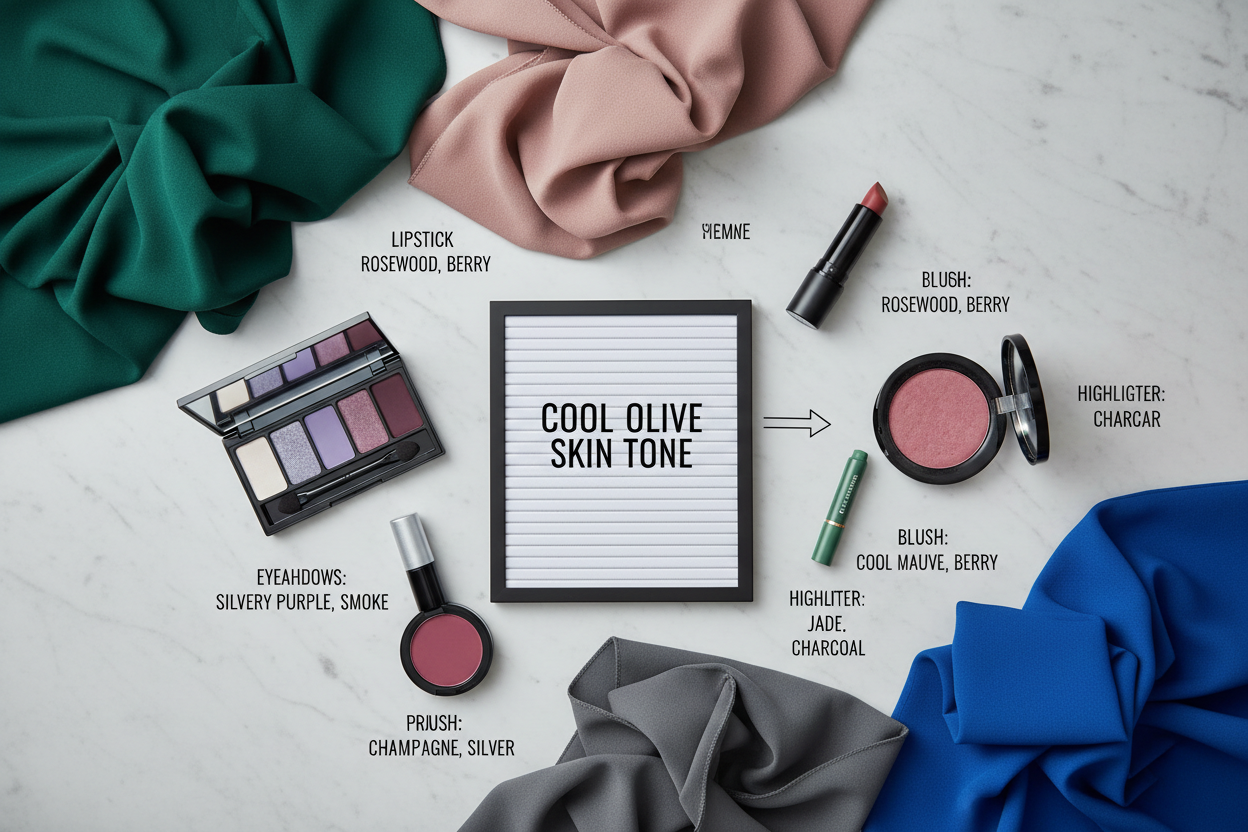
Blush Skip peachy, warm coral, and bronze blushes. Cool olive skin looks most natural with:
- Soft berry or plum-pink
- Dusty mauve
- Cool rose
These shades mimic a natural flush without adding warmth that turns muddy against an olive base.
Eye shadow The green in olive skin means certain shadows harmonize or clash in ways they wouldn't on other complexions.
- Works well: Cool-toned taupes, smoky greys, plum, navy, dusty rose, lavender, deep burgundy
- Use carefully: Green and khaki shadows, which can read muddy next to the skin's own green cast
- Avoid: Warm orange-brown, copper, and heavily brassy gold
Lip colors Cool olive skin tends to work best with shades in the blue-red to berry-plum range:
- Berry and deep plum
- Cool pink and mauve
- Classic cool red (blue-red base, not orange-red)
- Nude-pink rather than nude-peach
Highlighter Silver, pearl, or pink-champagne highlighters add luminosity without pulling warm. Warm gold and bronze tend to work against the undertone rather than with it.
Choosing the Right Foundation Undertone for Cool Olive
Foundation is the highest-stakes call for cool olive skin, and the most common source of frustration. The wrong shade doesn't just look slightly off — it can make the complexion look ashy, orange, or mask-like.
The core problem: most foundations marketed to olive skin are formulated with warm or yellow-leaning undertones, assuming all olive is warm olive. On cool olive skin, those formulas pull orange or muddy.
What to look for on packaging:
- Descriptors like neutral-cool, pink-beige, rosy, or cool beige
- Shade names with "C" (cool) or "N" (neutral) in lines that use letter-coded systems
- Avoid shades labeled golden, warm olive, honey, or camel — those are calibrated for warm undertones
Practical tips:
- Test on your jawline in natural light, not store lighting
- After applying, check whether the shade disappears into your skin or pulls warm — a slight pink or neutral result is right for cool olive
- If a shade looks fine on your hand but orange on your face, the formula is too warm
- A slight pink undertone usually works better than yellow; "neutral" formulas that sit between the two are often a good middle ground
The goal is for foundation to disappear against your skin — not adding warmth you don't have, not so cool it looks grey. A neutral-cool base is usually where that balance lands.
[Start the quiz to find your exact foundation match →]
Colors to Avoid With a Cool Olive Skin Tone
Knowing what to avoid is just as useful as knowing what works. For cool olive skin, the avoid list tends to be the opposite of what gets recommended for warm olive complexions — worth keeping in mind, since most generic "olive skin" advice is written with the warm variation in mind.
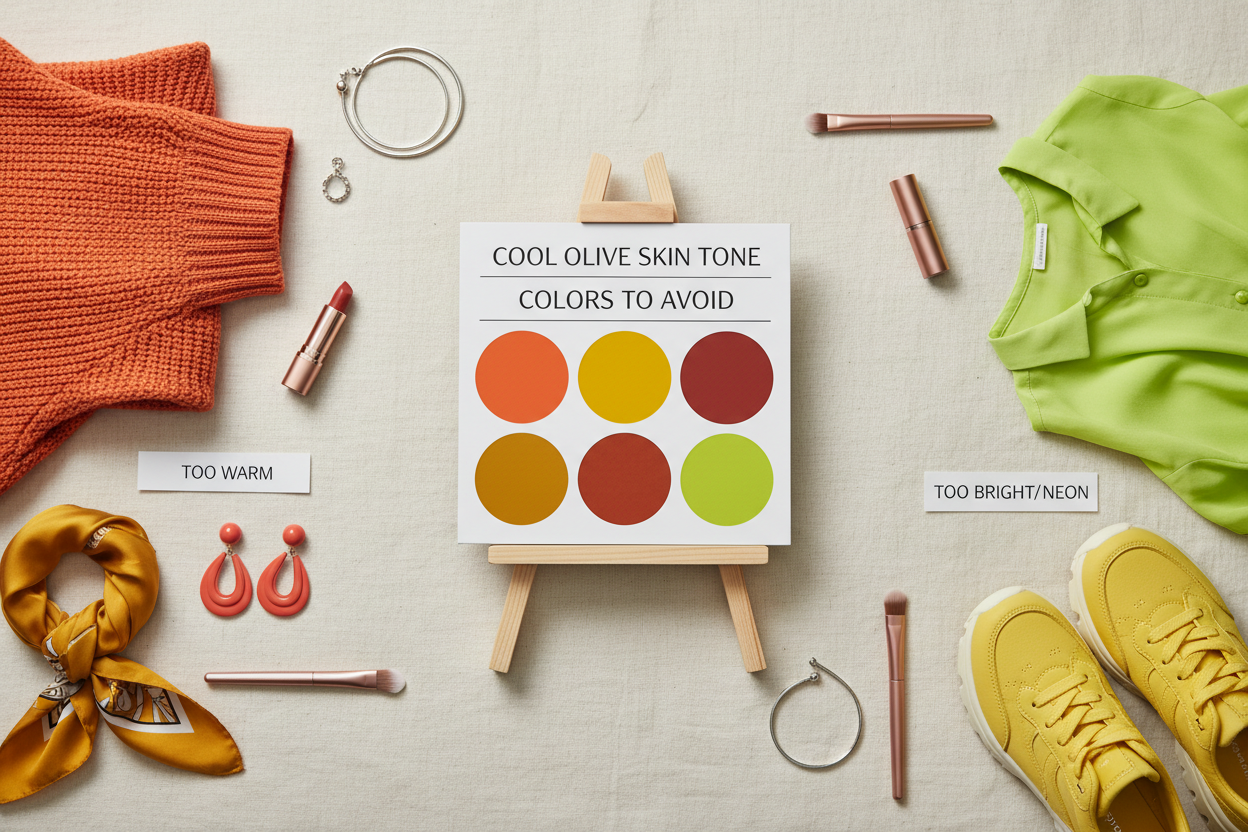
Overly warm yellows and oranges These push the yellow-green cast in olive skin toward muddiness. Mustard, golden yellow, burnt orange, rust, and warm terracotta all fall in this category.
Brassy or golden metallics Gold and bronze — in clothing, jewelry, and makeup — tend to clash with the pink-grey layer underneath cool olive skin, leaving the complexion looking flat.
Warm-toned browns Caramel, camel, tan, and warm beige worn close to the face can wash out a cool olive complexion. They share a yellow-brown tone that competes with the skin rather than contrasting it.
Warm peachy pinks and corals The yellow or orange undertones in these shades clash with the cooler base, which often makes the skin look uneven or slightly off.
Very pale warm pastels Butter yellow, peach, and warm cream can make cool olive skin appear sallow — the same way a warm-toned light source looks wrong against a cool surface.
The underlying principle: Every color on this list has one thing in common: a warm, yellow-orange undertone. Cool undertones harmonize with cool or neutral colors and clash with strong warm ones. Once you have that logic, you can evaluate any color on your own, not just the ones listed here.
Hair Color Recommendations for Cool Olive Skin
Hair color follows the same undertone logic as clothing and makeup. For cool olive skin, shades with cool, ashy, or blue-black depth tend to work best, while warm brassy tones often fight the complexion.
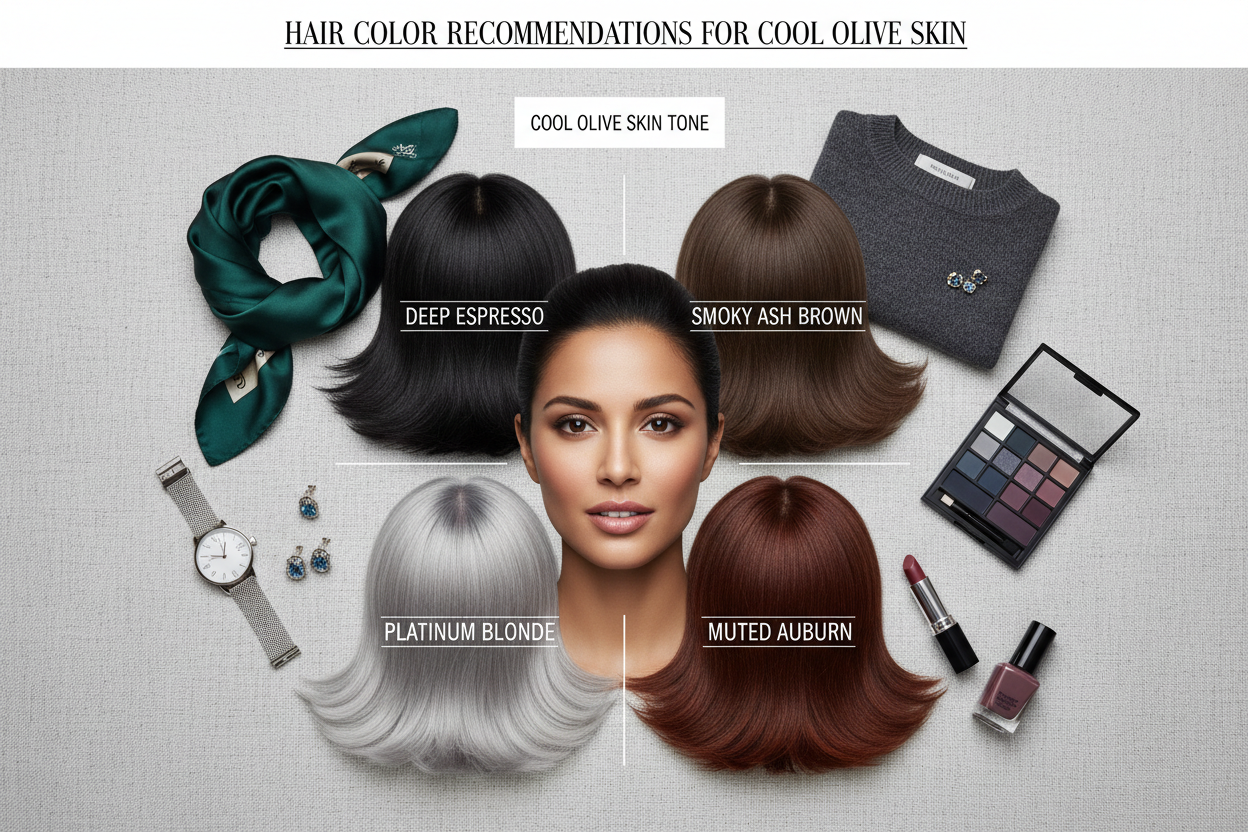
Natural dark shades (brunette to black)
- Blue-black reads well here — the blue base echoes the cool undertone without pulling warm
- Cool espresso and dark chocolate work when they lean ash rather than red-brown
- Soft black tends to look natural rather than harsh on cool olive skin
Brown shades
- Ash brown rather than warm chestnut or golden brown
- Cool mocha — brown with a subtle grey or taupe base
- Avoid warm auburn, honey brown, or caramel, which add brassiness that clashes with the cool undertone
Lighter shades (if going lighter)
- Ash blonde rather than golden or honey blonde
- Platinum or cool silver can work for dramatic contrast — just avoid yellow or warm tones in the lightening process
- If highlights are involved, ask for ash or pearl tones rather than golden or caramel
What to avoid:
- Brassy, warm golden, or orange-tinged brunettes
- Copper and red-orange shades
- Warm caramel or honey highlights around the face
The reasoning: Brassy or golden tones sit in the same warm-yellow family that clashes with cool olive's underlying undertone. When warm hair frames the face, it can pull out the yellow-green surface cast and make the skin read muddier. Ashy and cool tones let the skin's cool base come forward instead, so the complexion looks cleaner and more defined.
Find Your Exact Cool Olive Palette With a Personalized Quiz
The self-identification tests above are a reliable starting point — but olive skin is layered, and small differences within the cool olive category (how much green, how much grey, how much cool versus neutral-cool) can shift which shades actually work for you.
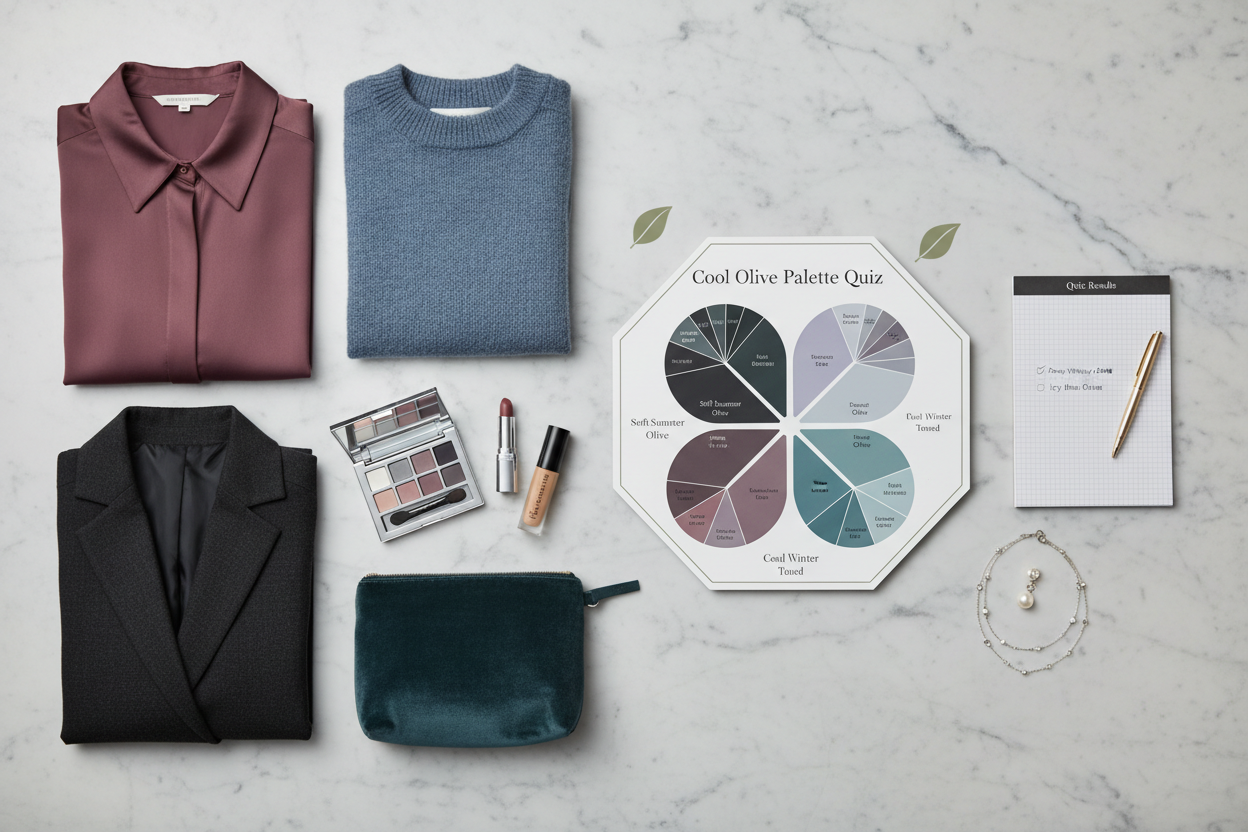
A structured color analysis quiz cuts through that. Instead of one judgment call based on a single vein-color reading, it weighs multiple signals at once — skin surface color, undertone cues, contrast level — and places you within the cool olive range based on your specific combination.
"Cool olive" as a category gives you broad direction. Your cool olive profile gives you something you can shop from.
People Also Ask
What is the difference between warm olive and cool olive skin tone?
Warm and cool olive skin share the same defining feature — a green or grey-green cast at the surface. The difference is in the undertone underneath.
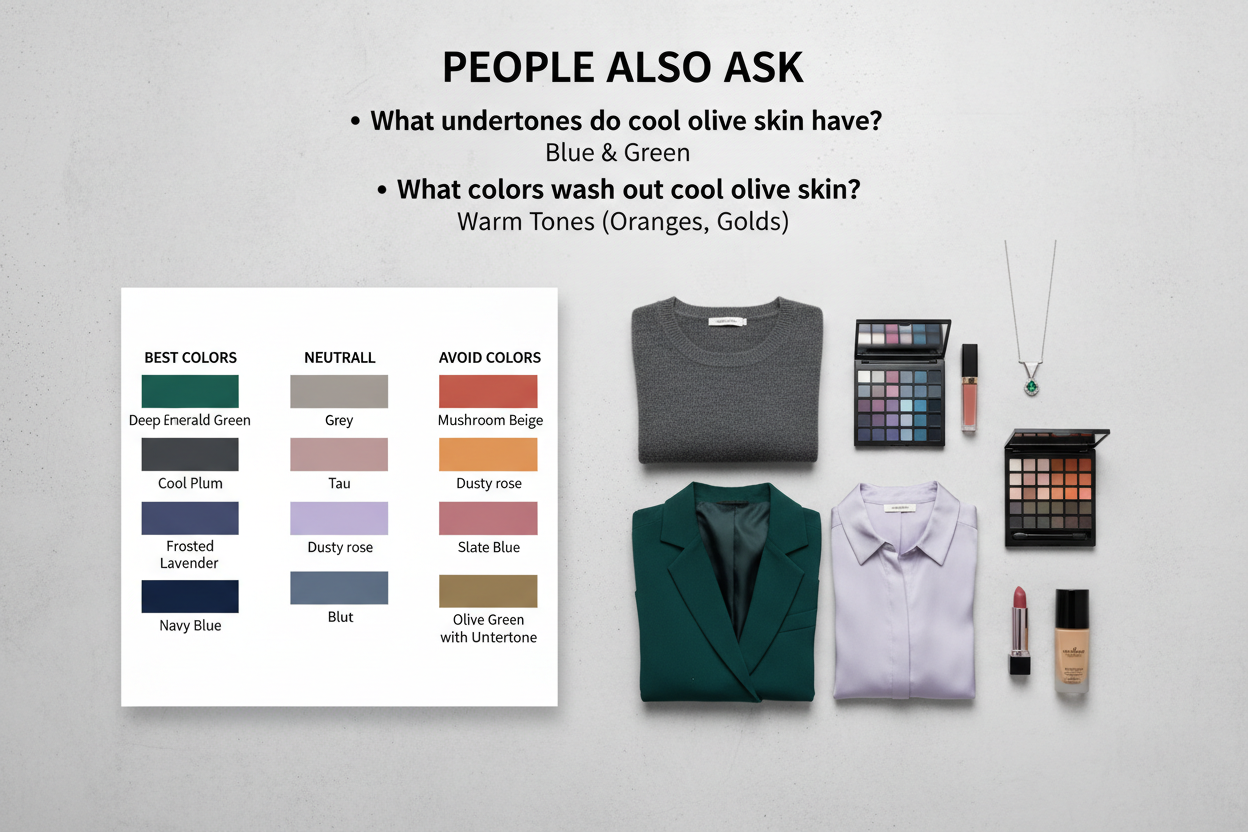
- Warm olive has a golden, yellow, or peachy undertone beneath that green surface. Gold jewelry, earthy tones, and warm camel shades tend to look good on it.
- Cool olive has a pink, bluish, or ashy undertone beneath the same green surface. Silver jewelry, jewel tones, and blue-based neutrals work better.
Because the surface cast is the same either way, standard warm-versus-cool tests often misread olive skin entirely. You only see the real difference when you watch how the skin responds to colored fabrics, metals, and makeup — not from looking at the skin alone.
How do I know if my olive skin has cool undertones?
No single test is fully reliable for olive skin, but a combination of signals builds a clearer picture:
- Vein color: Blue or blue-purple veins (not green) through the inner wrist suggest a cool base. Olive skin's green cast can make veins look greener than they are, so blue-purple tones still count even when they're faint.
- Jewelry test: Silver lifts your complexion while gold looks flat or slightly off.
- White fabric test: Pure white looks cleaner against your face than cream or off-white.
- Clothing reactions: Mustard, camel, and warm browns make you look dull or washed out, while charcoal, navy, and deep berry brighten you up.
- Tan quality: Your tan leans greyish or ashy rather than warm and golden.
- Makeup cues: Cool-toned blushes and lip colors (plum, berry, cool rose) sit more naturally on your skin than corals and peaches.
The more of these point the same direction, the more confident you can be that you're cool olive.
What colors look best on cool olive skin?
Cool olive skin tends to look its best in colors with a blue, purple, or ashy undertone. Those undertones echo the cool base beneath the skin's green surface instead of fighting it.
Clothing colors that tend to work:
- Jewel tones: Sapphire, amethyst, deep violet, emerald, teal
- Cool neutrals: Charcoal grey, navy, cool taupe, soft white
- Berry and mauve shades: Dusty rose, plum, raspberry, burgundy
- Blue-based reds: Classic crimson rather than tomato or brick red
Makeup colors worth trying:
- Blush in soft berry, mauve, or cool rose
- Lip colors in plum, cool pink, blue-red, or nude-pink
- Eye shadows in cool taupe, smoky grey, plum, and navy
- Silver or pearl highlighters rather than warm gold or bronze
The logic is straightforward: cool or neutral undertones in clothing and makeup echo the cool layer in the complexion, so the skin reads as more even and less muddy.
Can olive skin have cool undertones?
Yes — and this trips a lot of people up. The green or grey-green surface pigment that defines olive skin makes it easy to assume the undertone is warm, but surface color and undertone are two different things.
Undertone is the layer of color sitting beneath the skin's surface. For olive skin, that layer can genuinely lean cool (pink, blue, or ash), warm (golden, yellow), or sit somewhere in between. Cool olive is a real sub-type, not an edge case — it's just one that most color guides ignore.
The confusion makes sense. Olive skin can look warm in one light and cool in another. That's not the same as having an indeterminate undertone. It just means olive skin takes more careful assessment than most.
What foundation shade is best for cool olive skin?
The biggest challenge with foundation for cool olive skin is that many formulas marketed to olive complexions are calibrated for warm olive undertones, using yellow or golden bases that pull orange or muddy on cool olive skin.
What to look for:
- Shades described as neutral-cool, pink-beige, rosy beige, or cool beige
- Shade codes with a "C" (cool) or "N" (neutral) in foundation lines that use letter systems
- Formulas with a slight pink or neutral base rather than a yellow or golden one
What to avoid:
- Shades labeled golden, warm olive, honey, camel, or warm beige
- Anything that pulls visibly orange or yellow on the jawline after blending
Practical testing tips:
- Test on the jawline in natural daylight — not on your hand or under store lighting
- The right shade should seem to disappear into the skin; the wrong one leaves a visible warm cast
- If the hand swatch looks fine but the result on your face reads too warm, the formula's undertone is off for your cool base
You're looking for a shade that's neither warm-orange nor grey — something neutral-cool that sits invisibly against the skin.
FAQ
Is cool olive skin tone rare?
Cool olive is genuinely uncommon — not because olive skin itself is rare, but because the combination of a green surface cast with a cool undertone is less typical than the warm olive variation. Most people with olive skin carry golden or yellow undertones beneath the surface, which is why warm olive tends to be the default assumption in beauty guides. Cool olive is a recognized sub-type, but it represents a smaller share of olive complexions overall and gets far less coverage in mainstream color-matching resources.
What is the difference between cool olive and neutral olive skin?
Both types share olive skin's characteristic green or grey-green surface pigment. The difference is in the undertone layer beneath it:
- Cool olive has a pink, bluish, or ashy undertone. Silver jewelry, jewel tones, and cool neutrals tend to look more harmonious than warm alternatives.
- Neutral olive sits between warm and cool — neither undertone dominates. If you can never quite tell whether warm or cool colors suit you better, or if both silver and gold look fine on you, you're probably neutral. This ambiguity is common with olive skin: the green surface cast can obscure the undertone enough to make it genuinely hard to identify.
Do cool olive skin tones look better in silver or gold jewelry?
Silver is usually the better pick. Cool olive skin has a pink, blue, or ashy undertone under that green surface, so silver and white metals play well with that cool base. Gold adds warmth that isn't really there in the undertone, which can make the skin look a bit muddy or sallow by comparison.
White gold and platinum work for the same reason. If you like mixing metals, staying toward the cooler end keeps the skin looking clear instead of pulling it in two directions at once.
What hair colors complement a cool olive skin tone?
The most flattering options tend to have ashy, cool, or deeply rich tonal qualities rather than warm golden or brassy ones:
- Natural brunette and black shades: Cool brown, espresso, blue-black, or ash brown
- Highlights and lowlights: Ash blonde, cool chestnut, mushroom brown — avoid honey, caramel, or warm copper
- Bold color options: Deep plum, burgundy, cool auburn, or dark cherry
- Lighter hair: Platinum or ash blonde rather than golden blonde or strawberry blonde
The same logic applies as with clothing: colors with warm golden or orange bases can clash with the cool undertone and make the complexion look uneven.
Which makeup undertones should cool olive skin avoid?
The main categories to approach cautiously are those built on warm, orange, or strongly yellow bases:
- Foundation: Warm beige, golden, honey, or camel-labeled shades — these tend to pull orange or amplify a sallow cast on cool olive skin
- Blush: Bright coral, peach, or heavily orange-toned formulas, which can look garish rather than natural
- Lip colors: Orange-red, warm rust, and brick tones; warm peach nudes that lean yellow
- Eyeshadow: Copper, bronze, mustard, and warm terracotta palettes
- Highlighter: Warm gold or bronze finishes, which can read heavy rather than luminous
Swapping these out for cool-toned alternatives — berry blush, plum or blue-red lips, cool taupe eyeshadow, silver or pearl highlight — tends to look more balanced against a cool olive base.
Can the same person have both warm and cool olive characteristics?
Yes, and this is part of what makes olive skin genuinely complex to categorize. The skin's surface can appear to shift depending on lighting, surrounding colors, and even season — looking warmer in some conditions and cooler in others. This shape-shifting quality is a recognized feature of olive complexions, not evidence that the undertone is truly indeterminate.
In practice, some people sit close enough to neutral that warm and cool signals genuinely coexist — their undertone doesn't land clearly on either side. Others have a definite cool base that simply expresses differently depending on context. Testing with multiple methods (vein color, jewelry response, fabric draping, makeup reactions) across different lighting conditions gives a more reliable picture than any single test.
How does cool olive skin tone differ from cool beige or cool tan skin?
The main difference is surface pigment, not just undertone:
| Feature | Cool Olive | Cool Beige | Cool Tan |
|---|---|---|---|
| Surface cast | Green or grey-green | Pinkish, neutral, or slightly peachy | Brown with pink or neutral quality |
| Undertone | Pink, blue, or ashy | Pink or cool neutral | Pink or cool neutral |
| Common confusion | Misread as warm because of green surface | Less ambiguous — cool is easier to identify | Less ambiguous — depth varies but tone reads clearly |
Cool beige and cool tan complexions don't have the green surface cast that defines olive skin, so standard warm-versus-cool tests tend to work reliably for them. Cool olive skin's green layer creates enough interference that those same tests often misfire. That's what makes olive skin harder to read — it needs a more careful, multi-signal assessment rather than a single quick test. If you're not sure which category fits, a personalized color quiz can account for the layering that makes olive complexions tricky.