Light Spring Color Palette: Colors, Outfits, Makeup & Hair
 Reviewed by Alexandra Gilmore
Light Spring needs warm-neutral, light, gently clear color that feels sunlit rather than dusty. Test peach, coral, aqua, mint, primrose, camel, and warm ivory against Light Summer and True Spring, then use the winning direction across clothes, makeup, hair, jewelry, and metals.

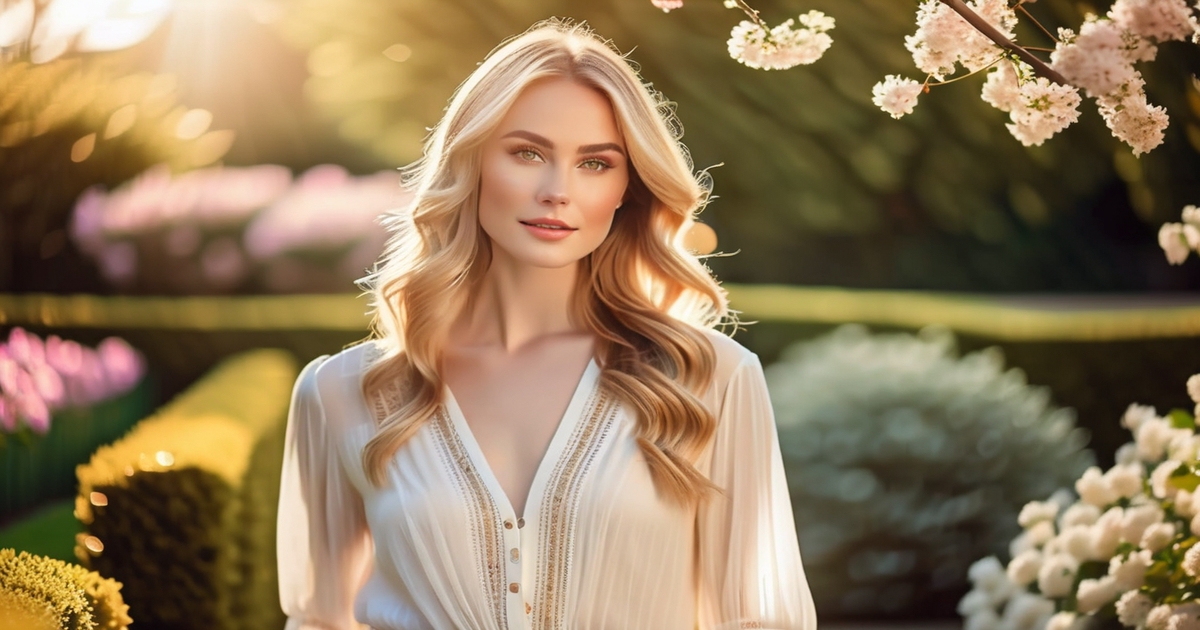
The Light Spring color palette is warm-neutral, light in value, and gently clear. Its colors feel sunlit rather than pale or dusty: peach, coral, primrose, warm aqua, fresh mint, light camel, and warm ivory. The palette works when it keeps the face in focus without adding heavy contrast.
This guide treats Light Spring as a practical hypothesis to test, not a label proved by hair or eye color alone. Start with controlled fabric comparisons, check the two neighboring seasons, and then use the result for clothing, makeup, hair, and metals. If Light Spring shades repeatedly make your complexion look more even and your eyes clearer, the palette is useful. If they do not, keep testing.
Key Takeaways
- Light Spring combines light value, warm-neutral temperature, and gentle clarity.
- Compare fabric near your bare face in indirect daylight; feature descriptions are supporting clues, not a diagnosis.
- True Spring is warmer and brighter, while Light Summer is cooler and softer.
- Build outfits with warm ivory, oatmeal, light camel, peach, coral, aqua, butter yellow, and fresh green.
- Keep makeup fresh and translucent, hair near a naturally light warm range, and metals light rather than dark or antique.
🌸 Take the Color Season Quiz
Use the quiz to narrow your season, then confirm the result with the Light Spring, True Spring, and Light Summer drapes in this guide.
Start the Color Season Quiz →📚 Recent Articles
Light Spring Color Palette at a Glance
In a 12-season system, Light Spring sits between True Spring and Light Summer. Lightness is the dominant quality. Warmth is present but less intense than in True Spring, and the colors retain more clarity than the misty shades associated with Light Summer. A useful shorthand is light first, warm second, clear third.
| Palette dimension | Light Spring direction | What to look for |
|---|---|---|
| Value | Light | Colors feel airy; very deep shades create a hard frame |
| Temperature | Warm-neutral | Peach, yellow, or green warmth rather than blue-gray coolness |
| Chroma | Gently clear | Fresh color with some brightness, without neon intensity |
| Contrast | Low to medium | Related light shades connect more easily than stark light-dark blocks |
Common feature descriptions include light golden or strawberry-blonde hair, light warm brown hair, clear blue, green, hazel, or light brown eyes, and a peach, golden, or warm-neutral complexion. These combinations can point toward Light Spring, but they overlap with other seasons. Dyed hair, a tan, surface redness, camera processing, and colored contact lenses can also change the impression.
Quick Light Spring Self-Check
Set up near a window in indirect daylight. Remove strong makeup, cover brightly dyed hair if it reflects onto the face, and wear a neutral top. Hold each color directly below the chin and switch between two drapes quickly. Watch the face rather than the fabric.
- Check light versus deep. Compare warm ivory with black or deep espresso. Light Spring usually looks more balanced in the lighter option, while the deep drape may emphasize shadows or separate from the face.
- Check warm versus cool. Compare peach with cool mauve, then warm aqua with powder blue. Look for a more even jaw and under-eye area, clearer lips, and a natural connection with the eyes.
- Check clear versus dusty. Compare fresh coral with dusty rose, and spring green with muted sage. Light Spring tends to need more life than a muted palette but less saturation than a vivid one.
- Repeat on another day. Change the order of the drapes and check the result in the mirror rather than relying only on phone photos.
A good color does not need to make the skin look artificially warmer. It should reduce the attention drawn to unevenness, make the eyes easier to see, and allow facial features to remain more noticeable than the drape. If both members of a pair work, mark the result as mixed and continue to the neighboring-season comparison.
Keep a short scorecard so memory and color preference do not take over. For every pair, note the effect on the under-eye area, jaw, lips, eye definition, and the boundary between face and fabric. Use simple marks such as better, worse, or no clear difference. A Light Spring hypothesis becomes stronger when light warm drapes win across several families, not when one favorite peach happens to look attractive. It becomes weaker when cooler Light Summer options repeatedly calm redness or when brighter True Spring options give the face more definition.
Photographs can support the mirror check, but lock exposure and white balance if your phone allows it. Place the camera in the same position and change only the fabric. Automatic processing may brighten one frame or cool the next, so compare the real-time reflection first. Save photos with the drape names rather than trying to remember which blue or pink you used later.
Controlled Draping: Light Spring vs True Spring vs Light Summer
The closest alternatives reveal which dimension matters most. True Spring shares warmth and clarity but carries stronger color. Light Summer shares lightness but moves cooler and softer. The wider Spring versus Summer comparison explains the temperature boundary in more detail. Once the palette itself is clear, the Light Spring celebrity examples guide shows how to use public figures as visual references without treating them as diagnostic proof.
| Test | Light Spring drape | Neighbor drape | Useful observation |
|---|---|---|---|
| Light Spring vs True Spring | Light peach | Bright orange-coral | Does the brighter color sharpen the face or become the main event? |
| Light Spring vs True Spring | Butter yellow | Clear daffodil yellow | Does added saturation create energy or visible color reflection? |
| Light Spring vs Light Summer | Warm shell pink | Cool powder pink | Which version makes the complexion look more even? |
| Light Spring vs Light Summer | Warm aqua | Cool powder blue | Does warmth connect with the face, or does coolness look calmer? |
Choose the season that wins across several pairs. One flattering blue does not settle the result because every seasonal palette contains versions of blue. Light Spring blue usually leans aqua, turquoise, or clear sky; Light Summer blue is more likely to carry a cool, powdery, or gray cast.
If True Spring colors look exciting but slightly loud, move lighter. If Light Summer colors look elegant but leave the complexion dull or pink-gray, move warmer. If the opposite effects occur consistently, use the neighboring palette instead. Borderline results are normal, and a working wardrobe can borrow carefully from the shared edge.
Best Light Spring Colors and Neutrals
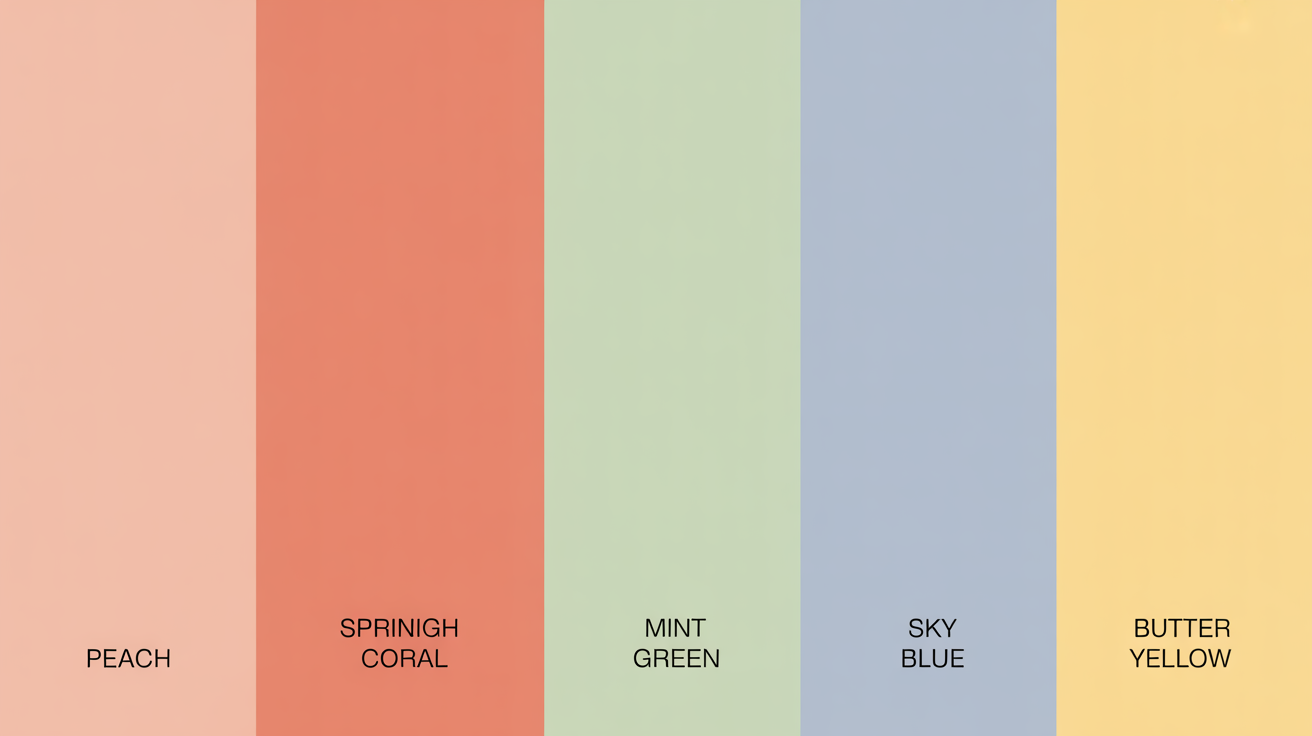
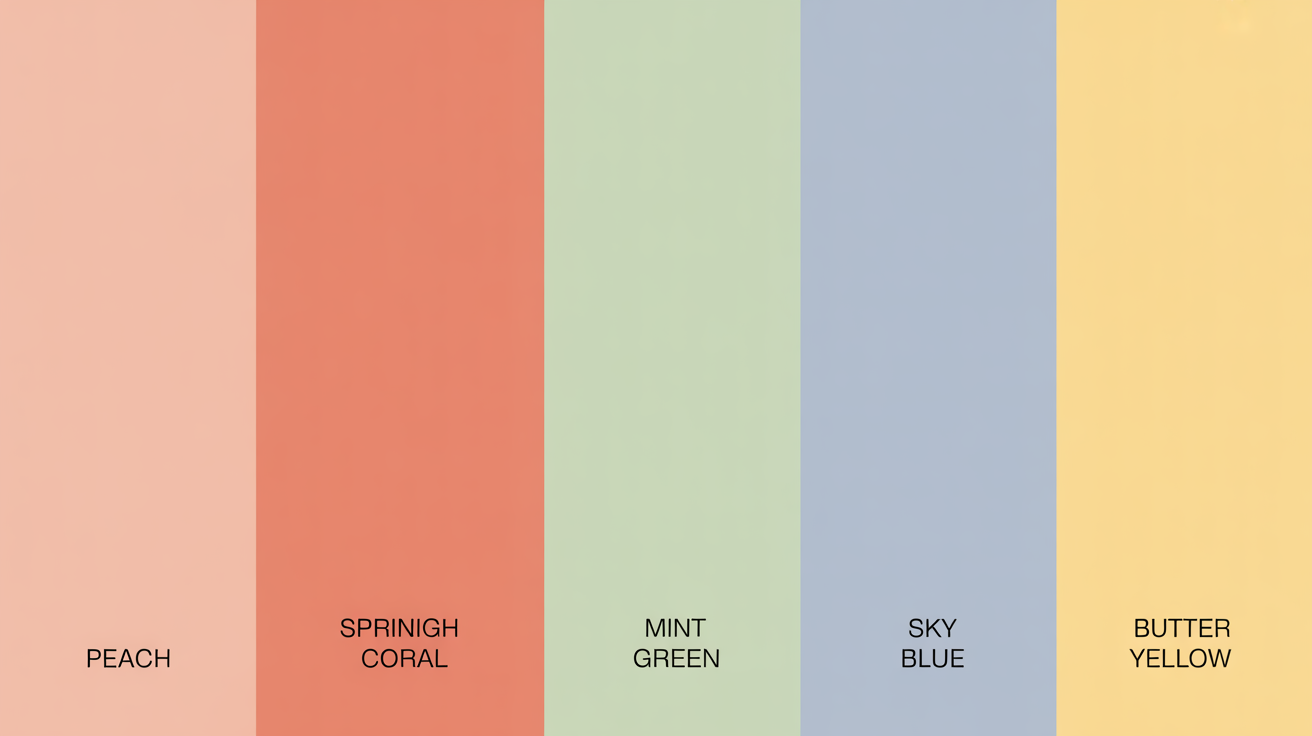
The core palette resembles color diluted with warm daylight, not mixed with gray. Peach, apricot, light coral, warm pink, butter yellow, primrose, apple green, fresh mint, aqua, light turquoise, and warm periwinkle all fit the direction. Exact fabric matters more than the name on a product page.
| Family | Useful Light Spring shades | Test against |
|---|---|---|
| Neutrals | Warm ivory, oatmeal, light camel, sand, warm beige, light warm taupe | Optic white, charcoal, black, cool mushroom |
| Reds and pinks | Peach, shell pink, salmon, watermelon, light coral | Burgundy, blue-red, dusty mauve |
| Yellows and greens | Butter, primrose, light chartreuse, apple, fresh mint | Mustard, moss, blue spruce |
| Blues and purples | Warm aqua, turquoise, clear sky, warm periwinkle | Deep navy, steel blue, gray lavender |
Warm ivory is usually easier near the face than stark white. Light camel and oatmeal replace the visual weight of dark brown. A light, slightly warm navy can work for trousers or a small print, but it is less representative than aqua or clear sky blue. The palette does not require dressing entirely in pastel; medium-light coral, turquoise, and green can supply definition.
Light Spring Clothing and Outfit Formulas
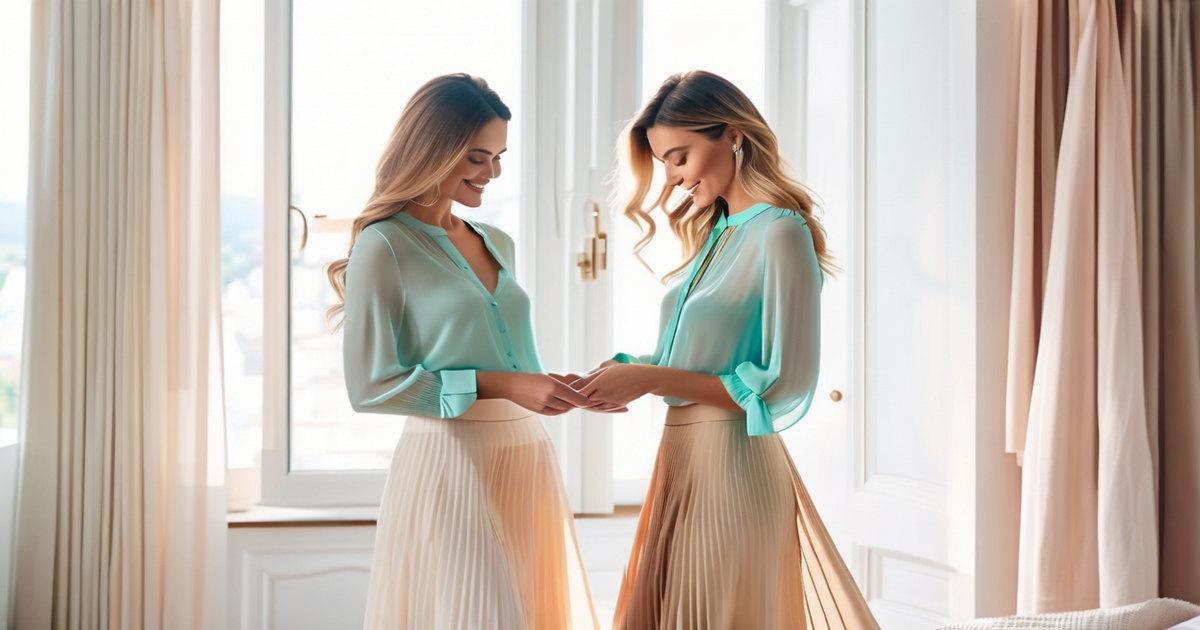
Start with three or four repeatable neutrals: warm ivory, oatmeal, light camel, and light denim are a flexible set. Add two signature colors such as peach and aqua, then one livelier accent such as coral or fresh green. This creates more outfits than buying isolated statement colors.
| Situation | Outfit formula | Why it works |
|---|---|---|
| Everyday | Warm ivory tee + light-wash denim + peach cardigan + tan shoes | Keeps the value range light and repeats warmth |
| Smart casual | Oatmeal trousers + aqua shirt + light camel blazer | Adds clear color without a dark jacket |
| Office | Warm beige suit + shell-pink top + champagne-gold jewelry | Looks polished with gentle contrast |
| Evening | Light coral dress + warm ivory wrap + light gold sandals | Uses a stronger palette color without adding depth |
| Weekend | Apple-green knit + cream jeans + light brown belt | Fresh green gives energy while neutrals keep it wearable |
Prints work best when their background stays light and their colors repeat the palette. Try warm-ivory florals, aqua-and-coral stripes, small gingham, or open watercolor shapes. A black background can make even a flattering peach flower feel disconnected. If a required uniform or favorite coat is dark, add a warm-light scarf, collar, or earring near the face and keep the lower half less important to the color test.
For a narrower wardrobe build, continue to the Light Spring styling guide. This page owns the season overview and diagnostic comparison; the styling page can take the deeper capsule and shopping intent.
Light Spring Makeup Colors
Makeup should relate to the palette without trying to recolor the skin. Match foundation to the actual face-to-neck transition; a Light Spring label does not determine a foundation shade. For color products, choose translucent warmth and gentle definition.
| Product | Colors to try | Colors to compare carefully |
|---|---|---|
| Blush | Peach, apricot, warm shell pink, light coral | Cool mauve, deep berry, brown-red |
| Lips | Peach nude, warm pink, watermelon, sheer coral | Blue-red, wine, gray beige |
| Eyes | Champagne, light gold, warm taupe, peach, soft aqua | Gunmetal, blackened plum, cool slate |
| Liner and mascara | Warm brown, soft cocoa, light bronze | Dense black when it overwhelms the eye area |
Texture can change the result. A sheer coral lip may fit while an opaque version of the same hue becomes too strong. Satin, cream, and softly luminous finishes often connect with gentle clarity; heavy contour and very smoky eyes add depth that the rest of the palette does not repeat. Personal preference and occasion still matter, so treat these as comparisons rather than rules.
Light Spring Hair Colors
Natural Light Spring hair is often described as golden blonde, honey blonde, strawberry blonde, light copper, or light warm brown. Those are patterns, not entry requirements. The most useful hair decision is whether the proposed color preserves the light-to-medium value and warm-neutral relationship already visible in the face, eyes, and brows.
For lightening, compare beige-gold, honey, wheat, and soft strawberry directions. For brunette hair, light golden brown, warm beige brown, and subtle caramel dimension can stay connected without turning orange. A soft root or fine lowlights may preserve brow structure better than one flat pale shade.
Very ashy blonde can remove warmth, while very dark brunette or black can raise contrast sharply. That does not make either choice forbidden; it means the change may require more makeup definition and a different wardrobe balance. Preview depth separately from temperature, and discuss starting color, hair condition, maintenance, and strand testing with a qualified colorist before a major chemical change.
Metals, Jewelry, and Accessories
Light yellow gold, champagne gold, light rose gold, and warm pearl usually echo the palette. Bright silver may also work on a neutral-warm Light Spring when the finish is delicate and the surrounding colors are warm. Dark oxidized metal and heavy antique brass add more depth, so compare them rather than judging by metal name alone.
| Accessory | Light Spring direction | Practical examples |
|---|---|---|
| Metals | Light, warm, softly reflective | Champagne gold hoops, fine rose-gold chain, warm pearl studs |
| Leather | Light warm neutrals | Tan belt, sand bag, light camel shoes |
| Stones | Clear and light | Aquamarine, light peridot, peach moonstone, pale citrine |
| Eyewear | Warm translucent or light metal | Honey acetate, champagne wire, light tortoiseshell |
Scale matters alongside color. Fine or medium-scale pieces repeat gentle contrast, while a large black frame can dominate even if its shape is flattering. Accessories are also a low-risk way to test coral, aqua, or primrose before buying a coat or suit.
Colors to Test Carefully
Light Spring has boundaries, but “avoid” lists are too blunt. A color may sit away from the face, appear as a small print detail, or work because your individual contrast differs from the textbook pattern. Test the effect and adjust the proportion.
| Challenging direction | Possible effect | Lighter alternative |
|---|---|---|
| Black and deep charcoal | Creates a hard edge and emphasizes shadows | Light warm navy, camel, warm taupe |
| Dusty mauve and blue-gray | Can remove warmth and clarity | Shell pink, warm periwinkle, clear sky blue |
| Rust, olive, and mustard | Adds Autumn depth and earthiness | Peach, apple green, butter yellow |
| Neon brights | Color may appear before the face | Fresh coral, aqua, primrose |
| Optic white | May look cold or stark | Warm ivory, cream |
People Also Ask
What are the main Light Spring colors?
Peach, light coral, warm pink, butter yellow, primrose, apple green, fresh mint, warm aqua, turquoise, warm ivory, oatmeal, and light camel form a useful starting palette. The common thread is light value with warm-neutral temperature and gentle clarity.
How can I tell Light Spring from Light Summer?
Compare warm shell pink with cool powder pink, and warm aqua with cool powder blue in indirect daylight. Light Spring usually responds better to the warmer version; Light Summer tends to look more balanced in the cooler, slightly softer version. Repeat the result across several color families.
How is Light Spring different from True Spring?
Both are warm and clear, but Light Spring needs more lightness and less saturation. If bright orange-coral and daffodil yellow look stronger and more balanced than peach and butter yellow, True Spring may be the better direction.
Can Light Spring wear black?
Yes, but black may create more contrast than the palette naturally carries. Move it away from the face, reduce its area, or add warm ivory, peach, or light gold near the neckline. Light camel, warm taupe, and a lighter warm navy are easier core neutrals for many wardrobes.
Common Questions: The Ultimate Color FAQ
Can Light Spring have brown hair or brown eyes?
Yes. Hair and eyes do not assign a season by themselves. Light warm brown hair, hazel eyes, or light brown eyes can fit when the overall coloring responds consistently to light, warm-neutral, gently clear drapes.
Is Light Spring the same as Soft Spring?
No standard 12-season system uses Soft Spring as one of its core categories. Some analysts or online systems use different labels. Ask which dimensions the label represents, then compare the actual swatches. For Light Spring, lightness is dominant and the palette retains visible freshness.
What is the best white for Light Spring?
Warm ivory, cream, and soft ecru are reliable starting points. Compare them with optic white near the face. The better white should make the complexion look more even without casting obvious yellow or blue reflection.
Should Light Spring wear gold or silver?
Light yellow gold, champagne gold, and light rose gold often connect easily with the palette. Delicate bright silver can still work, especially for neutral-warm coloring. Compare similar-size pieces in the same light so metal color, scale, and finish do not get confused.
What if my draping results are mixed?
Record which dimension changes the face most. If stronger Spring colors win, test True Spring. If cooler light colors win, test Light Summer. If results shift with lighting or makeup, repeat the comparison under controlled conditions and use a quiz as a shortlist rather than final proof.