Best Shirt Colors for Pale Skin
 Reviewed by Alexandra Gilmore
A shirt can wash out pale skin even when its cut and quality are excellent, especially if the color is too close to the complexion. Choose better blues, greens, reds, and neutrals by undertone and contrast, then use collars and layers to control how much color sits beside the face.

You've probably experienced both sides of this. There's the shirt you've owned for years — nothing special about it — but every time you wear it, someone notices. Then there's the expensive one, the one you dressed up for, that made you look completely washed out in every photo from that night.
💫 Build Your Personal Color Palette
Turn the useful colors from this article into a palette you can repeat across real outfits. A personal palette makes it easier to coordinate neutrals, accents, and combinations without treating every recommendation as a rigid rule.
Build My Palette →The difference usually isn't the cut or the price. It's the color.
Pale skin gets a reputation for being difficult to dress, but that reputation is mostly undeserved. The real problem is that most men with fair skin default to the same small set of neutrals — bright white, light grey, beige — without understanding how those specific shades interact with high-reflectivity skin. Pale skin doesn't just sit passively under fabric. It picks up color temperature from nearby clothing more than deeper skin tones do, which means the wrong neutral can pull your complexion in a direction you didn't intend.
This guide covers exactly what the best shirt colors for white skin are, and why — broken down by undertone, occasion, and the specific neutrals that cause the most problems. By the end, you'll be able to look at a shirt on a rack and know, before you try it on, whether it's likely to work for you.
Here's what you'll find inside:
- Why pale skin behaves differently when you get dressed, and what "high reflectivity" actually means in practice
- How to identify your undertone before you choose any color
- Specific shirt color recommendations for both cool and warm pale skin
- The neutrals to approach with caution — the colors most pale-skinned men reach for first, and often shouldn't
- A practical wardrobe-building framework so you're not starting from scratch every time you shop
Why Pale Skin Behaves Differently When You Get Dressed
Most color advice treats skin tone as a passive backdrop — a canvas that clothing sits on top of. For men with pale skin, that model doesn't hold up.
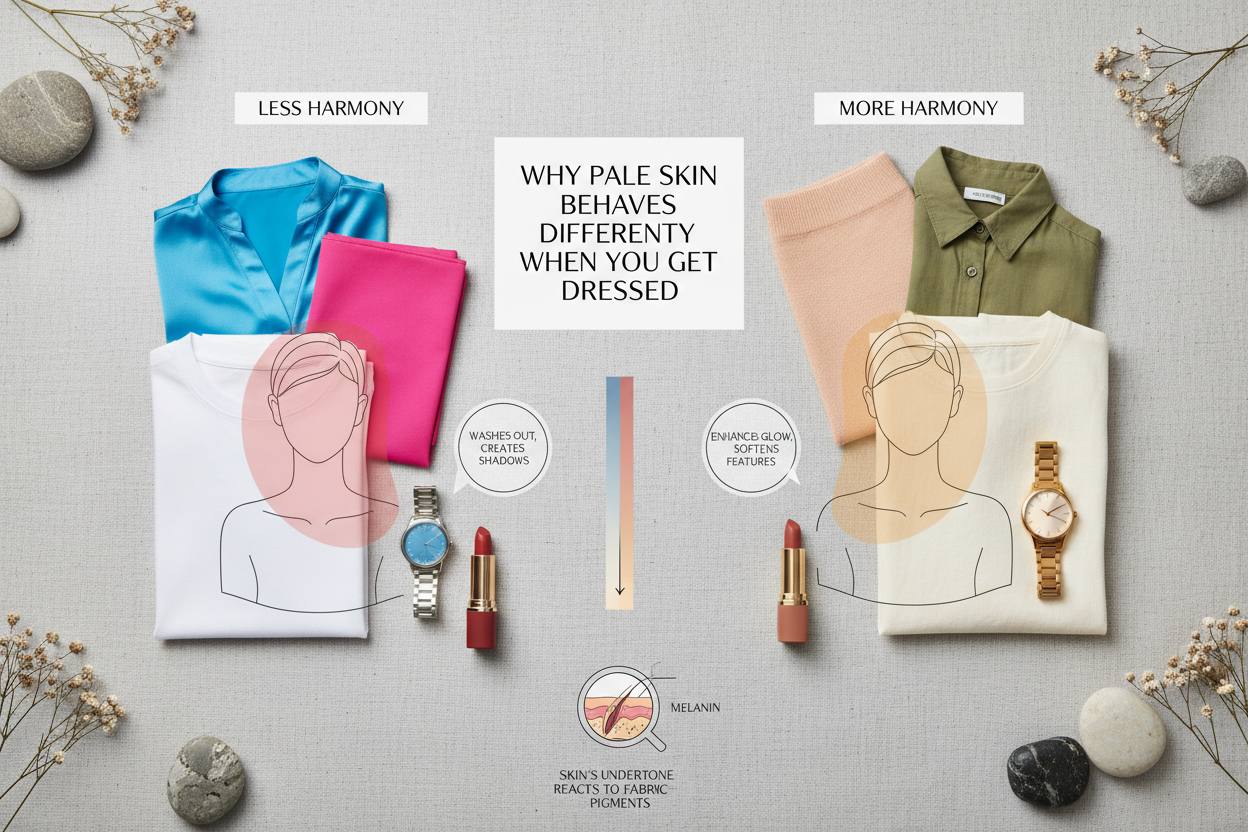
Pale skin is high-reflectivity skin. It picks up color temperature from nearby fabrics more actively than deeper skin tones do, which makes the fabric at your collar unusually consequential. A cool-toned shirt doesn't just rest against your face — it casts a subtle cool light onto it. A warm-toned shirt does the opposite. The lighter your complexion, the stronger the effect, because there's less pigment to neutralize what the fabric is doing.
This is what creates the "washed out" experience. It's not about the shirt being too casual or too formal, and it's rarely about fit. It's about the color temperature of the fabric clashing with the color temperature of your skin.
The practical implication: with pale skin, the margin for error on color is narrower than average. A shade that's slightly off doesn't look neutral — it drains the face. But the flip side is equally true. Get the color right, and it works harder for you than it would on almost any other skin tone.
Want to know exactly which colors work for your specific undertone? Take the color analysis quiz →
Identifying Your Undertone Before Choosing Any Color
Two men can have identical skin lightness and need completely opposite color palettes. The variable that explains this is undertone — the underlying hue beneath the surface, independent of how fair or tan the skin appears.
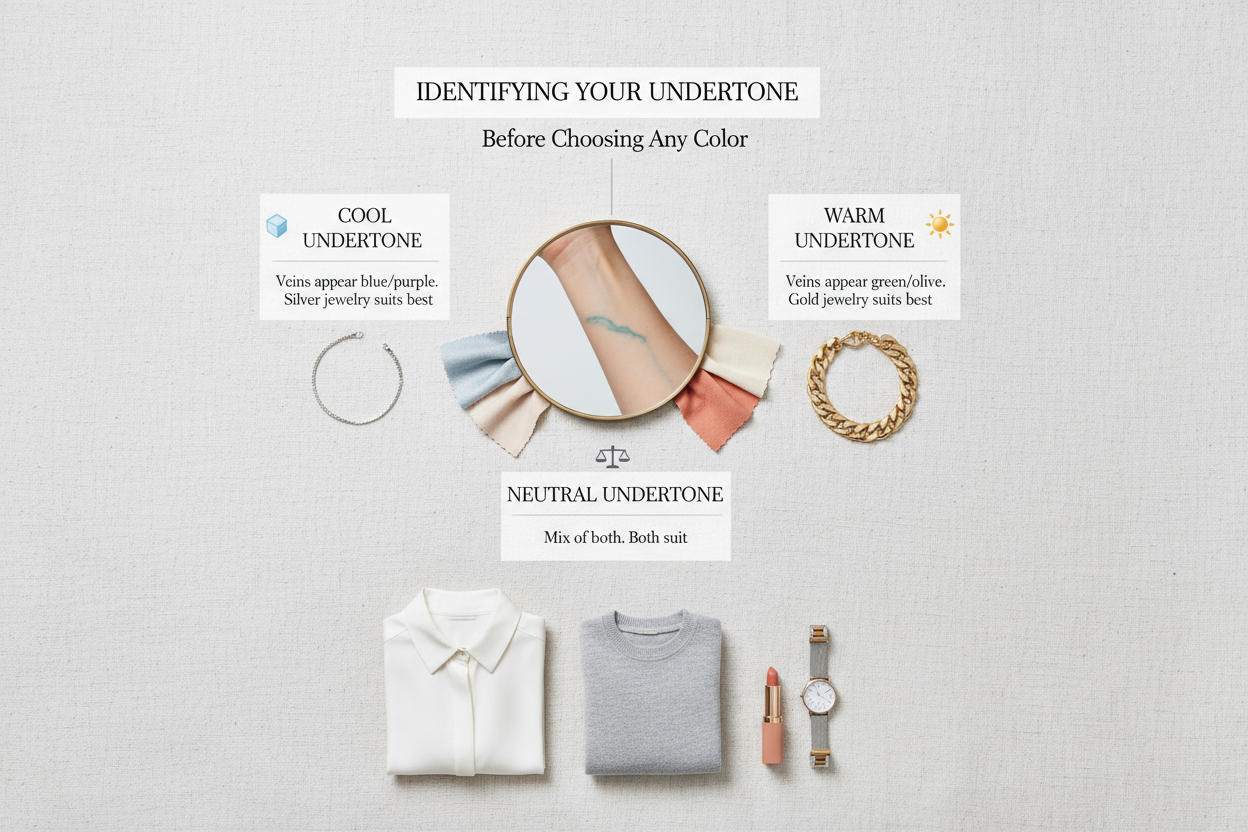
There are three broad categories:
- Cool undertones — skin reads as pink, red, or bluish. Veins on the inner wrist tend to look blue or purple.
- Warm undertones — skin reads as yellow, peachy, or golden. Veins tend to look green.
- Neutral undertones — a mix of both, with no strong pull in either direction.
For pale skin, undertone is often harder to read because there's minimal color saturation to work with. The pink flush of cool undertones and the faint gold of warm ones can both look like "just pale" at a glance.
A few reliable checks:
- Vein test — look at the inside of your wrist in natural light, not artificial. Blue-purple reads cool; green reads warm.
- White vs. cream — hold a stark white fabric next to your face, then an off-white or cream. Whichever makes you look brighter points to your undertone.
- Jewelry — if silver consistently flatters you more than gold, you likely run cool. Gold over silver suggests warm.
This matters before any color recommendation because a shirt that looks sharp on a cool-pale man can look flat on a warm-pale man, and vice versa. Getting undertone right isn't a styling technicality — it's what makes the rest of the advice actually apply to your face.
Best Shirt Colors for Pale Skin with Cool Undertones
Cool-pale skin has pink, blue, or rosy undertones sitting beneath the surface. The color logic here is simple: work with those undertones rather than against them, and find enough contrast to keep your face from disappearing into the shirt.
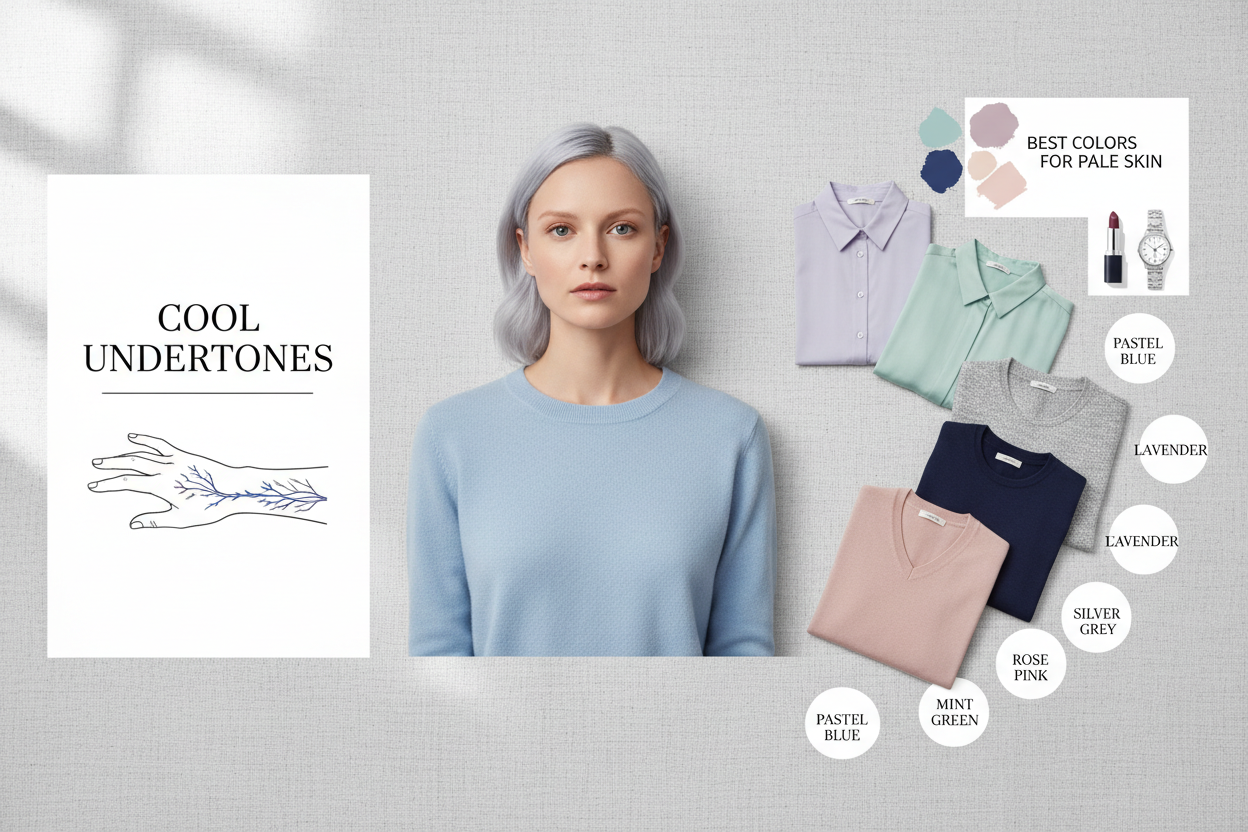
Colors that work well:
- True navy — one of the strongest options for cool-pale skin. It gives real contrast without the harshness of black, and its cool blue base gets along well with pink undertones.
- Jewel tones — deep emerald, sapphire, burgundy, rich plum. They add color without going warm, create depth next to fair skin, and tend to make the complexion look more alive rather than washed out.
- Soft, muted blues — a dusty or slate blue hits the sweet spot between enough color and enough contrast. Skip the icy, near-white blues; they amplify the pale-and-cool effect instead of countering it.
- Dusty rose and soft burgundy — sounds counterintuitive, but pinks in the right register complement the natural pink in cool-pale skin. The key is keeping them muted. Bright fuchsia is a different story.
- Charcoal with some warmth in it — not a pure cool charcoal, but a softer version with a hint of brown. It adds depth without the harshness of stark black or ashy grey.
The guiding principle: contrast and depth. Cool-pale skin does well with shirts that are richer or darker than the skin itself, in tones that share its cool temperature.
Colors to Avoid If You Have Cool Pale Skin
- Pure white — stark white reflects back onto the face and tends to amplify pallor rather than brighten it. Off-white or warm white works much better.
- Icy or very light pastels — pale lavender, light mint, powder blue. They sit too close to the skin tone. The contrast disappears, and so does the face.
- Cool grey, especially mid-tone — ashy, blue-based greys drain warmth from the face without adding depth. The result is a flat grey-on-grey that reads as washed out in person and even more so in photos.
- Washed-out beige or taupe — warm enough to clash with cool undertones, but not deep enough to create useful contrast. They fall in an awkward middle ground.
Best Shirt Colors for Pale Skin with Warm Undertones
Warm-pale skin carries yellow, peach, or golden undertones — subtle sometimes, but they're there. The goal with shirt color is to bring out that warmth, not neutralize it or introduce competing cool tones.
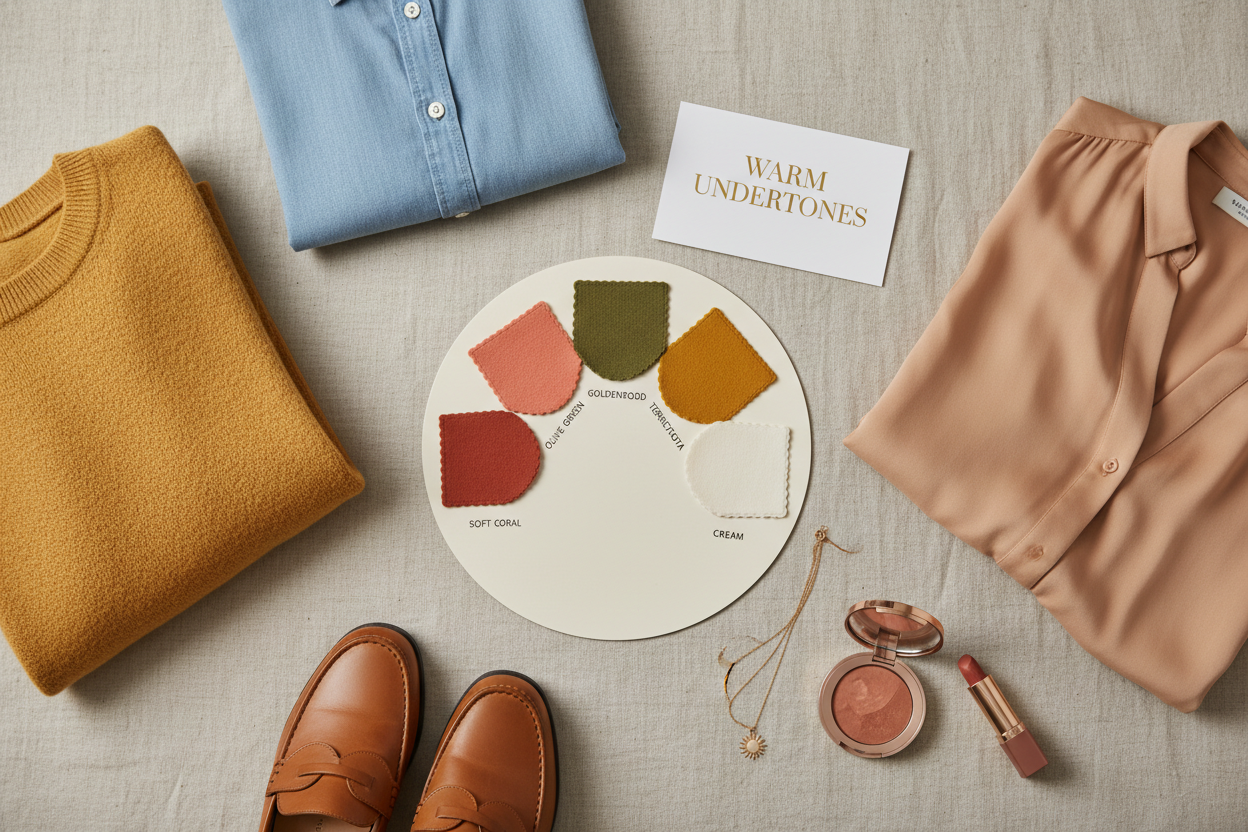
Colors that work well:
- Warm white and cream — cool-pale skin struggles with stark white, but warm-pale skin tends to do well in off-white, ivory, and cream. These shades echo the yellow and peach in your skin rather than pulling against them.
- Earthy tones — terracotta, rust, camel, and warm tan all share the same color family as warm undertones. Wearing them keeps the palette cohesive instead of creating visual competition at the collar.
- Olive and warm greens — there's enough yellow in these to sit comfortably with warm-pale skin. A muted olive works especially well: it adds depth without adding coolness.
- Warm navy and teal — not the pure, cool navy that works for cool undertones, but versions with a slightly green or warmer cast. They add depth while staying in the right temperature range.
- Muted peach and dusty coral — close to the skin's own undertone, these shades blend in a flattering way rather than clashing with the complexion.
What to avoid: the biggest trap for warm-pale men is grabbing standard "safe" neutrals — cool grey, ashy white, icy blue — without realizing how hard those shades work against yellow and peach undertones. The result is that washed-out look pale skin often gets blamed for, when the real cause is a temperature mismatch between skin and shirt.
Not sure whether your undertone runs warm or cool? Start the color analysis quiz — it takes under two minutes and gives you a personalized palette you can shop from right away.
Colors to Avoid If You Have Warm Pale Skin
- Ashy or cool grey — grey with a blue or silver base strips warmth from the face. On warm-pale skin, it reads flat and draining.
- Cool-toned blues — icy blue, periwinkle, and bright cobalt all run cold in a way that conflicts with yellow and peach undertones. There's contrast, but it's the wrong kind.
- Pure, stark white — like cool-pale men, warm-pale men rarely benefit from brilliant white. The difference is why: for warm undertones, stark white's cool cast fights the yellow in the skin rather than working with it.
- Cool-based purples — lavender and blue-violet carry enough cool temperature to work against warm undertones, making the skin look more pallid than it is.
The Neutrals Problem: Colors Pale Skin Men Should Approach with Caution
The most common styling mistake for pale skin isn't wearing a bad color — it's defaulting to "safe" neutrals that aren't actually safe for fair complexions.
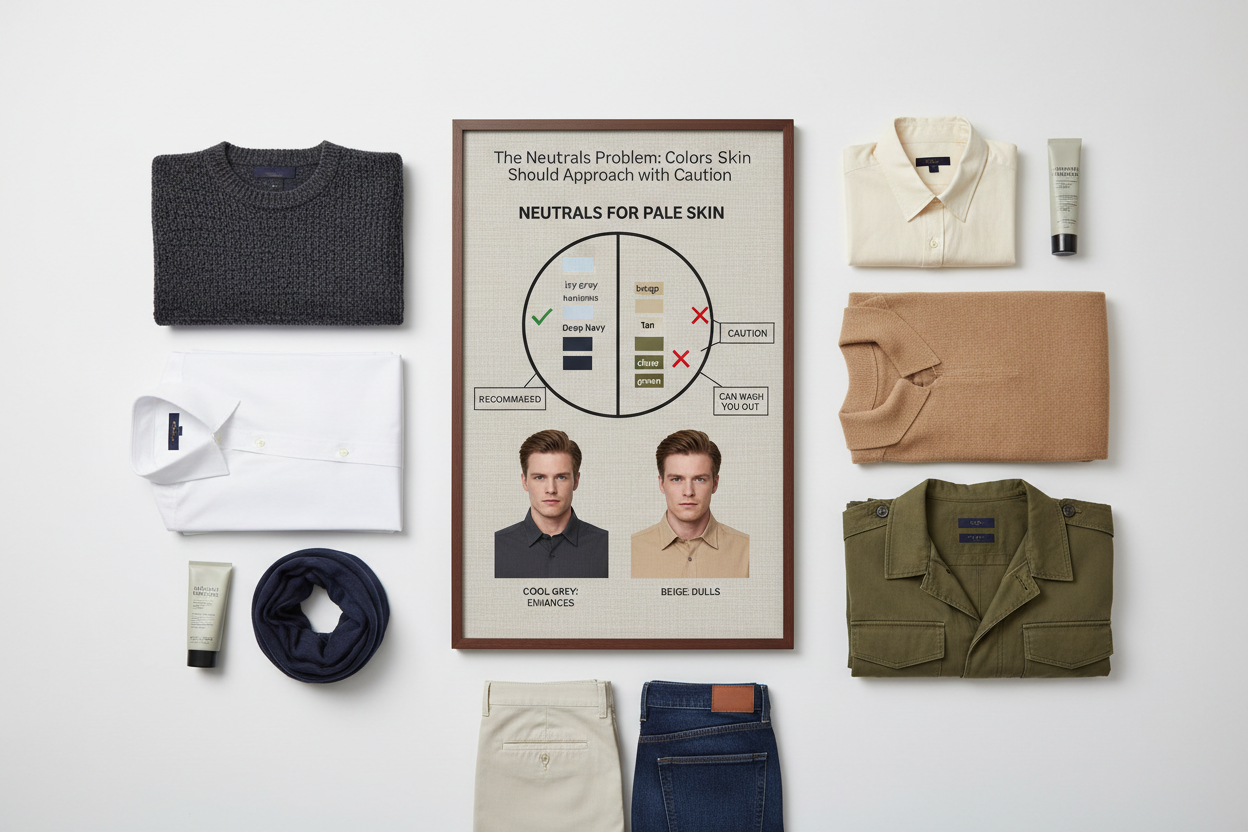
Pale skin's reputation for being hard to dress is mostly a neutral-selection problem. Bright white, cool charcoal, and mid-tone grey are the defaults most men reach for, and they cause more problems for fair skin than almost anything else in the palette.
Here's why:
Stark white sits at the extreme cool end of the white spectrum. Against pale skin, it creates a brightness competition — the shirt and the face pull attention in opposite directions instead of the shirt framing the face. This is why an expensive white dress shirt can look worse in photos than an old cream henley. The henley is probably the right kind of white.
Cool charcoal and medium grey are the other major culprit. Grey sounds neutral, but most commercial greys lean cool — bluish and ashy. Against pale skin, especially cool-pale skin, they don't produce the "sophisticated neutral" effect men are going for. Instead, they drain the face by matching its cool cast without offering any warmth or depth in return.
Washed-out pastels — very light versions of pink, blue, or yellow — sit so close in value to pale skin that contrast disappears. The face seems to dissolve into the shirt.
The right kind of neutral depends on your undertone. For cool-pale skin, a warm-leaning charcoal or soft slate works better than pure cool grey. For warm-pale skin, cream and off-white work better than brilliant white. In both cases, the right neutral has some directional warmth or depth that stark options lack.
How to Test Whether a Shirt Color Works for Your Pale Skin
The fastest in-store or at-home method takes about thirty seconds:
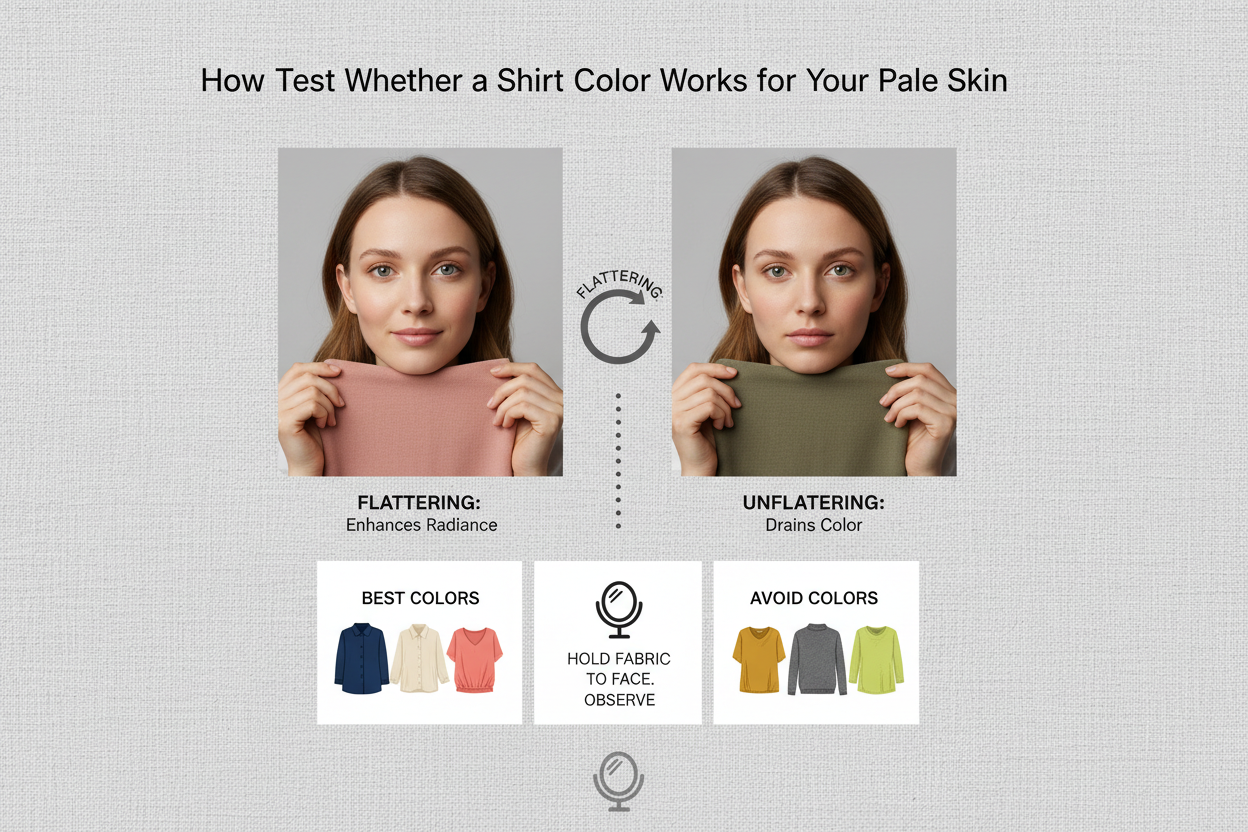
Hold the shirt up near your face in natural light. Not fluorescent retail lighting — near a window or outside. Drape it loosely so the fabric sits roughly at collar height.
Then look at what it does to your face, not the shirt:
- Does your face look brighter, more defined, more alive? The color is probably working.
- Does your face look flatter, paler, or more tired? The color is working against you.
- Do your eyes, lips, and jaw seem more prominent? That's contrast doing its job.
- Does everything look a little grey or washed out? That's the high-reflectivity problem.
A few things that make this test reliable:
- Natural light matters. Store lighting is warm and forgiving, which means it hides problems.
- Compare against a known good color. If you already own a shirt that reliably gets compliments, hold it up first. Use it to calibrate what "working" looks like for your face, then try the new one.
- Check photos, not just the mirror. Cameras don't compensate the way human eyes do. If a color looks fine in the mirror but draining in a photo, trust the photo.
The whole test is built around the high-reflectivity principle: pale skin is sensitive to fabric color temperature, and that interaction shows up clearly if you're watching the right thing — your face, not the shirt.
If you'd rather skip the trial and error, a color analysis quiz can map your undertone and reflectivity to a curated palette before you set foot in a store.
Building a Shirt Wardrobe Around Your Pale Skin Tone
A wardrobe that works for pale skin isn't about owning every color in the right range — it's about building a compact, coherent palette of 5–7 shirts where every piece pulls in the same undertone direction.
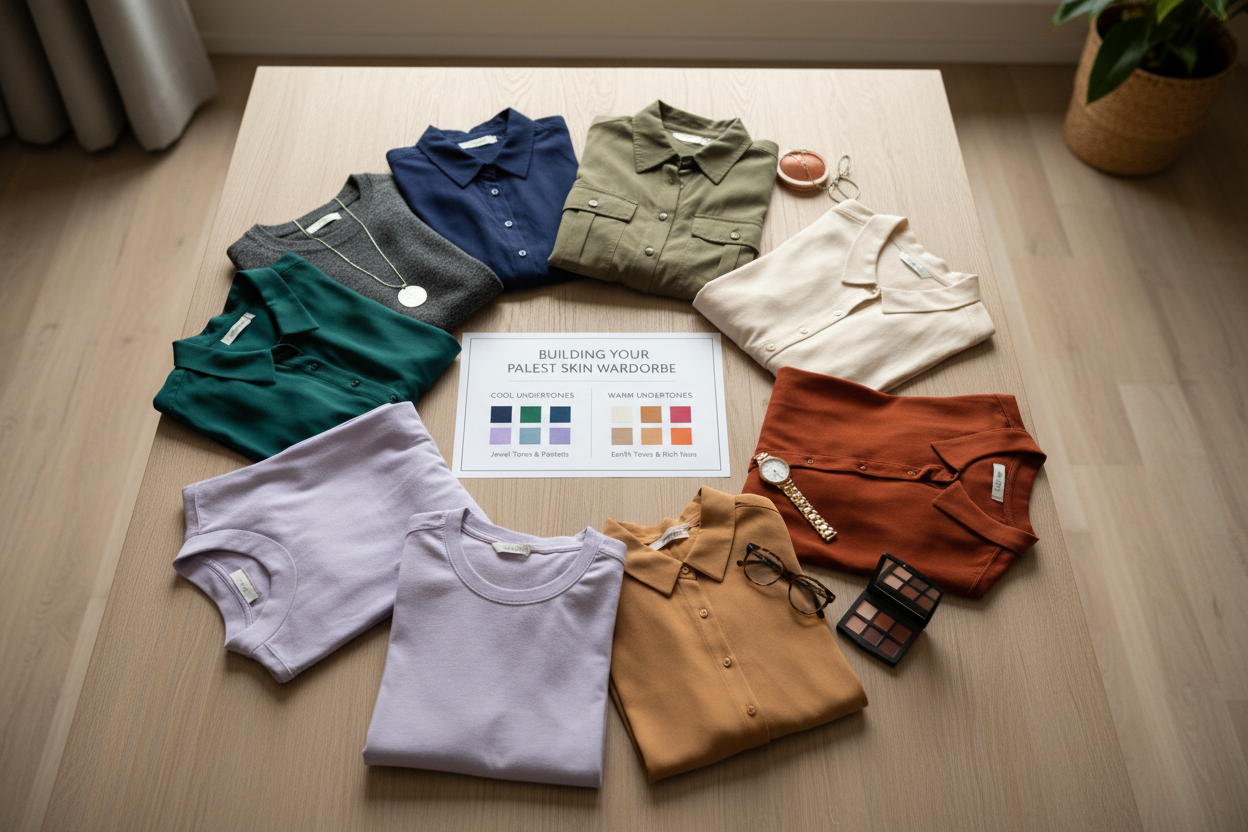
Step one: Anchor to your undertone. Every shirt in the core wardrobe should be either undertone-correct or undertone-neutral. No cool greys for warm-pale men, no earthy oranges for cool-pale men. One or two wrong-temperature shirts in the rotation won't ruin anything, but they'll be the ones you put on and feel slightly off in without knowing why.
Step two: Vary depth, not just color. One deep navy, one mid-tone blue, and one pale blue gives you less range than one deep navy, one burgundy, and one dusty rose — if all three are cool-toned. Depth variation within your undertone palette gives you options for different occasions without losing coherence.
Step three: Solve the neutral problem deliberately. Pick two neutrals that are right for your undertone: a warm white if you run warm, a soft off-white if you run cool, a warm charcoal instead of an ashy one. These become your utility shirts for business settings or casual Fridays, and they deserve the same attention as anything else in the wardrobe.
Step four: Add one or two deeper anchor pieces. A jewel-toned shirt for cool-pale skin or a terracotta for warm-pale skin tends to generate the most positive reactions. These are the shirts where high reflectivity works in your favor — the richness of the color creates depth and contrast against fair skin in a way that doesn't happen with the same shirt on a deeper complexion.
Step five: Edit based on feedback. The shirts that reliably get noticed are doing something right for your coloring. The ones you put on and feel uncertain about are usually fighting your undertone. Over time, both signals become easy to read.
Getting this right manually takes several rounds of shopping and wearing. A color analysis quiz accelerates that process by mapping the palette before you buy, so the first shirt you choose based on the results is already more likely to be the one someone compliments without you trying.
People Also Ask
What colors look best on pale or fair skin?
The honest answer depends on your undertone, not just how light your skin is. Two men with identical skin lightness can need completely different palettes.
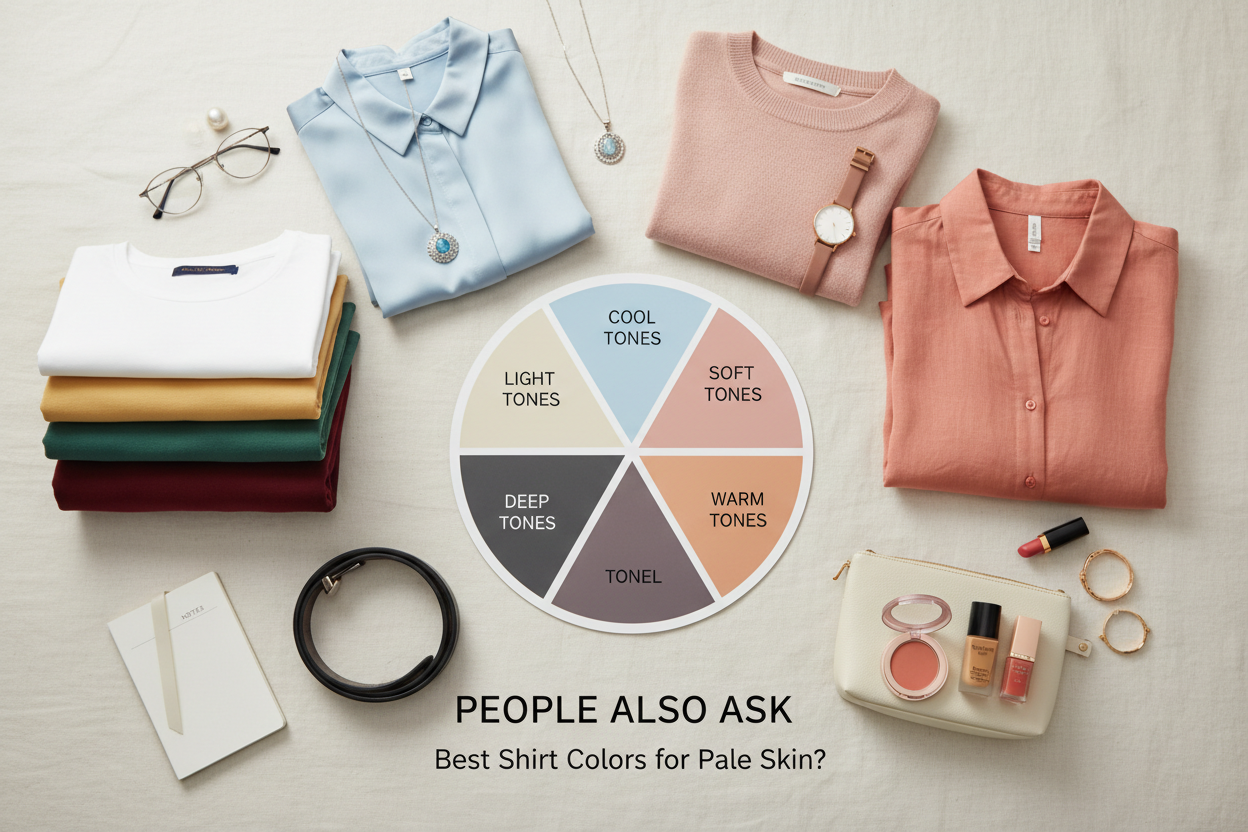
That said, some broad principles hold across pale skin generally:
- Richer, deeper colors tend to work better than washed-out ones — they create visible contrast against fair skin rather than blending into it
- Jewel tones like navy, deep emerald, burgundy, and sapphire are reliably strong for cool-pale skin
- Warm earthy tones — terracotta, olive, camel, warm cream — suit pale skin with yellow or golden undertones
- Muted, dusty versions of colors tend to outperform bright or icy versions at most skin-lightness levels
The colors that most often fail on pale skin aren't bold choices. They're the wrong kind of neutral: stark white, cool grey, and light pastels that sit too close to the skin's own value.
Should men with pale skin wear white shirts?
Yes, but the type of white matters. Stark, brilliant white tends to create a brightness competition at the collar, reflecting back onto fair skin in a way that amplifies pallor instead of warming the face.
For most pale-skinned men, off-white, warm white, or cream works better. There's enough warmth to complement pale skin without the cool reflectivity that makes pure white a problem up close.
One exception: if your pale skin runs warm, you'll handle bright white better than someone with cool-pale coloring — but warm-toned whites will still look better on you.
What colors make pale skin look washed out?
The washed-out effect comes from a color temperature mismatch between fabric and skin. The main culprits:
- Cool or ashy mid-tone grey — it matches the cool cast of pale skin without adding any warmth or depth, so the result looks flat and drained
- Stark white — the high reflectivity amplifies pallor rather than countering it
- Icy, near-white pastels (light mint, powder blue, pale lavender) — these sit so close to the skin's own lightness that contrast disappears entirely
- Washed-out beige and taupe — not quite warm enough to complement warm undertones, not quite cool enough to work with cool ones
The pattern is the same across all of them: they either mirror the skin's temperature without adding depth, or they're too close in lightness to fair skin for any definition to register.
How do I know my skin undertone if I have pale skin?
Undertone is harder to read on pale skin because the surface color is already low-saturation, but a few checks tend to work reliably:
- Vein test — look at the inside of your wrist in natural light. Blue or purple veins point to cool undertones; green veins suggest warm.
- White vs. cream test — hold a stark white fabric next to your face, then an off-white or cream. Whichever makes you look more alive tells you which direction you lean. Warm white wins? You probably run warm. Both look the same? You may be neutral.
- Jewelry test — silver flatters cool undertones; gold suits warm ones. If one metal has always looked right on you and the other looks off, that's a real signal.
- Compliment history — think about which shirt colors have gotten unprompted comments. Those colors are probably working with your undertone rather than against it.
No single test is definitive, but two or three pointing the same way gives you a working answer.
Can men with pale skin wear dark colors like navy or black?
Yes, and for pale skin with cool undertones, dark colors are often some of the best options available. Deep navy is a particularly strong choice: it creates real contrast against fair skin, matches the cool temperature of pink or rosy undertones, and avoids the harshness that pure black can introduce right at the collar.
Black is more situational. It gives you maximum contrast and holds up well in formal or structured settings, but placed directly against very fair skin it can look stark rather than sharp. A warm-leaning charcoal or a rich dark navy usually gets you the same depth with a slightly better result.
For warm-pale skin, the ones to be careful with are the cool darks: pure black, cool dark charcoal. Darker tones with a warmer base, like deep olive, dark espresso brown, or a warm-leaning navy, give you depth without the temperature clash.
FAQ
Is white a good shirt color for pale skin?
It depends on which white. Pure, brilliant white is one of the more common mistakes pale-skinned men make — its high reflectivity amplifies the coolness of fair skin at the collar, which tends to make the face look drained rather than bright.
Off-white, warm white, and cream are better defaults. They carry enough warmth to work with pale skin without the harshness of stark white. If your pale skin has warm undertones, you'll handle bright white better than a cool-pale man will — but warmer whites will still outperform it.
What is the single best shirt color for very fair skin?
There's no universal answer, since the right color depends on undertone. That said, a few colors tend to work well across pale skin types:
- Deep navy is the closest thing to a reliable choice for cool-pale skin — it creates real contrast, matches the cool temperature of pinkish undertones, and reads as sharp rather than harsh
- Rich burgundy is another strong option for cool undertones, adding depth without clashing on temperature
- Warm terracotta or rust works well for men whose pale skin has golden or yellow undertones
The consistent principle: pale skin benefits from colors with genuine depth or warmth, not muted near-neutrals that blend into the skin's own lightness.
Do men with pale skin look better in warm or cool colors?
Neither category wins universally — undertone determines this.
- Cool-pale skin (pink, rosy, or bluish cast) responds well to cooler, richer tones: navy, slate blue, burgundy, deep emerald, charcoal with a cool base
- Warm-pale skin (golden, peachy, or yellowish cast) tends to look more alive in warmer tones: terracotta, olive, camel, warm cream, rust
The mistake is treating pale skin as a single category and assuming either all warm or all cool colors will work. Picking the wrong temperature — even in a flattering depth — can produce the same washed-out result as the wrong neutral.
Why do some colors make pale skin look washed out?
It's a color temperature and contrast problem. Pale skin is highly reflective, which means it picks up the color temperature of nearby fabric more strongly than darker skin tones do. When a shirt color is:
- Too close in lightness to fair skin — pale pastels, icy tones, light neutrals — contrast disappears and features flatten
- Mismatched in temperature — a cool-grey shirt against warm-pale skin, or a warm-beige shirt against cool-pale skin — the clash reads as dull and tired rather than a clean pairing
- Low in depth without any compensating warmth — mid-tone washed-out colors have neither the contrast of a deep color nor the richness of a warm one
The culprits usually aren't dramatic choices. They're the wrong kind of neutral: stark white, cool grey, ashy mid-tones.
Can pale-skinned men wear bright or bold shirt colors?
Yes, though saturation level matters. Bold colors don't inherently clash with pale skin — but very high-saturation, almost neon versions can overwhelm fair skin because the contrast between the garment and the face becomes too extreme.
Muted, rich versions of bold colors tend to work better than their brightest equivalents. A deep jewel-toned burgundy beats hot fuchsia. A strong cobalt reads better than fluorescent blue. The depth is doing real work; the extreme brightness is doing too much.
If you want color and you have pale skin, aim for saturated-but-not-electric: genuine richness rather than washed-out pastels on one end or blinding brights on the other.
How does skin undertone change which shirt colors work for pale skin?
Undertone matters more than overall lightness. Two men with identically pale skin can need almost opposite palettes depending on whether their undertone runs cool or warm.
Cool undertones (pink, rosy, or bluish cast) work well with colors that share that temperature: navy, slate, burgundy, deep emerald, cool-leaning charcoal. Colors with yellow, orange, or strong warm bases tend to clash.
Warm undertones (golden, peachy, or yellowish cast) do better with earthy, warm-toned shirts: terracotta, olive, camel, warm cream, rust. Cool greys, icy blues, and stark whites tend to wash warm-pale skin out.
This is why generic "best colors for pale skin" lists often contradict each other — they treat two meaningfully different groups as one.
What neutral shirt colors are safe for pale skin?
Most classic neutrals come with conditions for pale skin:
| Neutral | Verdict |
|---|---|
| Off-white / warm white | Strong — works for most pale skin tones, especially as an alternative to stark white |
| Cream | Strong for warm-pale skin; slightly less ideal for very cool undertones |
| Light grey | Risky — ashy mid-tones frequently cause the washed-out effect; textured or slightly warm grey fares better |
| Navy | Reliable for cool-pale skin; one of the safest overall choices |
| Charcoal | Works well when it has warmth; pure cool charcoal can drain very fair skin |
| Stark white | Use with caution — high reflectivity amplifies pallor for most pale skin tones |
The safest bet is to lean toward neutrals with visible depth or warmth rather than flat, ashy, or brilliant versions. If you're not sure which direction suits your undertone, a color analysis tool can point you in the right direction. → Find your best neutrals with the color analysis quiz
To turn this principle into another practical outfit decision, continue with the companion article “Building Your Wardrobe: The Best Suit Colors for Pale Skin”, which keeps the two closely related questions distinct.