Best Colors for Neutral Olive Skin: Clothes and Neutrals
 Reviewed by Alexandra Gilmore
Neutral olive skin usually looks most balanced in nuanced neutrals and complex colors rather than extreme warm or cool shades. Build a practical wardrobe with soft ivory, mushroom, taupe, cocoa, softened navy, smoky teal, petrol, pine, burgundy, and muted rose, then adjust each color for your depth and preferred contrast.

Best Colors for Neutral Olive Skin: Key Takeaways
- Start with nuanced neutrals: soft ivory, mushroom, balanced taupe, cocoa, softened navy, and charcoal usually create a cleaner frame than yellow beige, optic white, or icy gray.
- Choose complex color over extreme temperature. Smoky teal, petrol, pine, burgundy, aubergine, muted rose, and blue-red berry support a balanced olive undertone without forcing it strongly warm or cool.
- Adjust depth before rejecting a hue. A light neutral olive complexion may need a softer value; a deep complexion may need more saturation or light-dark contrast. The color family can stay the same.
- Treat every recommendation as a comparison. Test two similar fabrics in indirect daylight and watch the face for evenness, shadow, and definition. Olive is not one fixed palette.
- Build outfits from one anchor, one color, and one bridge. For example: softened navy + smoky teal + soft ivory, or cocoa + burgundy + mushroom.
The best colors for neutral olive skin are usually balanced, slightly complex shades: soft ivory, mushroom, taupe, cocoa, charcoal, softened navy, smoky teal, petrol, pine, burgundy, aubergine, muted rose, and berry. They give the complexion definition without adding a strong orange, pink, yellow, or icy cast. This guide turns those colors into a practical clothing palette, neutral wardrobe, outfit formulas, and a daylight test you can repeat at home.
| Wardrobe role | Best starting colors | Compare before buying |
|---|---|---|
| Light neutral | Soft ivory, oyster, light mushroom | Optic white and yellow cream |
| Mid neutral | Mushroom, balanced taupe, stone, cocoa | Peach beige and green-gray khaki |
| Dark neutral | Softened navy, charcoal, espresso | Blue-black and flat cool gray |
| Everyday color | Smoky teal, petrol, pine, muted rose | Neon turquoise and sugary pink |
| Statement color | Burgundy, aubergine, blue-red berry | Orange-red and electric magenta |
💫 Discover Your Complete Color Palette
Neutral olive is one part of your coloring. A complete palette also accounts for depth, clarity, and contrast so you can choose clothing, makeup, and hair colors with more confidence.
Find My Color Palette →📚 Recent Articles
What Neutral Olive Skin Means for Clothing Color
Neutral olive describes two related observations. Olive refers to a muted green, gray, or yellow-green cast that is not fully explained by the usual pink-versus-golden split. Neutral means the underlying temperature response is relatively balanced: neither strongly warm nor strongly cool colors win every comparison. Neutral olive skin can occur at light, medium, or deep depth, so it should never be treated as a synonym for tan skin.
That distinction explains why generic lists can contradict one another. A list for warm olive skin may recommend orange camel, mustard, and terracotta; a cool list may recommend icy gray, cobalt, and magenta. Neutral olive often looks more settled between those poles. It tends to prefer colors with some depth or softness and neutrals that are neither peach-clean nor blue-gray.
Color itself has more than a name. Hue, value, and chroma change how a fabric behaves near the face; X-Rite's overview of hue, chroma, and value explains these measurable dimensions. In wardrobe terms, petrol and turquoise belong to a similar hue family, but petrol is deeper and less bright. That difference may matter more than the label “blue-green.”
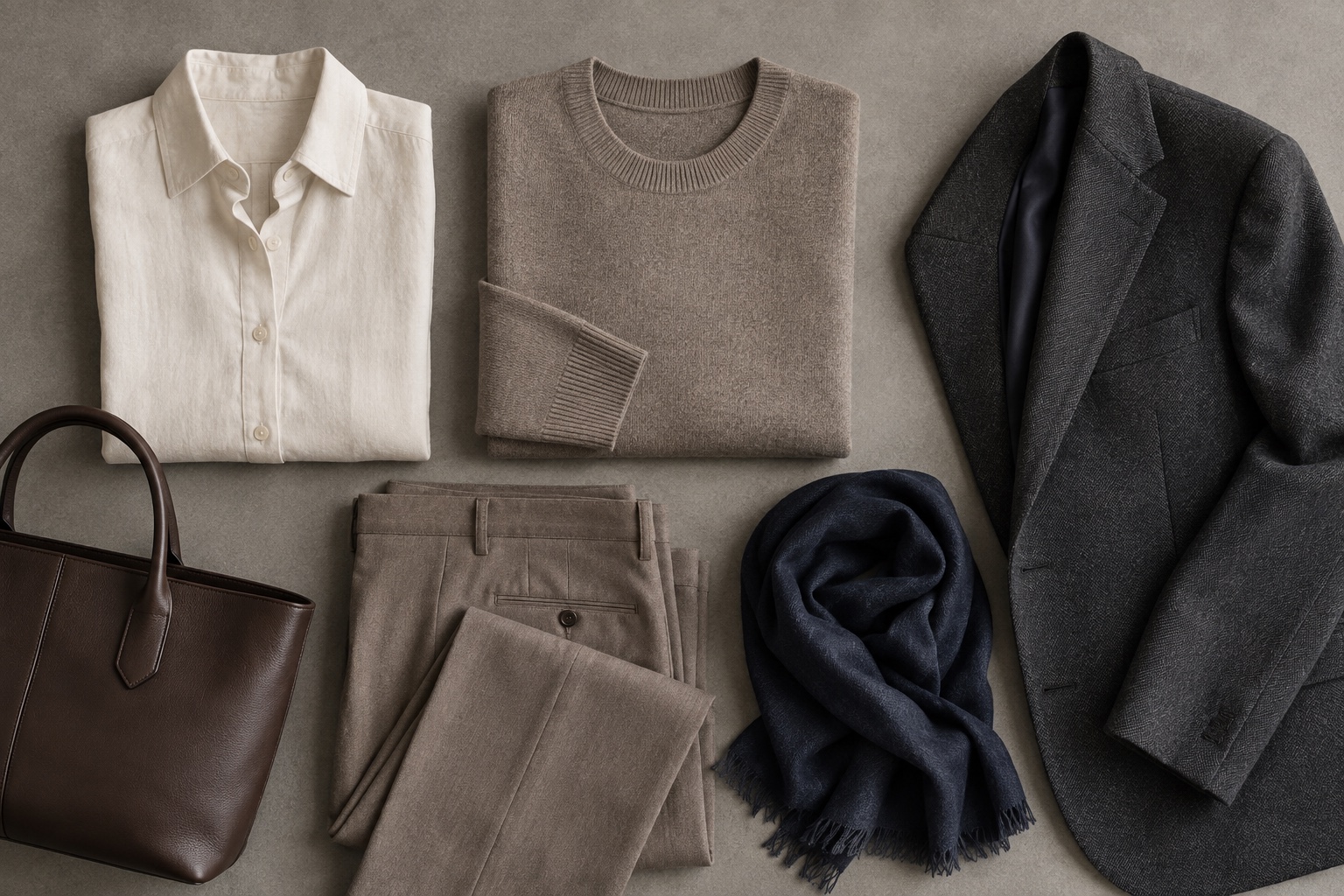
The Best Neutral Colors for Neutral Olive Skin
Neutrals do most of the work in a wardrobe, so solve them before collecting accent colors. The goal is not to match the complexion. It is to create enough separation that the face looks clear while avoiding a temperature cast that turns the skin orange, pink, gray, or overly green.
Soft Ivory, Oyster, and Light Mushroom
Soft ivory is a useful starting white because it is gentler than optic white without becoming visibly yellow. Oyster adds a gray-beige note, while light mushroom offers a quiet taupe. Compare all three near the face. If ivory looks creamy and heavy, move toward oyster; if oyster makes the skin dull, return to a warmer soft white. Use the winner for shirts, knitwear, summer trousers, and the light half of high-contrast outfits.
Mushroom, Balanced Taupe, Stone, and Cocoa
Mushroom and balanced taupe sit between warm camel and cool gray. They are especially practical for coats, tailoring, trousers, and bags because they connect easily to both burgundy and teal. Stone should be clearly lighter or darker than your skin rather than nearly identical. Cocoa gives the wardrobe a brown anchor without the orange pull of cognac or golden camel.
Softened Navy, Charcoal, and Espresso
Softened navy is one of the most reliable dark neutrals for neutral olive skin: it supplies definition, supports blue-green colors, and is less abrupt than black. Charcoal works when it is deep and dimensional rather than pale and icy. Espresso is the warm-side counterpart. Black can still work, particularly on medium-deep or high-contrast coloring, but it is an option to test rather than a requirement.
Best Clothing Color Families for Neutral Olive Skin
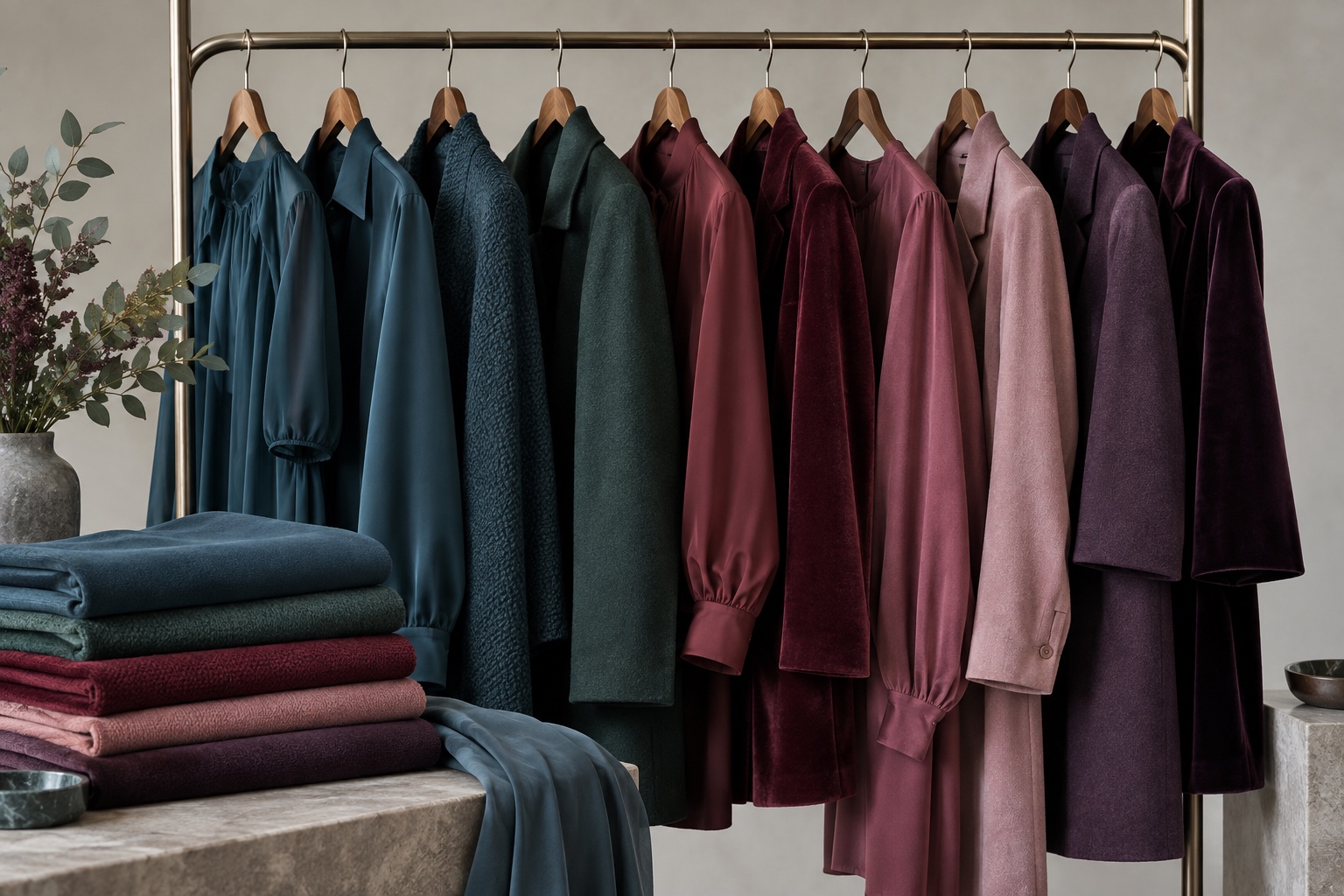
Once the neutrals are stable, add color families that contain a balanced or complex undertone. Neutral olive often handles both sides of the temperature spectrum when the shades share a similar level of depth and chroma.
| Family | Strong starting shades | Why they work |
|---|---|---|
| Blue-green | Smoky teal, petrol, deep peacock | They echo the olive complexity while blue keeps the result distinct. |
| Green | Pine, forest, muted emerald | Depth prevents green from blending into the complexion. |
| Red | Burgundy, oxblood, blue-red berry | A restrained red base creates contrast without an orange flare. |
| Pink | Muted rose, rosewood, raspberry | Brown or berry depth is usually easier than peach or bubblegum. |
| Purple | Aubergine, plum, smoky mauve | Red and blue are balanced inside a complex, wearable shade. |
For blue, compare softened navy, slate blue, and petrol before jumping to icy pastel or electric cobalt. For green, compare pine with olive: pine creates clearer separation, while olive can make an elegant tonal outfit when its depth differs from the skin. For red, place burgundy beside brick. A neutral olive complexion may accept both, but one should make the face look more even.
Yellow and orange require more precision. Ochre, antique gold, and red-based terracotta can work as accessories or away from the face. Pale butter yellow, fluorescent lime, and yellow-orange camel more often repeat the complexion's surface cast. If you love them, use a flattering neckline color, scarf, collar, or jacket to create a bridge.
Adjust the Palette for Light, Medium, or Deep Skin
Neutral olive identifies undertone direction, not value. Keep the same color families while changing their depth, saturation, and contrast. This prevents the common mistake of assigning every neutral olive person the same medium-dark palette.
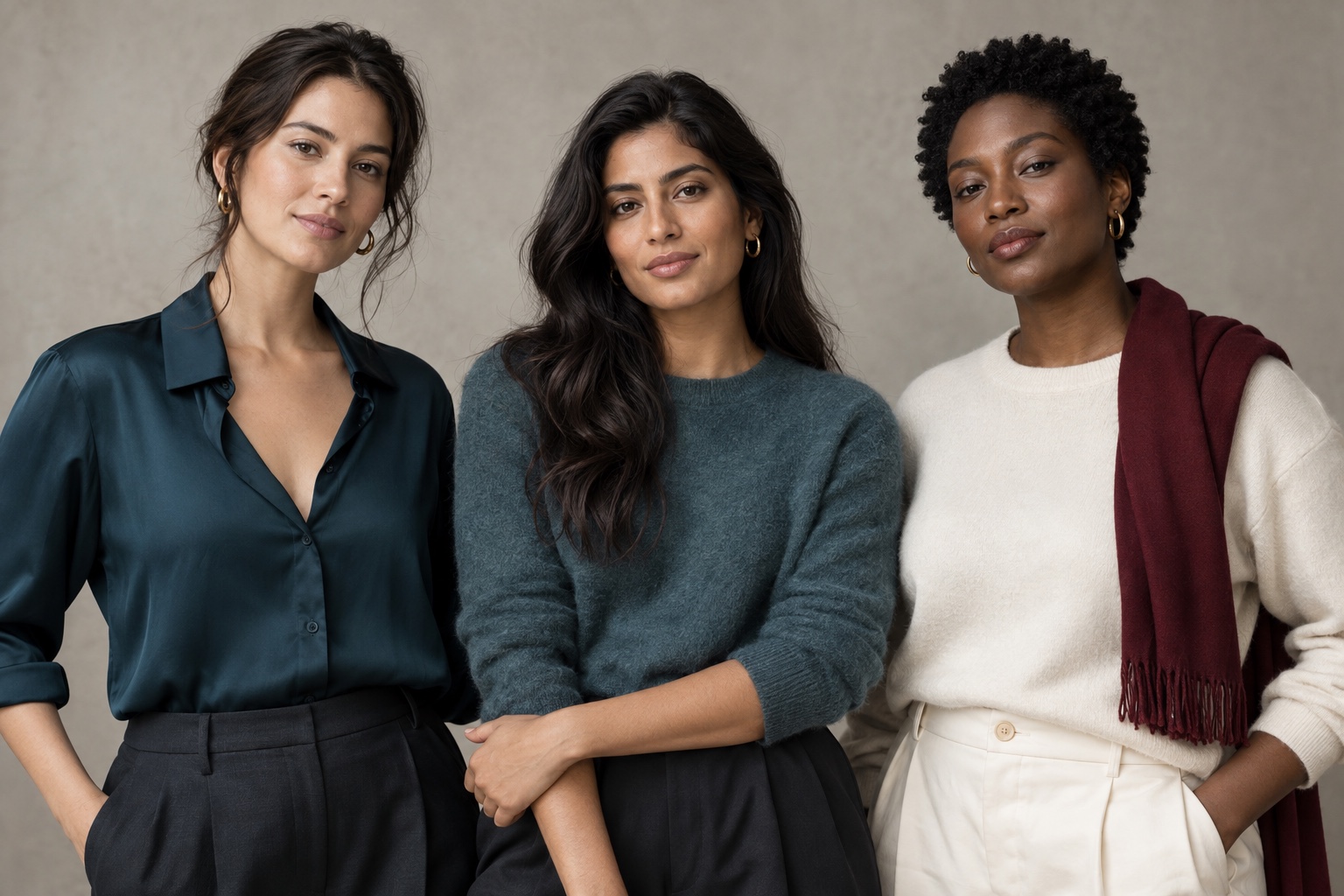
- Light neutral olive: try oyster, light mushroom, medium taupe, smoky teal, rosewood, and softened navy. Very dusty beige can disappear into the complexion; create definition with a deeper collar, neckline, or earring.
- Medium neutral olive: test mushroom, cocoa, petrol, pine, burgundy, and aubergine. This depth often carries the widest range, but close-to-skin camel and khaki still need deliberate contrast.
- Deep neutral olive: compare soft ivory, rich cocoa, ink navy, saturated petrol, deep berry, and clear pine. Pale muted colors may need a dark frame; colors that are too blackened may lose dimension.
Contrast preference matters too. Dark hair, defined brows, or bright eyes can support a stronger light-dark break; softer features may look more coherent in neighboring values. Use the contrast-level guide if undertone choices feel correct but outfits still look too loud or too flat.
Neutral Olive Outfit Formulas
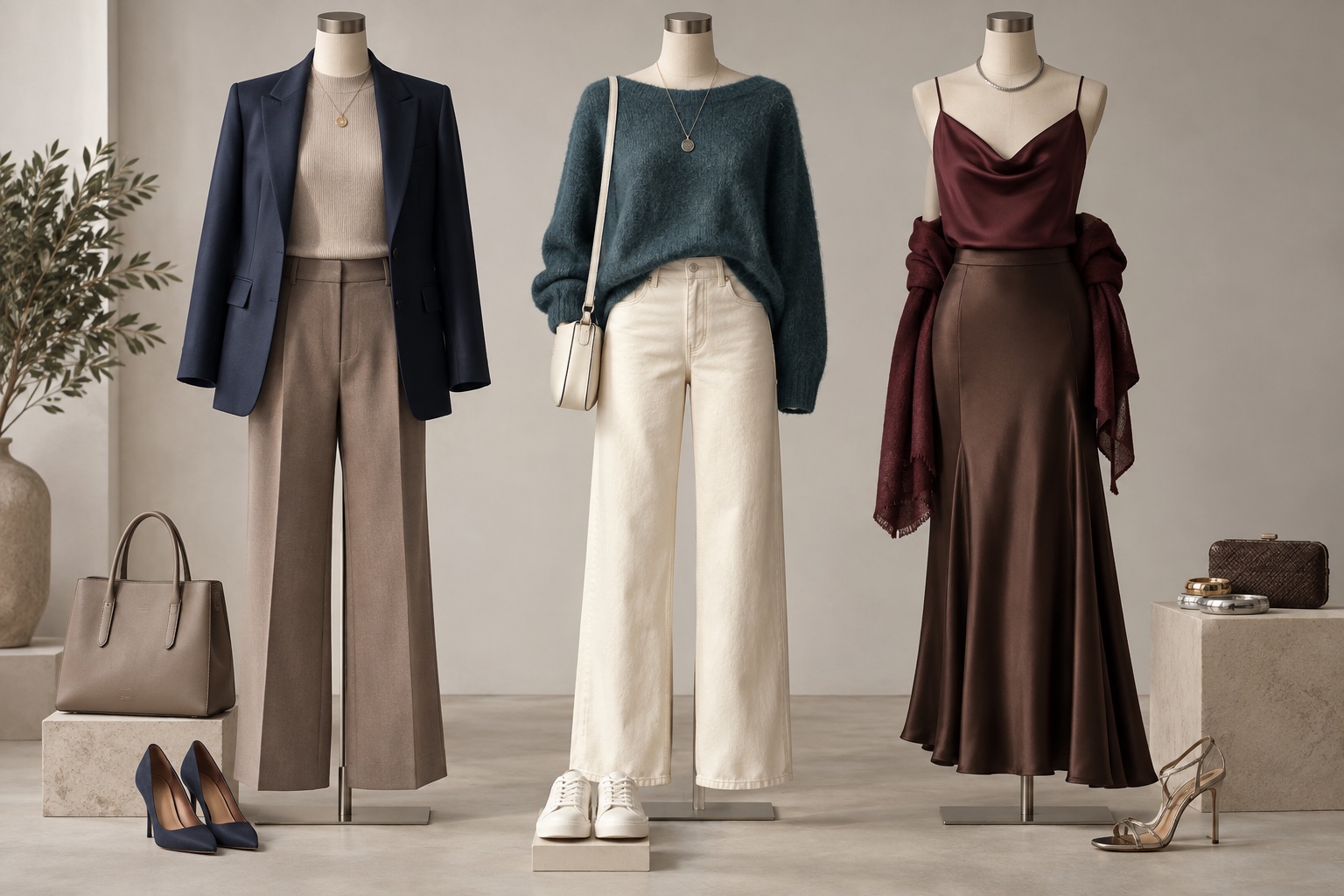
A usable palette should make getting dressed easier. Each formula below combines a neutral anchor, a flattering color, and a bridge that repeats or softens the contrast.
| Occasion | Formula | Easy adjustment |
|---|---|---|
| Work | Softened navy blazer + mushroom knit + taupe trousers | Add burgundy loafers or bag. |
| Casual | Smoky teal sweater + soft ivory denim + cocoa belt | Swap ivory for charcoal in winter. |
| Weekend tonal | Cocoa jacket + mushroom top + espresso jeans | Add petrol earrings or scarf. |
| Evening | Burgundy dress + cocoa wrap + mixed-metal jewelry | Choose aubergine if burgundy reads warm. |
| High contrast | Soft ivory shirt + ink navy suit + berry accent | Use oyster instead of ivory to soften it. |
| Low contrast | Rosewood knit + balanced taupe trousers + cocoa shoes | Keep all three colors at medium depth. |
Both silver and gold can belong in a neutral olive wardrobe. Compare equivalent finishes: brushed gold versus brushed silver is a fairer test than matte silver versus highly polished yellow gold. Pewter, champagne gold, antique brass, and mixed metals often connect more naturally than very bright finishes.
How to Test Clothing Colors in Daylight
Vein color and tanning history are weak substitutes for fabric comparison. Instead, use the same setup for every candidate. Stand near a window in indirect daylight, remove a strongly colored scarf or makeup if practical, and hold fabric from collarbone to chin. Keep the camera exposure and your position fixed if you take photographs.
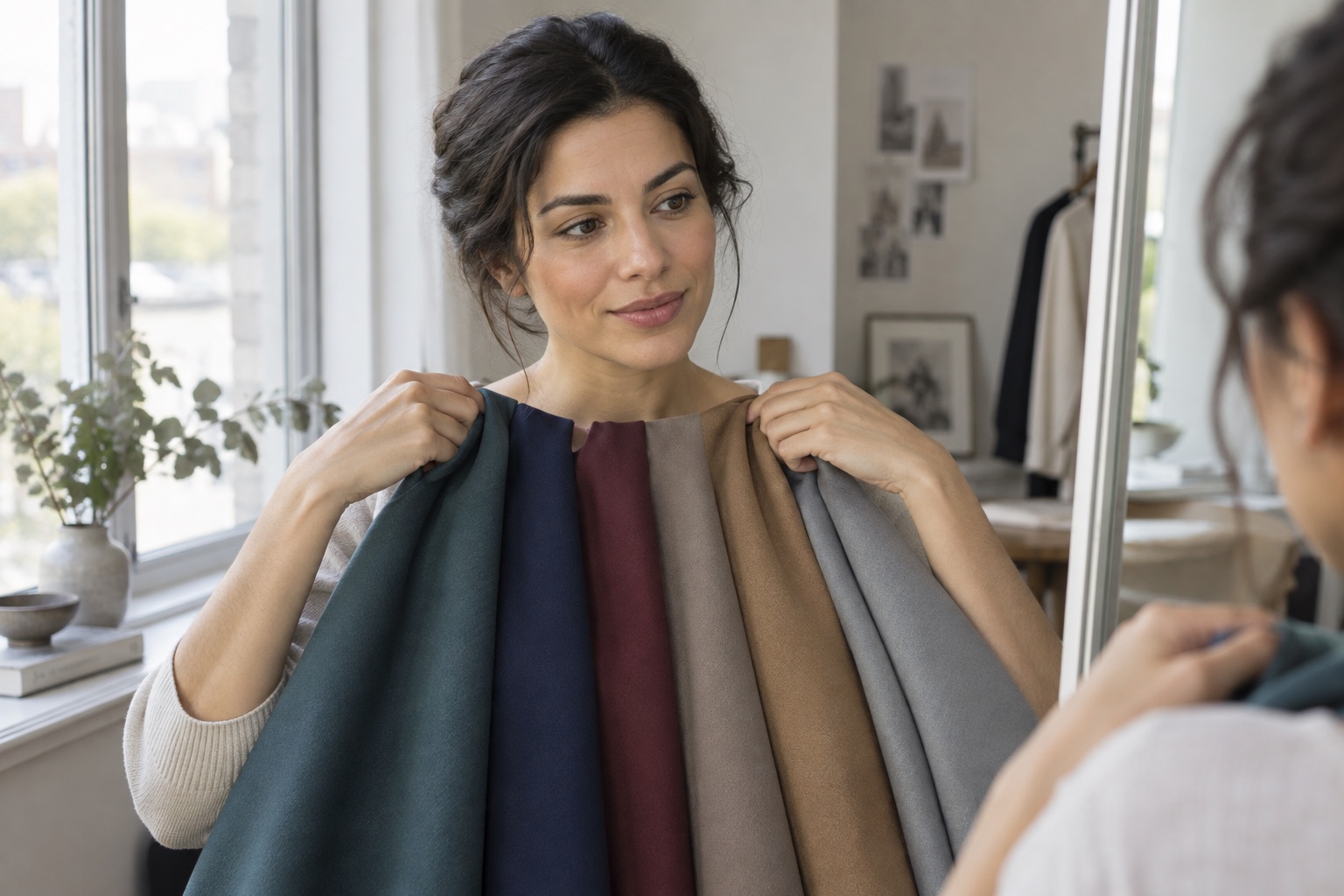
- Compare soft ivory with optic white. Choose the one that makes the skin look even and keeps the eyes and lips defined.
- Compare mushroom with yellow camel at a similar depth. Watch for an orange or overly green cast.
- Compare softened navy with black. Decide whether black creates useful definition or a hard shadow.
- Compare smoky teal with bright turquoise, then burgundy with brick. These pairs test chroma and temperature without changing the hue family completely.
- Repeat the likely winners on another day. A useful result should survive small changes in weather and clothing texture.
Look for calmer skin, reduced emphasis on under-eye shadow, clearer eye whites, and natural definition around the lips and brows. Do not use “glow” as the only criterion: reflected yellow or red light can look bright while shifting the complexion away from neutral. If you are unsure whether olive is the right description, complete the neutral vs. olive undertone comparison first.
Colors to Reconsider—and Better Swaps
No color is forbidden. The useful question is which version creates the intended effect and how much styling support it needs. Neutral olive skin is most likely to struggle when a color is both close to the skin's cast and weak in contrast, or when its temperature and brightness are extreme.
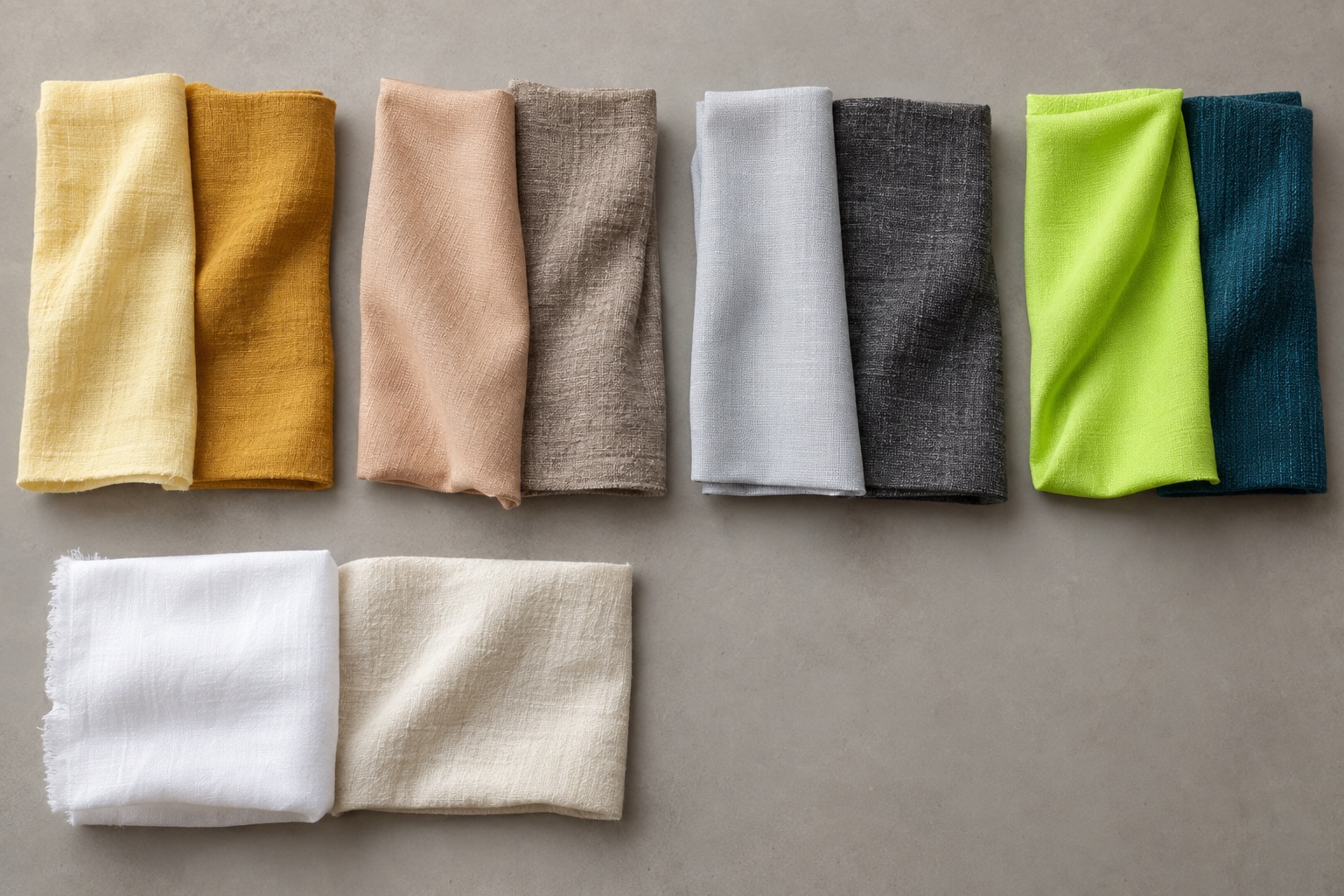
- Swap pale yellow for ochre, antique gold, or a small metallic accent.
- Swap peach beige for mushroom, balanced taupe, or cocoa.
- Swap icy light gray for charcoal, pewter, or softened navy.
- Swap neon lime for petrol, pine, or deep peacock.
- Swap optic white for soft ivory or oyster when the brighter white looks detached.
If you already own a difficult color, move it away from the face, expose more skin at the neckline, or add a scarf, collar, jacket, or necklace in a reliable shade. Texture also changes the effect: washed linen and heathered wool soften color, while satin and smooth synthetic fabric can intensify reflected light.
A 12-Piece Neutral Olive Capsule Wardrobe
A compact wardrobe can cover work, casual, and evening needs without relying on beige or black. Choose one item in each role, keeping all pieces within your preferred depth and contrast range.
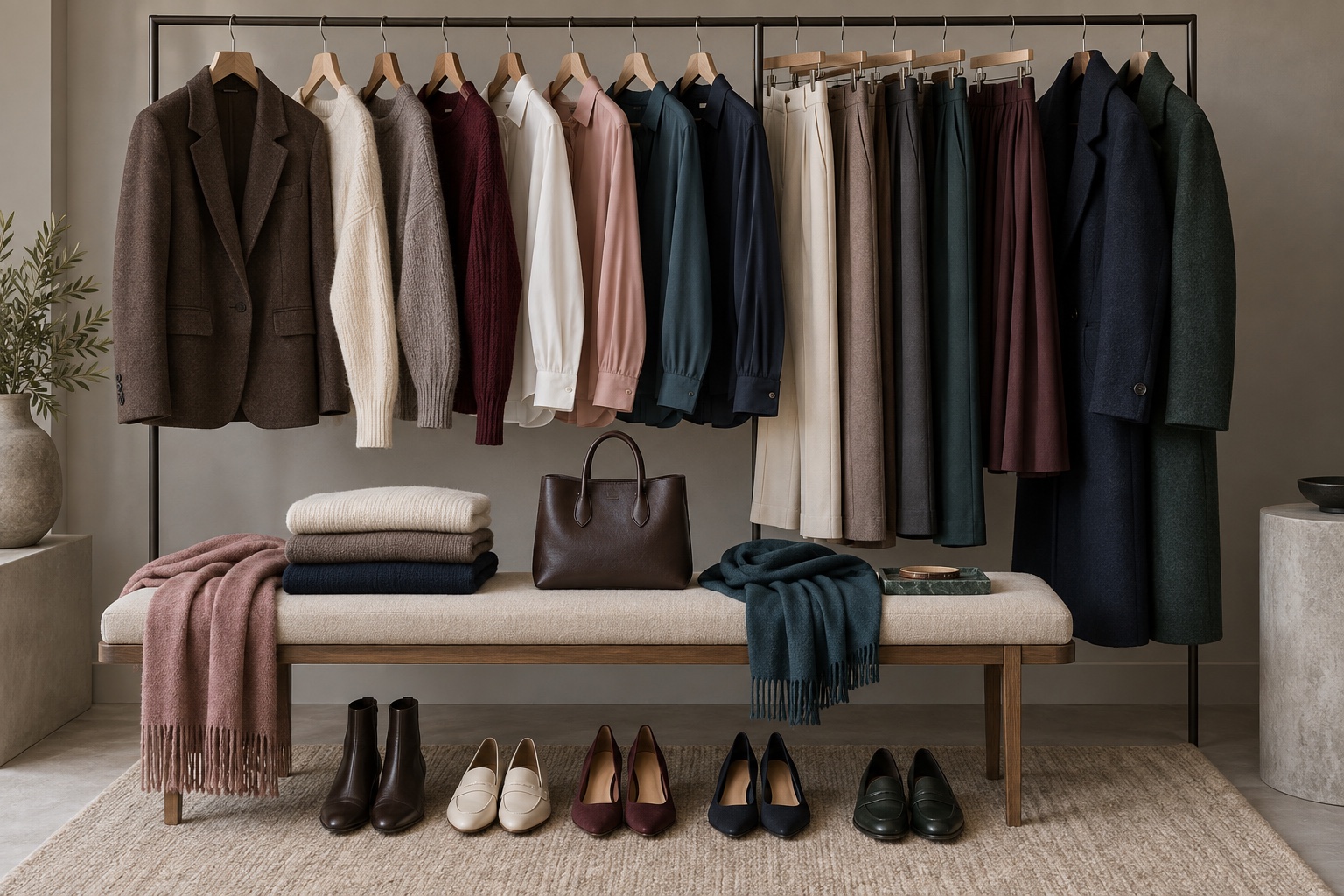
- Soft ivory shirt
- Mushroom knit
- Smoky teal top
- Muted rose blouse
- Softened navy blazer
- Cocoa jacket or cardigan
- Balanced taupe trousers
- Ink navy trousers or jeans
- Burgundy skirt or dress
- Espresso shoes
- Cocoa or charcoal bag
- Petrol, pine, and ivory scarf
Before adding another color, check whether it makes at least three outfits with this base. That rule keeps the palette practical without turning it into a rigid uniform. For hair choices that connect to the same undertone, use the separate hair color guide for olive skin.
Your Next Step
Choose three comparisons: soft ivory versus optic white, mushroom versus camel, and smoky teal versus bright turquoise. Test them near your face in stable daylight, record the winners, and build one outfit from a dark neutral, one color, and one light bridge. If the results split evenly between warm and cool but muted complex shades repeatedly win, a neutral olive direction is a useful working hypothesis. A broader seasonal color analysis can then refine depth, clarity, and contrast.
People Also Ask
What colors look best on neutral olive skin?
Start with soft ivory, mushroom, balanced taupe, cocoa, softened navy, charcoal, smoky teal, petrol, pine, burgundy, aubergine, muted rose, and blue-red berry. Adjust each color for your skin depth and preferred contrast rather than treating the list as universal.
What neutrals suit neutral olive skin?
Mushroom, taupe, cocoa, charcoal, softened navy, espresso, oyster, and soft ivory are reliable starting points. Compare close alternatives because a taupe may lean peach, violet, green, or gray depending on the fabric and brand.
Can neutral olive skin wear black?
Yes. Black is often effective on medium-deep or high-contrast coloring. If it creates hard shadows or makes the complexion look gray, replace it near the face with charcoal, ink navy, or espresso and keep black for trousers, shoes, or accessories.
Is white flattering on neutral olive skin?
White can be flattering, but the best version varies. Compare optic white, soft white, ivory, and oyster in daylight. Soft ivory often gives brightness without the blue cast of optic white or the strong yellow cast of cream.
Common Questions: The Ultimate Color FAQ
Is neutral olive skin warm or cool?
It is relatively balanced in temperature while also showing an olive cast. Neutral olive can lean slightly warm or cool, so matched fabric comparisons are more useful than assuming one fixed temperature.
Which jewel tones are best for neutral olive skin?
Try smoky emerald, petrol, burgundy, blue-red berry, deep plum, and aubergine. Very bright sapphire or magenta may work on clear, high-contrast coloring, while softer complex versions are easier for muted coloring.
Does beige suit neutral olive skin?
Some beige does. Mushroom, stone, and balanced taupe are usually safer than peach beige or yellow beige. Ensure the garment is visibly lighter, darker, warmer, or cooler than your skin so the outfit keeps definition.
Should neutral olive skin wear gold or silver?
Either may work. Compare metals with the same finish and brightness. Brushed gold, pewter, champagne gold, oxidized silver, and mixed metals can be more harmonious than very bright yellow gold or mirror silver.
How does skin depth change the neutral olive palette?
Depth changes value and contrast, not the entire undertone logic. Light skin may use softer versions with one deeper frame; deep skin can carry richer saturation and clearer light-dark contrast. The same teal, burgundy, cocoa, and navy families can remain useful.
How should I test colors for neutral olive skin?
Compare two fabrics of similar depth near the face in indirect daylight. Keep your position fixed and watch for repeatable changes in skin evenness, shadows, eye clarity, and facial definition. Repeat the strongest result on another day.