Best Colors for Blonde Hair, Blue Eyes, and Pale Skin
 Reviewed by Alexandra Gilmore
Blonde hair, blue eyes, and pale skin do not all respond to the same pastel palette. Balance ash versus golden blonde, icy versus blue-green eyes, and your natural contrast to choose useful navies, roses, greens, plums, and whites that brighten the eyes without overwhelming light features.

The best colors for blonde hair, blue eyes, and pale skin usually sit in a clear but not harsh range: soft navy, denim blue, powder blue, rose, raspberry, plum, cool green, sea glass, pearl, soft white, charcoal, and carefully chosen champagne. The exact version depends on three things: whether the blonde is ash or golden, whether the blue eyes read icy or warm blue-green, and how much contrast your features can carry.
This guide is narrower than a general blonde-and-fair-skin palette. It keeps blue eyes in the decision from the start. A color can flatter pale skin and still make blue eyes look flat. Another shade can make the eyes vivid but overpower very light hair. Use the tables below as a practical wardrobe filter, then adjust each color beside your face in indirect daylight.
Key Takeaways
- Choose color depth by contrast first: soft contrast needs medium-light colors, while stronger contrast can handle navy, berry, and charcoal.
- Ash blonde usually looks cleaner with cool rose, blue, plum, gray, and soft white.
- Golden or honey blonde usually needs warmer versions: cream, champagne, soft teal, peach-rose, warm navy, and camel used carefully.
- Blue eyes are not all the same: icy blue often responds to cooler colors, while blue-green or gray-blue can bridge into muted teal, sage, and warm rose.
- Use black, bright orange, stark yellow, beige, and icy pastels as test colors rather than automatic rules.
💫 Discover Your Complete Color Palette
Turn your hair, eye color, skin depth, undertone, and contrast into a palette you can use while shopping.
Build My Palette →📚 Recent Articles
Start With the Blonde Hair, Blue Eyes, and Pale Skin Combination
This combination is often light in value, but it is not automatically low contrast or cool toned. Platinum hair, very pale skin, and icy eyes create a different effect from dark blonde hair, blue-green eyes, and pale neutral-warm skin. Before choosing a shopping palette, separate the visible ingredients.
Look at your natural or current hair depth, the warmth of the blonde, the clarity of the blue eyes, brow depth, and the skin's undertone. A pale person with darker brows may need stronger anchors near the face. Someone with very light lashes and brows may look better when the clothing contrast rises gradually instead of jumping straight to black.
The page you are reading owns this specific combination. If blue eyes are not central to the question, the broader blonde hair and fair skin guide gives a wider wardrobe framework. If you want skin-first clothing advice without hair and eyes as filters, use the complete pale-skin color guide.
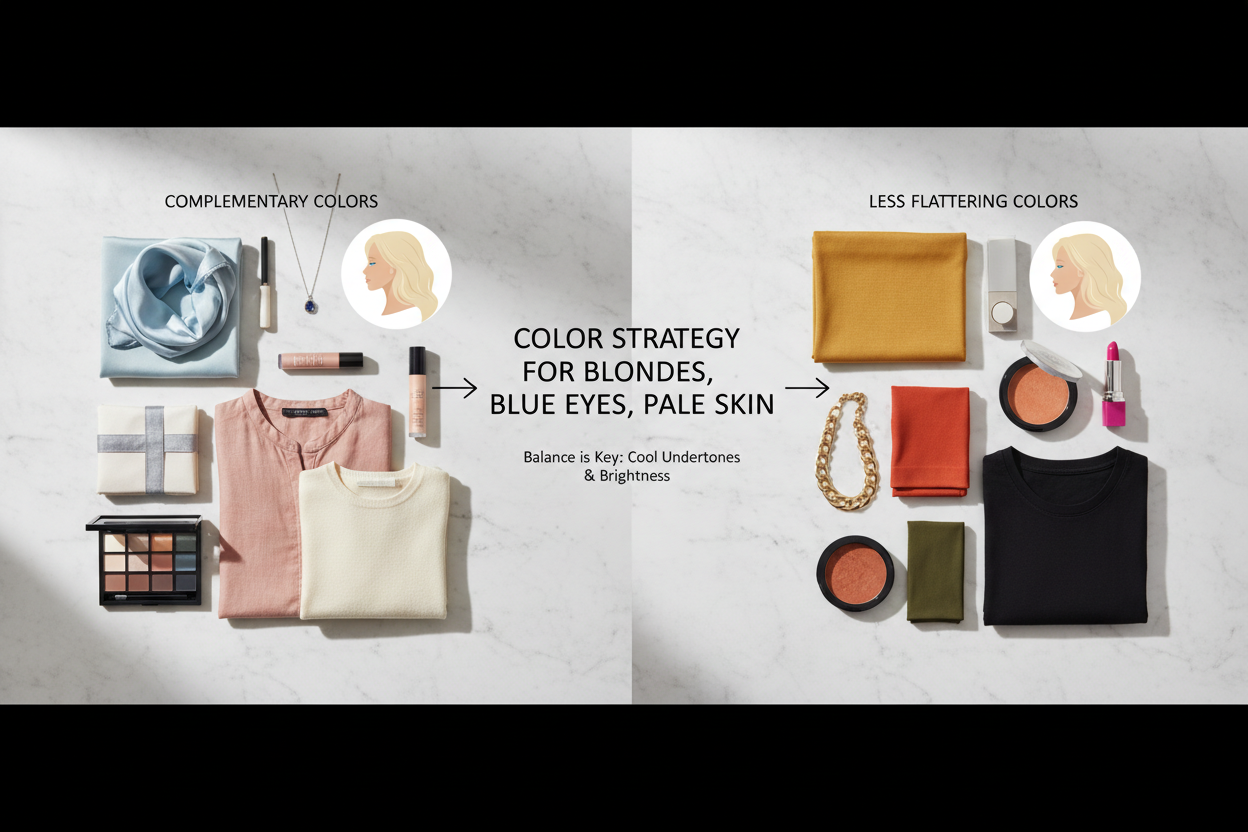
Ash Blonde vs Golden Blonde: Adjust the Palette First
Blonde temperature changes how the same clothing color behaves. Ash blonde, beige blonde, golden blonde, honey blonde, strawberry blonde, and dark blonde do not need identical colors. The difference is especially visible around blue eyes because both hair and eyes sit close to the face.
| Blonde direction | Usually strongest colors | Neutrals to try | Colors to handle carefully |
|---|---|---|---|
| Ash or platinum blonde | Powder blue, soft navy, cool rose, raspberry, plum, blue-red | Soft white, pearl gray, charcoal, cool taupe | Camel, mustard, orange, yellow beige |
| Beige or dark blonde | Denim, sea glass, muted teal, rosewood, soft berry | Ivory, stone, mushroom, gentle navy | Flat gray, icy pastels, highlighter brights |
| Golden or honey blonde | Warm navy, teal, soft coral, peach-rose, moss, turquoise | Cream, champagne, warm stone, light camel | Blue-white, icy lavender, stark black |
| Strawberry blonde | Soft green, teal, warm rose, muted coral, blue-green | Cream, warm gray, oat, gentle brown | Hot pink, harsh yellow, very cool gray |
If your hair is highlighted, use the pieces nearest the face as the deciding color. A cool root with golden face-framing highlights may need warmer tops than the root suggests. A golden base toned with ash ribbons may sit between the rows. When in doubt, test a cool rose and a peach-rose, then a soft navy and a teal. The better pair will usually reveal the direction.
Cool Blue Eyes vs Warm Blue Eyes
Blue eyes can look icy, gray-blue, clear medium blue, blue-green, or almost teal. This is why "wear blue" is not specific enough. The best blue may be powder, cornflower, denim, slate, teal, or navy depending on the eye color and the rest of the face.
| Eye impression | Colors that often sharpen the eye | Why it works |
|---|---|---|
| Icy or bright cool blue | Soft white, silver gray, blue-red, raspberry, cool navy | Repeats the clean coolness without turning the face yellow |
| Gray-blue | Slate, dusty blue, soft plum, rose brown, pewter | Matches the muted quality and avoids over-bright contrast |
| Clear medium blue | Denim, soft navy, rose, berry, clear teal | Adds enough depth to frame the eye without swallowing pale skin |
| Blue-green or warm blue | Sea glass, teal, sage, warm rose, cream, champagne | Connects the eye to warmer hair or skin notes |
Do not decide from the eye alone. A teal that makes blue-green eyes glow may still be too saturated for very pale, low-contrast coloring. A gray-blue eye may love slate, but if the hair is golden, the outfit may need cream or champagne to keep the total look alive.
Contrast-Based Clothing Table
Contrast is the distance between your lightest and darkest visible features. Pale skin and blonde hair can still create medium contrast if the brows, lashes, or eye ring are noticeably deeper. This table is usually more useful than a list of colors to avoid.
| Feature contrast | Best clothing depth | Good examples | Outfit strategy |
|---|---|---|---|
| Low contrast: light blonde, pale skin, light brows | Light to medium-light | Powder blue, rose, pearl, soft sage, light denim | Use one medium anchor such as denim or muted navy |
| Medium contrast: darker blonde, defined brows or eye ring | Medium with selective dark accents | Soft navy, berry, teal, charcoal, rosewood | Put the deeper color in a jacket, knit, or print |
| Higher contrast: pale skin with dark brows or lashes | Medium to dark but not severe | Navy, pine, plum, burgundy, cool charcoal | Balance dark pieces with a lighter neckline or lip color |
Black is not forbidden. It is simply a high-contrast tool. It works better when there is another dark feature to echo it, when the fabric is soft, or when the neckline includes white, blue, silver, rose, or denim to bridge the face and garment.
If you cannot decide your contrast level, compare the same outfit shape in three depths: pale blue, denim, and navy. Keep makeup and lighting the same. The right depth should make the eyes easier to see while leaving the hair connected to the face. If pale blue looks pretty but the features disappear, move deeper. If navy looks impressive but the hair looks separate, soften it with denim, a lighter neckline, or a print that includes both light and medium colors.
Best Clothing Colors for Blonde Hair, Blue Eyes, and Pale Skin
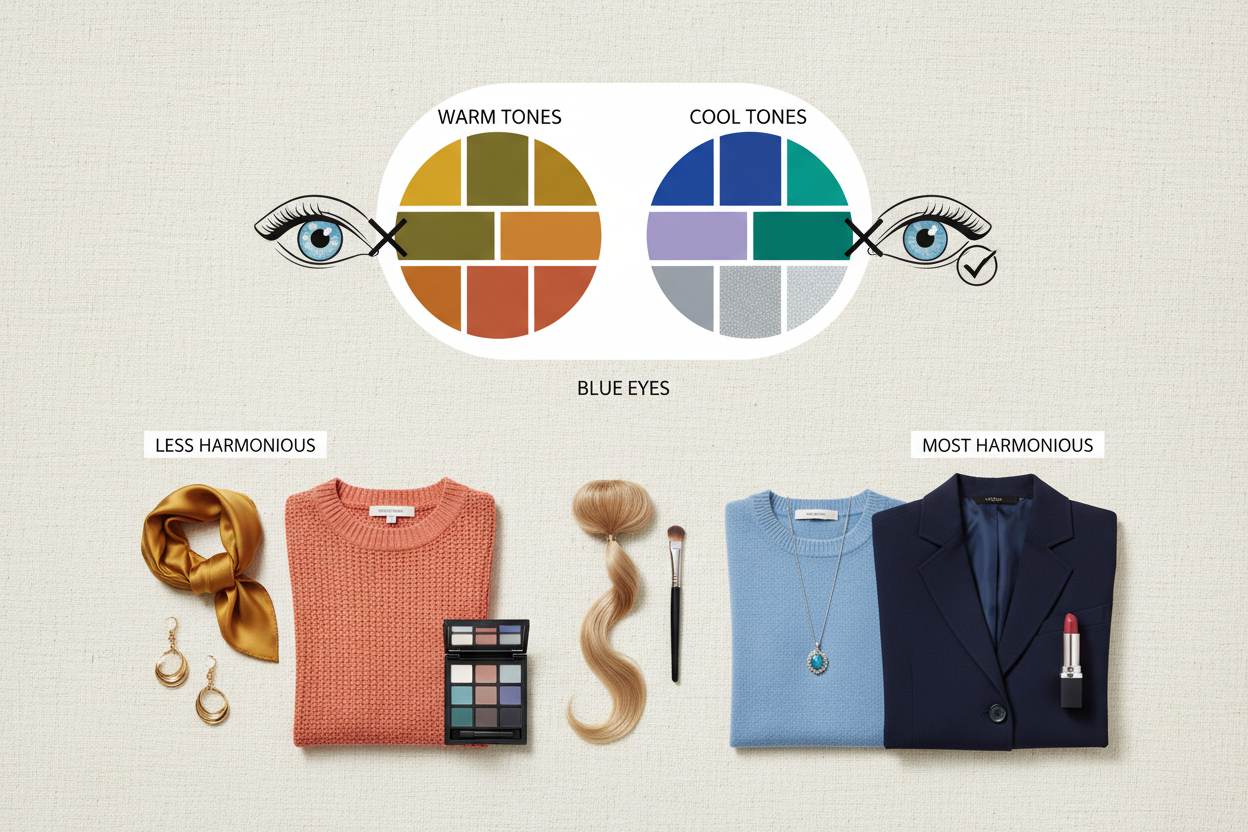
Start with blues because they repeat the eyes without competing with the hair. Powder blue, washed denim, cornflower, soft navy, and blue-gray are the most reliable range. If your eyes are warmer or greener, test sea glass, muted teal, and gentle turquoise. Very bright cobalt can be excellent on some higher-contrast faces and too sharp on others.
Rose colors are the second useful family. Soft rose, cool pink, dusty rose, raspberry, and rosewood can bring life back into pale skin without turning orange. For golden blonde hair, move from icy pink toward peach-rose or warm rose. For ash blonde hair, compare cool rose and blue-red before peach.
Greens work best when they are chosen with the eye temperature in mind. Soft sage and eucalyptus can suit gray-blue or blue-green eyes. Cool pine and emerald can anchor higher contrast. Yellow-green and olive need testing because they may make pale skin look sallow, especially beside ash blonde hair.
Neutrals should not disappear into the skin. Try soft white, ivory, pearl gray, stone, mushroom, denim, navy, and charcoal. Beige can work when it is clearly cooler, pinker, or warmer than the skin instead of identical to it. If beige makes the face vanish, add blue, rose, or navy near the neckline.
Outfit Formulas That Work in Real Wardrobes
A useful palette has to become outfits. The easiest formula is one eye-enhancing color, one neutral, and one texture or accessory that connects to the hair. For ash blonde, that connector may be silver, pearl, gray suede, or cool taupe. For golden blonde, it may be champagne, cream leather, straw, brushed gold, or light camel.
| Situation | Formula | Example |
|---|---|---|
| Everyday casual | Blue near the face + light neutral + soft texture | Denim shirt, pearl tee, light-wash jeans, silver or champagne earrings |
| Office or smart casual | Medium neutral + rose or blue accent | Soft navy blazer, ivory top, gray trousers, rose lip or scarf |
| Evening | Deeper eye color + controlled contrast | Plum, pine, navy, or berry dress with soft metallic jewelry |
| Warm blonde weekend | Warm blue-green + cream + champagne | Teal knit, cream denim, champagne flats, warm rose blush |
| Ash blonde weekend | Cool blue + gray + rose | Powder blue sweater, pearl gray coat, cool rose scarf |
For prints, look for a pale ground plus one medium anchor. Tiny florals, soft stripes, denim textures, and watercolor checks are easier than high-contrast black-and-white graphics. If you love a strong print, repeat one color from it in earrings, makeup, or shoes so the outfit looks intentional rather than separate from the face.
Accessories can do the final adjustment. Silver, pearl, pewter, and cool gray usually support ash blonde and icy blue eyes. Champagne, pale gold, cream leather, and light tortoiseshell often support golden blonde or warmer blue-green eyes. If a top is almost right but slightly flat, the right earring, scarf, or lip color can supply the missing bridge without replacing the garment.
Colors to Test Carefully
Orange, mustard, yellow beige, and camel often fail on ash blonde or cool pale skin because they add warmth the face does not share. They can work better on golden blonde or blue-green eyes when softened into peach, cream, champagne, warm tan, or muted coral. Test the version, not only the color name.
Very pale pastels can also be tricky. A pastel that is too close to skin depth may make the face look flat. Choose a pastel with a clear direction, such as powder blue, cool rose, sea glass, or soft lavender, and add a slightly deeper item nearby. Pale yellow and pale beige usually need the most caution.
Stark black and optic white are high-contrast extremes. Some people with blonde hair, blue eyes, and pale skin look striking in them. Others look disconnected. If black feels too severe, try navy, charcoal, ink blue, or plum. If optic white looks icy or chalky, try soft white, pearl, ivory, or a white shirt under denim.
Season labels can help, but they should not replace the mirror test. Blonde hair and blue eyes appear in Spring, Summer, and even some Winter-adjacent looks depending on chroma, warmth, and contrast. If you want to separate warm and cool skin direction first, start with the pale skin warm-versus-cool undertone guide.
People Also Ask
What color looks best on blondes with blue eyes and pale skin?
Soft navy is the safest single answer because it frames pale skin, relates to blue eyes, and is less severe than black. Powder blue, denim, rose, berry, teal, and pearl are also strong options depending on blonde warmth and contrast.
What colors make blue eyes pop with blonde hair?
Blue eyes usually look brighter beside controlled blues, rose, berry, plum, teal, and soft navy. Icy blue eyes often prefer cooler colors, while blue-green eyes can respond well to sea glass, teal, sage, and champagne.
Can blonde hair, blue eyes, and pale skin wear black?
Yes, but black is a contrast choice. It works better when brows or lashes are defined, when the fabric is soft, or when the outfit includes a lighter bridge such as white, pearl, denim, silver, rose, or blue near the face.
What colors should pale blondes avoid?
Avoid treating any color as universally banned. Test mustard, orange, yellow beige, flat beige, optic white, stark black, and icy pastels carefully because they are the most likely to overwhelm or wash out this combination.
Common Questions: The Ultimate Color FAQ
Are ash blonde and golden blonde flattered by the same colors?
Not exactly. Ash blonde usually aligns with cooler rose, blue, gray, plum, and soft white. Golden blonde often needs cream, champagne, teal, peach-rose, warm navy, or gentle camel. Beige blonde can bridge both when the shades are muted.
Is blue always the best clothing color for blue eyes?
Blue is often useful, but the type matters. Powder blue, denim, slate, teal, and navy create different effects. The best one should make the eyes clearer without making the skin look dull or the hair look separate.
What neutral colors work best?
Soft white, ivory, pearl gray, mushroom, stone, denim, navy, and charcoal are the most useful starting neutrals. Choose cooler versions for ash blonde and warmer versions for golden blonde.
How do I know my contrast level?
Look at your hair, skin, brows, lashes, and eye ring in indirect daylight. If everything is light and soft, use light-to-medium colors. If brows, lashes, or eye edges are deeper, add medium or dark anchors such as navy, berry, pine, plum, or charcoal.
Does this combination mean I am a Summer season?
No. Blonde hair, blue eyes, and pale skin can appear in more than one seasonal family. This article gives clothing guidance for the visible combination. A full season result also needs undertone, chroma, and contrast testing.
What dress color is best for blonde hair and blue eyes?
For a reliable dress, start with soft navy, denim blue, rose, raspberry, teal, plum, or pearl. Choose lighter and softer versions for low contrast, and deeper versions when brows, lashes, or eye definition can support them.