Best Clothing Colors for Brunettes With Fair Skin
 Reviewed by Alexandra Gilmore
Dark hair against fair skin creates natural contrast that clothing can either support or overpower. Adjust bold colors, neutrals, and outfit contrast for a warm or cool undertone, then use the suggested wardrobe combinations to keep the striking brunette effect crisp rather than washed out.

Pale skin and dark hair is one of the most visually striking natural combinations you can have. The sharp difference in lightness between your complexion and your hair creates built-in contrast — and the clothing colors you choose can either amplify that drama beautifully or work against it entirely.
💫 Build Your Personal Color Palette
Turn the useful colors from this article into a palette you can repeat across real outfits. A personal palette makes it easier to coordinate neutrals, accents, and combinations without treating every recommendation as a rigid rule.
Build My Palette →This guide covers exactly what you need to know about dressing a fair-skinned brunette look, including:
- Which bold colors make your natural contrast pop
- How your skin's undertone — warm or cool — shifts the ideal palette
- Which shades risk washing you out, and how to avoid them
- How to build a wardrobe that works with your coloring, not against it
One important nuance: not all fair skin reads the same. Understanding whether your pale complexion leans warm (golden, peachy) or cool (pink, bluish) is the single most useful step you can take before adding new pieces to your wardrobe. That undertone distinction shapes nearly every color recommendation that follows.
Whether your brunette shade is a deep espresso or a softer warm brown, the principles here apply — with a few adjustments depending on how rich or light your hair tone actually is. By the end of this guide, you'll have a clear, actionable picture of the best colors for pale skin and dark hair across every corner of your closet.
Why Pale Skin and Dark Hair Creates a High-Contrast Starting Point
Fair skin and dark hair sit at opposite ends of the lightness spectrum, and that gap is what makes this combination so visually striking. Pale skin reflects light. Dark hair absorbs it. The contrast ratio that creates is hard to match.
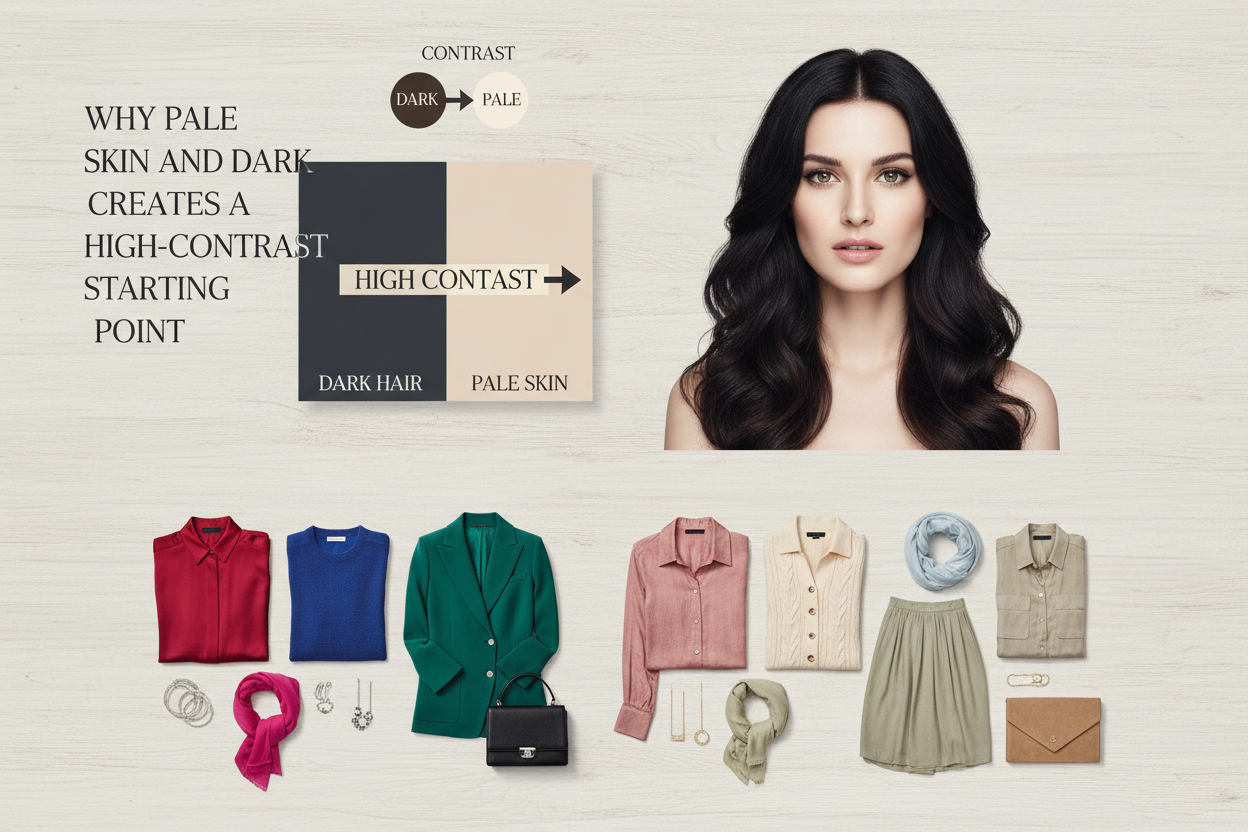
That contrast is the key variable when you're choosing clothing. A color placed near your face either extends that built-in drama or competes with it. Unlike lower-contrast coloring — where clothing choices carry less risk — this pairing is unforgiving in the best possible way: intentional choices look exceptional, while careless ones are immediately obvious.
This is also why generic "flattering colors for fair skin" advice often misses the mark. Those guides tend to assume a softer, lower-contrast appearance. This coloring is categorically different, and dressing it well means leaning into that rather than softening it away.
Want to know exactly where your coloring sits on the contrast spectrum? Take the free color analysis quiz →
Identifying Your Undertone: The Variable That Changes Everything
High contrast tells you how dramatic your palette can go. Undertone tells you in which direction. Before any specific color recommendation makes sense for your skin, you need to know whether your fair complexion is warm-toned or cool-toned — because that single variable changes which shades enhance your coloring and which ones fight it.
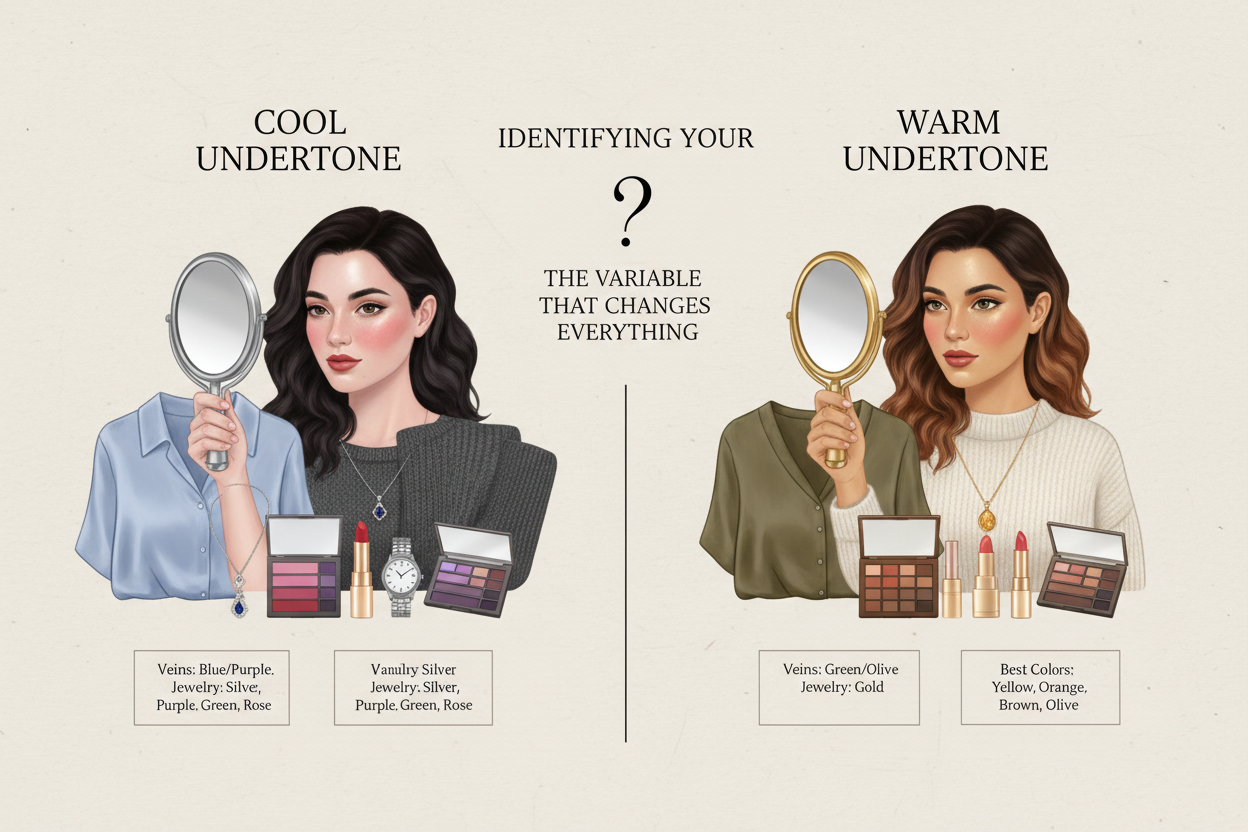
Undertones influence how colors read against your skin in ways that aren't always obvious. A jewel tone that glows on cool fair skin can look muddy on a warm fair complexion, even though both people are technically "pale."
Warm vs. Cool Undertones in Fair Skin: A Quick Self-Check
Use two or three of the following checks and look for consistency across them:
The vein test Look at the inside of your wrist in natural daylight:
- Veins that appear blue or purple → cool undertone
- Veins that appear green or olive → warm undertone
- A mix of both → neutral undertone
The jewelry test Hold a piece of silver jewelry and a piece of gold jewelry near your face:
- Silver makes your skin look clearer and brighter → cool undertone
- Gold looks more natural against your skin → warm undertone
The white vs. cream test Try on a crisp white top, then a warm cream or ivory one:
- Bright white looks clean and fresh against your skin → cool undertone
- Cream or off-white looks softer and more harmonious → warm undertone
Once you've confirmed your undertone, the palette sections below get a lot more precise — and a lot more useful.
Clothing Colors That Amplify the Contrast: Bold Picks for Pale Skin and Dark Hair
The pale-skin-dark-hair combination reads as dramatic and intentional, and the clothing colors that work best are the ones that honor that quality rather than dilute it. These are shades with enough depth or saturation to hold their own against the visual weight of dark hair while remaining distinct from the paleness of your skin.
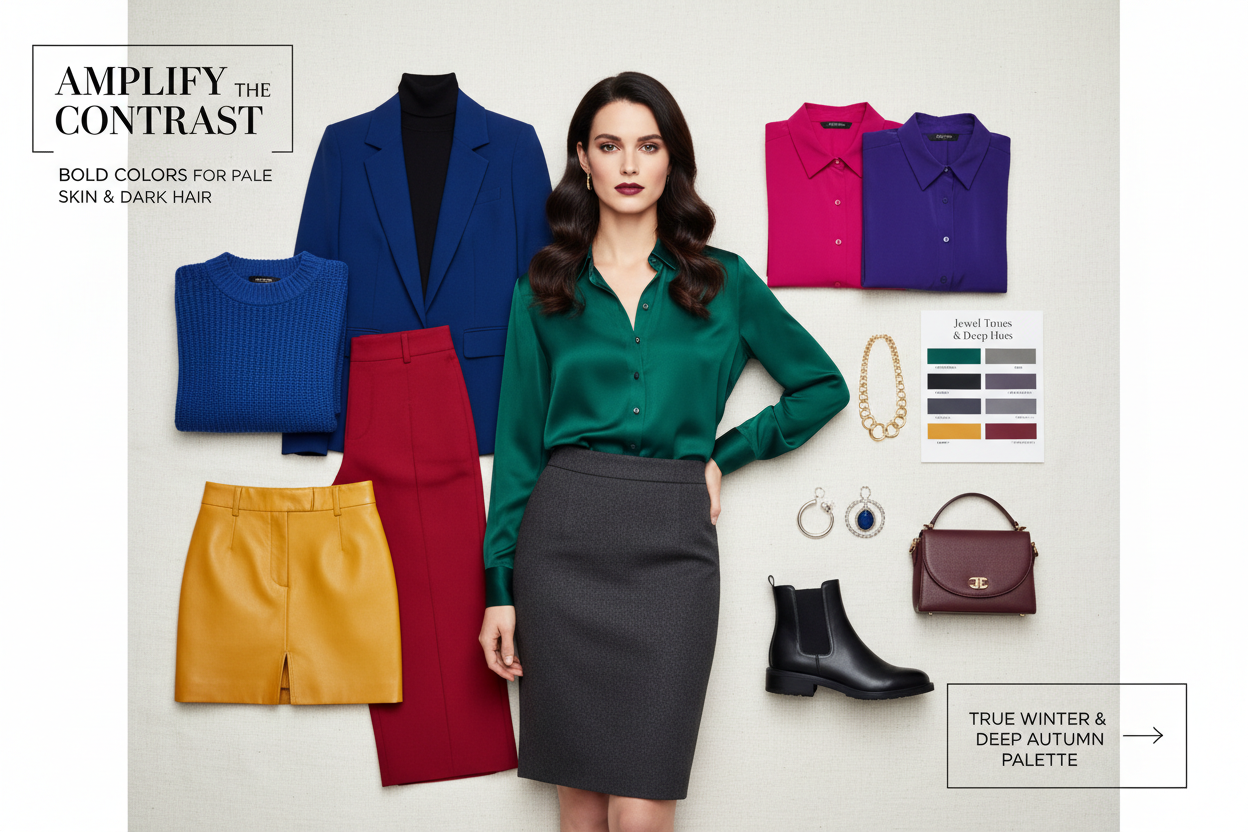
Colors that naturally amplify your contrast:
- True black — reinforces the deep anchor of dark hair and creates a clean, sharp frame for pale skin
- Rich navy — slightly softer than black but carries comparable visual weight; particularly strong for cool undertones
- Deep jewel tones (emerald, sapphire, amethyst, ruby) — saturated hues that echo the richness of brunette hair and make fair skin look luminous by contrast
- Burgundy and deep wine — warm-leaning depth that bridges the gap between your dark hair and your fair complexion
- Forest green and hunter green — earthy depth that reads as sophisticated rather than stark
The logic is the same across all of these: they maintain the contrast ratio rather than collapsing it. Wear something with genuine depth and your pale skin looks brighter, your dark hair looks richer, and the whole picture comes together.
When to Soften the Drama: Contrast-Aware Styling Adjustments
Bold and high-contrast isn't always the goal. Workplaces, casual weekends, and relaxed social situations sometimes call for a quieter version of your palette — and you can dial the drama down without abandoning what works for your coloring.
Practical ways to soften the contrast intentionally:
- Move bold colors away from your face. A deep navy trouser with a mid-tone blouse keeps the richness in your outfit without the high-contrast frame at the neckline.
- Use medium-depth shades as a bridge. Dusty rose, slate blue, and muted teal retain enough color personality to look deliberate without the full intensity of a jewel tone.
- Layer depth rather than wearing it as a single statement. A charcoal layer over a softer inner top creates visual interest with less contrast intensity at any single point.
- Lean on texture over color. When you want a quieter palette, textured fabrics — bouclé, ribbed knit, brushed linen — give the eye something to engage with even in softer shades.
The goal in low-drama situations isn't to abandon your palette. It's to use the same principles at a lower volume.
Clothing Colors for Cool-Undertoned Fair Skin With Dark Hair
Cool undertones in pale skin mean your complexion carries pink, rosy, or slightly bluish notes. Clothing that shares that cool temperature tends to look polished and cohesive. Warm or yellow-based tones, on the other hand, can make cool fair skin look sallow or washed out.
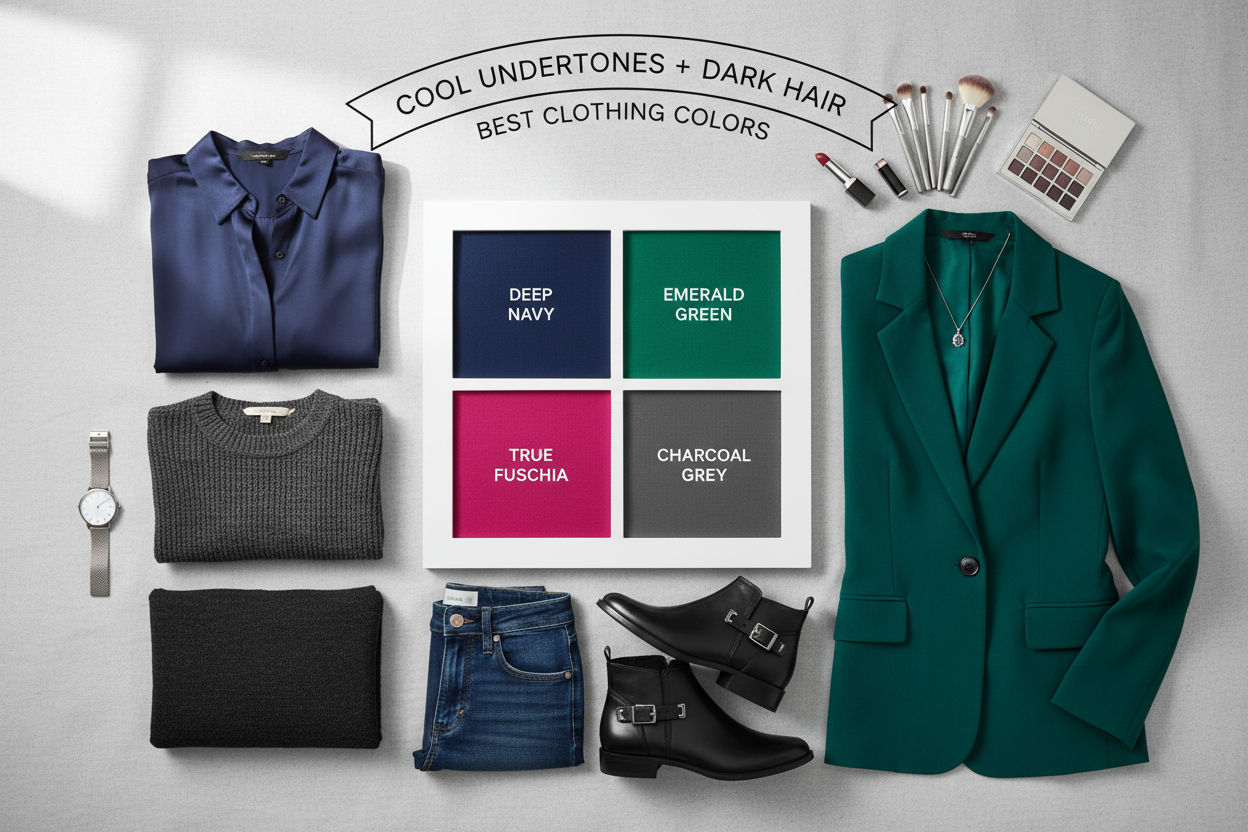
Strong choices for cool-undertoned fair skin with dark hair:
- Icy brights — crisp white, powder blue, lavender, and pale mint work well against rosy skin
- True cool jewel tones — sapphire, amethyst, and cool emerald all have blue or green undertones that suit cool complexions
- Silver and charcoal grays — share the cool temperature of your skin while adding some depth
- Cool berry and plum shades — deep enough to hold up against dark hair, cool enough to flatter your complexion
- Classic navy — versatile and consistently cool, with enough weight to anchor the high-contrast pairing
- Crisp black and white — a high-contrast classic that directly mirrors the contrast between your hair and skin
Not sure whether your undertone is cool or warm? Take the quiz for a personalized read on your specific coloring →
Clothing Colors for Warm-Undertoned Fair Skin With Dark Hair
Warm undertones in fair skin mean your complexion carries golden, peachy, or slightly yellow notes — the same tonal register as brunette shades described as honey, caramel, or fawn. That warm thread through your hair and skin creates a natural opportunity: clothing that picks up those warm tones creates harmony across your entire appearance.
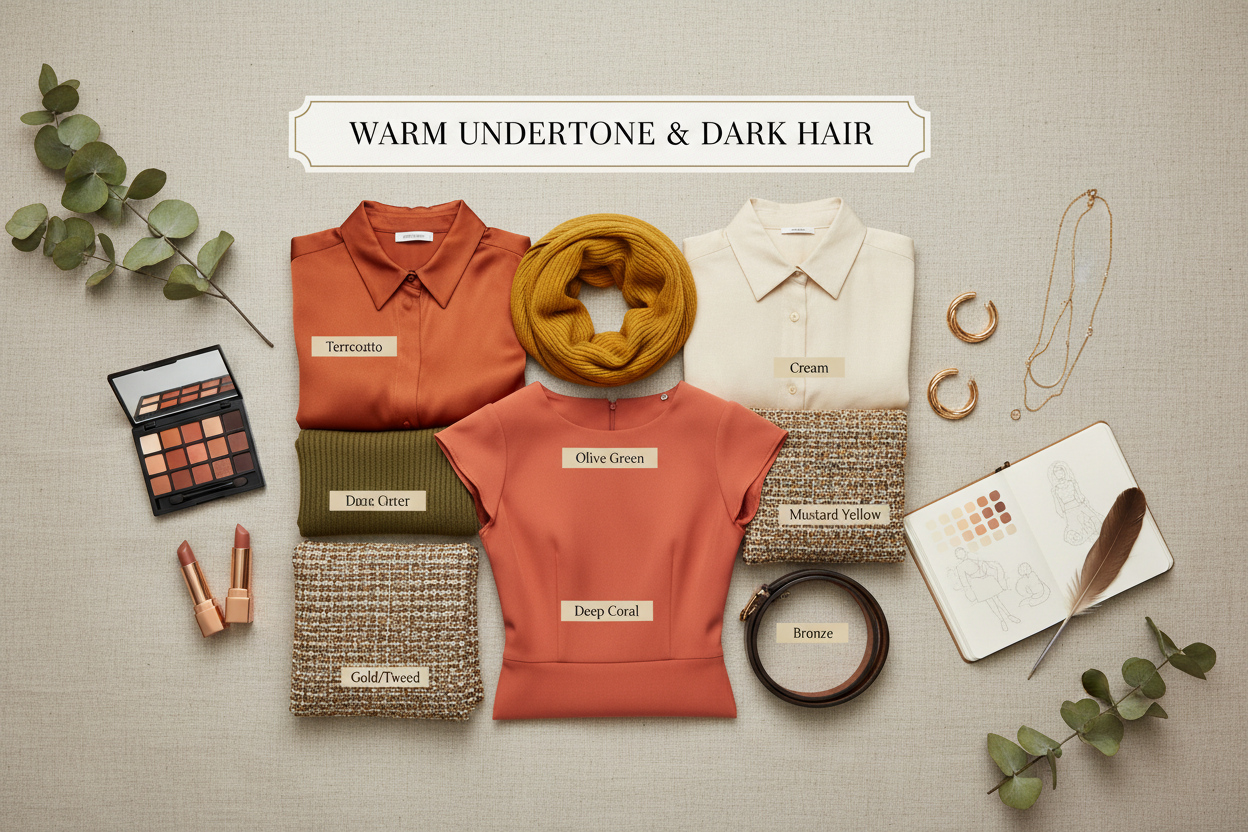
Strong choices for warm-undertoned fair skin with dark hair:
- Warm earth tones — terracotta, camel, rust, and warm tan share tonal DNA with honey and caramel brunette shades, creating a naturally unified look
- Warm jewel tones — topaz, amber, warm emerald, and copper-orange carry yellow or red undertones that echo the warmth in your skin
- Ivory and warm cream — far more flattering than stark white on warm-toned skin; avoids the grey-ish cast that cool white can create
- Olive and warm sage green — earthy greens with a yellow base that complement golden undertones naturally
- Deep burgundy and cinnamon — warm-leaning reds and red-browns that resonate with the depth of brunette hair while harmonizing with peachy or golden skin
- Rich cognac and warm brown — echo the caramel and cocoa register of warm brunette hair tones
The through-line is temperature. Warm fair skin tends to glow when clothing stays in the same tonal family — and look a bit flat or washed out when stark cool or bluish tones take over.
Colors to Approach With Caution: Shades That Can Wash Out Fair Skin
Caution isn't the same as prohibition. These colors can work — but they're more likely to flatten the pale-skin-dark-hair contrast than the shades in the previous section, and it's worth knowing why before you reach for them.
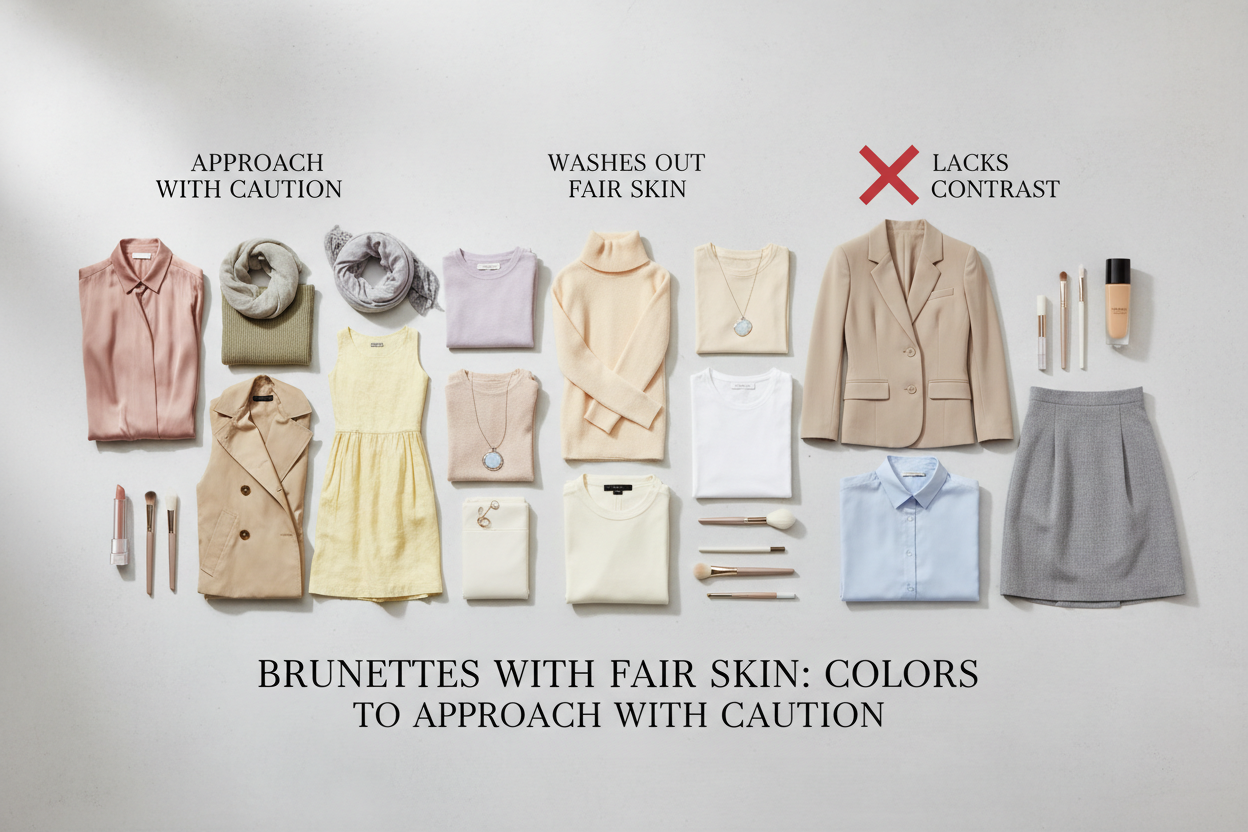
Shades to use thoughtfully:
- Pale yellow and washed-out gold — on cool fair skin especially, these can read as sallow; even on warm skin, they need enough saturation to avoid blending into your complexion
- Light beige and sand — when neutrals sit too close to your skin tone, the low contrast blunts your coloring; try a deeper camel or richer tan instead
- Pastel peach and soft coral — on warm fair skin, these blend rather than contrast; on cool fair skin, the warmth in the hue fights your undertone
- Washed-out gray — mid-gray without depth or warmth flattens pale skin; charcoal or slate hold their own better
- Neon shades — high intensity without depth overwhelms the contrast rather than enhancing it; better as accents than statement pieces
The issue with all of these isn't that they're universally wrong. They're just more dependent on execution. Saturation, fabric weight, and placement — near your face versus further away — all affect whether the color works with your coloring or against it.
Building a Wardrobe Around Your Contrast: Putting the Palette Together
Knowing what individual colors do for you is useful. Actually building a wardrobe around your coloring — pale skin, dark hair, a confirmed undertone — is where it pays off. The goal isn't a checklist. It's a set of pieces that consistently look like you meant them.
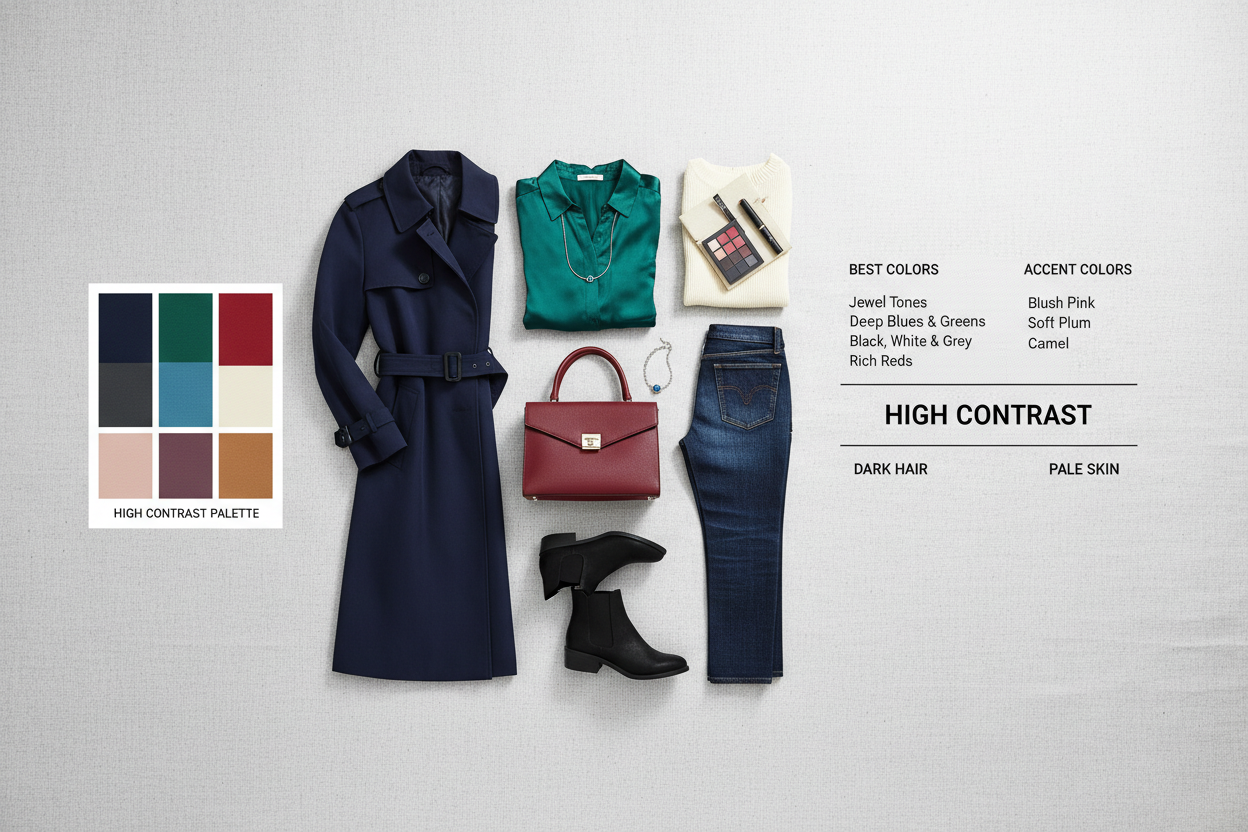
Think of it in three tiers:
Tier 1: High-drama anchors Pieces that use your contrast fully — deep jewel tones, black, navy, strong burgundy. These are what make your coloring look most striking. You don't need many. Three or four well-chosen items give you a backbone.
Tier 2: Undertone-aligned midrange Colors that don't announce themselves but still work with your complexion. Cool grays and muted blues for cool undertones; warm earth tones and ivory for warm. These carry the everyday load without losing coherence.
Tier 3: Considered neutrals Charcoal rather than washed-out gray. Rich camel rather than light sand. Off-white or bright white depending on your undertone. These do the quiet work without actively undermining anything.
When the tiers fit together, even simple outfits read as put-together. Not because every piece is making a statement, but because none of them are working against you.
People Also Ask
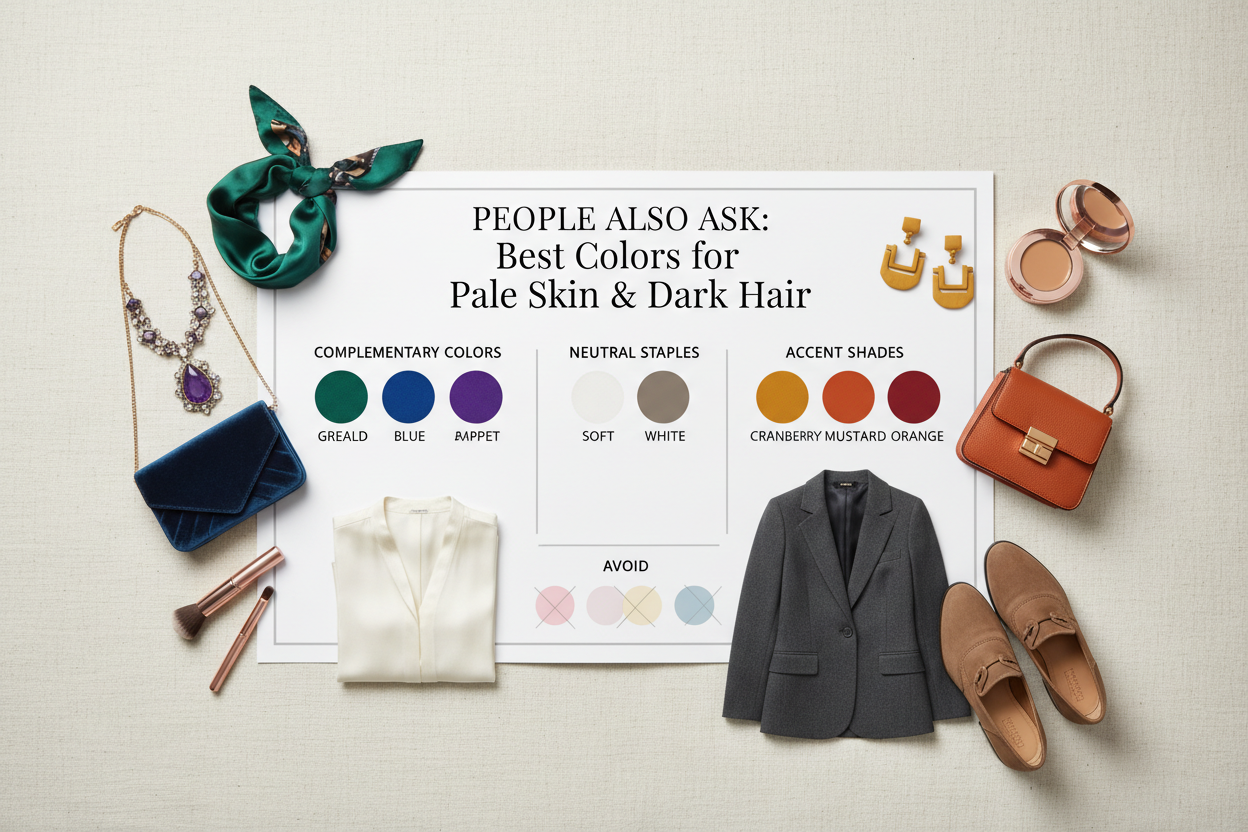
What colors look best on pale skin with dark hair?
The strongest choices work with the natural contrast this coloring already has. Deep jewel tones — sapphire, emerald, amethyst, ruby — tend to be reliably flattering: the saturation makes pale skin look luminous and dark hair look richer. True black, deep navy, and burgundy work for the same reason, keeping the contrast sharp rather than collapsing it. For everyday wear, medium-depth shades like slate blue, dusty rose, and muted teal stay polished without going full jewel-tone intensity. Your undertone (warm vs. cool) then determines which end of each shade works best for your specific complexion.
Should brunettes with fair skin wear black clothing?
Yes — it's one of the more reliable options for this coloring. Black echoes the depth of dark hair and frames pale skin cleanly, reinforcing the high-contrast effect rather than fighting it. The main variable is undertone: on cool fair skin, black sits naturally alongside the complexion's pink or rosy notes. On warm fair skin it still works, especially with warm accessories or richer layers like burgundy or cognac. All-black outfits are rarely the problem here; flat or shapeless styling is more likely to dull the look than the color itself.
What colors wash out pale skin with dark hair?
Shades that sit too close to the tone of pale skin create a low-contrast effect that flattens everything. The highest-risk ones:
- Light beige and sand — blend into fair skin rather than contrasting with it
- Pale yellow and washed-out gold — can add a sallow cast, especially on cool undertones
- Pastel peach and soft coral — tend to merge with a fair complexion rather than read as distinct
- Washed-out mid-gray — lacks the depth to hold its own against dark hair
The common thread is either not enough contrast or a color that clashes with your skin's undertone. These aren't hard rules — saturation, fabric, and placement near your face all matter — but they carry more risk than deeper or more saturated options.
Does warm or cool undertone matter more for fair-skinned brunettes choosing clothes?
Undertone matters just as much as contrast, and possibly more when you're fine-tuning. Knowing that pale skin and dark hair creates high contrast tells you how bold your palette can go. Undertone tells you which direction that boldness should take. A jewel tone that glows on cool fair skin can look muddy on a warm fair complexion, even if both people technically have "pale skin and dark hair."
Cool undertones (pink or rosy notes in the skin) pair well with sapphires, icy brights, crisp white, and silver-based neutrals. Warm undertones (golden or peachy notes) work better with earth tones, warm jewel shades like topaz and amber, ivory, and rich camel. When an otherwise good color still looks off, undertone is usually why — the depth is right but the temperature isn't.
What clothing colors make pale skin look brighter?
Pale skin looks brightest when the clothing near your face creates real contrast and matches (or complements) your undertone:
- Cool undertones: Icy brights like powder blue, lavender, and crisp white reflect cool light back toward the skin, playing up its natural rosiness
- Warm undertones: Warm ivory, soft gold, and peachy-coral shades with enough saturation to contrast add a warm glow
- Both undertones: Deep jewel tones make fair skin look lighter by comparison — the contrast does the work
- Both undertones: True black and rich navy anchor the look at the shoulders and let pale skin stand out
Colors too close to the skin's own tone — light beige, washed-out pastels, pale yellow on cool skin — do the opposite, making fair skin look flat instead of bright.
FAQ
What is the best clothing color for someone with pale skin and dark brown hair?
No single answer covers everyone, but deep, saturated colors tend to work best. Rich jewel tones like sapphire, emerald, and amethyst fall into this category, as do strong neutrals like black and deep navy. They hold the natural contrast between pale skin and dark hair rather than flattening it.
The second thing to consider is undertone. Cool fair skin tends to look better with cool-leaning versions of those shades, while warm fair skin does more with burgundy, topaz, or forest green. Get both the depth and the temperature right, and the result tends to feel pulled together.
Do jewel tones work for fair-skinned brunettes?
Yes, and reliably so. Jewel tones come up again and again for this coloring because the saturation works two ways at once: deep color makes pale skin look more luminous by contrast, and the richness balances the visual weight of dark hair. Sapphire, emerald, amethyst, and deep ruby are good places to start.
Undertone determines which jewel tones actually work. Cool fair skin tends to do better with clear, cool jewels — sapphire and amethyst rather than topaz or amber. Warm fair skin looks more cohesive in warmer jewels — rich gold-greens, purples with red undertones, deep amber. Either way, jewel tones rarely wash out fair skin the way pale or muted shades can.
Can pale-skinned brunettes wear all-black outfits without looking washed out?
Yes, with one caveat. Black works well for this combination because it echoes the depth of dark hair and creates a clean, high-contrast frame around fair skin. It tends to sharpen the look rather than wash it out.
The main thing to consider is undertone at the collar line. Cool fair skin pairs naturally with true black, since both lean toward pink or rosy tones. Warm fair skin can sometimes make all-black feel a little flat — adding a warm accent near the face, like a cognac belt or burgundy scarf, usually fixes that without ditching the look entirely. Fit and styling tend to matter more than color anyway.
How do I know if my fair skin has warm or cool undertones?
A few self-checks tend to be reliable:
- Vein color: Look at the inside of your wrist in natural light. Blue-purple veins suggest cool undertones; green veins suggest warm.
- Jewelry response: Silver tends to look more harmonious on cool undertones; gold flatters warm undertones more naturally.
- Sun reaction: Cool fair skin often burns and stays pale; warm fair skin may tan slightly before burning.
- White vs. ivory: Hold a crisp white fabric and a warm ivory fabric near your face. Cool undertones usually look cleaner next to true white; warm undertones look more alive next to ivory.
Undertones matter more than people expect. A color that glows on a cool complexion can look muddy on a warm one, even at the same depth.
Are there specific colors that clash with the pale-skin-dark-hair combination?
No color is an absolute rule, but a few categories consistently cause problems:
- Light beige and sand — sit too close to fair skin and kill the contrast
- Washed-out pastels — pale yellow, soft peach, and muted pink tend to blend into a fair complexion rather than stand apart from it
- Pale yellow on cool skin — particularly likely to introduce a sallow cast
- Mid-range muddled tones — dusty mauves and desaturated olive flatten the natural drama of this coloring without offering anything back
The common thread is either too little contrast or a temperature mismatch with the skin's undertone. None of these shades are impossible to wear, but they need careful attention to saturation, placement, and supporting pieces to avoid looking flat.
Does hair shade within brunette (e.g., honey vs. espresso) change which clothing colors work best?
Yes, though the differences are subtle. The brunette spectrum runs from honey and fawn through caramel and cocoa to espresso, and each sits at a different warmth level and depth. That shift nudges the overall palette.
- Deeper, cooler brunettes (espresso, blue-black) increase contrast, so bold, saturated, cool-toned clothing tends to land well.
- Warmer, lighter brunettes (honey, caramel, fawn) bring more warmth into the picture, which softens contrast a little and makes earth tones — camel, terracotta, olive — feel more cohesive with the hair.
Skin undertone still matters more than hair shade. But knowing where your brunette falls on the warm-to-cool axis helps you pick the right version of a color, not just the right color.
What neutral clothing colors are safest for fair skin with dark hair?
The most reliable neutrals for this coloring have enough depth or temperature clarity to hold up against both pale skin and dark hair:
- True black — strong, high-contrast, and versatile across undertones
- Rich navy — similar depth to black with slightly softer contrast; works on both warm and cool undertones
- Deep charcoal — easier to mix than mid-gray, which can look flat against this combination
- Warm ivory or off-white — more flattering than stark white on warm fair skin, and easier to wear day-to-day
- Crisp white — best for cool undertones, where it plays up natural brightness
- Rich camel or cognac — a solid warm-neutral anchor for warm-undertoned fair skin
Mid-range neutrals — light beige, washed-out gray, pale taupe — are riskier because they don't have enough contrast to register against the visual weight of dark hair. When in doubt, go deeper or more temperature-specific rather than pale or muddled.
Not sure where your undertone falls? A quick color analysis can clarify which neutrals and accent shades will work best for your coloring — take the quiz at color-analysis.app to find out.
To turn this principle into another practical outfit decision, continue with the companion article “Best Shirt Colors for Pale Skin”, which keeps the two closely related questions distinct.