Spring vs Summer Palette Differences
 Reviewed by Alexandra Gilmore
Spring and Summer can both look light and delicate, but their colors behave differently because Spring is warm and clearer while Summer is cool and softer. Compare peach against rose, warm aqua against powder blue, and ivory against soft white to identify which palette keeps your complexion awake.

At first glance, spring and summer color palettes can look almost identical. Both tend toward softer, lighter hues. Both can feature blonde hair, blue eyes, and a delicate complexion in their typical physical profiles. Yet wearing the wrong palette's colors can leave you looking washed out, tired, or off in a way that's hard to name but impossible to ignore.
💫 Explore Seasonal Color Analysis
Use the distinctions in this article to narrow the possibilities, then compare the seasonal system as a whole. Seeing the neighboring palettes together makes the result easier to test in real clothing and daylight.
Learn Seasonal Analysis →The reason the spring vs summer color palette question trips so many people up is that the dividing line runs through something subtle but fundamental: undertone. Spring palettes are built on warmth — golden, peachy, and sun-kissed tones — while summer palettes lean cool, resting on a blue-pink or rosy base. That single shift changes which colors flatter you and which ones fight your natural coloring.
Here's what this distinction actually means in practice:
- Spring colors have yellow or golden undertones running through them, making shades feel alive and sun-warmed
- Summer colors carry a cool, slightly muted quality — think colors seen through a soft haze rather than direct sunlight
- Both seasons share lightness as a defining characteristic, which is why the lightest versions — Light Spring and Light Summer — are the most commonly confused pair in the entire 12-season system
This article breaks down exactly where the two palettes diverge, how to read the physical signals that point toward one over the other, and what those differences mean when you're building a wardrobe. Whether you're deciding between the broader season families or narrowing down between Light Spring and Light Summer specifically, you'll find a clear, evidence-based guide to telling them apart.
Why Spring and Summer Palettes Are So Easy to Confuse
Most color analysis confusion happens at the edges of seasonal families, and the spring-summer boundary is one of the worst offenders. The reason is simple: both families share lightness as a defining characteristic. Light Spring and Light Summer are, by formal definition within the 12-season system, the two lightest palettes that exist — lighter than any Autumn or Winter sub-season, and softer than Bright Spring or Deep Winter.
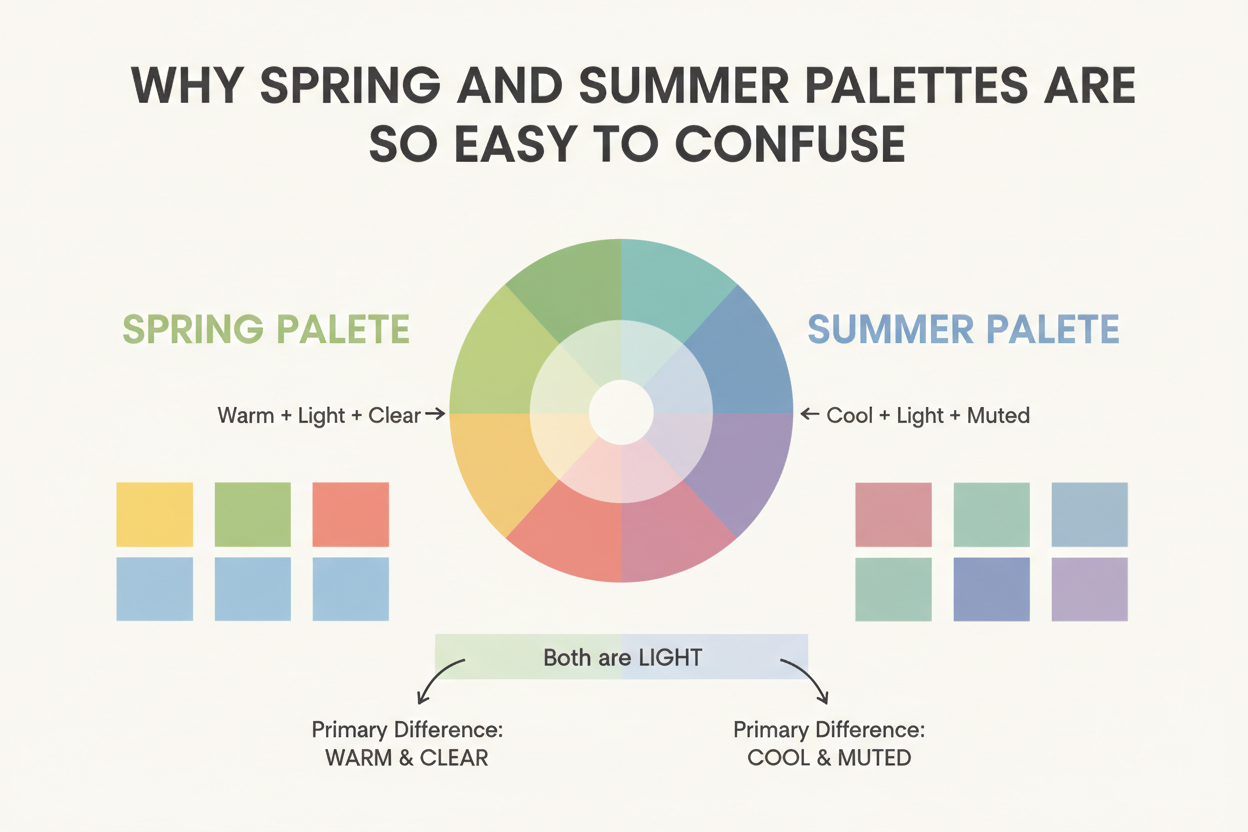
That shared lightness means the physical profiles can overlap a lot. Someone might know their coloring is delicate and soft without being able to tell whether the underlying quality is warm or cool. When lightness is the dominant thing you see in the mirror, the warmth or coolness underneath can be genuinely hard to read — especially in artificial light or without a direct color comparison next to the skin.
This trips up practitioners and self-analysts alike. If you've already determined that lightness is your primary characteristic but can't land on a season, you're not missing something obvious. You've hit one of the system's genuinely close calls.
→ Not sure where your lightness falls? Take the color analysis quiz to get a palette grounded in your specific undertone.
The Core Difference: Warm Undertones vs Cool Undertones
Strip away the color names and seasonal metaphors, and the spring vs summer distinction comes down to one thing: warm versus cool undertone.
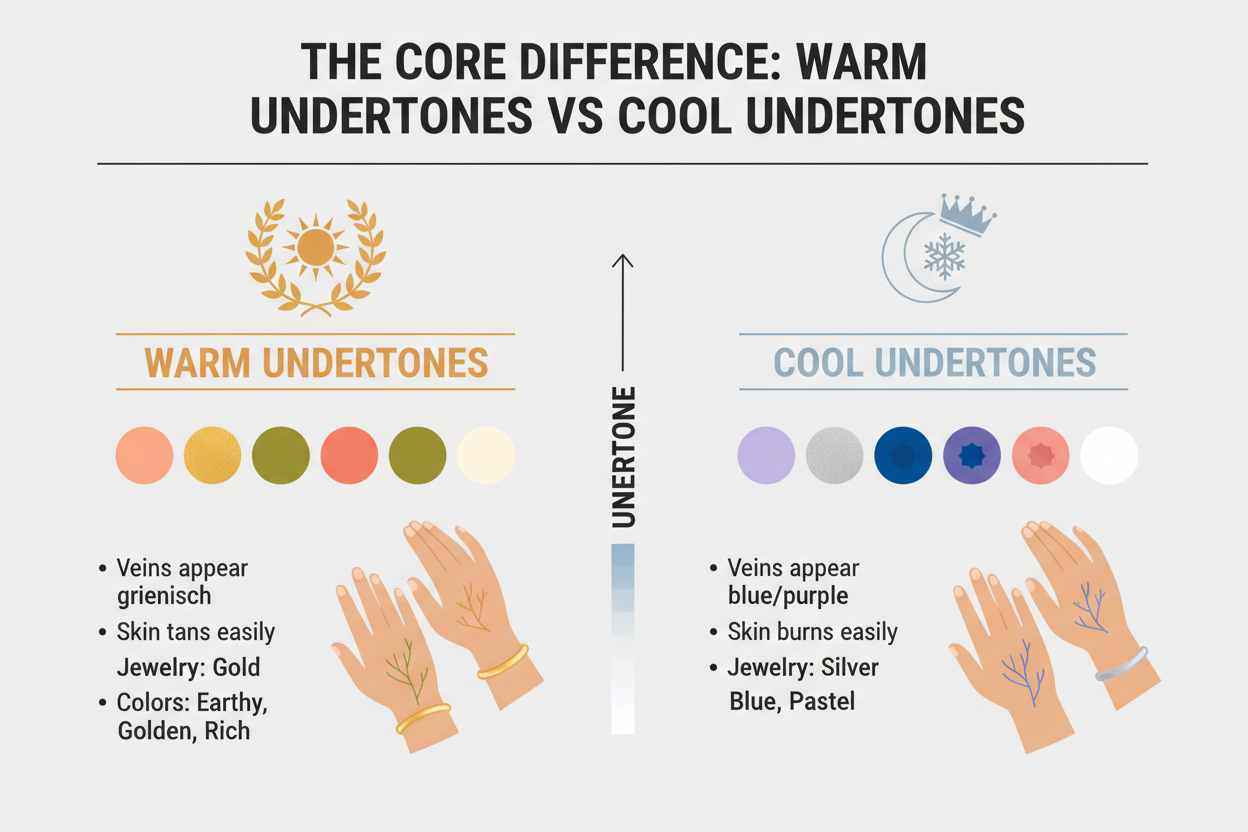
Spring palettes are anchored in warmth. The hues carry yellow or golden undertones, giving them a sun-touched, peachy, or honey-like quality. Even spring colors that read as neutral lean warm rather than sitting at true neutral or drifting cool.
Summer palettes work on the opposite side of that axis. Cool undertones run through every summer hue, creating a blue-pink, rosy, or ash-tinged quality. Summer colors often look softened or slightly muted compared to their spring counterparts, even when the hue itself is similar.
The part that trips people up: undertone and lightness move independently. A color can be light and warm (spring) or light and cool (summer). When lightness dominates the visual impression, undertone hides in plain sight. That's exactly why these two families cause so much confusion for people who've correctly identified that their coloring is soft and light but haven't yet pinned down which direction — warm or cool — it's pulling.
How the Spring Palette Looks in Practice
Spring colors share a quality that's hard to name but easy to recognize: they feel sun-warmed. Even the quieter, more muted spring tones carry a golden or peachy undercurrent that keeps them from reading as cold or dusty. A few things hold true across the whole spring family:
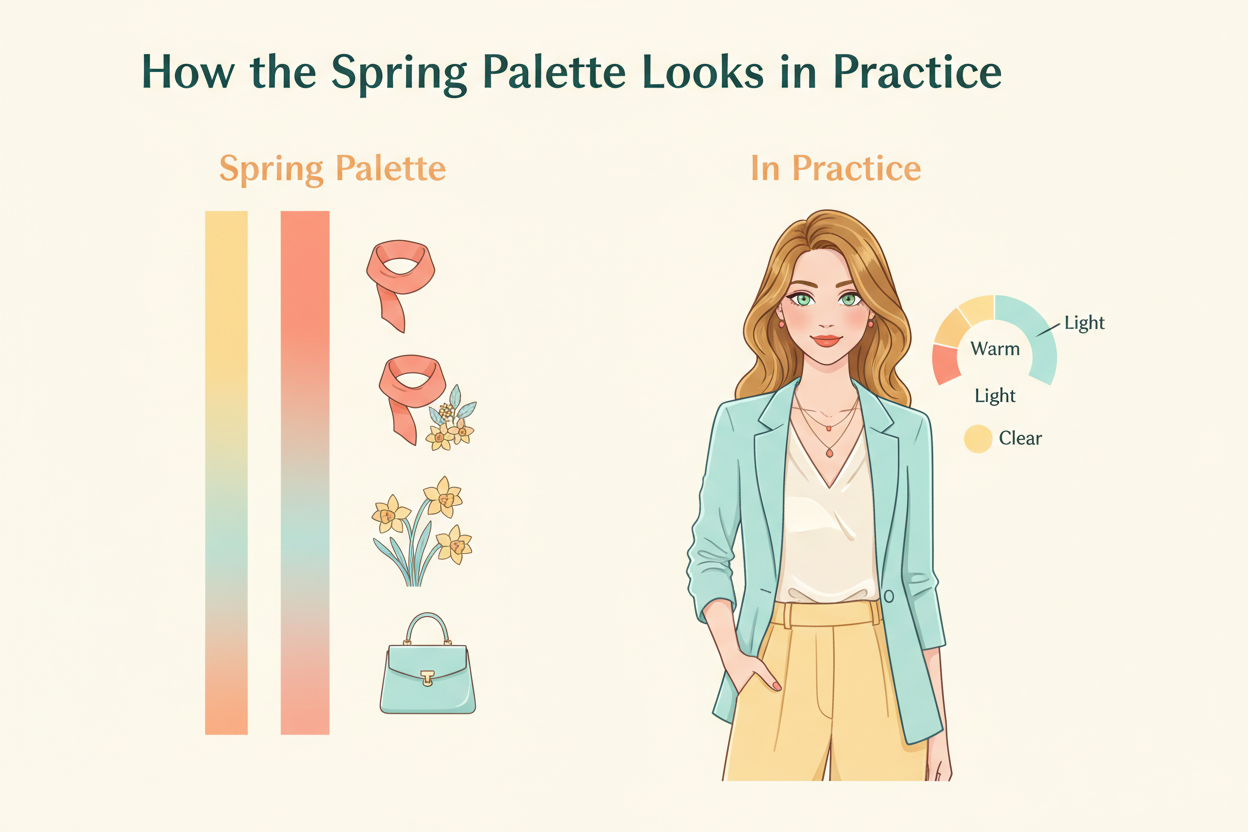
- Undertone: Warm — every hue has a yellow, golden, or peachy base
- Saturation range: Varies by sub-season — Light Spring sits at lower saturation while Bright Spring can handle bold, electric colors — but warmth stays constant throughout
- Common hues: Peach, coral, warm ivory, golden yellow, warm turquoise, camel, warm greens with yellow in them
- Neutrals: Warm beige, camel, golden brown, off-white with a peachy or cream cast — not stark or cool white
- What to avoid: Icy, blue-based, or ashy tones that pull the warmth out of the complexion
Within the 12-season framework, spring's defining characteristics — warmth, brightness or clarity, and lightness in Light Spring's case — work together to produce a palette that reads as fresh and luminous rather than cool and airy. Think of it as late-morning light rather than the hazy diffusion of an overcast afternoon.
How the Summer Palette Looks in Practice
Summer palettes read as cool, soft, and slightly hazy — colors seen through a thin veil of mist rather than direct sun. True Summer, also called Cool Summer, is the most characteristic expression of this palette, but the cool quality runs across all summer sub-seasons.
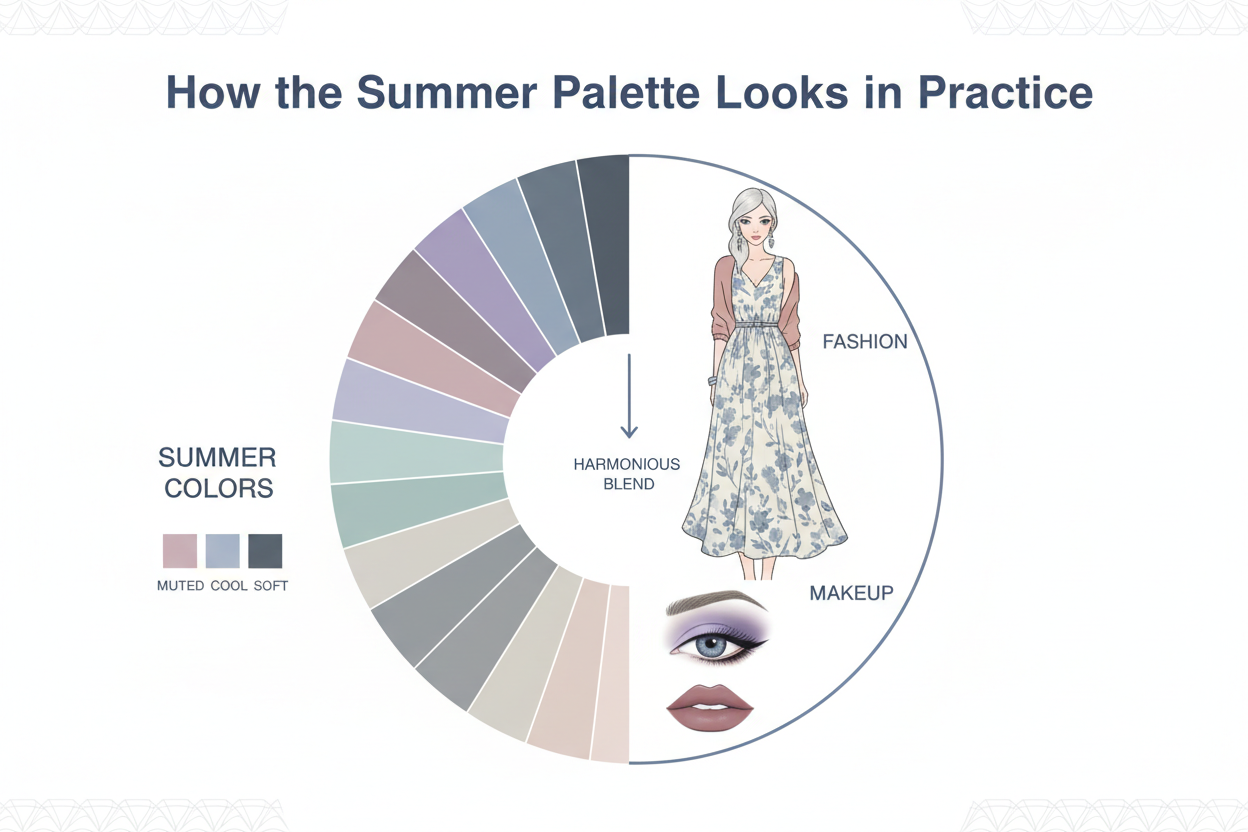
Key characteristics across the summer family:
- Undertone: Cool — blue-pink, rosy, or ash-based in every hue
- Saturation: Intentionally soft and muted; fully saturated colors tend to overwhelm summer coloring
- Common hues: Dusty rose, lavender, soft blue, cool mauve, powder pink, cool sage, periwinkle, icy lilac
- Neutrals: Cool grey, soft white with a slight blue or pink cast, greyed taupe, rose-tinged beige
- What to avoid: Warm, golden, or orange-based tones that clash with the cool undertone and create a muddy or sallow appearance
The muted quality isn't flatness. It's refinement. Summer palettes work through tonal harmony: colors share a similar cool, softened character rather than standing in sharp contrast. Drop a warm, golden spring color into a summer wardrobe and it looks jarring because it breaks that internal consistency.
→ Still unsure whether your complexion reads warm or cool? Start the quiz for a side-by-side analysis of your undertone.
Light Spring vs Light Summer: The Closest Comparison in the 12-Season System
Of all the seasonal pairings that get confused, Light Spring and Light Summer are the hardest to separate. Both are the lightest seasons in the 12-season color analysis system, both produce a similar physical profile at first glance, and both call for soft, delicate colors over anything bold or heavy.
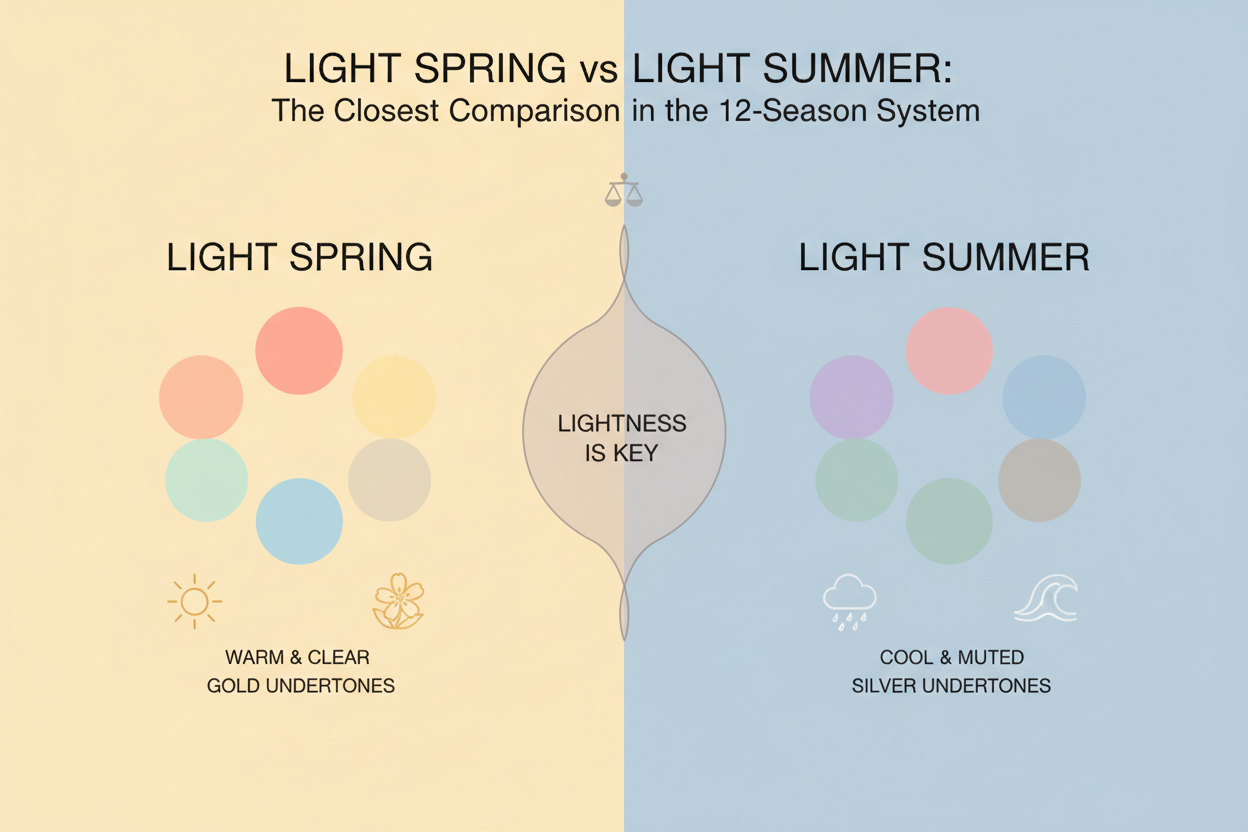
The distinction matters a lot for wardrobe and makeup, yet it's small enough that you need careful observation in the right light to catch it reliably.
Physical Traits That Overlap Between Light Spring and Light Summer
The overlap in physical appearance between these two types is real and substantial — confusion here isn't a failure of observation, it's an accurate recognition that the types genuinely resemble each other. Traits they commonly share:
- Light complexion — skin that reads as fair to light, without strong depth or contrast
- Blonde or light hair — ranging from platinum to medium blonde, often with fine texture
- Blue, blue-grey, or grey eyes — without strong hazel or green warmth
- Low contrast between hair, eyes, and skin — all three features sit in a similar light value range
- Delicate, soft overall impression — nothing about the coloring feels bold or heavily pigmented
These shared traits mean that the usual identification shortcuts — "fair skin," "light hair," "light eyes" — don't actually resolve the question. Both types check those boxes.
The Subtle Signals That Reveal Your True Season
The real differentiators show up at the micro level, in the undertone and cast of each feature rather than in overall lightness. Check each one in natural daylight for the clearest read:
- Skin undertone: Light Spring skin has a peachy, golden, or warm ivory cast. Light Summer skin leans pink, rose, or cool beige — it tends to flush rosy or cool pink rather than peachy.
- Hair tone: Light Spring hair runs toward golden blonde, with warmth or honey in the strands. Light Summer hair reads as ash blonde — cool, slightly greyed, no golden warmth.
- Eye quality: Both types can have blue or grey eyes, but Light Spring eyes often carry warm flecks or a sunlit quality. Light Summer eyes tend to be a cooler grey-blue, sometimes with a soft lavender cast.
- How skin responds to color: Hold a warm peach fabric near your face in natural light. Light Spring skin looks alive and healthy; Light Summer skin may look slightly off or flushed in an unflattering way. Reverse with a cool rose fabric — the Summer comes to life while the Spring can look sallow.
These signals are subtle but consistent. The catch is that they require comparison rather than isolated observation, which is why so many people find it genuinely hard to self-identify at this level without structured tools.
Practical Style Implications: Choosing Colors for Your Wardrobe
The warm-cool distinction matters most when you're actually standing in a dressing room. Get it wrong — even slightly — and light coloring ends up looking washed out or just a bit off, with no obvious culprit.
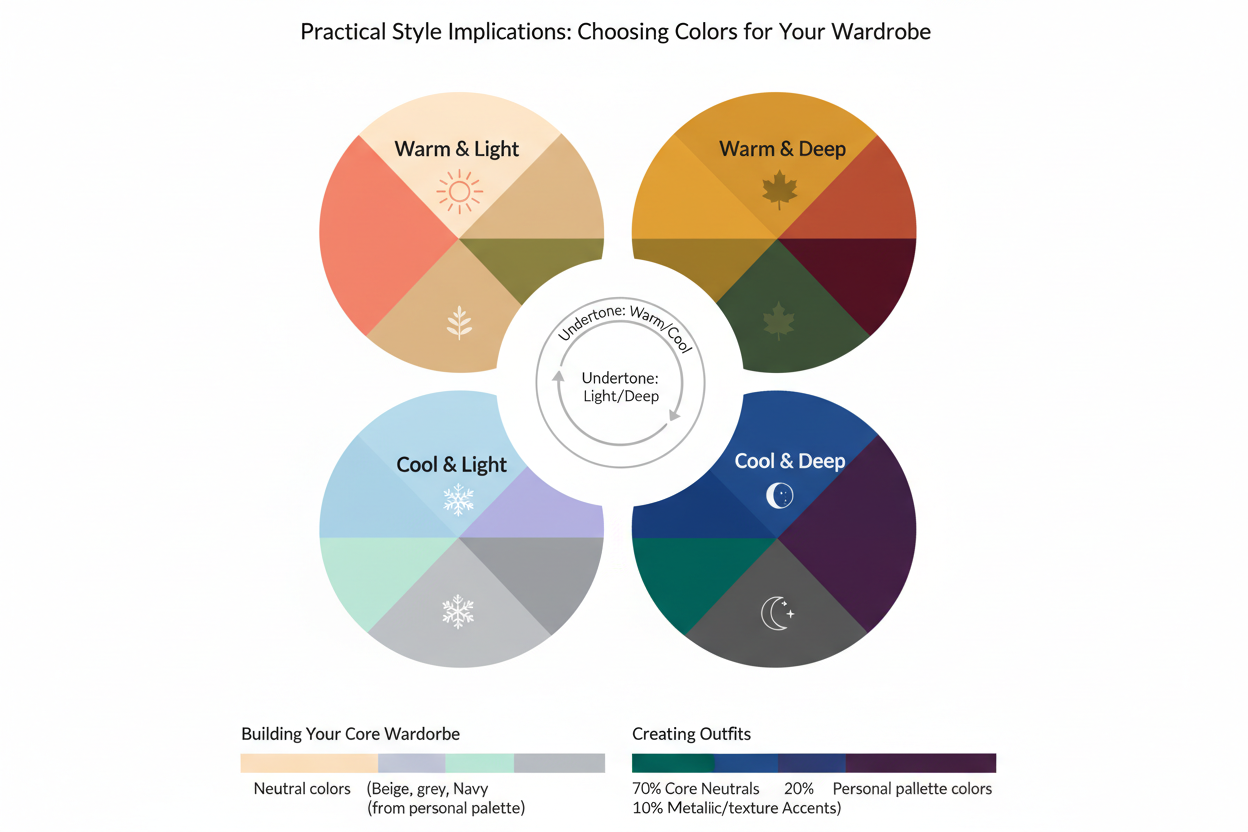
For Light Spring wardrobes:
- Build a base in warm ivory, camel, and soft peach rather than stark white or cool grey
- Reach for warm corals, peachy pinks, golden yellows, and warm aquas as accent colors
- Choose gold jewelry over silver as a default — it aligns with the warm undertone
- Avoid anything with an ashy, lavender, or blue-grey cast, which will compete with the skin's warmth
For Light Summer wardrobes:
- Build a base in soft white, cool grey, and rose-tinged neutrals rather than cream or warm beige
- Reach for dusty rose, lavender, soft periwinkle, cool mauve, and powder blue as accent colors
- Choose silver or rose gold jewelry — cool metals read as more harmonious than yellow gold
- Avoid warm, golden, or orange-based tones, which can make cool undertones look sallow or muddy
The reason both palettes work internally is the same: Spring colors share warmth, Summer colors share coolness and a soft, muted quality. Mix across the two without thinking about undertone and outfits start to look disconnected — or worse, they fight the complexion instead of supporting it.
How to Confirm Which Palette Is Yours
You can narrow this down yourself, but it takes more than reading a description and deciding it sounds like you. The 12-season system has real nuance — what one framework calls Light Spring, another might describe slightly differently — and the physical differences between adjacent types are genuinely close.
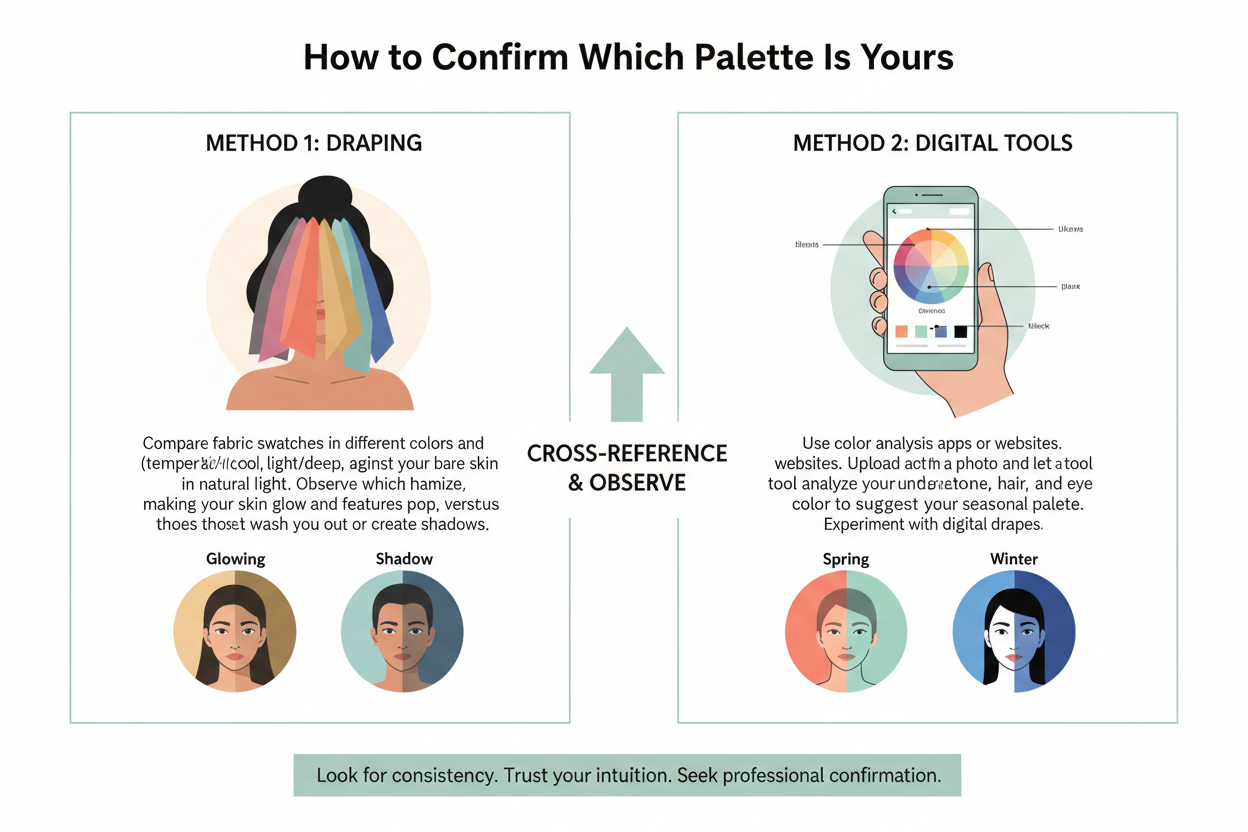
The most reliable approaches:
Draping test in natural light: Hold fabric swatches in warm tones (peach, coral, golden yellow) and cool tones (dusty rose, lavender, cool grey) close to your face near a window or outside. Whichever group makes your skin look clearer and more even is pointing you toward your season.
Hair and vein check as supporting data: Greenish veins lean warm (spring); blue or purple veins lean cool (summer). Golden or honey hair tones lean spring; ash or cool blonde lean summer. These are useful signals, but not definitive on their own.
Structured analysis tools: Because the Light Spring / Light Summer boundary is so close, a quiz that asks about multiple characteristics at once — undertone, hair tone, eye quality, how your skin responds to color — tends to be more reliable than any single observation.
The effort is worth it. Light coloring is particularly unforgiving of the wrong palette direction — there's not enough depth or contrast to absorb a poor color choice. Getting the warm-cool call right is what everything else in your color wardrobe depends on.
People Also Ask
What is the difference between a spring and summer color palette?
The defining difference is undertone direction. Spring palettes carry warm undertones — golden, peachy, or yellow-based hues that give colors a sun-warmed quality. Summer palettes carry cool undertones — blue-pink, rosy, or ash-based hues that give colors a soft, slightly hazy quality.
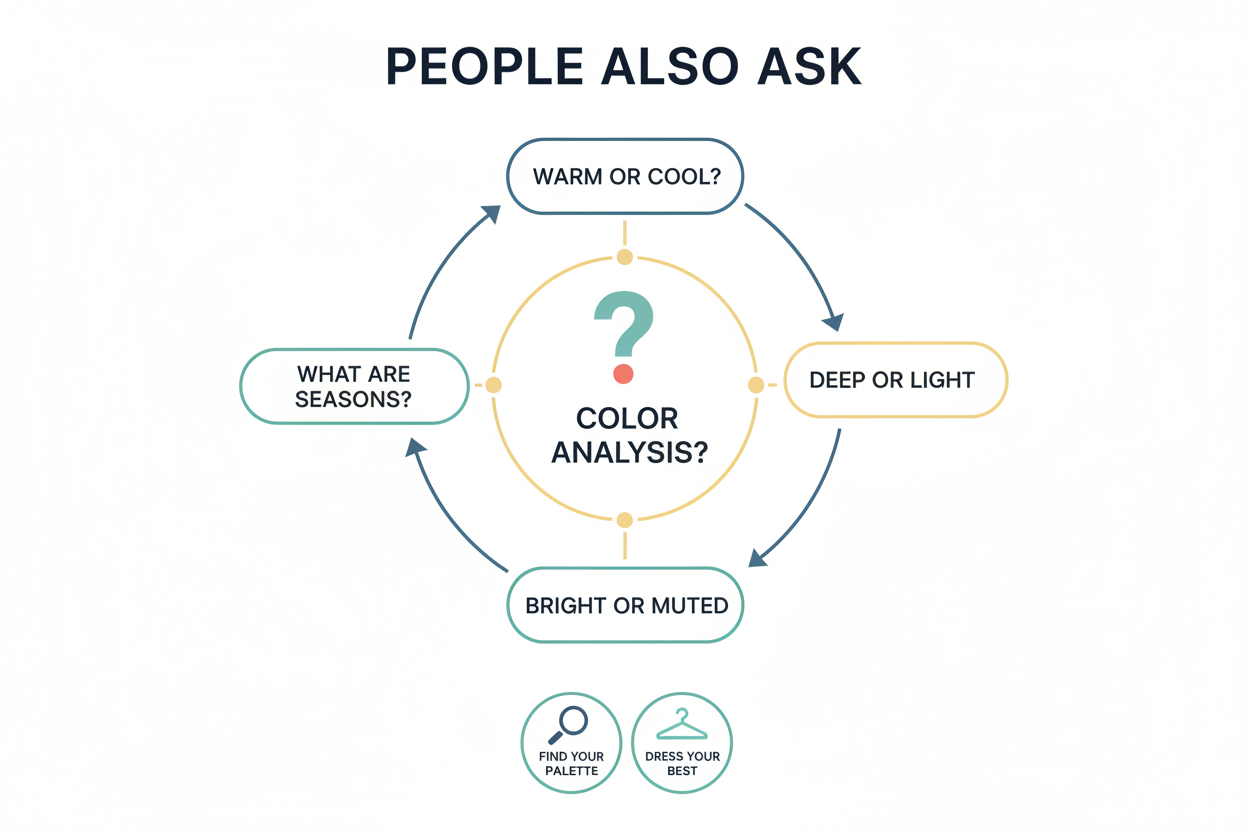
Both families can share similar lightness and saturation levels, which is why they're frequently confused. The warm-versus-cool axis is what separates them. Peach and dusty rose may look similar at a glance, but one belongs to spring and the other to summer.
Can you be both a spring and summer color type?
In the standard 12-season color analysis system, each person lands in one season, not two. That said, adjacent seasons share characteristics. Light Spring and Light Summer both prioritize lightness and softness, so someone sitting close to the boundary may pull off colors from either palette reasonably well.
Even so, one undertone direction — warm or cool — will consistently be more flattering. The point of seasonal analysis is to figure out which direction works better for your coloring, not to mix families freely.
How do I know if I am a Light Spring or Light Summer?
Both types tend to have light complexions, blonde or light hair, and often blue or grey eyes, so overall appearance alone won't answer the question. Check the finer details in natural daylight:
- Skin cast: Peachy or warm ivory points to Light Spring; pink, rosy, or cool beige points to Light Summer
- Hair tone: Golden or honey blonde suggests Light Spring; ash or cool blonde suggests Light Summer
- Vein color: Greenish veins lean warm (spring); blue or purple veins lean cool (summer)
- Draping response: Hold warm peach and cool dusty rose fabric near your face. The one that makes your skin look clearer indicates your season
These signals are subtle. Comparing colors side by side in consistent natural light gives you more reliable results than looking at each feature separately.
What colors should a summer palette avoid that a spring palette can wear?
Summer palettes generally don't work well with:
- Warm oranges, corals, and peachy tones — these clash with cool undertones and can make skin look muddy or sallow
- Golden yellows and camel — the yellow warmth conflicts with summer's blue-pink base
- Warm ivories and cream whites — summer coloring reads better in a soft white with a cool or neutral cast
- Yellow gold metallics — silver and rose gold align better with cool undertones
Spring palettes thrive in all of the above. The warm, golden quality in spring colors supports the complexion rather than fighting it.
Is warm or cool undertone the key difference between spring and summer seasons?
Yes — undertone is the foundational distinction. Every spring sub-season (Light Spring, True Spring, Bright Spring) has a warm undertone base. Every summer sub-season (Light Summer, True Summer, Soft Summer) has a cool one. Saturation, depth, and specific hue selection all build on top of that.
Lightness and undertone are separate things. Lightness describes how much white is in a color. Undertone describes which direction it leans — warm or cool. Two people with equally light coloring can belong to entirely different seasonal families depending on how their skin, hair, and eyes read on that warm-cool axis.
FAQ
What is the main difference between spring and summer color palettes?
Undertone. Spring palettes are built on warm, golden, or peachy undertones. Summer palettes rest on cool, blue-pink, or ash-based undertones. Everything else — saturation, depth, specific hue selection — is secondary to that warm-versus-cool axis.
Do spring and summer palettes share any of the same colors?
Not exactly, but they share a character. Both families include soft, relatively light hues — muted pinks, gentle blues, quiet neutrals can appear in both. The difference is the temperature of those colors. A pink in a spring palette has a peachy warmth to it; the same general "pink" in a summer palette leans rosy and cool. The colors look similar in isolation but behave differently against warm and cool skin.
How do I tell if my undertone is warm (spring) or cool (summer)?
A few reliable signals to check in natural daylight:
- Veins: greenish veins suggest warm undertones (spring); blue or purple veins suggest cool undertones (summer)
- Skin cast: peachy or ivory warmth points toward spring; pink or rosy cast points toward summer
- Jewelry test: gold flatters warm undertones; silver flatters cool undertones
- Fabric draping: hold a warm peach next to a cool dusty rose near your face — whichever makes your complexion look clearer indicates your family
No single signal is definitive, so look at all of them together in consistent lighting.
What makes Light Spring and Light Summer so difficult to distinguish?
Lightness is the dominant characteristic in both. Light Spring and Light Summer are the two lightest palettes in the entire 12-season system, which means the coloring that defines them — light complexion, blonde hair, often blue or grey eyes — looks nearly identical on the surface. The separating factor, warm versus cool undertone, is subtle enough to be invisible without direct color comparison. When the primary feature is shared, the secondary one requires closer inspection.
Can someone with blonde hair and blue eyes be either a spring or a summer?
Yes. Blonde hair and blue eyes are common traits in both Light Spring and Light Summer, so those features alone don't resolve the question. What matters is the tone within them — golden or honey blonde reads as spring; ash or cool blonde reads as summer. Warm blue eyes with a hint of green lean spring; purely grey-blue or cool blue eyes lean summer. Skin undertone usually provides the clearest confirmation.
Which palette is better for muted, dusty colors—spring or summer?
Summer. Soft, dusty, muted tones define the summer family, especially Soft Summer and True Summer. Summer palettes pull in grey or cool softness. Spring palettes can include softer shades (Light Spring in particular), but they tend toward clarity and warmth — fresh and luminous rather than hazy and muted. If dusty mauve, smoky blue, or greyed lavender feel natural to you, summer is the more likely fit.
How many sub-seasons exist within the spring and summer families?
Each family has three sub-seasons, six total across both:
Spring: Light Spring, True Spring, Bright Spring Summer: Light Summer, True Summer (Cool Summer), Soft Summer
These sub-seasons go beyond the broad warm-cool split, accounting for differences in depth and saturation within each family. Not sure which sub-season fits your coloring? Take the color analysis quiz to find your precise palette.