Is Seasonal Color Analysis Worth It
 Reviewed by Alexandra Gilmore
Seasonal color analysis is useful when it reduces costly guesswork, not when a label becomes another rulebook to obey. Compare free tools, digital services, and professional draping by accuracy, price, and likely benefit, then decide whether your wardrobe problem justifies the time and expense.

You've probably seen it on your feed: someone drapes fabric swatches around their shoulders, a consultant declares them a "Soft Autumn" or a "True Summer," and suddenly their entire wardrobe philosophy shifts. The question is whether that moment of revelation is genuinely useful—or just another aesthetics trend dressed up in scientific language.
💫 Explore Seasonal Color Analysis
Use the distinctions in this article to narrow the possibilities, then compare the seasonal system as a whole. Seeing the neighboring palettes together makes the result easier to test in real clothing and daylight.
Learn Seasonal Analysis →The honest answer depends on what you're buying, literally and figuratively.
Seasonal color analysis—the practice of matching your skin tone, eye color, and natural hair color to one of four seasonal palettes—has been around since the 1970s and 1980s. It isn't new. What is new is the scale of its revival, driven by social media and a wave of accessible online tools that have brought the concept to audiences far beyond the styling studios where it once lived quietly.
Here's what this article will do: walk you through what a session actually involves, what it realistically costs (from free self-guided quizzes to $130-and-up in-person appointments), what the evidence says about accuracy, and—critically—whether the results translate into anything useful for your closet and your confidence. You'll also get a direct comparison of in-person, online, and self-guided approaches so you can decide which route, if any, makes sense for you.
No cheerleading, no dismissal. Just a clear-eyed look at what seasonal color analysis delivers and where it falls short.
What Seasonal Color Analysis Actually Is (And Why It's Trending Again)
Seasonal color analysis is a framework for identifying which colors—based on undertone, saturation, and value—work with your natural coloring. A trained analyst (or a well-designed tool) looks at your skin's undertone, eye color, and natural hair color, then places you into one of four seasonal categories: Spring, Summer, Autumn, or Winter. Many modern systems expand these into twelve or even sixteen sub-seasons for finer precision.
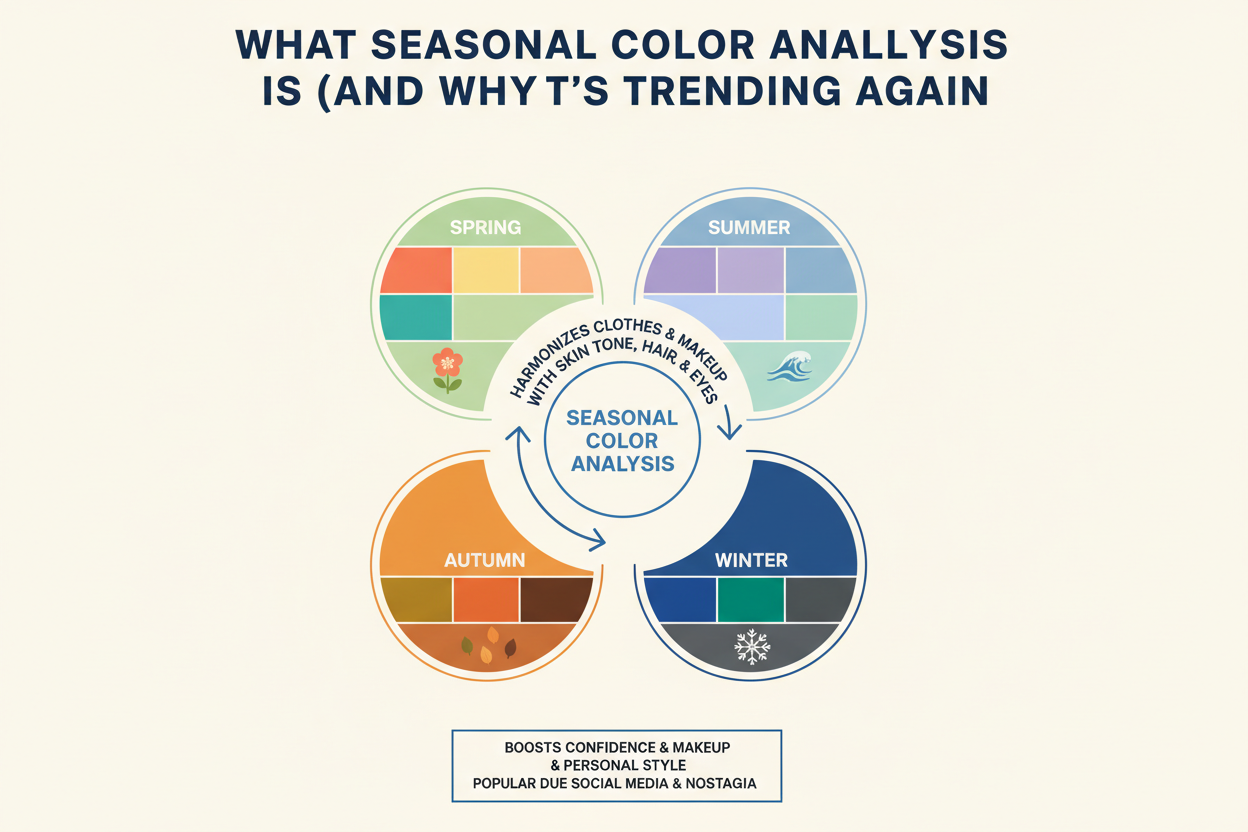
The core logic is simple: certain hues make your complexion look clearer and more luminous, while others cast shadow, add unwanted sallowness, or drain color from your face. The analysis tries to map which is which, for you specifically.
The concept goes back to the 1970s and 1980s, popularized by color theorist Suzanne Caygill and later by Carole Jackson's widely read Color Me Beautiful. It was a staple of department-store makeover culture for a decade, then quietly faded. What's different now is distribution. TikTok and YouTube have turned personal color reveals into shareable content, and accessible online tools have lowered the barrier to entry from "book an appointment" to "take a quiz on your lunch break."
The resurgence is real enough that some people are traveling to South Korea specifically for the service. There, professional personal color analysis (퍼스널컬러) has become a mainstream beauty ritual with a well-developed industry behind it. That's a meaningful cultural signal: this isn't a micro-trend. It's a concept that has re-entered mainstream consciousness with enough momentum to drive international travel.
If you've been curious but haven't tried it yet, take our free color analysis quiz here to get an immediate read on your season before going further.
The Real Costs: From a $130 In-Person Session to Free Online Quizzes
Knowing the price range helps you pick the right entry point instead of just going with whatever you stumble across first.
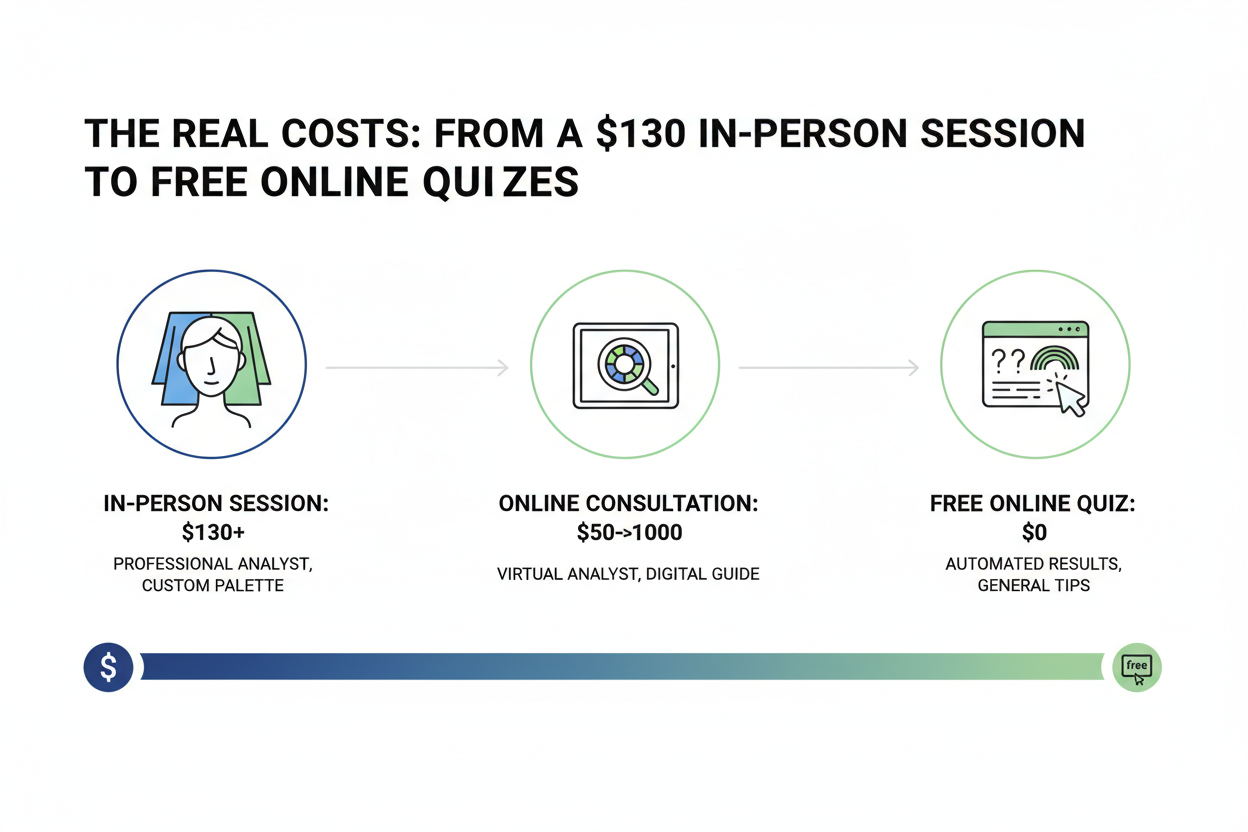
The high end: professional in-person sessions In the United States, a professional in-person session typically runs around $130, based on publicly reported experiences—though prices vary by city and analyst credential. Major metros and in-demand analysts charge more. Seoul, which draws international visitors specifically for this, sits at the premium extreme: you're paying for the analysis and for access to a market where the practice has been refined at serious scale.
The middle ground: online consultations Some stylists offer virtual draping sessions over video call, usually cheaper than in-person. The catch is that lighting and screen calibration introduce variables that can throw off accuracy. A good virtual analyst will send preparation instructions to help you control for that.
The accessible end: apps and self-guided quizzes Free self-assessment quizzes and photo-analysis tools have gotten a lot more common. Quality varies a lot (more on how to evaluate them below), but the better ones give you a useful starting point without spending anything.
In-Person vs. Online vs. Self-Guided: A Side-by-Side Breakdown
| Format | Typical Cost | Accuracy Factors | Best For |
|---|---|---|---|
| In-person professional | ~$130+ | Controlled lighting, physical draping, trained eye | Maximum confidence in result; committed to acting on it |
| Online/virtual stylist | $30–$100 | Depends heavily on photo quality and lighting | Budget-conscious, comfortable with some variability |
| App or quiz | Free–$20 | Algorithm quality, photo conditions, self-reporting accuracy | First exploration; testing curiosity before investing more |
| Seoul-based specialist | Variable + travel | Specialized market, high practitioner density | Experience-driven; already traveling to Korea |
No format is objectively better for everyone. The right choice depends on how much confidence you need and how seriously you plan to act on the result.
What You Actually Get: Palette Cards, Wardrobe Edits, and the 'Wrong Shades' Revelation
The deliverables from a color analysis session are more concrete than most people expect.
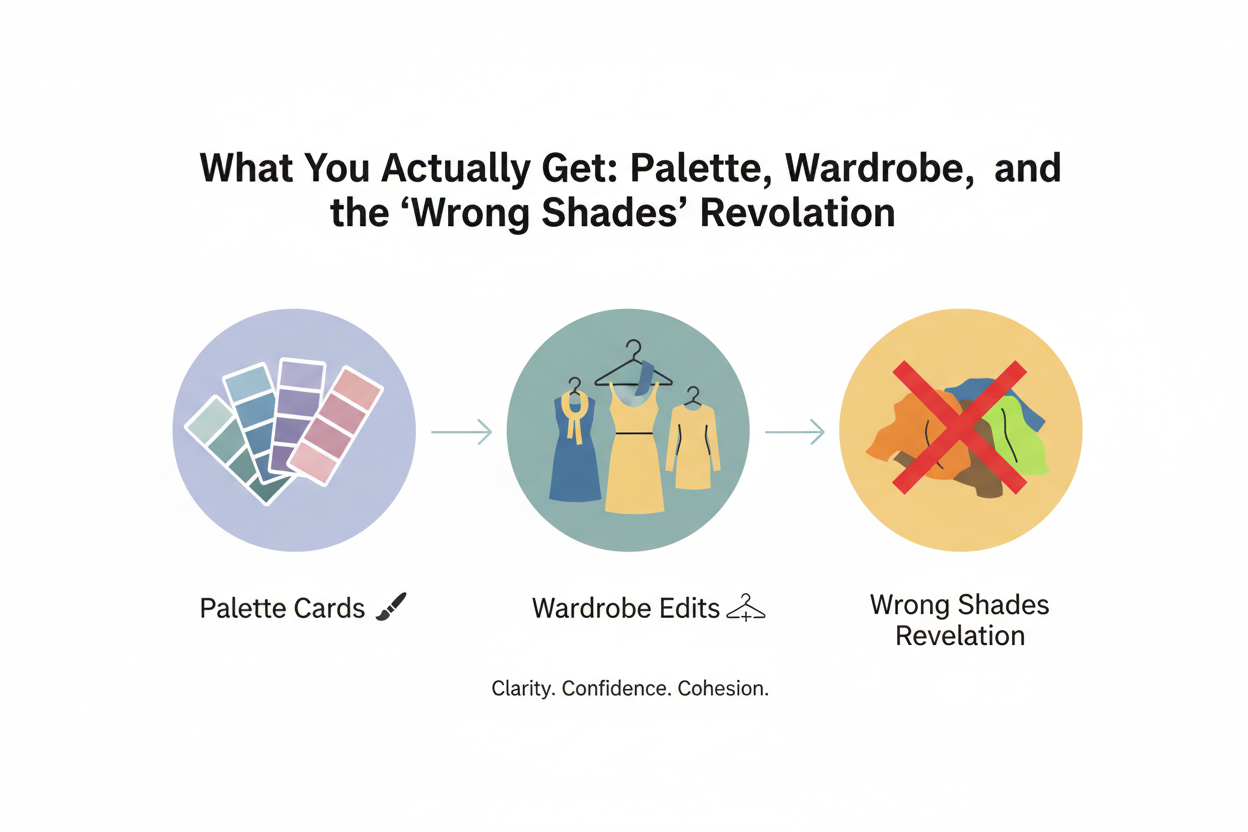
You typically walk away with a physical or digital swatch palette covering neutrals, accents, and statement colors, plus a list of shades to avoid. A good analyst will also explain the undertone logic behind your palette—cool vs. warm, muted vs. bright—so you can make your own calls while shopping without needing to refer back. Some sessions include a wardrobe audit that flags which pieces you already own are working and which aren't.
The emotional side is harder to describe but often the part people remember most. One account that gets cited regularly describes paying $130 for a session and leaving with the unsettling realization of having worn the wrong shades for decades. "Wrong shades my entire life" sounds like an exaggeration, but it captures something real: the moment when a color you always reached for—something that seemed safe, neutral, fine—suddenly looks clearly off once you have actual contrast data to compare it against.
The practical benefit is simpler decisions. Instead of evaluating every purchase from scratch, you have a filter: does this fall in my palette? Does the undertone match? For a category that generates a surprising amount of daily cognitive friction, that's not a small thing.
The Case For: Life-Changing Testimonials and What the Believers Say
The testimonials are real, and they're worth taking seriously before you dismiss them as hype.
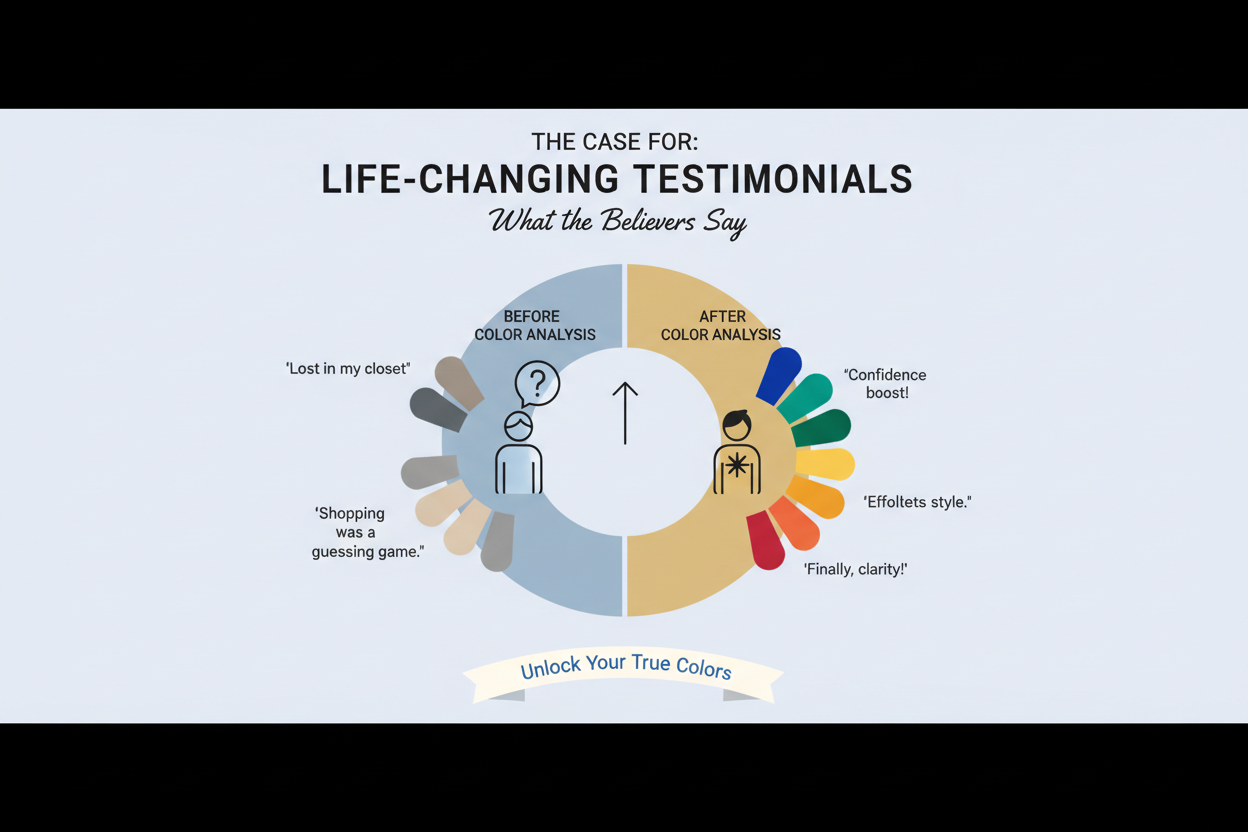
People who describe color analysis as life-changing are usually pointing to one or more of the same specific outcomes:
- Shopping gets faster and less wasteful. A defined palette cuts down on impulse buys that seemed fine in the store but never get worn.
- Getting dressed stops being a decision. When you trust that anything in your palette will work together at the undertone level, mixing and matching is low-risk.
- More people comment on how you look. Not about the clothes—about you. "You look rested." "You look healthy." That shift matters.
- It's about expression, not just rules. Stylists who specialize in this work describe it as helping clients find their own colors, not sorting people into boxes. A wardrobe that feels like you, not a costume assembled from whatever was trending.
None of that is trivial. If a $130 session or a free quiz genuinely cuts decision fatigue, reduces wardrobe waste, and makes you feel better getting dressed, the return is real—at least for people who care about clothing at all.
Ready to find out which season you are? Start the free quiz now and get your palette in minutes.
The Case Against: What the Cynics Get Right
The skeptics aren't wrong—they're just making different points, equally valid ones.
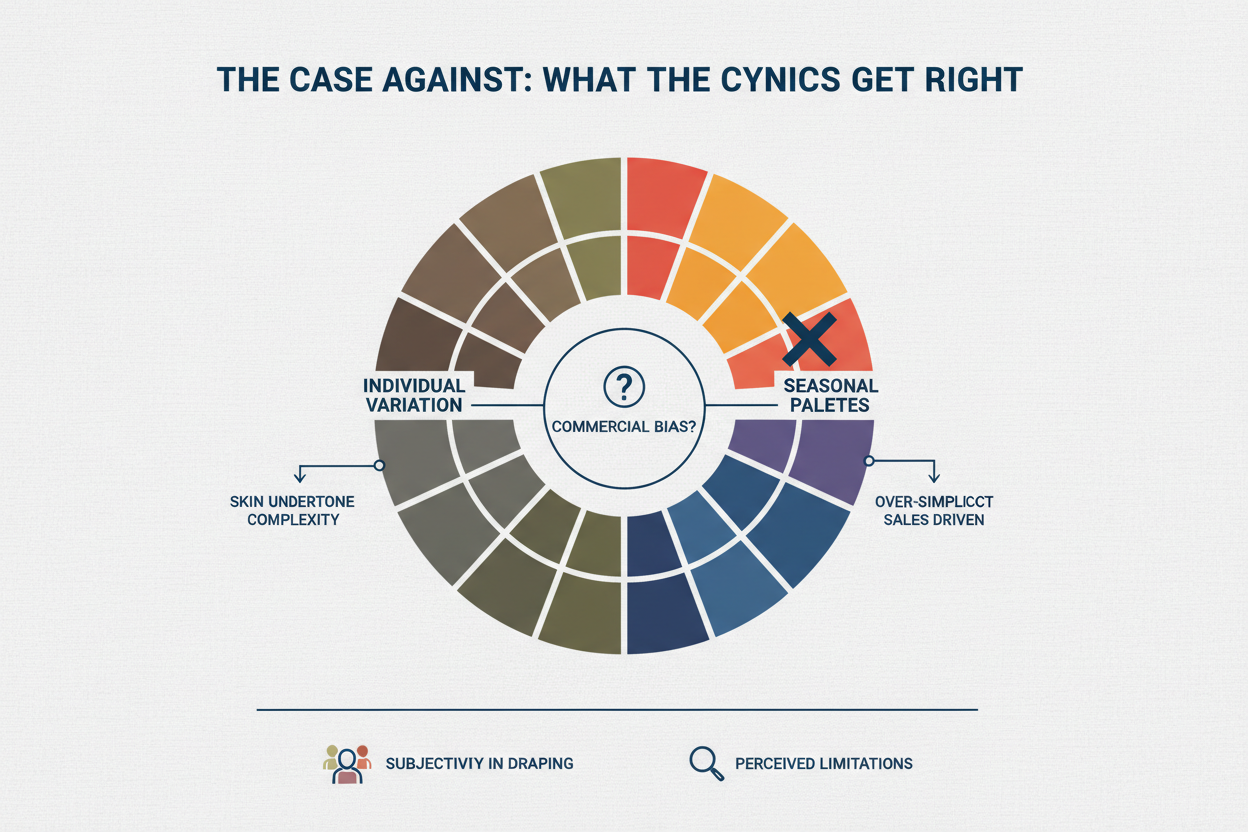
The four-season system is genuinely reductive. Human coloring exists on a continuum, not in four discrete boxes. Sub-season systems try to fix this, but even sixteen categories can feel like a forced fit for people whose coloring doesn't map cleanly onto any template. The system works well when someone's features cluster clearly. It works less well at the edges.
Draping results are partly subjective. Trained analysts sometimes disagree on the same client. Lighting conditions, the specific fabric swatches, and the analyst's own visual calibration all introduce variability. That doesn't make the analysis useless, but treating any single result as definitive truth is an overclaim.
Over-rigidity is a real risk. Some people leave color analysis having internalized a ruleset so strict it creates more anxiety than it resolves—refusing to wear a beloved piece because it's "not in my palette," or feeling unable to get dressed without consulting a chart. That's the opposite of what the whole thing is for.
The "it doesn't matter what you wear" contingent has a legitimate point: style is expressive, rules exist to be broken, and plenty of people dress beautifully without any systematic framework. Color analysis is a tool, not a truth. Treated as the former, it tends to add something. Treated as the latter, it tends to add constraints.
The cynics are right that it can be oversold. They're wrong if they think that means it has no practical use.
How to Get an Accurate Reading Without Flying to Seoul
Seoul is the premium extreme. It's not the only path to a reliable result.
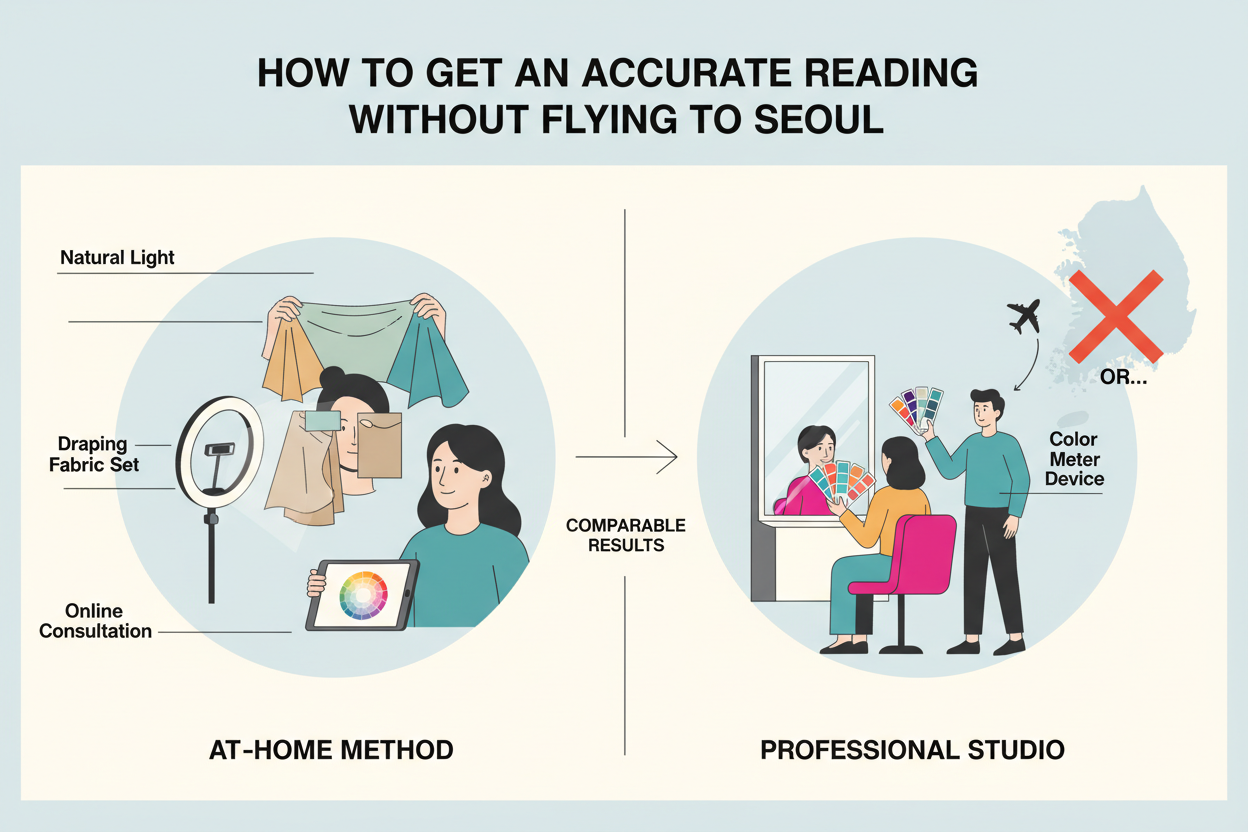
A sequenced approach, by cost and accessibility:
Start with a structured online quiz or tool — ideally one that analyzes photo inputs rather than relying on self-reported descriptions, which introduce recall bias. Use this to identify your likely season range before spending anything.
If you want more confidence, book a virtual consultation with a credentialed stylist — look for someone with specific color analysis training, not just general styling experience. Preparation matters: follow their photo guidelines exactly, shoot in natural daylight, remove makeup if possible, and pull your hair back.
For the highest-confidence result, pursue an in-person professional session — either locally or, if you're already planning international travel, through the established personal color industry in South Korea or major European cities where the practice is similarly developed.
Evaluate any tool or analyst against specific quality criteria (see below) before committing time or money.
What to Look for in an Online Color Analysis Tool
Not all tools are equivalent. Before using one, check it against these criteria:
- Photo-based vs. description-based: Tools that analyze actual images of your features are more reliable than those asking you to describe your skin tone in words. Self-description introduces a lot of error.
- Lighting guidance: A decent tool will tell you how to photograph yourself — specifically in natural daylight, no artificial color casts. If it accepts any photo without any preparation guidance, treat the result with skepticism.
- Season granularity: Does it distinguish sub-seasons (Soft Autumn vs. True Autumn, for example), or does it just return a broad four-season result? More granularity is usually more useful, but only if the underlying methodology can back it up.
- Explainability: Can the tool tell you why it placed you in a given season — what undertone logic, value level, or chroma characteristics drove the result? Explainable outputs let you apply the logic yourself. Opaque outputs just hand you a label.
- No upsell dependency: Be cautious of tools where the "real" result is locked behind a paid tier and the free output is too vague to act on. A good entry-level tool should give you something useful for free.
The Verdict: Who Should Do It and Who Can Skip It
Do it if:
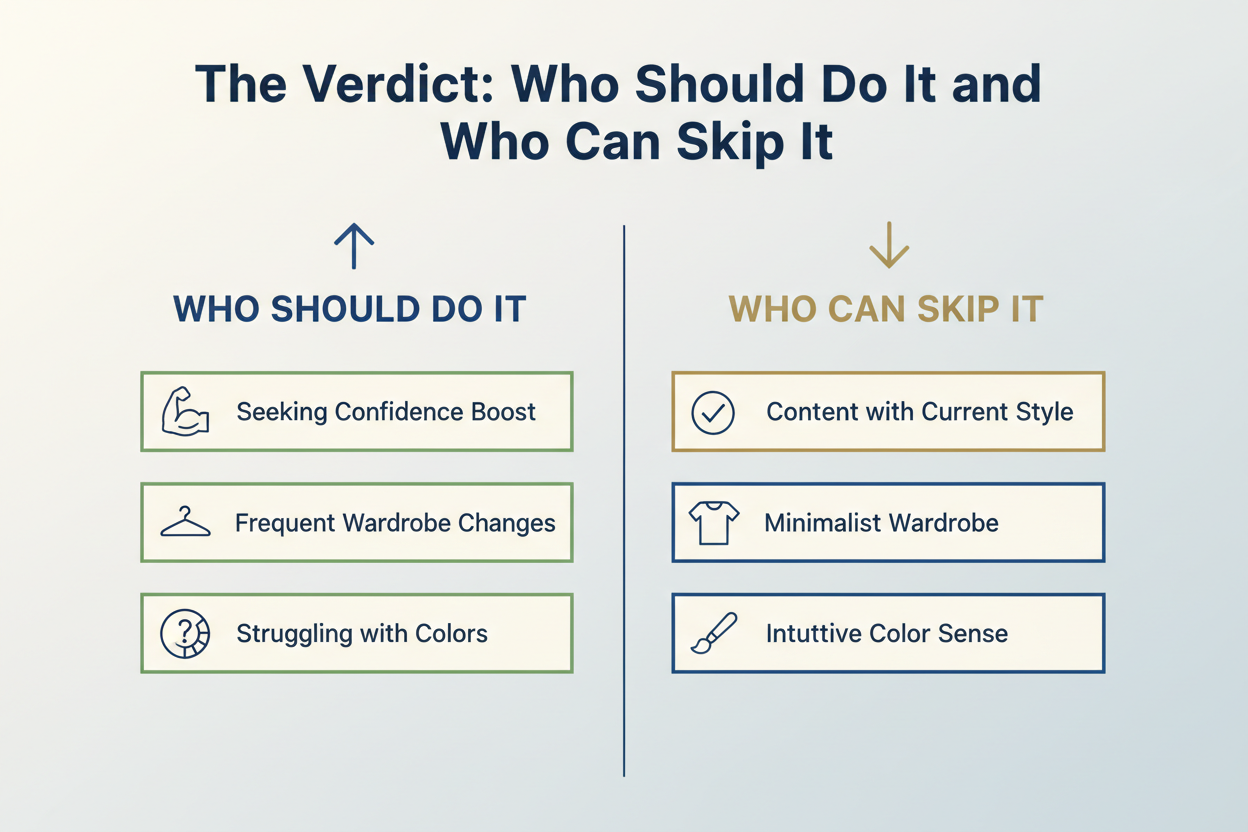
- Shopping feels stressful or wasteful and you'd actually use a filter to narrow your options
- You regularly buy things you like in the store and never wear them
- You keep getting dressed and feeling off, but can't pinpoint why
- You're curious and willing to treat the output as a useful starting point, not gospel
Skip it (for now) if:
- You already have a strong instinct for which colors work on you—this is most useful when that instinct is missing or unreliable
- You're unlikely to do anything with the result; a palette you ignore is just time (and possibly money) wasted
- You want a complete style overhaul—color is one piece of it, and it works best alongside fit, silhouette, and figuring out what you actually like
The honest answer on whether it's worth it: For most people who engage with it seriously and actually use the output, yes—especially given how accessible the price points have become. The framework has real limitations. The four-season system is a rough model of human complexity, and no analysis should be treated as the final word on what you can or can't wear. But as a tool for making decisions faster, building a more coherent wardrobe, and feeling less uncertain when you're getting dressed, it works. The value is especially clear if you start with a good free tool before deciding whether to pay for anything more.
The real question isn't whether color analysis is "real." It's whether having a framework makes the daily decisions easier. For most people who try it, it does.
People Also Ask
How accurate is seasonal color analysis?
Accuracy depends heavily on the method and practitioner. In-person sessions with physical fabric draping in controlled lighting tend to produce the most reliable results—though even trained analysts sometimes disagree on the same client. Online tools vary widely: photo-based tools that analyze your actual features in natural daylight outperform text-based quizzes that rely on self-description, which introduces recall bias. The four-season framework is a simplification of a continuous spectrum of human coloring, so some people fit their season clearly while others sit at the edges and need sub-season refinement to get an accurate read. Treat any result as a strong starting point, not a verdict.
What does a professional color analysis session include?
A typical in-person session involves draping fabric swatches in different colors and undertones around your shoulders while you sit in front of a mirror in neutral lighting. The analyst watches how each swatch interacts with your complexion—which ones make your skin look clearer or more rested, and which ones cast shadow or pull out undertones you don't want. From this, you get:
- A curated palette of your most flattering colors, organized by neutrals, accents, and statement shades
- A list of colors to avoid, sometimes called your "drains"
- An explanation of the underlying logic—your undertone, value level, and chroma—so you can apply it yourself when shopping
- Sometimes, guidance on auditing your existing wardrobe against your new palette
Most sessions end with a physical or digital swatch card you can bring shopping.
Can I do seasonal color analysis at home for free?
Yes, with caveats. Free online quizzes and photo-based tools have made this accessible without spending anything. The key is picking a tool that works from actual images of your features rather than asking you to describe your coloring in words—self-reported descriptions are far less reliable than visual analysis. To get a more accurate result at home:
- Photograph yourself in natural daylight, away from artificial light that adds color casts
- Remove makeup when possible so your natural skin tone reads clearly
- Pull your hair back to assess your natural color, not a dyed or highlighted version
- Use a tool that explains why it assigned your season, not just which label you got
A good free tool gives you a solid directional result. It won't have the precision of a professional draping session, but it's a reasonable first step before deciding whether to pay for more.
How much does it cost to get your colors done professionally?
In the US, a professional in-person session typically runs around $130, though prices vary depending on where you live and who you see—analysts in major cities or with strong credentials tend to charge more. Virtual consultations with a trained stylist usually fall somewhere in the $30–$100 range, depending on how long the session is and what you get afterward. At the high end, flying to South Korea for a specialist session is the biggest commitment once you factor in travel, though the session fees themselves can be surprisingly competitive with US prices. Free and low-cost online tools sit at the other end of the spectrum—good enough for a first impression without spending anything.
Why is color analysis so popular in South Korea?
Personal color analysis (퍼스널컬러) has become a mainstream beauty and styling ritual in South Korea. The country has a dense network of specialized studios, trained practitioners, and established methodology—enough that some international visitors plan trips to Seoul specifically to access it.
A few things drove this. South Korea's beauty culture has always emphasized personalized self-presentation, so the service fit naturally alongside existing grooming and skincare practices. Social media did the rest: color reveals are shareable and communal, and word of mouth spread fast.
The practical result is a market where high practitioner density keeps prices competitive without sacrificing specialization. If you want a professional color analysis, Seoul is probably the best place in the world to get one.
FAQ
What is seasonal color analysis and how does it work?
Seasonal color analysis identifies which colors work best with your natural features—skin tone, hair, and eyes—based on three characteristics: undertone (warm or cool), value (light to deep), and chroma (muted or vivid). Your coloring maps to one of four seasonal archetypes—Spring, Summer, Autumn, or Winter—each representing a distinct combination of these qualities.
In practice, a practitioner holds fabric swatches against your face and watches how each color interacts with your complexion. Colors in your season tend to make your skin look clearer and more even. Colors outside it can cast shadows or pull attention away from your face. The result is a palette you can apply to clothing, accessories, and makeup.
The framework originated in 1970s and '80s color theory. It's had a major revival lately, driven largely by social media and more accessible online tools bringing it to a much wider audience.
Is a $130 professional color analysis session worth the money?
For many people, yes — but it depends on what you do with the information. A Business Insider writer paid $130 for a professional session and discovered she'd been wearing the wrong shades her entire life. She called it a significant shift in how she approached her wardrobe.
The math is simple: if a palette stops you from buying colors that don't work on you, the session pays for itself pretty fast. The catch is follow-through. People who actually use the palette when shopping tend to get the most out of it. People who file it away don't.
If $130 feels like a lot to spend upfront, online tools and virtual consultations are cheaper ways to get a rough sense of your palette before committing to a full session.
Can online color analysis tools give accurate results?
Yes, but method matters. Photo-based tools that analyze your actual features in natural daylight consistently outperform text-based quizzes where you describe your own coloring from memory. Self-described undertones and hair colors introduce real bias. A visual analysis just works from what's in front of it.
To get a reliable result from an online tool:
- Use a photo taken in natural daylight, away from warm or cool artificial lighting
- Remove or minimize makeup so your natural skin tone reads clearly
- Pull your hair back if it's dyed or highlighted
- Choose a tool that explains the reasoning behind your season assignment, not just the label
A good online tool gives you a solid starting point. It won't replicate the precision of fabric draping in person, but it's a meaningful first step.
How do I know if I'm wearing the wrong colors for my season?
The signals are usually subtle but consistent. Colors from the wrong season pull attention toward the clothing and away from your face. You might notice redness or uneven skin tone looking more pronounced, or a washed-out quality that makes you look tired no matter how rested you are. Shadows around the jawline and under the eyes tend to get harsher, and you end up reaching for more makeup just to look put-together.
The right colors do the opposite: your complexion looks clearer, more even, with no extra effort. How dramatic the shift feels depends on how far outside your palette you've been dressing. Some people find the comparison immediately obvious when they see it side by side.
What are the four seasons in color analysis and what do they mean?
Each season maps to a specific combination of undertone, value, and chroma:
| Season | Undertone | Value | Chroma |
|---|---|---|---|
| Spring | Warm | Light to medium | Clear and bright |
| Summer | Cool | Light to medium | Soft and muted |
| Autumn | Warm | Medium to deep | Rich and muted |
| Winter | Cool | Medium to deep | High contrast, vivid or stark |
Springs do best in warm, fresh, clear colors—peach, coral, warm greens. Summers suit soft, cool, dusty tones: lavender, powder blue, rose. Autumns are flattered by earthy, warm shades like olive, rust, and mustard. Winters can carry bold, cool, or starkly contrasted colors—true red, navy, black and white.
Many systems expand the four seasons into twelve or more sub-seasons to handle people who fall near the boundary between two types.
Does seasonal color analysis work for all skin tones and ethnicities?
Yes. The core variables—undertone, value, and chroma—exist across all skin tones and ethnicities, so the analytical framework applies universally even when the resulting palettes look completely different from person to person.
That said, the quality of any result depends on the practitioner or tool having enough reference points for diverse coloring. Some early color analysis resources were developed with limited representation, which is where the perception that the system favored lighter complexions came from. Most contemporary practitioners and well-designed digital tools have since expanded their frameworks. When choosing a professional or an online tool, check whether they actually show experience analyzing a range of skin tones—not just claim that they do.
How long does a professional color analysis session take?
Most in-person sessions run one to two hours. Here's roughly how that time breaks down:
- Initial consultation (10–15 minutes): discussing your style goals and any concerns about your current wardrobe
- Draping process (45–60 minutes): working through swatch families to identify your season and sub-season
- Palette review and explanation (15–20 minutes): walking through your results, the logic behind them, and how to apply them
- Wardrobe guidance (remaining time): advice on how your existing clothes align with your palette and what to prioritize going forward
Virtual consultations tend to be shorter—usually 45 to 90 minutes—depending on how in-depth the analyst goes. If you want a faster starting point, an online color analysis tool can give you a directional result in a few minutes and help you decide whether a full session is worth the time and cost.
For the next diagnostic or service-choice step, continue with the companion article “Digital Color Analysis vs In-Person”, which keeps the two closely related questions distinct.