High Contrast Face Quiz: Are You High, Medium, or Low?
 Reviewed by Alexandra Gilmore
Compare the lightest and darkest features around your face to identify low, medium, or high contrast. Use the quiz, a neutral daylight check, and a grayscale photo to separate value contrast from skin depth, undertone, and color season.

A high contrast face has a clear light-to-dark difference among the features that frame it; a low contrast face has features that sit closer together in value. Compare your hair at the roots, skin, brows, eyes, and lips in steady daylight, then check the same view in grayscale. The quiz below sorts the result into low, medium, or high contrast without tying any category to one skin depth, undertone, or color season.
💫 Discover Your Complete Color Palette
One feature rarely explains every color that works for you. Compare your undertone, depth, clarity, and contrast as a complete palette, then use the results to test clothing, makeup, and hair colors more consistently.
Find My Color Palette →High Contrast Face Quiz: Key Takeaways
- Contrast describes difference, not depth. Light, medium, and deep complexions can each have low, medium, or high feature contrast.
- Judge relationships. Compare hair, skin, brows, eyes, and lips instead of using one feature as the answer.
- Use grayscale as a second view. It removes hue, but exposure, filters, makeup, and dyed hair can still change the result.
- Treat the category as a styling tool. It can help you test tonal outfits, stronger pairings, makeup definition, and hair depth; it is not a rule about what you may wear.
- Keep contrast separate from undertone and season. Contrast answers “how much light-dark difference?” while undertone and seasonal analysis answer different color questions.
What Facial Contrast Means
In visual terms, value means how light or dark something appears. Feature contrast is the visible spacing between the lightest and darkest areas around your face. A narrow spacing reads as low contrast, a moderate spacing as medium contrast, and a wide spacing as high contrast.
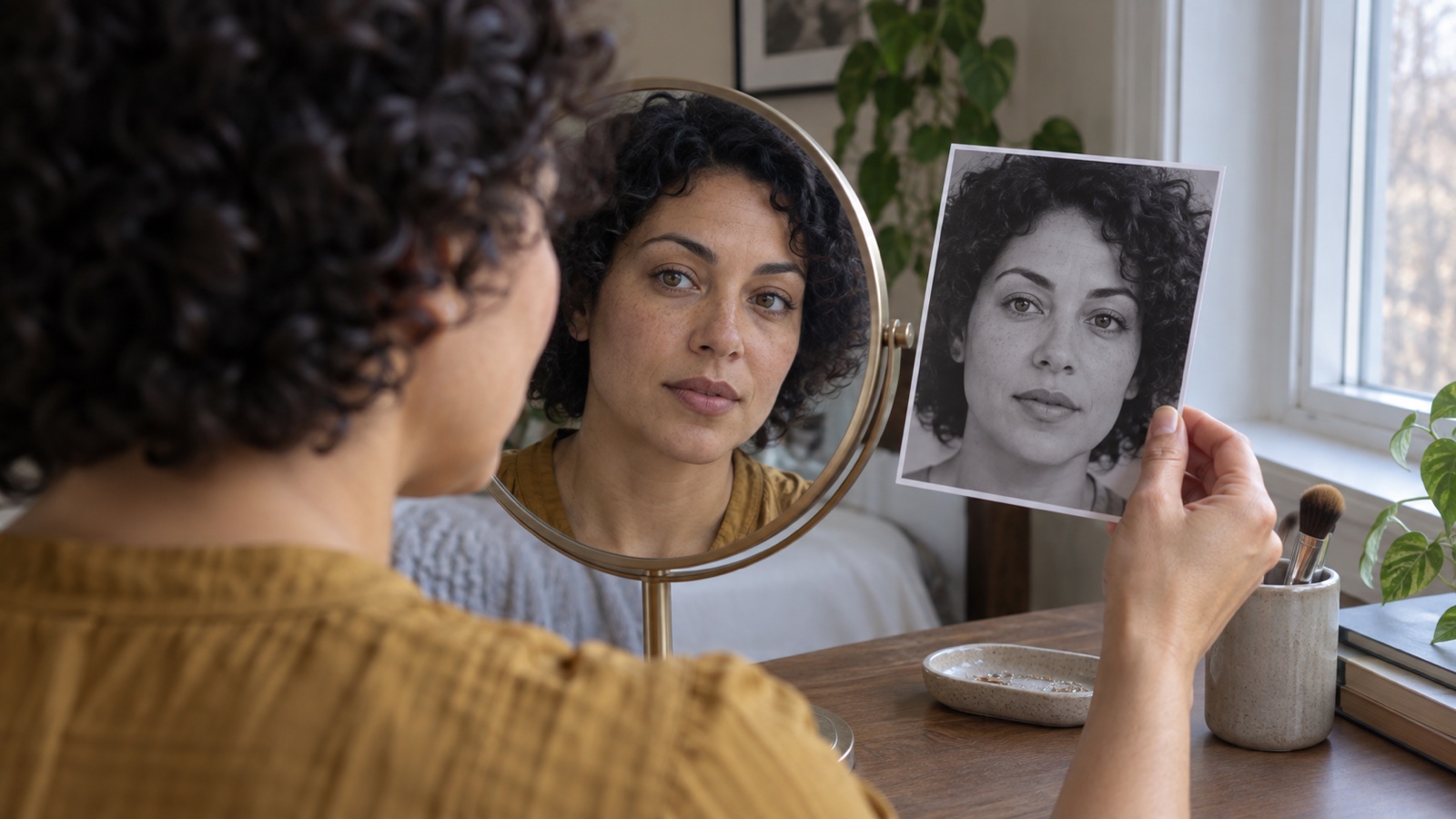
The term facial contrast also appears in vision research, where studies have measured contrast between localized features—such as eyes, brows, or lips—and surrounding skin. That is narrower than the personal-color framework used here, which also considers hair and the overall impression. Research confirms that cosmetics can alter localized facial contrast, but it does not establish a universal low/medium/high wardrobe test. Read the open-access study on cosmetics and facial contrast as evidence for the visual mechanism, not as proof of a personal color category.
Contrast is also distinct from hue and temperature. Dark auburn hair and dark ash-brown hair can have similar value even though one reads warmer. Two people can share an undertone yet prefer different outfit contrast because their features create different value spacing.
Take the High Contrast Face Quiz
Use a mirror in indirect daylight or a neutral, front-facing photo. For each question, choose the answer that repeats most consistently—not the one that appears only under one lamp, camera filter, or makeup look.
| Question | A: close together | B: some separation | C: clearly separated |
|---|---|---|---|
| When you squint, how distinct are hair and skin? | They blend into a similar value zone. | The edge is visible but not stark. | The hair creates a strong light-dark frame. |
| How do brows compare with nearby skin? | Soft or lightly defined. | Noticeable without dominating. | Immediately dark or light by comparison. |
| How distinct are eyes from the surrounding eye area? | The eye area reads softly overall. | The iris or lash line adds moderate definition. | The eyes create a crisp, obvious focal contrast. |
| How much do lips differ from surrounding skin without lipstick? | The transition is subtle. | The mouth is defined but moderate. | The mouth creates a strong value boundary. |
| In grayscale, what is the overall spacing? | Most features cluster in a narrow band. | Several steps are visible without extremes. | Light and dark zones separate at first glance. |
Mostly A suggests low contrast. Mostly B suggests medium contrast. Mostly C suggests high contrast. A split result is useful too: you may have medium overall contrast with one high-contrast zone, such as dark brows, or one soft zone, such as low lip contrast. Use the mixed result when choosing where to repeat definition.
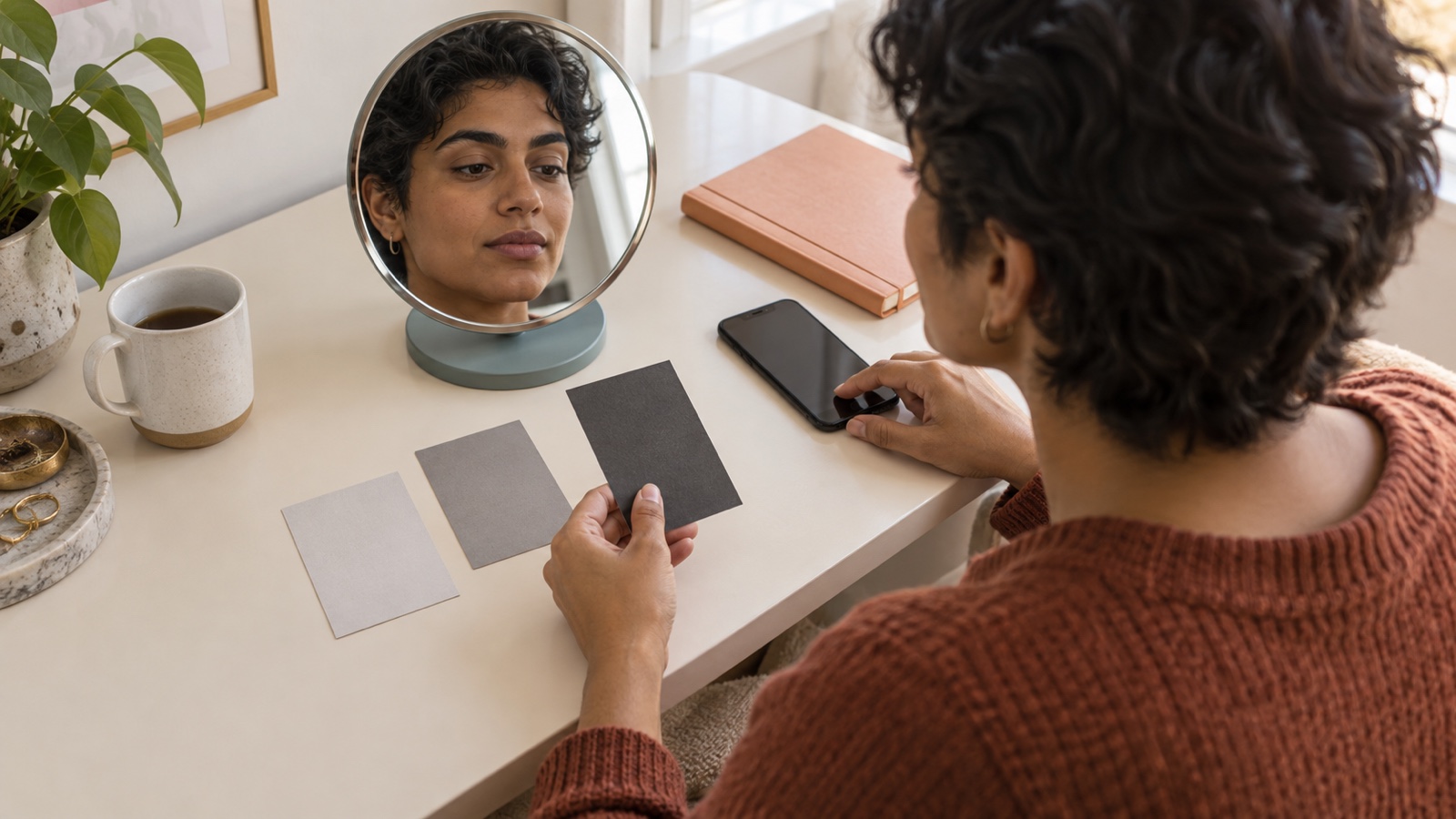
Compare Hair, Skin, Brows, Eyes, and Lips
Start with the five zones together. Hair usually creates the largest frame, but it should not erase the information in brows, eyes, and lips. Look at the root area nearest the face if lengths are highlighted, lightened, or faded. If your current color is the one you wear every day, you can record both your natural-root contrast and your current contrast.
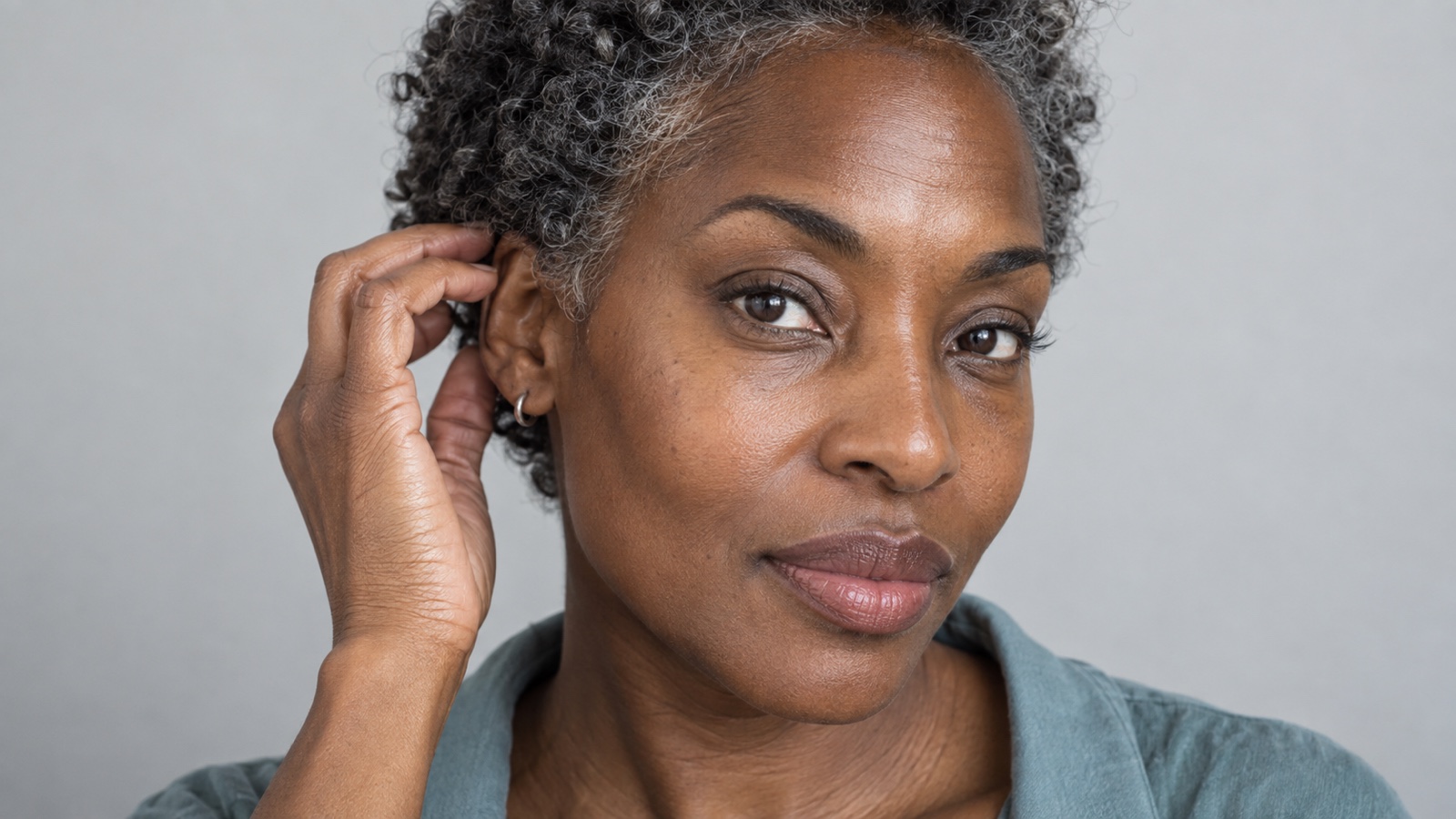
Skin depth alone cannot provide the answer. Deep skin with dark hair, dark eyes, and softly defined lips may form a narrow value range. Deep skin with silver-white hair may form a wide one. Fair skin with blonde hair and light brows may be low contrast, while fair skin with very dark hair may be high contrast.
Also note localized contrast. Strong brows can create definition in the upper face even when hair, skin, and eyes are fairly close in value. Lip color or eyeliner can deliberately add another focal point. This is why “mostly A,” “mostly B,” and “mostly C” are more useful than an invented numerical cutoff.
Low, Medium, and High Contrast Compared
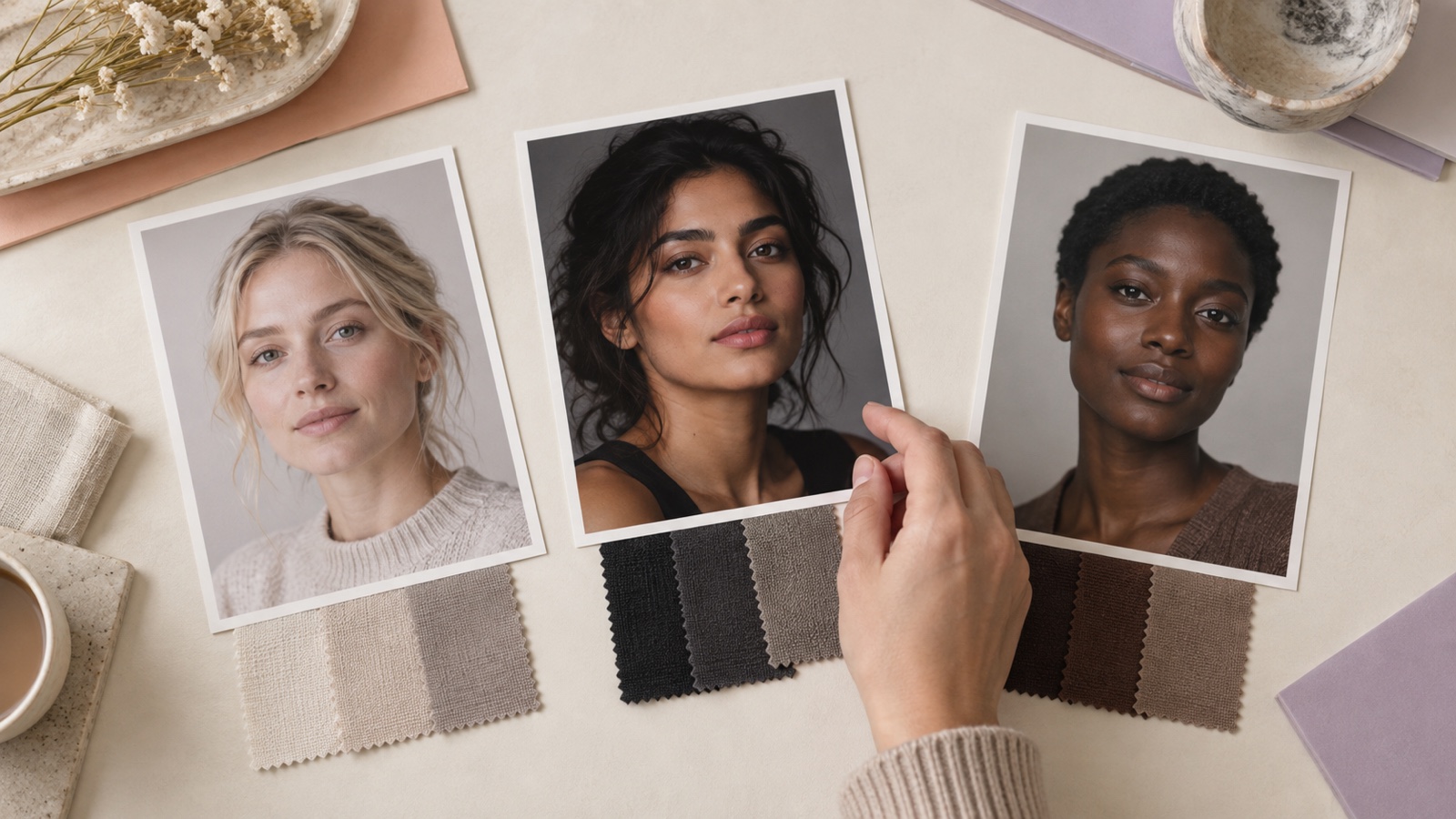
| Contrast level | What you can observe | Useful outfit test | Useful makeup or hair test |
|---|---|---|---|
| Low | Hair, skin, brows, eyes, and lips occupy a relatively close value range. | Compare tonal or softly stepped colors with a crisp light-dark pairing. | Try diffused definition beside one deliberately stronger focal point. |
| Medium | Features show clear separation, but the face is not organized around the lightest and darkest extremes. | Test a moderate light-dark step, then add or remove one stronger accent. | Build definition in stages and stop where the face and styling feel equally present. |
| High | The lightest and darkest features create an immediate, wide visual separation. | Compare a bold light-dark combination with a lower-contrast tonal version. | Test whether crisp brows, lashes, lips, or hair framing echo the existing range. |
None of these is a quality ranking. Low contrast can look deliberate in a monochromatic outfit or support one isolated statement color. High contrast can carry bold separation or intentionally soften it. Medium contrast often moves easily between the two. The useful question is not “Which category is best?” but “Do I want to echo my natural range or create a controlled contrast with it?”
What a Low Contrast Face Looks Like
A low contrast face has relatively small visible steps among its main features. The overall impression may be blended, tonal, or gently defined. This can appear with light features, medium-value features, or deep features; “low contrast” never means “pale.”
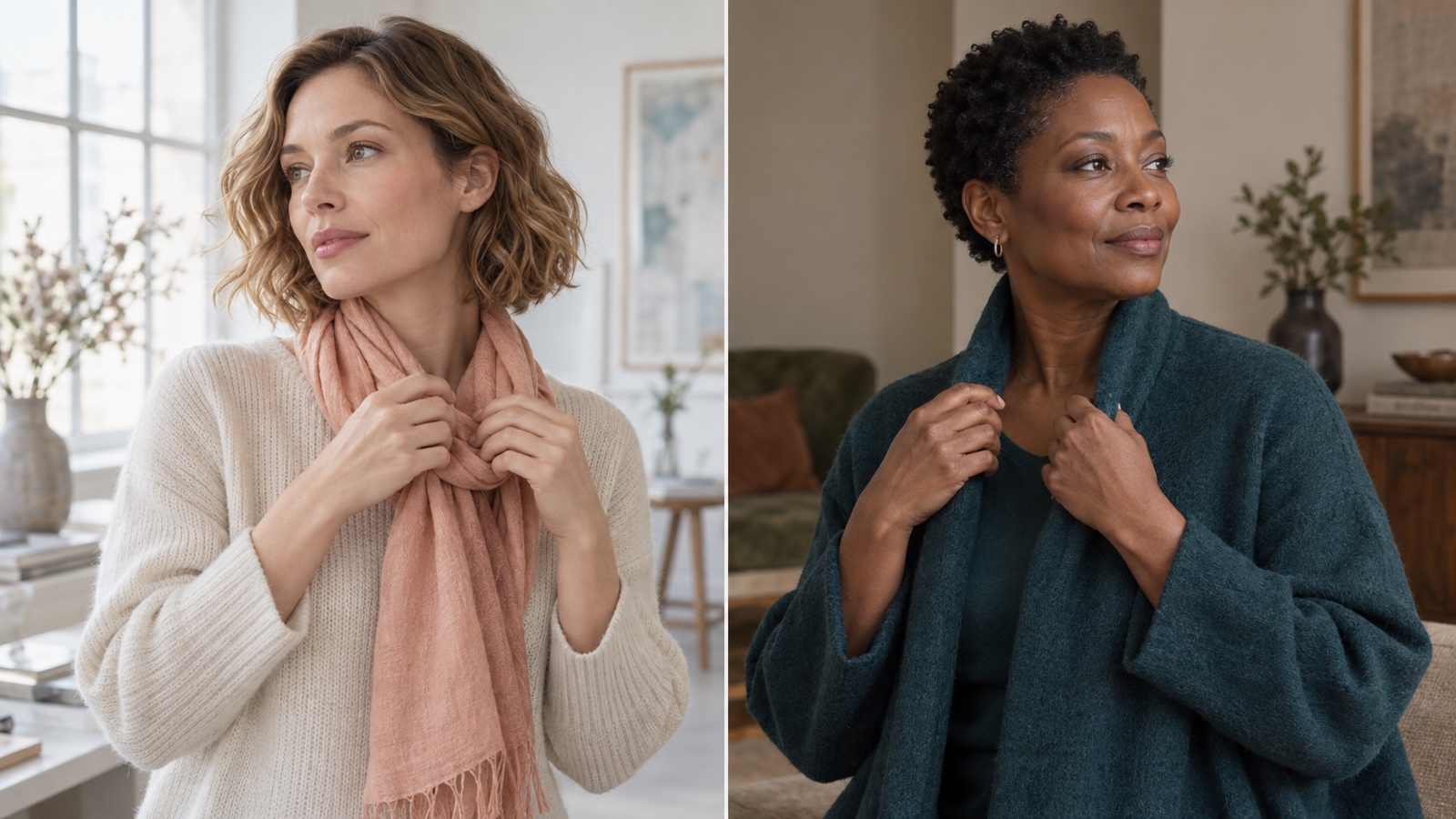
Common low-contrast patterns include light skin with light hair, brows, and eyes; medium skin with medium hair and softly defined features; or deep skin with dark hair and eyes. These are examples, not a checklist. Surface redness, gray hair, a dark iris ring, strong brows, or naturally vivid lips can create local contrast without changing the whole impression.
If low contrast is your likely result, open the focused low contrast face color guide. It covers tonal clothing, pattern scale, makeup placement, and hair choices in more detail. Keep this quiz page as the shared classifier so you can compare low, medium, and high before applying the result.
Use Natural Light and a Grayscale Photo
Stand near a window in indirect daylight. Remove strong color filters, avoid direct sun, and use the same neutral background for repeated checks. Look once with hair pulled back to isolate the face, then again with hair framing it. If you wear makeup most days, compare a bare or minimal-makeup view with your usual look so you can separate natural from styled contrast.
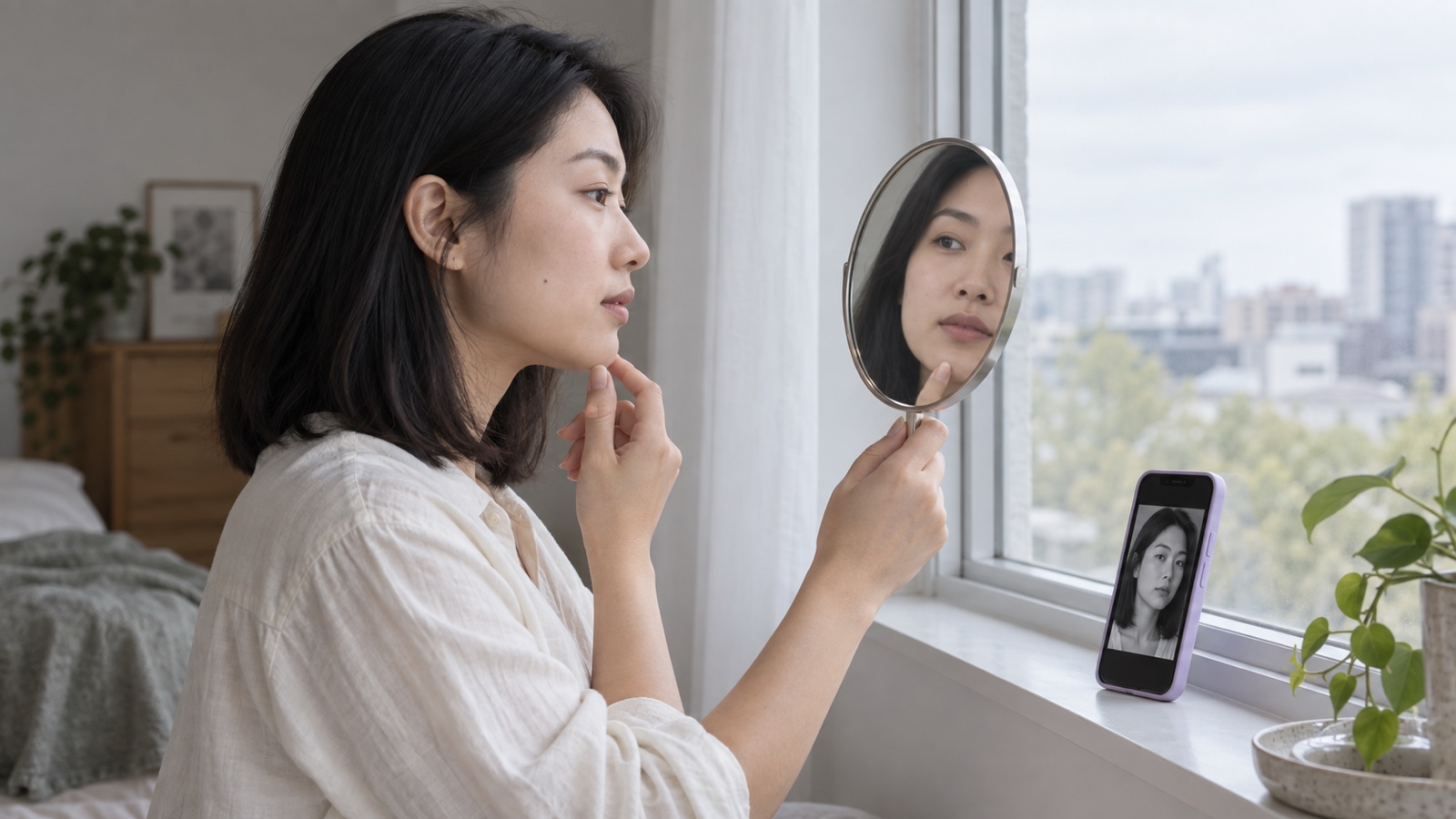
- Take one front-facing photo with even exposure and your current root color visible.
- Duplicate it before editing so you can compare color and grayscale versions.
- Convert the copy to black and white or reduce saturation fully. Adobe’s official guide explains a standard black-and-white conversion workflow; most phone editors offer an equivalent control.
- Squint slightly and note the lightest zone, darkest zone, and any feature that separates first.
- Repeat on another day or with another neutral photo if the result is close.
Do not calculate a universal percentage from pixels. Phone processing, exposure, shadows, hair shine, makeup, and grayscale conversion can all shift apparent values. You are looking for a repeatable visual category, not proving that a face crosses a scientific threshold.
Apply Your Result to Clothing, Makeup, and Hair
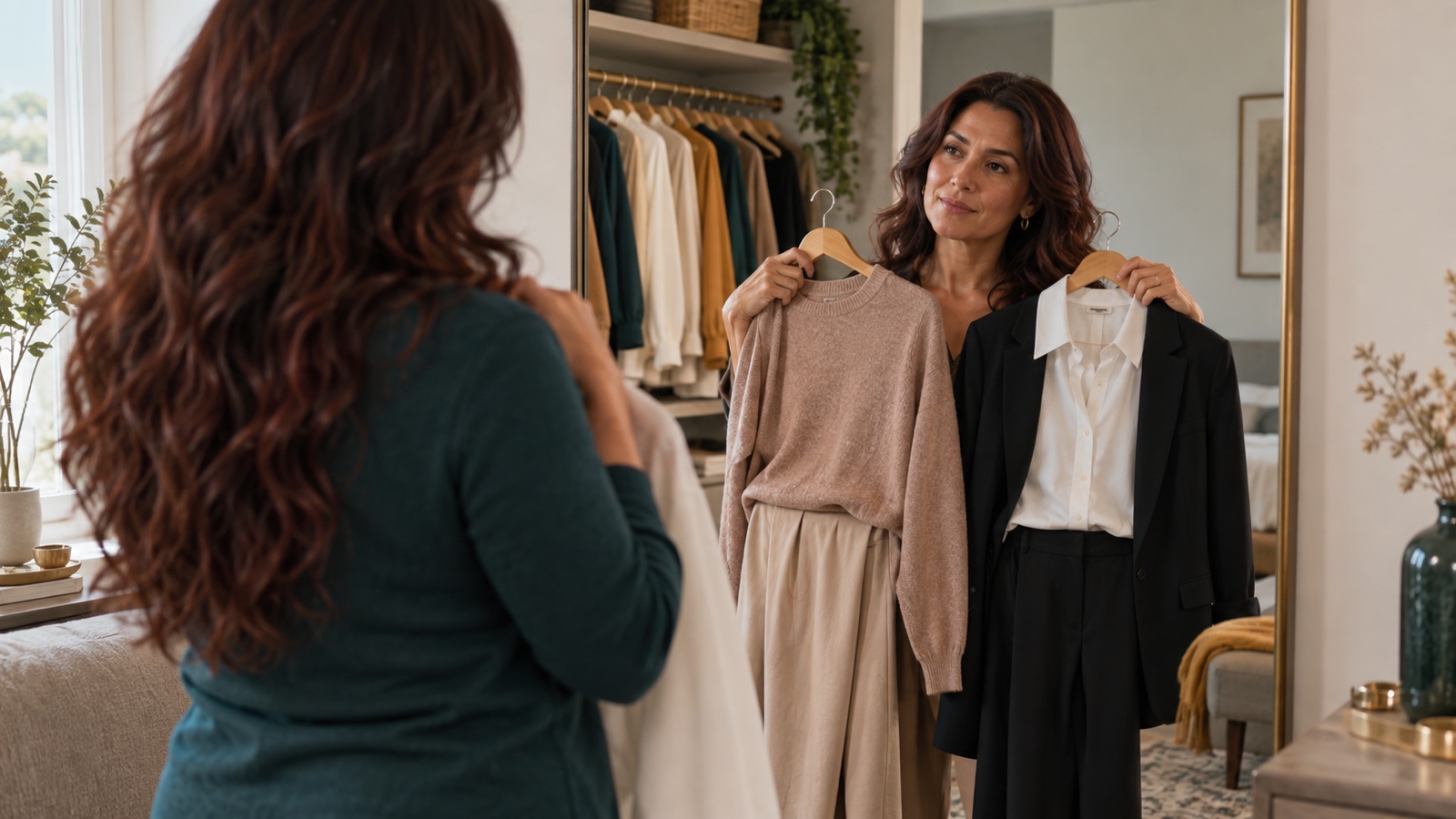
Use your result as an A/B test. For clothing, compare a tonal combination with a more separated light-dark pairing while keeping temperature and saturation reasonably similar. If the stronger outfit arrives before your face, soften one step. If the tonal outfit feels visually flat, add a darker anchor, lighter collar, stronger pattern edge, or concentrated accessory.
For makeup, contrast is about placement and edge as much as pigment. A low-contrast result might begin with softly connected brows, lashes, cheeks, and lips, then add one stronger focal point. A high-contrast result might repeat existing definition with a crisp lip or eye, or deliberately soften it with diffused edges. Medium contrast can build gradually. These are design options, not claims that one application is inherently more flattering.
Hair can change the visible frame more than any other single styling choice. Darkening hair may widen the difference from lighter skin; lightening it may narrow that difference. Highlights, face framing, root depth, and gray blending can create localized contrast even when the overall level remains similar. For a hair-specific comparison, use the high-contrast versus low-contrast hair guide.
For broader wardrobe routing, the complete high and low contrast coloring guide connects value contrast to patterns and outfit formulas. If you still need to separate contrast from hue and season, continue with the seasonal color analysis overview.
When Your Contrast Result Changes
Your natural contrast is not the only useful reading. Hair color, gray growth, brow tint, tanning, makeup, lighting, and even a strong frame on glasses can change current contrast. Record the version you are styling now rather than forcing every decision to match an earlier photo.
If the quiz gives mixed answers, test the two neighboring categories. A medium result with high eye contrast may support stronger detail near the eyes and softer clothing transitions. A low overall result with silver hair may need a new comparison because the hair now creates a brighter edge. Mixed results are a prompt for controlled testing, not a failed quiz.
People Also Ask
How do I know if I have a high contrast face?
Your lightest and darkest facial features separate clearly at first glance, especially in grayscale. Dark hair against much lighter skin is one possible pattern, but pale hair against deep skin or strongly defined eyes and brows can also create high contrast.
Can dark skin be low contrast?
Yes. If deep skin, dark hair, dark eyes, brows, and lips sit close together in value, the overall face can read as low contrast. Skin depth and feature contrast are separate observations.
Is low contrast the same as a Soft season?
No. Low contrast describes a narrow light-to-dark range, while a Soft season is primarily associated with muted chroma within a seasonal framework. They may occur together, but neither guarantees the other.
Can I change my contrast level?
You can change your current visible contrast with hair color, makeup, brows, glasses, and clothing near the face. Your natural reading may remain useful as a baseline, while the current reading helps with today’s styling.
Common Questions: The Ultimate Color FAQ
Is facial contrast the same as undertone?
No. Contrast compares lightness and darkness; undertone describes a warm, cool, neutral, or olive color direction. Use contrast to test intensity and value spacing, then use undertone to refine hue.
Should I use my natural or dyed hair color?
Record both if they differ. Natural roots show your baseline, while the hair color you maintain shows the frame that currently interacts with your clothing and makeup.
Does eye color determine contrast?
Eye value contributes, but the color name does not decide the result. Light blue and light brown eyes can be similar in value, while dark blue and pale blue eyes can affect the range differently.
How accurate is the grayscale test?
It is a useful visual aid, not a calibrated measurement. Repeat it with stable daylight, neutral exposure, and more than one photo before treating a close result as consistent.
What if I like clothing with more contrast than my face?
Wear it intentionally. You can keep the bold pairing and add a bridge near the face, repeat one of its values in makeup or accessories, or simply accept that the outfit will be the strongest visual element.