Cool Winter Color Palette: Best Colors, Makeup, and Hair
 Reviewed by Alexandra Gilmore
Cool Winter, often called True Winter, puts blue-based temperature first and supports it with clarity and strong contrast. Use black, optic white, graphite, navy, sapphire, emerald, blue-red, and fuchsia, then compare softer Cool Summer and brighter Bright Winter colors to confirm the boundary.

Key Takeaways
- Cool Winter is often called True Winter in 12-season color analysis. In both names, cool temperature is the defining quality, supported by clear color and strong light-dark contrast.
- The practical palette starts with black, optic white, charcoal, graphite, ink navy, and blue-black. Sapphire, cobalt, emerald, blue-red, raspberry, fuchsia, and royal purple supply the strongest color.
- Cool Winter differs from Cool Summer through clarity and contrast: Winter uses sharper black-and-white relationships and clearer jewel tones, while Summer is softer, grayer, and lower contrast.
- Cool Winter differs from Bright Winter through temperature priority: Cool Winter stays consistently blue-based; Bright Winter can borrow a little more neutral warmth and pushes brightness further.
- Makeup works best as a controlled repeat of the palette: cool pink or berry cheeks, blue-red or fuchsia lips, and charcoal, navy, plum, or cool taupe around the eyes.
- Hair usually connects most easily when it remains neutral-cool and defined. Blue-black, cool espresso, ash brown, and cool dark blonde are useful reference families, but the best choice also depends on natural depth and maintenance.
💫 Discover Your Complete Color Palette
Ready to discover all the colors that make you look radiant? Our comprehensive color analysis will reveal your complete personal palette - perfect for hair, makeup, and wardrobe decisions.
Find My Season →This guide focuses on using the Cool Winter color palette: which neutrals and statement colors to choose, how Cool Winter relates to True Winter, how it compares with Cool Summer and Bright Winter, and how to translate the palette into makeup and hair. If you are still identifying your season, start with What Season Am I?. A season result is a styling framework, not a rule about which colors you are allowed to wear.
For a broader Winter wardrobe framework, see the complete Winter color palette guide, then use the Cool Winter comparisons here to refine temperature and contrast.
📚 Recent Articles
Cool Winter and True Winter: Are They the Same?
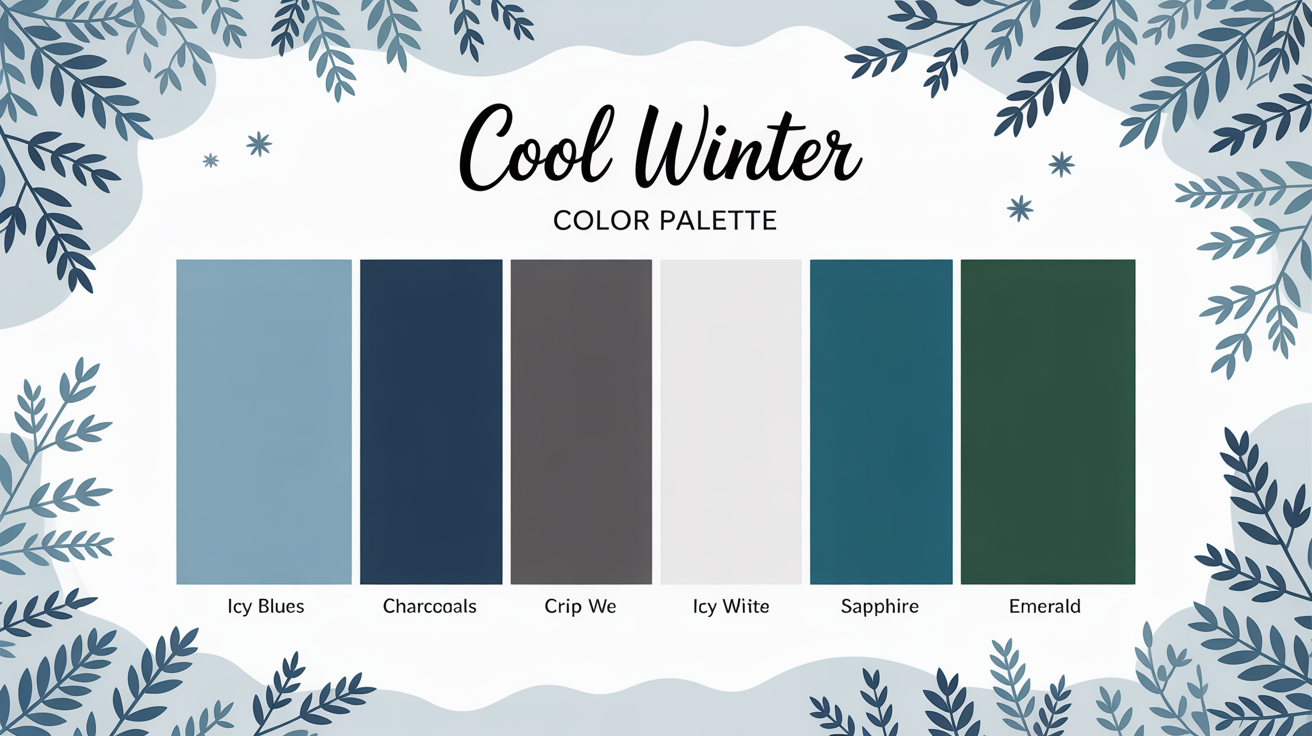
In many 12-season systems, Cool Winter and True Winter describe the same central Winter palette. Some analysts use True Winter for the season positioned between Deep Winter and Bright Winter; others use Cool Winter to emphasize that temperature is its leading quality. Expanded systems may separate the labels or define their boundaries differently. That naming variation is why color properties are more useful than relying on the label alone.
The central palette is fully cool, clear rather than muted, and capable of distinct contrast. It combines very dark neutrals with optic white, icy lights, and saturated colors. The result is cleaner than Cool Summer, less depth-led than Deep Winter, and slightly less neon-bright than the clearest edge of Bright Winter.
| Color quality | Cool or True Winter direction | Useful clothing test |
|---|---|---|
| Temperature | Cool and blue-based | Blue-red beside tomato red; cobalt beside warm teal |
| Value | Full range from black to optic white | A dark jacket with a crisp light shirt near the face |
| Chroma | Clear and saturated | Sapphire beside smoky blue; fuchsia beside dusty rose |
| Contrast | Medium-high to high, with defined edges | Black and white or navy and icy pink in one outfit |
Hair, eye, and skin color do not identify the season by themselves. People with different feature combinations can respond well to the same palette. Compare equal-size drapes in indirect daylight, keep makeup and background consistent, and watch the face rather than the cloth: clearer eye definition and more even-looking shadows are more useful clues than a checklist of feature colors.
Cool Winter Color Palette at a Glance
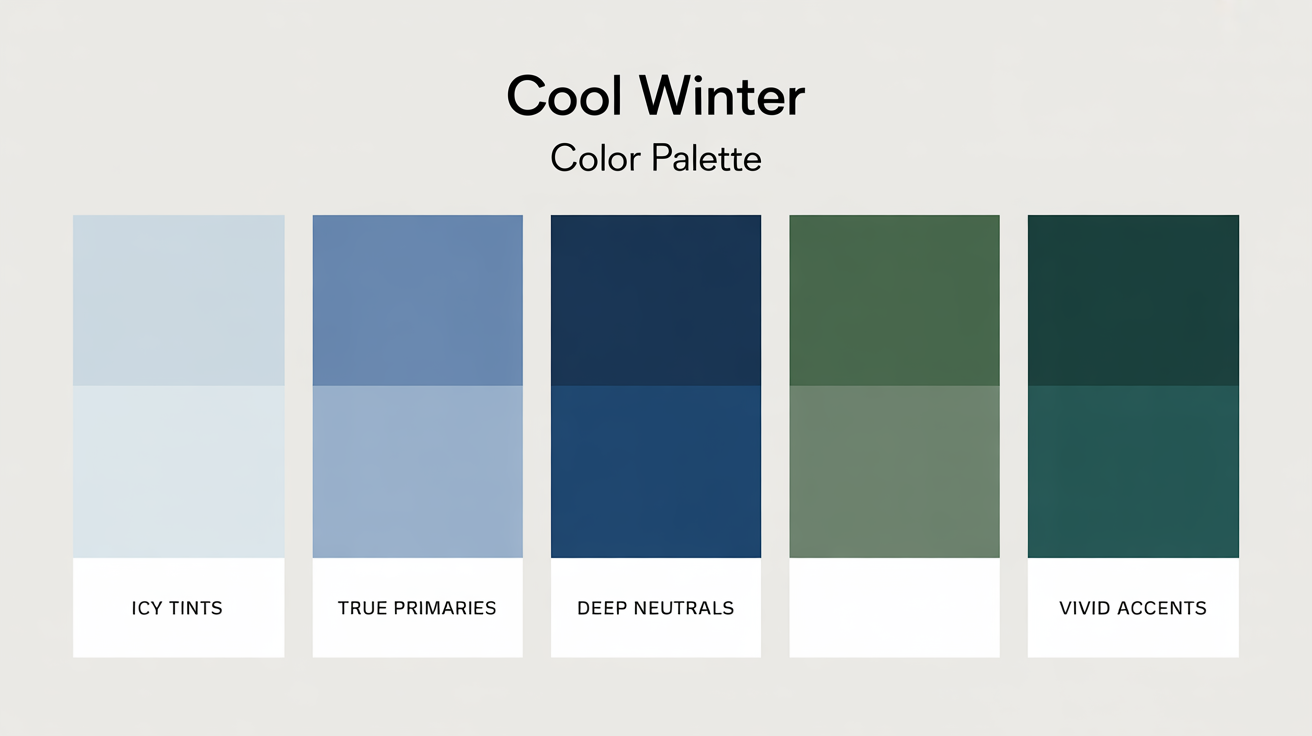
A workable palette needs roles, not an endless list of names. Use repeatable neutrals for coats, trousers, shoes, and bags; clear colors for tops and dresses; and icy or vivid colors for contrast. A color name is only a starting point because navy, burgundy, teal, and pink can be mixed warm, cool, bright, or muted.
| Palette role | Strong Cool Winter colors | Best uses |
|---|---|---|
| Dark neutrals | Black, blue-black, charcoal, graphite, ink navy | Coats, suits, trousers, shoes, large bags |
| Light neutrals | Optic white, cool pearl, icy gray | Shirts, knitwear, contrast panels, prints |
| Blues and greens | Sapphire, cobalt, royal blue, emerald, blue-teal | Tops, dresses, suits, scarves |
| Reds and pinks | Blue-red, cranberry, raspberry, magenta, fuchsia | Dresses, shirts, lipstick, small accents |
| Purples | Royal purple, amethyst, cool plum, violet | Knitwear, evening pieces, eye makeup |
| Icy accents | Icy pink, icy blue, icy lavender, icy mint | Shirts, scarves, highlights within a print |
Icy colors are pale but not dusty. An icy pink has a crisp white base and a clear cool tint; a Summer pastel usually contains more gray. Test the distinction beside optic white. If the pale color looks clean and luminous, it can support Winter contrast. If it blends into a smoky haze, it is moving toward Summer.
Cool Winter vs. Cool Summer and Bright Winter

Neighbor comparisons work best with matched color families. Compare a blue with another blue, or a pink with another pink, while changing only temperature, softness, or brightness. This makes it easier to see what the face responds to instead of reacting to a favorite color.
| Feature | Cool Winter / True Winter | Cool Summer | Bright Winter |
|---|---|---|---|
| Main quality | Coolness | Coolness with softness | Brightness and clarity |
| Overall contrast | Strong and defined | Blended and medium | Very high and energetic |
| Blue test | Sapphire or royal blue | Smoky blue or soft navy | Electric blue or vivid cyan-blue |
| Pink test | Raspberry or blue-red | Dusty rose or mauve | Hot pink or clear neon-leaning fuchsia |
| Neutral test | Black, optic white, charcoal | Soft navy, dove gray, soft white | Black and brilliant white with vivid accent |
| Typical mismatch | Warm or dusty color looks disconnected | Pure black and saturated brights dominate | Controlled classic colors feel too restrained |
For Cool Winter vs. Cool Summer, compare sapphire with smoky blue, optic white with soft white, and fuchsia with dusty rose. If the softer drapes reduce visible contrast and keep attention on the face, explore the Cool Summer color palette guide. If clear color and a crisp dark-light edge stay balanced, Cool Winter is the more useful direction.
For Cool Winter vs. Bright Winter, keep clarity high and change temperature. Compare blue-red with a slightly warmer clear red, cool emerald with vivid turquoise, or royal purple with bright violet. Bright Winter tolerates more Spring influence and stronger electric accents. The Bright Winter guide owns that full palette; this page keeps the emphasis on consistently cool color.
If deep, dark shades are more important than pure coolness, compare the Deep Winter color palette. Deep Winter builds around depth; Cool Winter uses black and navy too, but can give optic white, icy accents, and pure jewel tones more visual space.
Best Cool Winter Neutrals
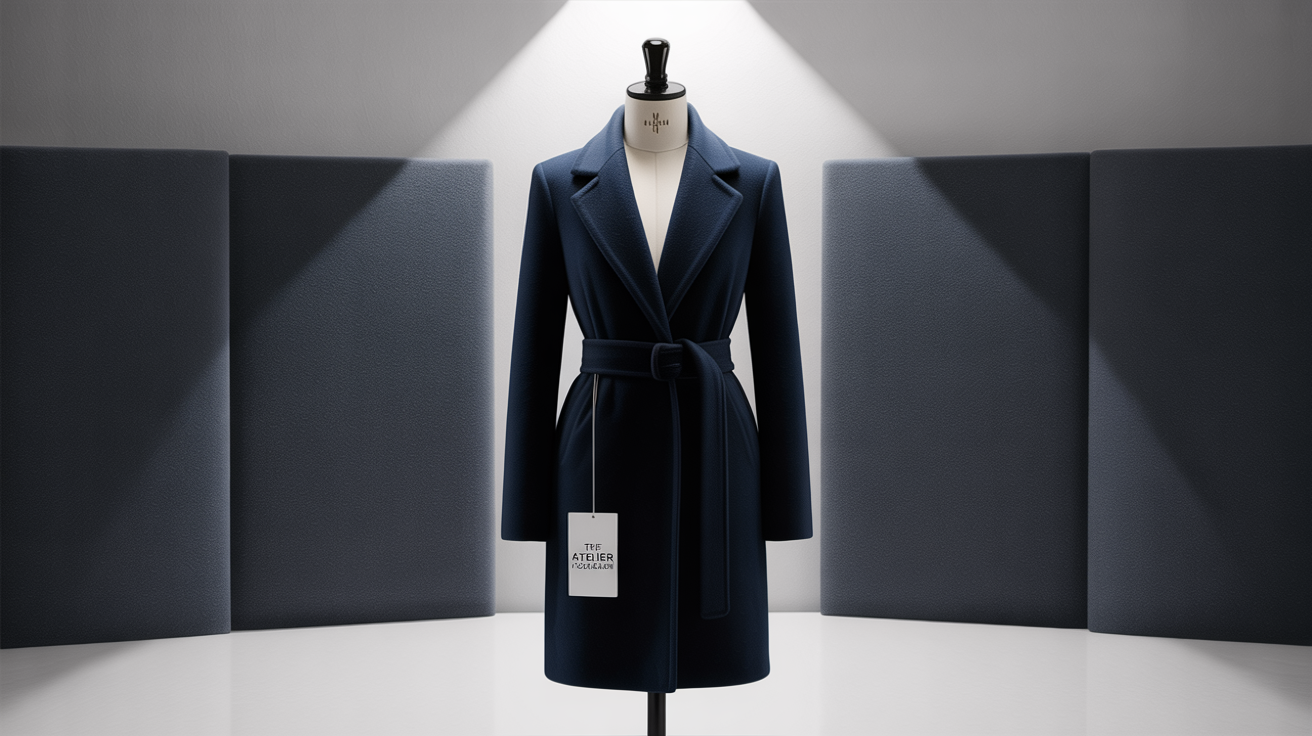
Black is a useful Cool Winter neutral, but it does not need to fill the entire wardrobe. Ink navy, charcoal, graphite, and blue-black provide the same cool structure with different levels of formality. Optic white creates the clearest light contrast. Icy gray and cool pearl are gentler options when pure white feels too sharp for the garment or occasion.
| Neutral | What to look for | Easy pairings |
|---|---|---|
| Black | Clean black without a faded brown cast | Optic white, sapphire, fuchsia, emerald |
| Ink navy | Deep blue that remains visibly cooler than warm marine navy | Icy blue, raspberry, cool pearl, cobalt |
| Charcoal | Blue-gray or neutral gray rather than taupe | Blue-red, royal purple, optic white |
| Graphite | Defined dark gray with a polished or matte cool finish | Icy pink, emerald, magenta |
| Optic white | Clear white without cream or yellow | Every dark neutral and saturated accent |
| Icy gray | Pale silver-gray that stays clean rather than beige | Navy, blue-black, berry, violet |
Brown is easiest when it is very dark, cool, and close to espresso; medium camel, tan, and orange-brown are harder to connect near the face. If a warm neutral is already in your wardrobe, place it in shoes or trousers and repeat a Cool Winter color near the face. Denim works when the wash reads clear indigo, blue-black, or cool dark blue rather than faded beige-blue.
Cool Winter Statement Colors
Statement color is where this palette becomes more useful than a black-and-white stereotype. Start with one family you already enjoy, then choose its cooler, clearer version. Sapphire and cobalt are dependable blues; emerald and blue-teal cover green; blue-red, raspberry, and fuchsia cover red and pink; royal purple and amethyst cover purple.
| Color family | Choose | Compare carefully |
|---|---|---|
| Red | Blue-red, cranberry, raspberry | Tomato, rust, coral, brick |
| Pink | Fuchsia, magenta, icy pink | Peach, salmon, dusty warm rose |
| Blue | Sapphire, cobalt, royal blue | Muted denim, warm teal, dusty blue |
| Green | Emerald, blue-teal, cool pine | Olive, moss, chartreuse |
| Purple | Royal purple, violet, amethyst | Warm mauve, brown-plum, muted lavender |
| Yellow | Small accents of clear lemon | Mustard, ochre, butter yellow |
The final column is not a disposal list. Distance from the face, fabric texture, print scale, and the colors around an item can all change the result. Use the palette where it saves time: large purchases, pieces worn near the face, and combinations that need to work repeatedly.
Cool Winter Color Combinations
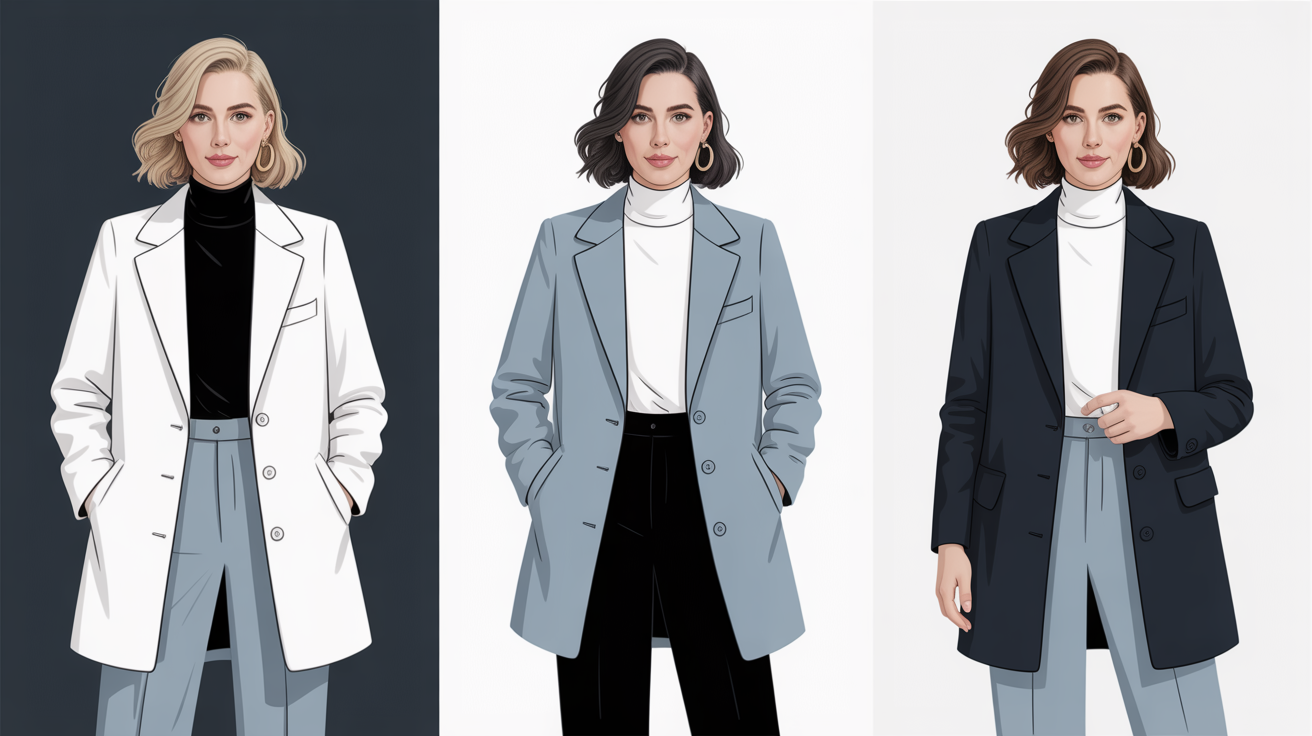
A clear palette does not require maximum contrast every day. Repeatable formulas can move from quiet to dramatic while keeping the colors cool and defined.
- Minimal: charcoal trousers + icy gray knit + black shoe + silver earring.
- Classic contrast: ink navy suit + optic white shirt + blue-red lip or pocket accent.
- Color-led: sapphire top + black bottom + icy blue scarf.
- Office: graphite jacket + cool pearl blouse + raspberry bag or tie.
- Evening: royal purple dress or shirt + blue-black layer + polished silver.
- Relaxed: dark indigo denim + emerald knit + optic white sneaker.
- Monochrome: navy + cobalt + icy blue, separated by value and texture.
- Two statements: fuchsia + sapphire over one shared dark neutral.
For a wardrobe-first treatment of garment shapes, patterns, and outfit planning, continue to the Cool Winter style and fashion guide. This page keeps color selection central so it does not compete with that narrower wardrobe intent.
Cool Winter Makeup Colors
Makeup can echo the palette without becoming theatrical. Choose one point of definition: a blue-red lip, a charcoal lash line, a cool berry cheek, or a clean contrast between skin and brows. Product names are unreliable, so compare the actual swatch in daylight and check whether it turns orange, muddy, or gray after application.
| Category | Cool Winter direction | Adjustment clue |
|---|---|---|
| Lipstick | Blue-red, raspberry, cranberry, fuchsia, cool wine | If it turns orange, try a bluer red; if it looks heavy, reduce depth before saturation |
| Blush | Cool pink, berry rose, clear plum-pink | Use a sheer layer first; avoid forcing a dark cheek to match a dark lip |
| Eyeshadow | Cool taupe, charcoal, navy, plum, icy lavender | Keep warm bronze and orange-brown away from the main eye contour |
| Liner and mascara | Black, blue-black, charcoal, deep navy, aubergine | Choose charcoal or navy when black creates more definition than desired |
| Highlight | Pearl, icy pink, cool champagne with minimal yellow | Match finish to skin texture and lighting rather than chasing maximum shine |
Foundation and concealer should match the skin rather than the seasonal palette. Seasonal color describes clothing and decorative color relationships; it does not replace a shade match. Test complexion products along the jaw and check them after they settle in the lighting where they will be worn.
Cool Winter Hair Colors
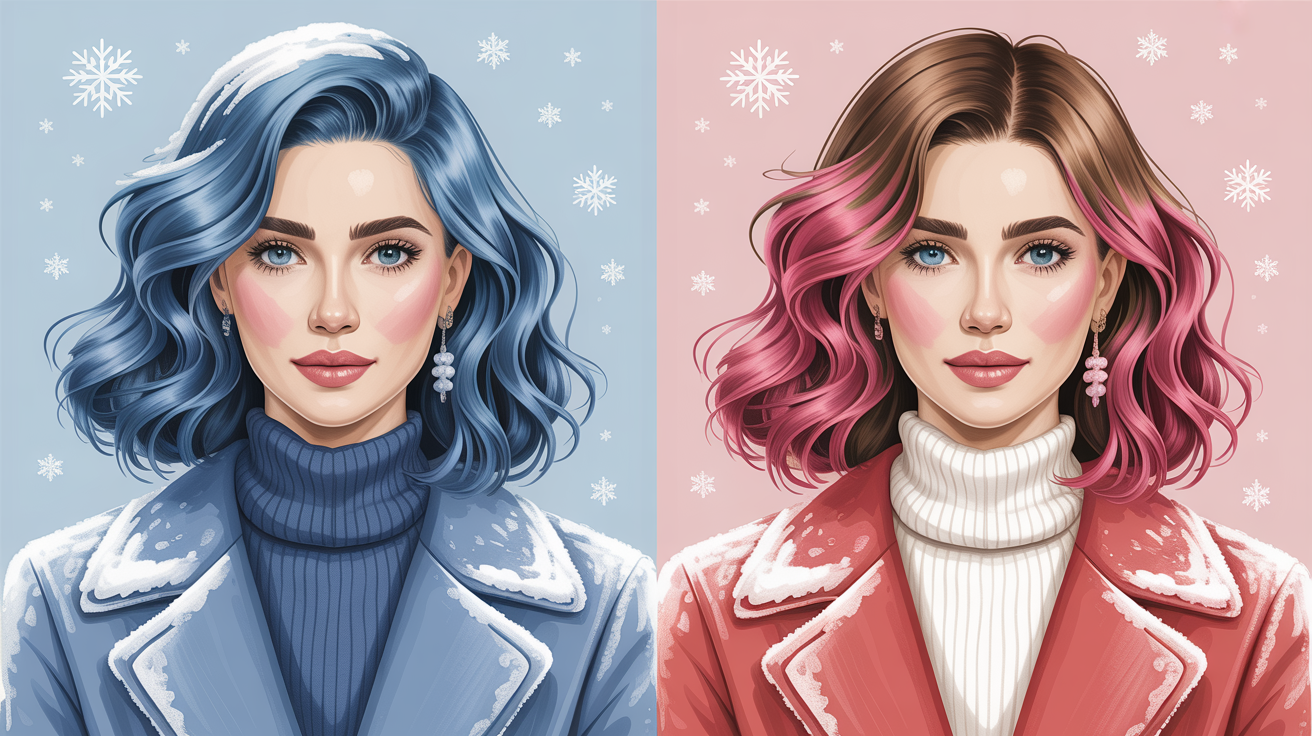
Cool Winter hair color is less about making every person darker and more about keeping the result defined and neutral-cool. Natural hair can already provide the right contrast. A dramatic change is optional, and repeated lightening or darkening may add maintenance without improving the connection between hair, skin, eyes, and wardrobe.
| Starting depth | Useful directions | Discuss with a colorist |
|---|---|---|
| Very dark | Natural black, blue-black, cool soft black | Avoid an opaque result when natural dimension is important |
| Dark brown | Cool espresso, ash dark brown, neutral-cool brunette | Control red or orange warmth without making the finish flat |
| Medium brown | Cool mocha, ash brown, deep mushroom brown | Use lowlights or fine cool dimension instead of one solid dark block |
| Blonde or gray | Cool dark blonde, ash blonde, silver, clean gray | Preserve healthy contrast through brows, clothing, or darker lowlights if desired |
Warm copper, strawberry, caramel, and honey can pull the overall look toward Autumn or Spring, especially in a large solid area. If warmth is intentional, keep it controlled and compare it with a cooler alternative before committing. For more examples by starting shade, use the dedicated True Winter hair color guide. A professional colorist can assess lift, porosity, existing dye, and the maintenance required for a safe result.
Metals, Prints, and Colors to Adjust
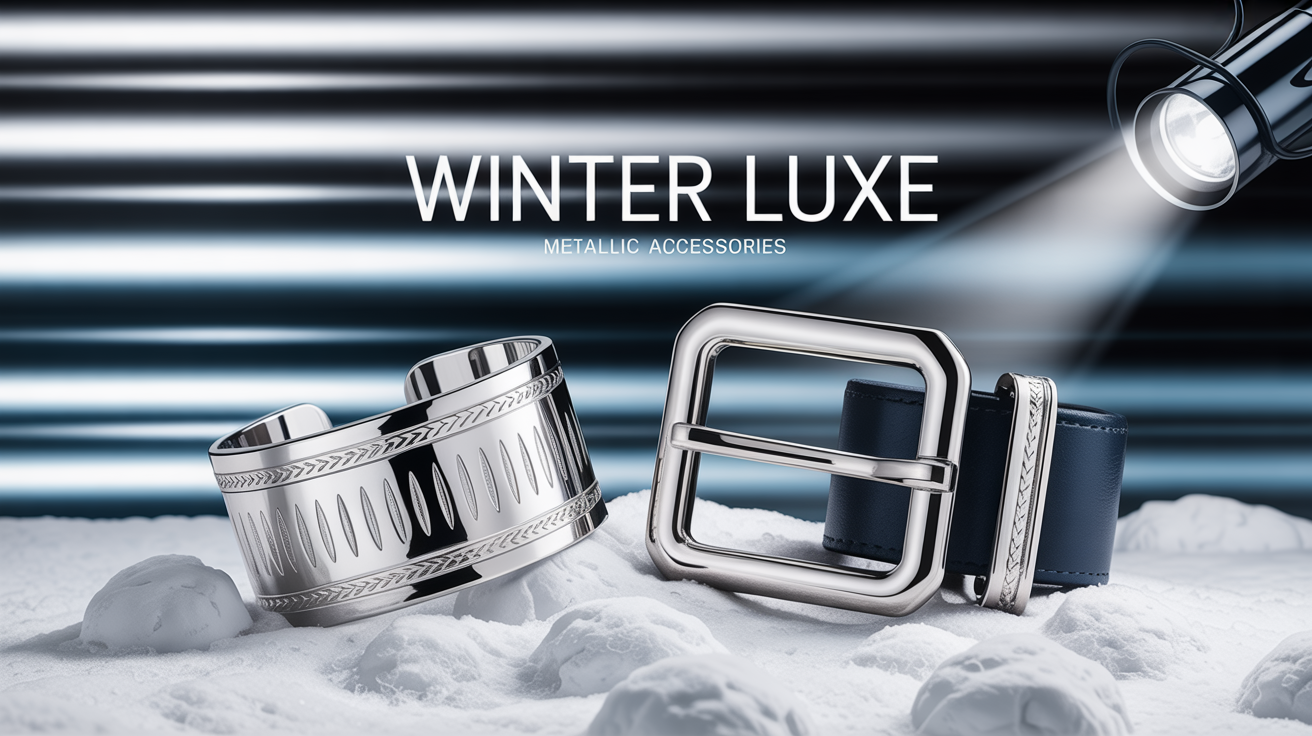
Silver, platinum, white gold, chrome, and polished steel repeat the cool clarity of the palette. Gunmetal works when an outfit needs more depth. Bright yellow gold creates a deliberate warm contrast; it is easiest in a small piece or mixed with silver rather than spread across several large accessories.
Prints work when the overall blend stays cool and defined. Black-and-white stripes, cool jewel-tone geometrics, and high-contrast florals are straightforward. Step back from a print: small warm and cool marks can merge visually into a muted brown, while a large print may retain clear color separation. Scale matters as much as the individual swatches.
Camel, mustard, rust, peach, orange-red, warm beige, and dusty earth tones are the usual adjustment colors. They can still be used below the waist, in a bag or shoe, or separated from the face with a Cool Winter neckline. Personal preference, dress code, cultural context, and the clothes you already own remain part of the decision.
People Also Ask
Is Cool Winter the same as True Winter?
Often, yes. Many 12-season systems use Cool Winter and True Winter for the central Winter subtype whose first priority is cool temperature. Some expanded systems separate the terms, so check the color properties and the analyst's system rather than assuming every label uses identical boundaries.
What are the best colors for Cool Winter?
Start with black, optic white, charcoal, graphite, and ink navy. Add sapphire, cobalt, emerald, blue-red, raspberry, fuchsia, royal purple, and icy pink or blue. Choose clear, blue-based versions rather than warm or dusty ones.
Can Cool Winter wear navy and brown?
Ink and midnight navy are excellent core neutrals. Brown is easier when it is very dark and cool, such as cool espresso. Camel and orange-brown create more warmth, so place them farther from the face or combine them with a clear Cool Winter color.
What is the difference between Cool Winter and Cool Summer?
Both are cool, but Cool Winter is clearer and more contrasting. Cool Summer uses softer navy, smoky blue, mauve, dove gray, and blended combinations; Cool Winter supports black, optic white, sapphire, fuchsia, and sharper edges.
Common Questions: The Ultimate Color FAQ
Can Cool Winter wear gold?
Yes. Silver and white metals usually connect more directly to the palette, but yellow gold can be an intentional accent. Try a smaller piece, a pale or cooler gold, or mixed-metal jewelry and judge it within the complete outfit.
Can Cool Winter wear pastels?
Choose icy tints rather than dusty pastels. Icy pink, icy blue, icy lavender, and icy mint retain a clean white base and work especially well beside navy, charcoal, or black.
Is black always the best Cool Winter neutral?
Black is useful, not compulsory. Ink navy, charcoal, graphite, and blue-black can provide structure with a different level of depth. Compare the finished fabric near the face because texture and fading change how dark neutrals read.
How much contrast does Cool Winter need?
Enough to keep colors distinct, but not necessarily maximum black-and-white contrast in every outfit. Navy with icy blue or charcoal with raspberry can preserve definition while feeling quieter.
How do I shop with a Cool Winter palette?
Choose two or three neutrals and three repeatable statement colors before shopping. Photograph them in indirect daylight, compare new items against those references, and prioritize coats, tops, dresses, scarves, and other pieces worn near the face.
If the Winter comparison fits but you still need a guided result, continue to the canonical color analysis quiz rather than treating one palette description as a diagnosis.