Best Colors for Yellow Undertone Skin
 Reviewed by Alexandra Gilmore
A yellow undertone benefits from warmth, but that does not make every orange, mustard, or beige equally flattering. Choose specific clothing families by depth and saturation, then compare balanced warm shades with selected blues and greens so your complexion looks lively rather than overly yellow.

Knowing the best colors to wear for yellow skin undertone transforms getting dressed from guesswork into a reliable system. Yellow undertones sit in the warm family, and the colors you choose either work with that warmth to create harmony or clash against it and drain your complexion of life.
💫 Discover Your Complete Color Palette
One feature rarely explains every color that works for you. Compare your undertone, depth, clarity, and contrast as a complete palette, then use the results to test clothing, makeup, and hair colors more consistently.
Find My Color Palette →This guide breaks down the process shade by shade so you leave with specifics, not vague advice like "stick to warm tones." Here is what you will find inside:
- What "yellow undertone" actually means in practical color-analysis terms
- The core color families that consistently flatter warm, yellow-based skin
- Why depth matters — the same hue can work or fail depending on how light or rich it is
- Colors to approach with caution and the situations where rules bend
- A quick at-home test to confirm whether a color is genuinely working for you
- Shade-specific breakdowns for autumnal colors (oranges, warm greens, browns, navy) and spring-warmth colors (creams, corals, soft yellows, deep ruby red)
- A practical wardrobe-building framework you can apply immediately
One note before diving in: yellow has a reputation for being the hardest color to wear, yet the reality is that almost any skin tone can carry some version of it — the deciding factor is which specific shade aligns with your undertone and how deep or light your overall coloring runs. That same logic applies across every color family covered here. The goal is precision, not a blanket list of "do" and "don't" colors.
What 'Yellow Undertone' Actually Means in Color Analysis
Undertone is not the same as surface color. Your surface depth — fair, medium, tan, deep — is how light or dark your complexion looks overall. Undertone is the subtle hue sitting beneath that. Two people can have the same surface depth, both medium brown, and still have completely different undertones. One reads warm and golden; the other reads cool and pink.
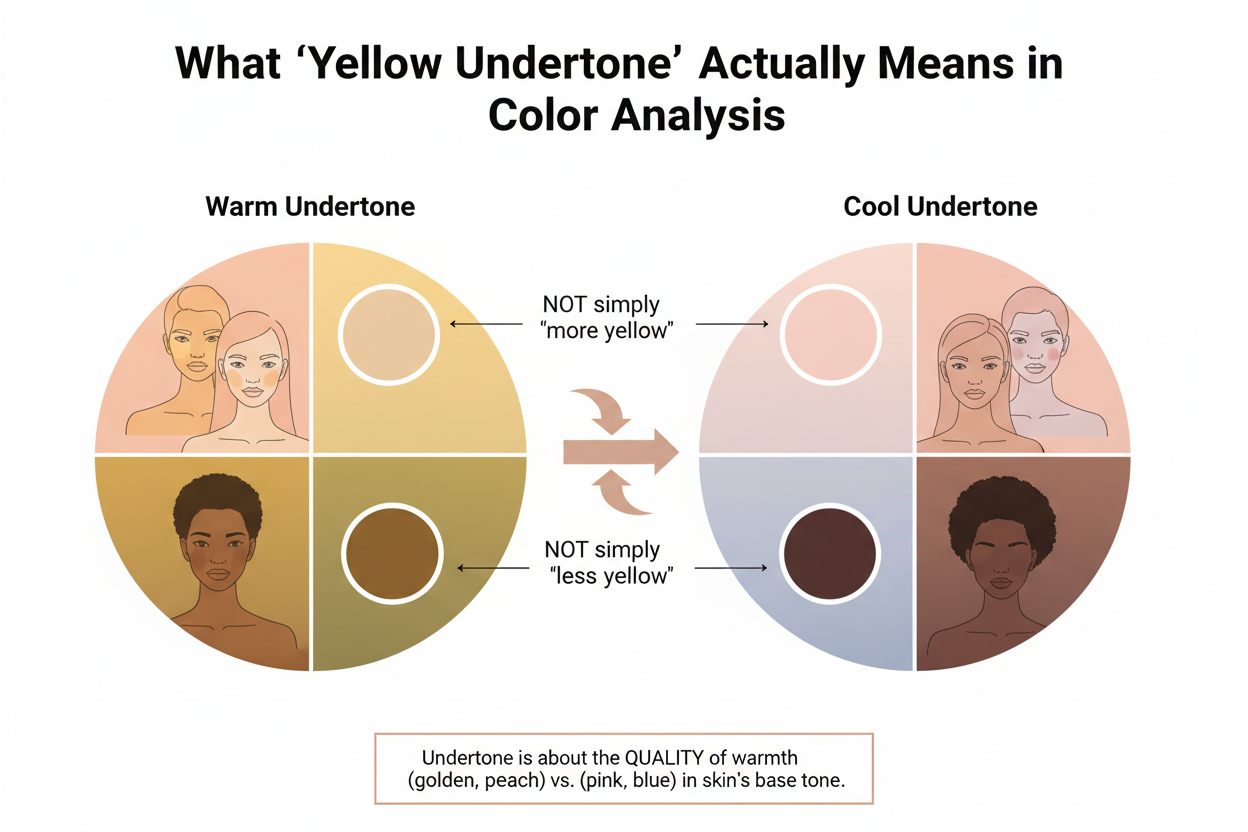
Yellow undertone sits within the broader warm-undertone family. Warm skin in general can pull golden, peachy, or bronze, but a yellow undertone specifically skews more golden — and in certain lights, slightly sallow. It shows up across a wide range of ethnicities and skin depths, from fair to very deep.
This distinction matters when you're choosing colors. A color that looks radiant on a cool-toned person with the same surface depth can look muddy or washed out on someone with a yellow undertone, and the reverse is just as true. Getting your undertone right is the starting point — everything else follows from there.
Not sure whether your undertone is warm, cool, or neutral? Take the free color analysis quiz →
The Core Color Families That Flatter Yellow Undertones
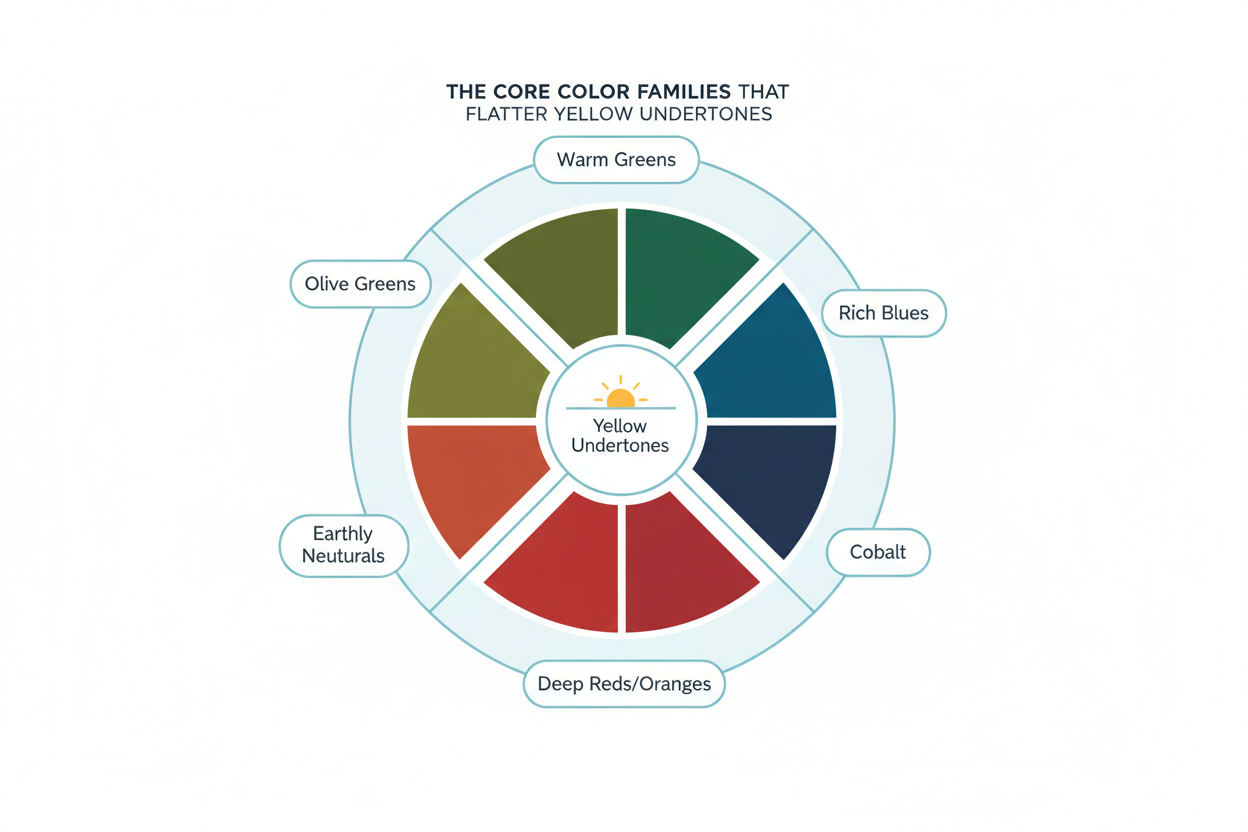
Yellow undertones harmonize best with colors that share a warm pigment base. Rather than presenting a flat list, it is useful to think of two complementary palettes: one that leans into autumnal richness and one that draws on lighter spring warmth. Both are covered in detail below, but here is the master overview:
| Palette | Key Colors |
|---|---|
| Autumnal Depth | Oranges, warm browns, warm greens, navy blue |
| Spring Warmth | Creams, corals, soft yellows, deep ruby red |
The reason these hues work is shared pigment logic. Warm greens carry yellow in their base. Oranges and corals are built from red and yellow. Even navy, which reads as a cool color to many people, has enough depth to ground a warm undertone without pulling the pink or purple that icy blues do.
Autumnal Depth Colors: Oranges, Browns, Warm Greens, and Navy
These are the colors most consistently recommended for warm-toned skin — rich, grounded, and saturated with the same earthy pigments present in a yellow undertone.
Oranges and rust tones Burnt orange, terracotta, and copper-adjacent shades work well with yellow undertones because their warm pigment base mirrors and amplifies the golden quality in the skin. Avoid cool-leaning oranges with a slight pink correction; look instead for shades that have a distinctly earthy or burnt quality.
Warm browns Caramel, toffee, chocolate, and tobacco browns create a tonal relationship with yellow undertones rather than competing with them. Lighter tawny shades work especially well for fair to medium depths; deeper espresso and cognac shades read beautifully on medium to deep complexions.
Warm greens Olive, moss, khaki, and forest green all carry a yellow base that echoes the undertone. Avoid greens that lean blue (teal, emerald with a cool cast) or gray (sage can veer too ashy). The test: hold the green next to yellow or gold — if they feel like the same family, it will likely work.
Navy blue Navy earns its place in the warm-tone palette because of its depth. Unlike bright cobalt or icy periwinkle, navy is dark enough to provide strong contrast without the cool, draining quality of lighter blues. It works as a practical neutral in an autumnal wardrobe.
Spring Warmth Colors: Creams, Corals, Soft Yellows, and Deep Ruby Red
Where the autumnal palette is saturated and grounded, the spring-warmth palette is lighter, brighter, and more luminous — but still anchored in warm pigment.
Creams and warm whites Pure, stark white tends to pull cool and can emphasize the sallow quality that some yellow undertones want to minimize. Cream, ivory, and warm off-white shades add luminosity without that blue-white contrast. Think warm paper rather than bleach.
Corals Coral is essentially a pink warmed with orange, which puts it right in the sweet spot for yellow undertones. It gives you the freshness of a lighter color without drifting cold. Medium and peach-leaning corals tend to work better than hot, fuchsia-adjacent ones.
Soft yellows This is where BESTCO-007 and BESTCO-008 come in. Yellow has a reputation for being difficult, but for someone with a yellow undertone, the danger isn't wearing it — it's choosing the wrong version. Cool-leaning yellows with a greenish or lemony cast can look unwell against golden skin. Warm, buttery, or golden yellows do the opposite: they create a harmonious glow because you're reinforcing the undertone rather than fighting it.
Deep ruby red A warm, jewel-toned red with minimal blue adds drama to the spring palette. Deep ruby sits close enough to warm burgundy and crimson to flatter without pulling too cool.
Why Shade Depth Changes Everything for Yellow Undertones
Undertone is only half of the equation. Depth — how light or dark a color is — determines whether a harmonious hue actually flatters your specific complexion.
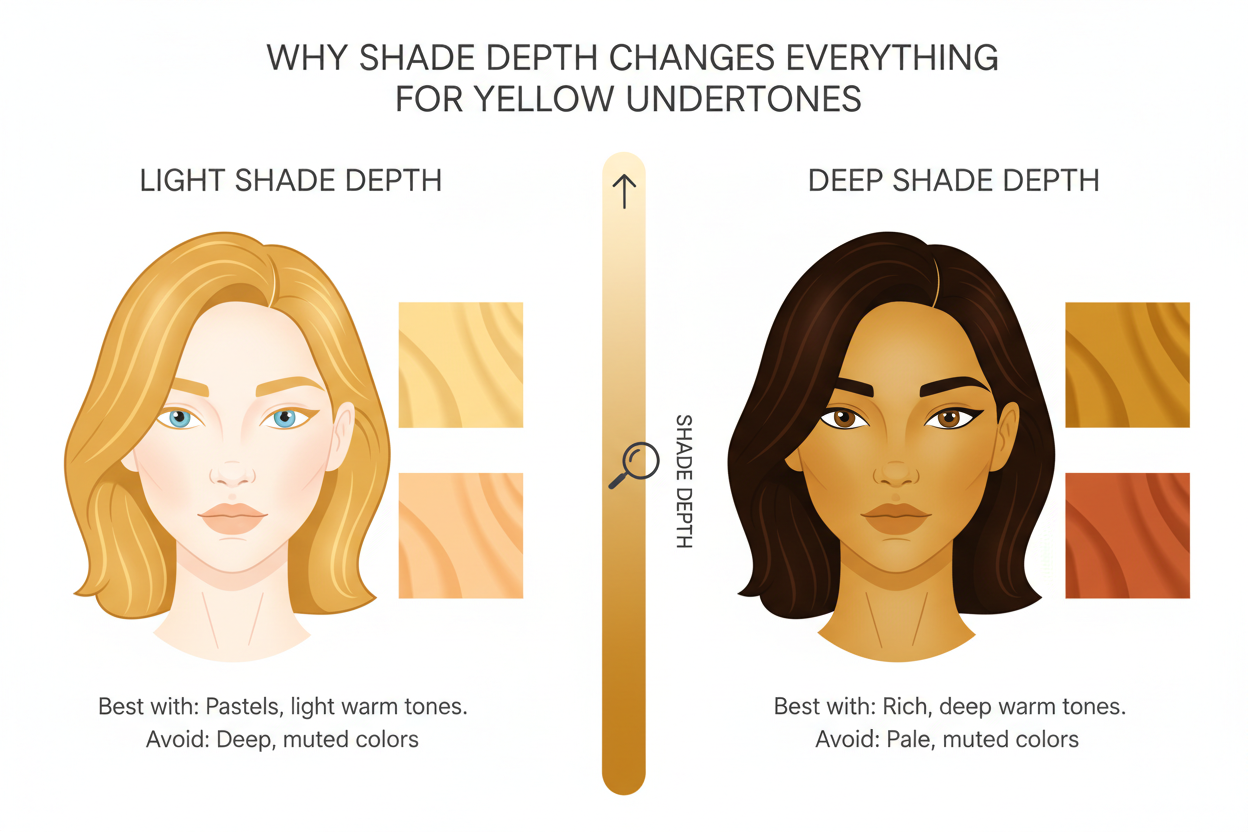
Take yellow as an example. A soft butter yellow on fair, warm-toned skin creates a light-on-light harmony that reads as luminous. That same butter yellow on deep, warm-toned skin can disappear — too little contrast to register. Someone with deep warm coloring will generally get more mileage out of a rich golden mustard.
The core principle: your color choices should generally match or complement the contrast level of your own coloring.
- Fair yellow undertone: lighter iterations of warm hues tend to harmonize better — soft corals, creams, lighter warm greens
- Medium yellow undertone: mid-range depths offer the most flexibility — terracotta, medium olive, coral, warm caramel
- Deep yellow undertone: richer, more saturated versions carry weight — burnt orange, espresso brown, forest green, deep ruby
This is why broad rules ("warm tones should wear earth tones") only get you so far. The right hue category in the wrong depth can still clash.
Colors to Approach With Caution if You Have a Yellow Undertone
Warm-color advice usually covers what to wear, but knowing what to watch out for is just as useful. The colors below aren't banned — context and personal preference always matter — but they're more likely to clash with a yellow undertone than work with it.
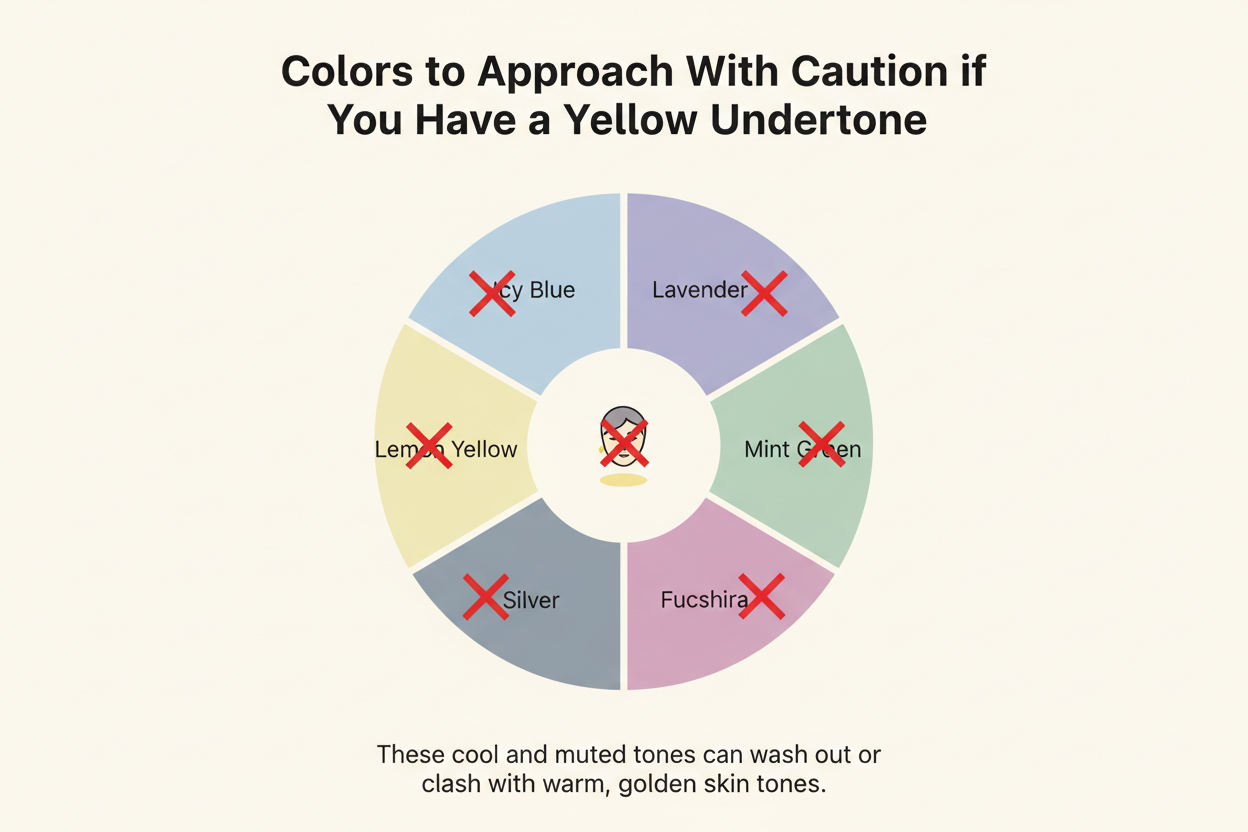
Icy or cool blues Light sky blue, baby blue, and periwinkle have a cool, almost lavender quality that can pull the sallow quality in yellow undertones forward rather than warming the complexion. Navy works fine. Icy blue takes more care.
Stark, blue-white Pure optical white is corrected with blue by design. Against yellow-toned skin, it can heighten a contrast that reads as washed-out rather than fresh. Creams and warm off-whites are safer choices.
Cool purples and lilac Muted lavender and blue-based purples tend to amplify the yellow in warm skin in an unflattering way — the contrast pulls instead of harmonizes. Warmer purples like plum, wine, and aubergine fare better because they shift toward the red end of the spectrum.
Cool pinks and fuchsia Bright, blue-toned pinks can cause a similar dissonance. Peach-pinks and salmon-pinks are warm-leaning and usually work well. The cooler, more vivid end of the pink range is where you want to slow down.
None of this means these colors are off-limits. Accessories, patterns, and where a garment sits on your body all affect how close a color gets to your face — and that changes how much the undertone interaction actually matters.
Want a precise read on your personal undertone and depth? Start the free quiz to see your full color palette →
How to Test Whether a Color Works With Your Yellow Undertone
The most reliable way to figure this out is to stop relying on memory or mirrors and actually hold colors next to your face. Here's a method that works at home:
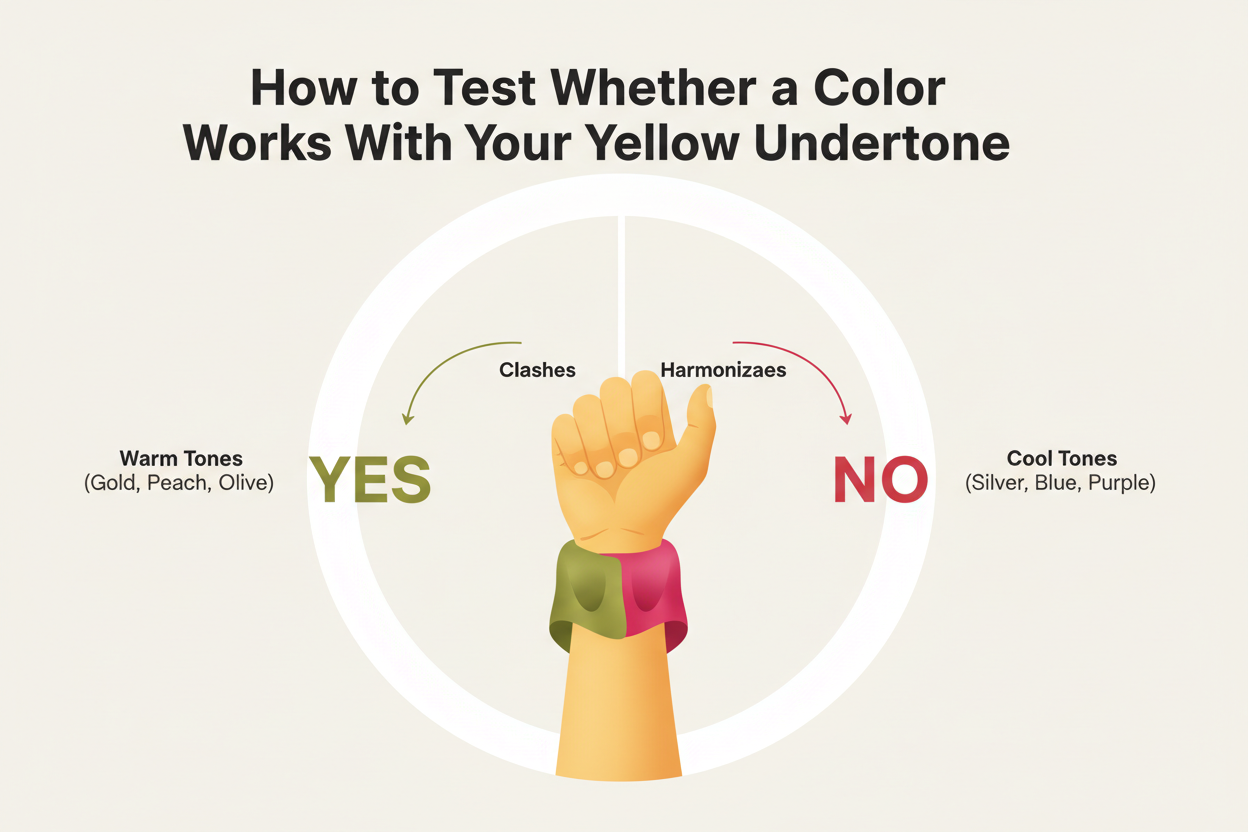
Work in natural daylight. Artificial lighting runs warm or cool on its own and will throw off what you see. Morning or midday near a window is ideal.
Take off your makeup and jewelry before you start — especially gold or silver pieces, which carry their own undertone and mess with your perception.
Hold the fabric directly under your chin, not out at arm's length. The interaction happens because of the proximity to your face.
Signs the color is working:
- Skin looks brighter and more even
- Under-eye shadows soften
- Your features look more defined
Signs it isn't:
- Skin reads more yellow or greenish than usual
- Dark circles or uneven patches get more noticeable
- Your face looks tired even when you're not
When possible, compare two versions of the same hue — warm olive green versus cooler sage, butter yellow versus lemon yellow. The contrast between results makes the better choice obvious fast.
This is essentially what professional color analysts do, just without the appointment.
Building a Wardrobe Palette Around Yellow Undertone Colors
Individual color picks are useful. A coordinated system is far more valuable.
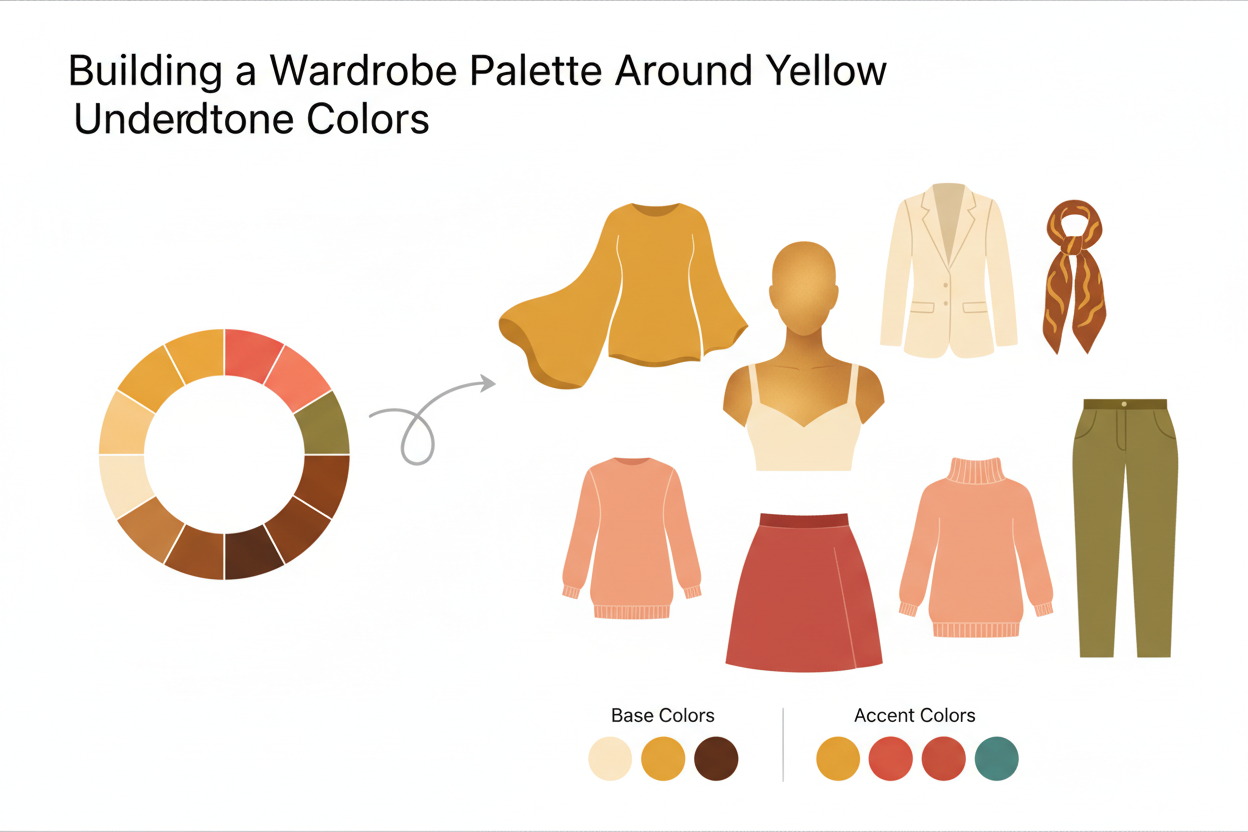
The good news for yellow undertones is that the autumnal and spring palettes are designed to coexist. They share the same warm-pigment logic, so pieces from each mix naturally. A cream blouse goes with olive trousers; a coral top works with warm brown or navy; a soft yellow dress sits well with caramel accessories.
A practical framework:
Neutrals first: cream, warm white, navy, and warm brown replace stark white, gray, and black as your base. These work in every season without fighting your undertone.
Mid-tones as workhorses: olive, terracotta, and deep ruby red are versatile enough for everyday wear and warm enough to flatter.
Highlight colors near the face: soft yellow, coral, and bright orange work best in tops, scarves, or necklines, where the warm undertone interaction shows most clearly.
Anchor with depth pieces: a forest green coat, a cognac bag, or a burnt orange knit are the investments that stay flattering year-round because they sit permanently in the warm-pigment family.
Match depth to your coloring: fair complexions should lean toward lighter iterations within each color family; deeper complexions tend to get the most from richer, more saturated versions.
The result is a wardrobe where most pieces work together without deliberate effort, because everything shares the same underlying color logic as your skin's undertone.
People Also Ask
What colors look best on yellow skin undertones?
The most reliably flattering colors for yellow undertones fall into two warm-pigment families. On the richer end: burnt orange, terracotta, warm browns, olive and moss greens, and navy blue. On the lighter end: cream, coral, buttery yellow, and deep ruby red. What these shades have in common is a warm base that works with the golden quality in the skin rather than against it. Shade depth matters too — lighter complexions tend to suit softer versions within each family, while deeper complexions carry richer, more saturated versions with greater impact.
What colors should people with warm undertones avoid?
There are no absolute bans, but a few categories are more likely to clash with a yellow undertone:
- Icy and cool blues — baby blue, periwinkle, and pale sky blue can pull a sallow quality to the surface rather than warming the complexion
- Stark optical white — its blue-corrected pigment can read as washed-out against golden skin; cream or ivory are safer alternatives
- Cool purples and lavender — blue-based purples tend to push the yellow in warm skin in an unflattering direction; warmer options like plum or aubergine work better
- Cool pinks and fuchsia — bright, blue-toned pinks create dissonance; peach-pinks and salmon, which lean warm, are generally safer
Placement matters here. A cool color in a skirt or trousers sits farther from your face than a neckline does, which changes how much the undertone clash actually shows.
Is yellow undertone the same as warm undertone?
They overlap but are not the same thing. Warm undertone is the broader category — it includes skin that reads golden, peachy, bronze, or yellow-hued beneath the surface. Yellow undertone is a specific expression within that warm family, one that skews more golden and can appear slightly sallow in certain lighting rather than peachy or bronze. Most color advice for warm undertones applies to yellow undertones, but yellow-undertone skin may respond more noticeably to colors that reinforce warmth versus those that neutralize it.
Can people with yellow undertones wear navy blue?
Yes. Navy is one of the more useful colors in a warm-tone wardrobe because its depth keeps it from reading as cool and draining the way lighter blues do. Icy or bright blues tend to amplify a sallow quality in yellow-toned skin, but navy provides strong contrast without that cool pull. It works well as a neutral base and pairs naturally with the earthy shades that flatter warm undertones — navy with terracotta, caramel, or olive, for instance.
What is the difference between yellow undertone and olive undertone?
Related, but not the same thing. Yellow undertone refers to the warm, golden pigment beneath the skin's surface. Olive skin is a surface-level description — a medium complexion with a greenish or golden-brown cast that can sit over either a warm or neutral undertone. Someone with olive skin often has a yellow undertone, but olive describes what the skin looks like, while yellow undertone describes the subsurface pigment that affects how colors read against it. In color analysis, undertone drives the recommendations; surface depth narrows down which shade within a color family actually works.
Frequently Asked Questions About Colors for Yellow Undertone Skin
What are the best colors to wear for yellow skin undertone?
The strongest choices are warm colors that work with the golden quality in your skin rather than fight against it. They break into two rough groups:
- Rich, deep tones: burnt orange, terracotta, warm brown, caramel, olive and moss green, navy, deep ruby red
- Lighter, softer tones: cream, ivory, coral, peach, buttery yellow
Shade depth should match your complexion — softer tints for lighter skin, more saturated versions for deeper skin. The thing they all have in common: a warm pigment base that sits comfortably with yellow undertones instead of pushing them toward looking washed out.
Can people with yellow undertones wear cool colors like blue or purple?
Yes, but with some selectivity. Cool colors work best when they're deep enough to provide strong contrast without pulling out the yellow in the skin. Navy, forest green, and plum or aubergine tend to be safer than their lighter, icier counterparts. Pale sky blue, lavender, and bright fuchsia are more likely to cause problems — their blue-based pigments can make warm skin look washed out or push the complexion toward a sallow cast. Placement matters too. A cool-toned piece worn away from the face, like a trouser or skirt, creates less undertone interaction than the same color worn at the neckline.
Is navy blue flattering for yellow undertone skin?
Yes. Navy works well for warm-toned skin, including yellow undertones. Unlike lighter blues, which can look cool or washed out against warm skin, navy is deep enough to hold its own and create strong contrast. It also pairs naturally with the earthy tones — terracotta, warm browns, olive green — that tend to suit yellow undertones.
What shade of yellow can someone with a yellow undertone actually wear?
Almost any shade of yellow can work, but which one depends on your undertone and depth together. Warm yellows — golden, buttery, amber — tend to be the safer bet. Cool, acidic, or chartreuse yellows have a greenish edge that can clash with warm skin. Softer, muted yellows usually suit lighter warm complexions. Richer golds and ochres tend to work better on medium to deep skin. Same rule applies to any color: knowing your specific undertone and depth helps you figure out which shades in a family actually flatter, rather than just guessing.
Do autumnal colors work for all depths of yellow undertone skin?
Yes, broadly, but you'll want to shift the specific shade based on your complexion depth. Deeper yellow-undertone skin handles saturated, rich tones well — dark chocolate brown, deep burnt orange, bold olive. Lighter yellow-undertone skin tends to look better in softer, medium-depth versions of those same families: warm camel rather than espresso, muted terracotta rather than deep brick. The warm base stays flattering across the board; what changes is the intensity.
How do I know if I have a yellow undertone versus a neutral undertone?
A few practical checks help:
- Vein test: Yellow-undertone skin typically shows greenish veins at the wrist; neutral undertones show a mix of green and blue.
- White versus cream test: Yellow undertones almost always look better in cream or ivory than stark optical white, which tends to read as too cool. Neutral undertones handle both more easily.
- Jewelry test: Yellow-undertone skin tends to suit gold. Neutral undertones can usually wear gold or silver without either looking off.
- Color reaction: If warm, earthy tones consistently seem to lift your complexion while cool pinks or icy blues flatten it, you probably have a warm, likely yellow, undertone.
If warm and cool colors work roughly equally well, a neutral undertone is more likely.
Are coral and cream universally flattering for warm undertones?
They're among the most reliably flattering choices, but "universally" is too strong. Coral's warm, peachy-orange base naturally harmonizes with golden skin, making it a safe pick across most warm complexions. Cream and ivory work for similar reasons — they skip the cool-corrected quality of optical white, which tends to amplify sallowness in yellow-undertone skin.
That said, the right shade still depends on your skin depth. A lighter warm complexion often suits a softer, blush-leaning coral, while a deeper warm complexion can carry something brighter and more saturated. If you want a precise answer for your specific combination of undertone and depth, a dedicated color analysis will get you further than general rules.